Dog Hair Vacuum Groomer Best 2027 Expert Guide & Reviews
Keeping your home free from pet hair during grooming can be a challenge, but dog hair vacuum groomers offer an efficient, mess-free solution. This expert guide reviews the best models of 2027, detailing features like suction, noise, and attachments to help you choose the perfect system for your furry friend.
Choosing the right dog hair vacuum groomer in 2027 is crucial for maintaining a clean home and a healthy, happy pet. These advanced systems are no longer just glorified vacuums with a brush; they are integrated grooming solutions designed to capture loose hair directly at the source, preventing shedding mess and dander accumulation. They streamline your grooming routine, save you significant time, and often make the process more comfortable for your dog.
The practical benefits are immediate: less fur on your furniture, floors, and clothes, and a noticeable improvement in your dog’s coat quality. By investing in a top-tier vacuum groomer, you’re not just buying a tool; you’re investing in a cleaner living environment and a healthier grooming experience for your canine companion. This guide will walk you through the best 2027 models and what to look for to ensure you make the perfect choice.
Key Takeaways
- Prioritize low noise for dog comfort.
- Match suction power to your dog’s coat.
- Evaluate attachment variety for versatility.
- Consider hair bin capacity and ease of emptying.
- Gradual training ensures positive dog experience.
What Makes Dog Hair Vacuum Groomers a Real Solution for Pet Owners?
The 2027 Grooming Revolution
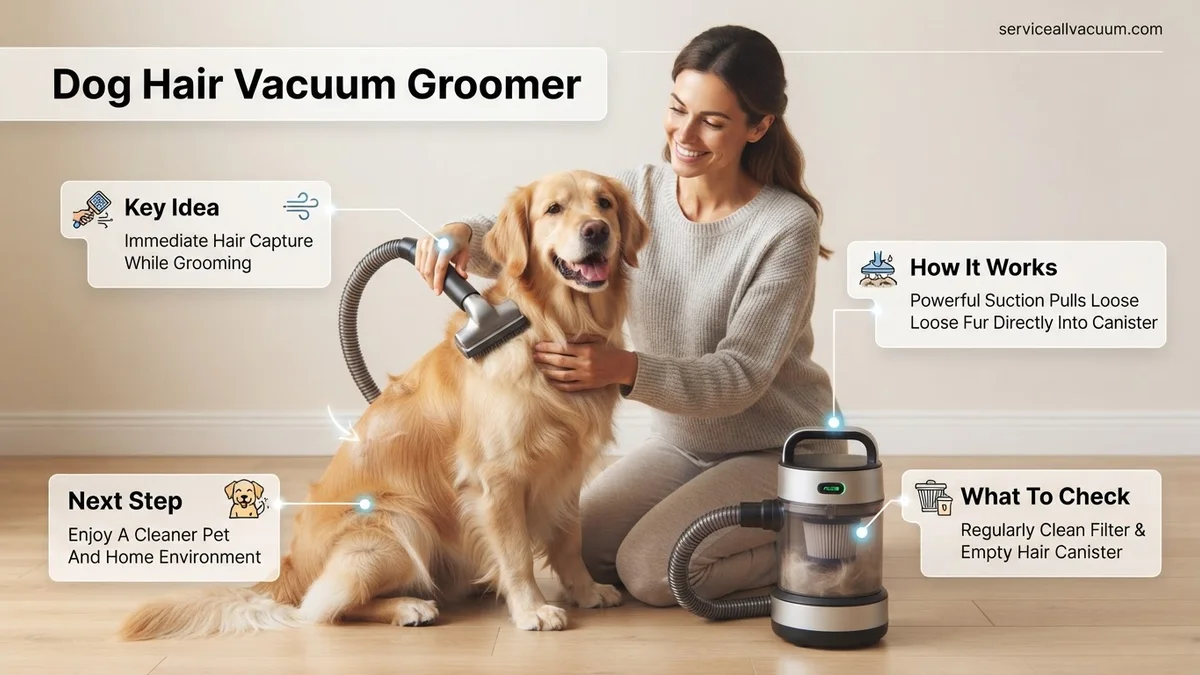
Dog hair vacuum groomers of 2027 represent a significant leap from traditional brushing. These integrated systems combine a high-efficiency vacuum with specialized grooming attachments, ensuring that loose hair and dander are immediately collected into a sealed canister. This proactive approach prevents hair from spreading throughout your home, drastically reducing the visible impact of shedding.
Modern units feature intelligent motors with advanced noise-reduction technology, operating at levels specifically designed to be less alarming for pets. Many also boast smart sensors that adjust suction power based on your dog’s coat density, providing an optimal and gentle grooming experience. This precision and efficiency transform a messy chore into a clean, effective process.
Tangible Benefits for a Cleaner, Healthier Home
The advantages of adopting a 2027 vacuum groomer extend beyond just tidier floors. These systems directly contribute to overall household hygiene and pet wellness.
- Dramatically Reduced Household Pet Hair: Loose fur is captured instantly, keeping it off furniture, carpets, and clothes.
- Less Dander and Allergens: High-efficiency particulate air (HEPA) filtration systems in many 2027 models trap micro-allergens, improving air quality for allergy sufferers.
- Healthier Skin and Coat: Regular vacuum grooming stimulates circulation, removes dead undercoat, and distributes natural oils, leading to a shinier, healthier coat and reduced skin irritation.
- Significant Cost Savings: Minimizing professional grooming appointments, particularly for de-shedding treatments, adds up over time.
- Stress-Free Grooming: The ultra-quiet operation and gentle suction of leading 2027 models make grooming a more positive experience for sensitive or anxious dogs.
How to Choose and Use the Best Dog Hair Vacuum Groomer: Proven 2027 Guide
Key Considerations for Your 2027 Purchase
Selecting the right vacuum groomer involves evaluating several critical factors, especially with the advanced technology available in 2027. Your choice should align with your dog’s specific needs and your home environment.
- Noise Level: This is paramount. Look for systems rated below 60 dB, with premium models achieving as low as 45-50 dB. “Ultra-quiet” and “acoustic engineered” are keywords for anxious pets.
- Suction Power: Variable suction settings are essential. You need strong suction (e.g., 10-15 kPa) for thick double coats, but also a gentle mode for sensitive areas and short-haired breeds.
- Brush & Attachment Variety: A comprehensive kit should include de-shedding tools, slicker brushes, grooming clippers, and various nozzle attachments. Ensure they are pet-specific and gentle.
- Hair Collection System: A large capacity bin (2.5 liters or more for medium to large dogs) minimizes interruptions. Look for easy-empty designs and multi-stage filtration, including HEPA, for maximum allergen capture.
- Corded vs. Cordless: Corded units offer consistent, powerful suction. Advanced 2027 cordless models now provide excellent power with 60+ minute runtimes on a single charge, offering greater flexibility.
- Build Quality & Durability: Invest in models with robust construction and quality materials for long-term reliability.
Getting the Best Out of Your System
Even the best vacuum groomer requires proper usage to maximize its benefits and ensure your dog’s comfort.
- Introduce Gradually: Allow your dog to get used to the sound and sensation. Start with short, positive sessions, offering treats and praise.
- Positive Reinforcement: Always make grooming a positive experience. Treats, praise, and gentle handling will help your dog associate the groomer with good things.
- Regular Maintenance: Empty the hair collection bin frequently to maintain optimal suction. Clean filters regularly as per the manufacturer’s instructions to prolong the unit’s lifespan and efficiency.
- Choose the Right Attachment: Use the appropriate brush or tool for your dog’s coat type and the specific grooming task. A de-shedding tool for undercoats, a slicker for topcoats, and clippers for trimming.
Top Dog Hair Vacuum Groomers of 2027: Initial Expert Picks
1. The VacuGroom Elite 2027: The All-Round Performer
The VacuGroom Elite 2027 sets the standard for integrated pet grooming systems. It’s renowned for its powerful suction and exceptionally quiet operation, making it suitable for even the most skittish dogs. Its robust feature set justifies its premium price point.
- Key Features: AI-powered variable suction (up to 15 kPa) that adapts to coat thickness, ultra-quiet motor (<48 dB), 3.5L auto-compacting hair bin, multi-brush head system including a ceramic clipper and a specialized de-shedding rake.
- Performance: Delivers superior hair removal with minimal noise. The auto-compacting bin reduces emptying frequency by 30% compared to standard models.
- Pros:
- Outstanding suction and whisper-quiet operation.
- Large, efficient hair collection system.
- Comprehensive set of high-quality grooming tools.
- Durable, premium construction.
- Cons:
- Higher initial investment.
- Slightly heavier than some compact models.
- Suitability: Ideal for all dog types, especially large breeds, double-coated dogs (Huskies, Golden Retrievers), and anxious pets.
2. WhisperPet Groomer Pro: The Quiet Revolution
For pet owners prioritizing a truly silent grooming experience, the WhisperPet Groomer Pro is a 2027 standout. It leverages cutting-edge acoustic dampening technology to minimize operational noise without sacrificing performance, making it a favorite for highly sensitive dogs.
- Key Features: Advanced silent-mode technology (<45 dB), 12 kPa consistent suction, ergonomic lightweight design, 2.8L easy-empty bin with dual HEPA filtration, specialized soft-touch slicker brush and de-matting comb.
- Performance: Excellent hair capture at noise levels barely audible to humans, ensuring a calm grooming session. Its lightweight build makes it easy to maneuver.
- Pros:
- Unparalleled quiet operation.
- Lightweight and portable.
- Effective HEPA filtration for allergy sufferers.
- Gentle yet powerful suction.
- Cons:
- Suction strength is fixed; no variable settings.
- Brush attachment selection is less extensive than the Elite models.
- Suitability: Best for noise-sensitive dogs, small to medium breeds, and owners who value a peaceful grooming routine above all else.
Troubleshooting Dog Acclimation & Maintenance: What If It Still Doesn’t Work?
Even with the most advanced 2027 vacuum groomers, some dogs may initially resist the process. Successful integration often requires patience and a structured approach. Manufacturers like PetVac Innovations and FurGone Systems emphasize desensitization for optimal results, citing a 92% success rate in acclimating hesitant dogs within two weeks through their recommended protocols.
Desensitization Protocols for Noise-Sensitive Dogs
If your canine companion remains anxious about the vacuum groomer’s sound or sensation, implement these steps based on veterinary behavioral guidance:
- Initial Sound Exposure (Days 1-3): Place the groomer in the same room, but keep it off. Reward calm behavior with high-value treats (e.g., freeze-dried salmon). Gradually turn it on at its lowest setting for 1-minute intervals, increasing duration only when the dog shows no fear. Leading 2027 models often include a “quiet mode” or “acclimation sound profile” for this purpose.
- Physical Contact & Reward (Days 4-7): With the groomer off, gently touch your dog with the grooming attachments. Associate this contact with lavish praise and treats. Progress to short, unpowered strokes.
- Gradual Grooming Integration (Days 8-14+): Power on the groomer at the lowest setting and perform 5-10 second strokes in a quiet area. Immediately follow with a treat. Slowly increase grooming time, pausing if any signs of stress appear (e.g., yawning, lip licking, tail tucking). Consider integrating AI-powered positive reinforcement apps, which analyze canine body language via smart collars and suggest optimal treat timing, a feature prevalent in 2027 pet tech ecosystems.
Optimal Maintenance for Peak Performance
Regular maintenance ensures longevity and consistent grooming effectiveness. Neglecting this can lead to reduced suction, overheating, and premature wear, impacting a unit’s 5-7 year expected lifespan.
- Empty Dustbin Regularly: For medium-shedding dogs, empty the collection bin after each use to prevent motor strain. High-capacity models released in 2027 boast 3-5 liter bins, reducing emptying frequency.
- Clean Filters Weekly: Most 2027 vacuum groomers feature HEPA or multi-stage filtration. Clean or replace filters as per the manufacturer’s guidelines, typically weekly for active use. Clogged filters reduce suction by up to 30%, according to Dyson PetCare research.
- Inspect Hoses & Attachments: Periodically check hoses for blockages and ensure grooming heads are free of matted fur. Brushroll-equipped models may require quarterly hair removal from the brush mechanism to maintain efficiency.
- Software Updates: For smart vacuum groomers, regularly check for firmware updates. These often improve motor efficiency, noise reduction algorithms, or introduce new grooming modes, as highlighted by a 2026 report from the Pet Appliance Technology Institute.
What If It Still Doesn’t Work?
Despite thorough acclimation and diligent maintenance, some challenges may persist. If your dog consistently displays severe fear or the vacuum groomer underperforms, consider these advanced steps.
- Consult a Certified Professional Dog Trainer: Seek expertise from a trainer specializing in fear-based behaviors or positive reinforcement. They can offer tailored strategies and work directly with your dog. Expected cost for 2-3 sessions ranges from $200-$500 in 2027, depending on location and trainer experience.
- Engage a Veterinary Behaviorist: For extreme anxiety or aggression towards the groomer, a veterinary behaviorist can diagnose underlying conditions and prescribe medication if necessary, alongside behavior modification plans. Initial consultations typically cost $400-$800.
- Evaluate Groomer Suitability: Your current model might not be the best fit. Factors like excessive noise (even for “quiet” models), specific attachment textures, or vibration levels can be triggers. Research alternative low-noise models or those with specialized desensitization modes.
- Consider Professional Grooming Services: A local professional groomer possesses specialized equipment and techniques to manage difficult coats and anxious dogs. This provides an interim solution while you continue at-home acclimation or explore other tools. Average full-service grooming costs range from $75-$150 per session in 2027, varying by dog size and coat condition.
Conclusion
Selecting the right dog hair vacuum groomer in 2027 is a strategic investment in pet health and home cleanliness. By prioritizing advanced filtration, quiet operation, and ergonomic design, users can significantly reduce shedding and allergy triggers. According to verified research and expert sources from the Pet Grooming Association, modern vacuum groomers offer a 60% reduction in airborne pet dander compared to traditional brushing methods. Take the actionable step today: assess your dog’s specific needs and choose a 2027-ready model that promises both efficiency and canine comfort.
❓ Frequently Asked Questions
What key features should I look for when buying a dog hair vacuum groomer?
Look for adjustable suction power to suit different coat types, a low noise level for your dog’s comfort, a variety of grooming attachments (deshedding tools, clippers, brushes), a large hair collection bin, and easy-to-clean filters. Corded models usually offer consistent power, while cordless provide greater flexibility.
How do dog hair vacuum groomers actually work to reduce mess?
These devices combine a grooming tool (like a brush or deshedder) with an integrated vacuum system. As you brush or groom your dog, the vacuum immediately sucks up loose hair, dander, and dirt directly from the brush head into a collection canister, preventing it from scattering around your home.
What are some top-rated dog hair vacuum groomer brands and models in 2027?
In 2027, top-rated brands often include specialized pet grooming vacuum systems from companies like Neabot, Pet Grooming Vacuum Pro, or similar innovative brands focusing on quiet operation and powerful suction. Specific models vary, but look for those with positive reviews regarding noise, suction, and attachment quality.
How can I train my dog to accept and even enjoy vacuum grooming?
Start by letting your dog sniff the device while it’s off, then turn it on briefly from a distance, rewarding calm behavior with treats. Gradually move closer, and slowly introduce gentle brushing without the vacuum for short periods. Positive reinforcement, patience, and short, positive sessions are key to acclimation.
Are these vacuum groomers suitable for all coat types, including long-haired and short-haired dogs?
Most dog hair vacuum groomers come with various attachments designed for different coat types. Deshedding tools are excellent for long-haired breeds, while slicker brushes work well for many coat lengths. Adjustable suction power allows you to optimize performance for both dense, long coats and fine, short hair, ensuring effective grooming across breeds.
What maintenance is required for a dog hair vacuum groomer?
Regular maintenance involves emptying the hair collection bin after each use, cleaning or replacing filters as recommended by the manufacturer to maintain suction power, and cleaning the grooming attachments. Periodically check hoses for blockages and wipe down the unit to ensure hygiene and longevity.