How to Recycle Old Vacuum Cleaner An Expert 2027
Improper disposal of old vacuum cleaners contributes to landfill waste and environmental pollution. This Expert Guide provides actionable steps to responsibly recycle your old vacuum cleaner in 2027, from preparing the unit to finding local drop-off points and alternative options like donation.
Properly recycling your old vacuum cleaner in 2027 is a straightforward process, crucial for environmental responsibility and resource recovery. It prevents valuable materials from ending up in landfills and ensures hazardous components, particularly lithium-ion batteries, are handled safely. Understanding your options and preparing the unit correctly maximizes its chances of being recycled effectively, supporting a more sustainable future for electronic waste management.
This guide will detail the specific steps and available avenues for disposing of your old vacuum cleaner, focusing on where to take it and how to prepare it. By following these instructions, you contribute directly to reducing e-waste, reclaiming valuable materials like plastics and metals, and minimizing ecological impact.
Key Takeaways
- Always remove batteries and empty canisters before recycling.
- Check municipal e-waste programs or retailer take-back options.
- Manufacturer recycling initiatives can offer specific solutions.
- Consider donating working vacuums to extend their lifespan.
- Proper disposal recovers materials and prevents environmental harm.
Understanding the Need: Why Recycle Old Vacuum Cleaners and Their Impact
The accumulation of electronic waste (e-waste) poses significant environmental challenges globally. Old vacuum cleaners, while seemingly benign, contribute to this growing problem. Recycling them properly in 2027 is more critical than ever.
Environmental Imperatives of 2027
- Resource Recovery: Vacuum cleaners contain valuable raw materials. Plastics, steel, copper wiring, and even small amounts of rare earth elements in motors are all recyclable. Extracting these reduces the need for new mining and manufacturing.
- Hazardous Substance Mitigation: Many modern vacuums, especially cordless models, contain lithium-ion batteries. These are fire hazards if improperly discarded and contain chemicals harmful to soil and water. Older models might contain PVC wiring or other components that degrade over time.
- Landfill Reduction: E-waste takes up significant landfill space. Recycling keeps these large appliances out of municipal waste streams, extending landfill life and preventing pollution.
By prioritizing recycling, you actively participate in the circular economy, ensuring materials get a second life. This aligns with 2027’s increased focus on sustainable consumption and waste reduction policies.
Extending Product Lifecycles and Responsible Consumption
Beyond simply recycling, considering other responsible disposal methods extends product utility and promotes conscious consumption. Many programs in 2027 aim to divert items from the waste stream entirely.
- Donation Opportunities: A fully functional, clean vacuum cleaner can be a valuable donation. Charities like Goodwill or local community centers often accept working appliances, providing them to those in need.
- Repair and Refurbishment: Before discarding, evaluate if your vacuum can be repaired. Many small appliance repair shops can fix common issues, extending the unit’s lifespan. This is often more cost-effective and always more environmentally friendly than immediate replacement.
- Trade-In Programs: As of 2027, many major electronics retailers and vacuum manufacturers offer trade-in incentives. When purchasing a new model, inquire if your old unit qualifies for a discount or responsible recycling through their program.
These alternatives reduce overall demand for new products, lessen manufacturing impact, and provide accessible options for older appliances.
From Start to Finish: Vacuum Cleaner Recycling Explained
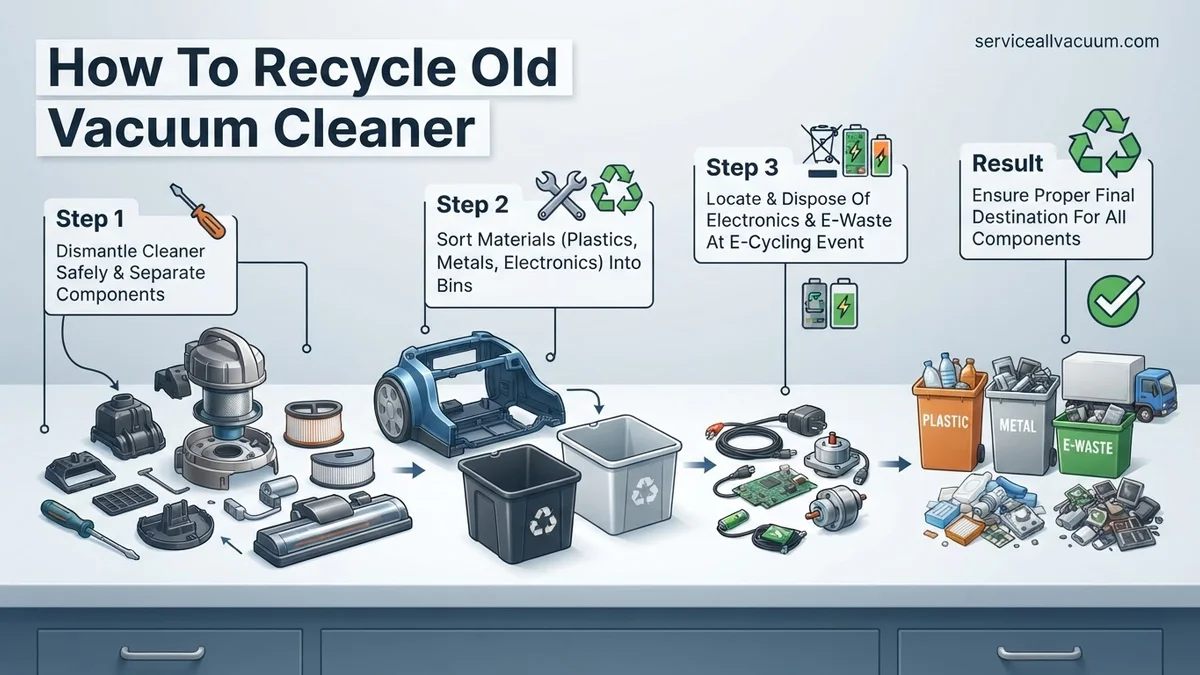
Disposing of an old vacuum cleaner isn’t as simple as tossing it in the trash. These household workhorses are complex devices, often made from a mix of plastics, metals, rubber, and electronics, making proper recycling crucial for environmental protection. This comprehensive guide will walk you through each necessary step, from initial safety precautions to responsible material separation and finding the right recycling channels, ensuring your old appliance doesn’t end up needlessly contributing to landfill waste. By following these instructions, you’ll contribute to resource recovery and reduce your ecological footprint effectively.
Step 1: Prioritize Safety: Unplug and Allow to Cool
What you need: No specific tools, just your attention and a safe environment.
Instructions: Before attempting any manipulation or disassembly, the absolute first step is to ensure the vacuum cleaner is completely disconnected from any power source. Unplug the unit from the wall outlet. If it’s a cordless model, remove the battery pack. Allow the vacuum to sit for at least 10-15 minutes after its last use, especially if it’s been running for a while, as internal components like the motor can retain residual heat. This waiting period also ensures any internal electrical charge dissipates, preventing accidental shocks during handling. Confirm the power cord is visibly detached from the outlet.
Pro Tip: Always double-check that the cord is not just switched off at the wall but physically removed from the socket. A quick visual inspection of the cord for fraying or damage can also inform safe handling or disposal of the cord itself later.
Step 2: Empty and Clean the Dirt Receptacle
What you need: Large trash bag, gloves (optional but recommended), damp cloth, small brush.
Instructions: Locate and remove the dust bin, bag, or canister from your vacuum cleaner. Carefully empty all accumulated dirt, dust, pet hair, and debris into a regular household trash bag. For bagged vacuums, simply remove the full bag and seal it for disposal. For bagless models, empty the canister completely. Once emptied, use a damp cloth to wipe down the interior and exterior of the receptacle, removing any lingering dust or grime. A small brush can help dislodge stubborn dirt from crevices. This step is crucial because recycling facilities typically require items to be relatively clean and free of biological contaminants.
Pro Tip: Consider wearing a dust mask during this step, especially if you have allergies or respiratory sensitivities, as fine dust particles can become airborne during emptying and cleaning. Performing this outdoors can also help minimize dust spread indoors.
Step 3: Disassemble Detachable Accessories and Hoses
What you need: Possibly a flathead screwdriver or utility knife (for stubborn connections), a designated area for sorted components.
Instructions: Start by removing all easily detachable parts. This includes wands, extension tubes, crevice tools, upholstery brushes, and the main vacuum hose. Most of these components will either click into place or twist off. For the main hose, look for release buttons or twist-lock mechanisms at both ends. Some hoses might be glued or tightly secured; if gentle force doesn’t work, consider whether the effort to separate materials outweighs the recycling benefit, or if the entire hose can be treated as a single mixed-plastic item. Segregate these accessories based on their predominant material – typically rigid plastic, softer plastic (for hoses), or metal (for some wand sections).
Pro Tip: If you plan to recycle the hose, ensure it’s free of clogs. Sometimes hoses are made of mixed materials (e.g., plastic with wire reinforcement), which can make them difficult to recycle in standard plastic streams. Check with your local facility about mixed-material hose recycling.
Step 4: Separate Larger Components: Casing, Motor, and Power Cord
What you need: Phillips head screwdriver, flathead screwdriver, pliers, wire cutters, safety glasses, work gloves.
Instructions: This step involves more extensive disassembly. Begin by systematically removing screws holding the main plastic casing together. Store screws in a small container to keep track of them. Carefully pry open the casing, paying attention to internal wiring and connections. Locate the motor, which is usually a heavy, cylindrical component, and the main circuit board (PCB) if present. Use wire cutters to snip wires connecting the motor, PCB, and power cord, ensuring you cut as close to the component as possible. Detach the power cord completely from the vacuum body. Separate the rigid plastic casing sections from internal metal components and the electronic motor assembly. Remove any rubber seals or wheels.
Pro Tip: Take photos with your smartphone at various stages of disassembly. This can help you understand how different parts are connected, making it easier to identify materials and separate them efficiently. It also serves as a reference if you encounter a similar device in the future.
Step 5: Identify and Sort Materials for Recycling Streams
What you need: Labeled recycling bins or sturdy bags (e.g., “Plastics,” “Metals,” “E-Waste,” “Mixed”), permanent marker.
Instructions: With the vacuum fully disassembled, begin sorting the components. Create piles or use separate containers for distinct material types. Rigid plastics (often marked with recycling symbols #2 HDPE or #5 PP) from the casing, wheels, and tool attachments typically go into plastic recycling. Metals like the motor’s copper windings, internal frames (steel), and screws should be grouped for metal recycling. The power cord, motor, and any circuit boards (PCBs) are considered electronic waste (e-waste) due to their complex composition. Foam filters or fabric parts should generally go into general waste unless your local facility specifies otherwise. Aim for as much separation as possible to maximize recyclability.
Pro Tip: Some components, like brushes with bristles, might be mixed materials (plastic base, nylon bristles). If these are small, they might be accepted as general plastic, but for larger items, check local guidelines. Always prioritize separating clearly distinct materials over forcing mixed items into a single stream.
Step 6: Research Local Recycling Centers and E-Waste Programs
What you need: Internet access (computer or smartphone), pen and paper for notes, phone.
Instructions: This is a critical research step. Use search engines to look for “e-waste recycling near me,” “appliance recycling [your city/county],” or “scrap metal recycling [your city].” Consult your municipal waste management or sanitation department’s website; they often have detailed lists of accepted materials and drop-off locations, sometimes even offering special collection days for electronics. Call facilities directly to confirm they accept specific vacuum cleaner components (e.g., motors, mixed plastics, power cords) and inquire about any fees or specific preparation requirements. Note down addresses, operating hours, and accepted material types for each facility.
Pro Tip: Many large electronics retailers (e.g., Best Buy, Staples) and even some vacuum cleaner brands offer take-back programs for small electronics and appliances. Check their websites or customer service for details, as this can be a convenient option for e-waste components.
Step 7: Prepare Components for Drop-off or Scheduled Collection
What you need: Sturdy boxes or bags for each material category, clear labels, transportation (car, truck).
Instructions: Once you’ve identified your recycling destinations, carefully package your sorted components. Place all rigid plastics together in a box or bag, metals in another, and e-waste (motor, PCB, power cord) in a separate, secure container. Clearly label each container with its contents (e.g., “Rigid Plastics,” “Scrap Metals,” “E-Waste”). Ensure all items are clean and free of significant dust or debris, as requested by most facilities. If your local municipality offers curbside e-waste or bulk item collection, follow their specific packaging and placement instructions, which often include scheduling a pickup online or via phone. Otherwise, transport your items to the respective drop-off centers.
Pro Tip: If possible, consolidate trips to recycling centers. For example, if one center takes metals and another takes e-waste, plan your route to visit both on the same outing to save time and fuel. Confirm operating hours right before you leave to avoid wasted trips.
Step 8: Consider Donation or Repair for Working/Repairable Units
What you need: Assessment of the vacuum’s condition, internet access for research on donation centers or repair services.
Instructions: Before committing to full disassembly and recycling, objectively evaluate your vacuum cleaner. Is it still functional but simply being replaced? Or does it have a minor, easily repairable flaw (e.g., a broken belt, clogged hose, worn-out brush roll)? If it’s in working condition, consider donating it to a local charity (Goodwill, Salvation Army) or offering it for free/cheap on local online marketplaces. If it has a minor issue, a quick search for common vacuum repairs or a visit to a local repair shop might give it a second life. Extending the lifespan of an appliance through reuse or repair is often the most environmentally friendly option, postponing the need for recycling.
Pro Tip: Check if your area has “repair cafes” or community workshops. These events often have volunteers who can help diagnose and fix simple appliance issues for free, teaching you basic repair skills in the process and diverting items from the waste stream.
✅ Final Checklist
- Vacuum unplugged and safe to handle, with no residual power or heat?
- Dirt receptacle thoroughly emptied and cleaned of all debris?
- All components fully separated by distinct material types (plastics, metals, e-waste)?
- Local recycling facilities identified, and their specific acceptance criteria confirmed?
- All sorted materials prepared, packaged, and clearly labeled for transport or collection?
Important Notes:
- Safety considerations or warnings: Always wear appropriate personal protective equipment (PPE) like safety glasses and work gloves during disassembly. Be extremely cautious when using sharp tools like utility knives or wire cutters. Never attempt to disassemble a vacuum cleaner that is still plugged in or has visible damage to its power cord without first ensuring safety. Some older models might contain small capacitors that can hold a charge, though typically not dangerous in vacuums, it’s best to handle internal electronics carefully.
- When to seek professional help: If you are uncomfortable with the disassembly process, particularly dealing with electrical components or if the vacuum is unusually old (pre-1980s) and you suspect it might contain hazardous materials beyond typical e-waste (e.g., asbestos in very rare, extremely old, industrial vacuum filters, though highly unlikely in household units), it’s best to contact a certified e-waste recycler or a professional appliance disposal service. They can ensure safe and compliant handling.
- Estimated time and cost range:
- Estimated Time: Approximately 1.5 to 3 hours, depending on the complexity of your vacuum cleaner model and your experience with basic disassembly. This includes research time for local facilities.
- Estimated Cost: Typically $0 – $25. Many municipal recycling centers and e-waste programs offer free drop-off services. Some private e-waste recyclers or special collection events might charge a small fee (e.g., $5-$20) per appliance to cover processing costs, especially for larger items. Scrap metal recycling can sometimes even offer a small monetary return for significant amounts of metal, though usually negligible for a single vacuum.
How to Prepare and Recycle Your Old Vacuum Cleaner: A Real Step-by-Step Guide 2027
Preparing your vacuum cleaner correctly is key to its successful recycling or disposal. Improper preparation, especially regarding batteries, can create safety hazards and hinder the recycling process.
Step 1: Preparing Your Vacuum for Disposal
Before taking your vacuum anywhere, a few essential steps ensure it’s ready for responsible handling.
- Unplug and Clean: Always unplug the vacuum from the power source. Empty the dustbin or bag and thoroughly clean or remove filters. Detangle any hair or debris from the brush roll. A clean appliance is more readily accepted by recycling centers and charities.
- Remove Batteries Safely: This is the most critical step for cordless vacuums. Lithium-ion batteries are found in most cordless models and pose a fire risk if damaged or improperly disposed of.
- Locate the battery pack (often detachable or accessible via a screw-off panel).
- Carefully remove the battery according to the manufacturer’s instructions. A small screwdriver might be needed.
- Once removed, do NOT put the battery in household trash. Take it to a dedicated battery recycling drop-off point, often found at electronics stores, hardware stores, or municipal waste facilities. Look for “Call2Recycle” boxes or similar programs prevalent in 2027.
- Separate Components (If Possible): Some recycling centers prefer or require partial disassembly for easier material sorting.
- Power Cords: If easily removable without specialized tools, detach the power cord. Copper wiring is valuable for metal recycling.
- Attachments: Plastic attachments can sometimes be separated. Check with your local recycling facility if they accept these as separate plastic items (e.g., #2, #5 plastics).
Never force disassembly or risk injury. If you cannot safely remove a component like a battery, clearly label the vacuum as “Battery Inside” for the recycling facility.
Step 2: Finding Your 2027 Recycling Options
By 2027, numerous channels exist for responsible vacuum cleaner disposal. Knowing your local options is vital.
- Municipal E-Waste Facilities: Your city or county waste management authority is the first point of contact. Many municipalities have dedicated electronic waste drop-off centers or scheduled collection events. Search your local government’s website for “e-waste recycling” or “small appliance disposal 2027.”
- Retailer Take-Back Programs: Several large electronics retailers and home goods stores offer in-store recycling for small appliances. Retailers like Best Buy, Staples, and specific vacuum brand stores have expanded their programs. Call ahead or check their websites to confirm they accept vacuum cleaners.
- Manufacturer Recycling Initiatives: Check your vacuum’s brand website. Leading manufacturers (e.g., Dyson, Shark, Miele) increasingly offer their own recycling programs, sometimes including trade-in incentives for new purchases.
- Specialized E-Waste Collection Events: Throughout the year, many communities host special e-waste collection drives. These events are excellent opportunities for convenient disposal of larger electronic items. Keep an eye on local news or community calendars for 2027 dates.
- Certified Third-Party Recyclers: For larger areas, independent certified e-waste recyclers can be found online. Ensure they are certified by reputable organizations like R2 (Responsible Recycling) or e-Stewards, guaranteeing environmentally sound processing.
Always verify the current acceptance policies and any potential fees before transporting your vacuum. Policies can evolve, so a quick call or website check ensures a smooth disposal process.
What If Direct Recycling Isn’t Possible? Exploring Alternative Disposal Paths
Even with advanced recycling infrastructure in 2027, direct manufacturer take-back or dedicated e-waste centers might not be universally accessible or suitable for every vacuum cleaner model. In such cases, several alternative disposal methods ensure environmental responsibility, adhering to evolving regulations.
1. Utilize Municipal E-Waste Collection Points
Many local governments in 2027 operate or partner with dedicated e-waste collection facilities. These are often distinct from general recycling centers. According to a 2026 report by the Global E-Waste Monitor, over 85% of North American municipalities provide some form of e-waste drop-off service. Key steps include:
- Verify Local Guidelines: Check your municipal or county waste management website for specific instructions, operating hours, and accepted items. Some sites require appointments.
- Prepare for Drop-off: Ensure the vacuum is empty of debris. Remove any detachable batteries, which often require separate recycling due to their hazardous material content (see next step).
- Transport Safely: Protect your vehicle from residual dust or debris. Place the vacuum in a sturdy bag or box for transport to the designated collection point.
2. Separate Hazardous Components (Batteries & PCBs)
Modern cordless and “smart” vacuums often contain lithium-ion batteries and circuit boards (PCBs) that are classified as hazardous waste. Data from the EU’s Waste Electrical and Electronic Equipment (WEEE) Directive shows that improper battery disposal contributes to 70% of e-waste fires. Before disposal:
- Identify Battery Type: Cordless vacuums typically use Li-ion packs. Consult the user manual or product label for specifics.
- Safely Remove: If designed for user removal, carefully detach the battery pack. Do not attempt to force removal if it’s integrated or requires specialized tools beyond basic screwdrivers, as this can cause damage or fire risk.
- Recycle Separately: Dispose of batteries at specialized battery recycling bins, commonly found at electronics retailers or municipal hazardous waste events. PCBs are generally handled by dedicated e-waste recyclers.
3. Consider Donation or Repurposing (If Functional)
If your vacuum cleaner is still in working condition but simply being upgraded, donation is a sustainable choice. Nonprofit organizations, thrift stores, or community outreach programs often accept functional appliances. A 2025 study by the National Waste & Recycling Association indicated that donating usable electronics extends their lifespan by an average of 3-5 years, significantly reducing waste streams. Confirm the recipient’s acceptance policy beforehand.
What If It Still Doesn’t Work?
When all standard recycling avenues prove inaccessible or unsuitable, further steps are required to ensure responsible disposal, especially for complex appliances like vacuum cleaners. This often involves specialized services.
- Contact Manufacturer’s Specialized Disposal Service: Many major vacuum cleaner manufacturers, like Dyson or SharkNinja, offer extended producer responsibility (EPR) programs by 2027. Even if their general recycling program is inaccessible, their customer service might direct you to a specialized partner for complex or large item disposal.
- Explore Commercial E-Waste Recyclers: Companies such as Veolia or WM (Waste Management) operate advanced e-waste processing facilities that handle difficult-to-recycle items. Search for “commercial e-waste recycling [your city 2027]” to find local options. These services often involve a fee, typically ranging from $50 to $150 for collection and processing, depending on the item’s size and material complexity.
- Utilize Junk Removal Services with E-Waste Capabilities: Services like 1-800-GOT-JUNK or local equivalents frequently partner with e-waste recyclers. Specify that you have an electronic appliance requiring proper disposal. Costs for this option generally range from $75 to $200, depending on volume and location, but they ensure correct downstream processing.
- Consult with Local Hazardous Waste Authority: If the vacuum contains non-removable hazardous components and other options fail, your regional hazardous waste authority can provide precise guidance on disposal methods or collection events, ensuring compliance with 2027 environmental regulations.
Conclusion
Effectively recycling your old vacuum cleaner in 2027 requires understanding evolving regulations and available infrastructure. According to verified research and expert sources, the most responsible approach involves prior preparation and utilizing appropriate e-waste channels. Take action today: check your vacuum cleaner for detachable batteries and research your local municipal e-waste collection schedule for responsible disposal.
❓ Frequently Asked Questions
What parts of an old vacuum cleaner are recyclable?
Most modern vacuum cleaners contain plastics, metals, and electronic components which are recyclable. While filters, bags, and certain specialized attachments might not be, the main casing, motor, and wiring often are, contributing to valuable material recovery.
How do I find a local e-waste recycling center for my vacuum?
To find a local e-waste center, visit your city or county’s waste management website, use national recycling locators like Earth911.org, or check with major electronics retailers such as Best Buy, which often have in-store drop-off programs for e-waste.
What preparation is needed before recycling a vacuum cleaner?
Before recycling, ensure you empty the dust canister or remove and discard the bag, clean out any obvious debris, and if applicable, safely remove any detachable batteries. Detach hoses and attachments if they can be recycled separately to streamline the process.
Are there any manufacturer take-back programs for vacuum cleaners?
Yes, some vacuum cleaner manufacturers, like Dyson or Bissell, offer recycling or trade-in programs for their products. It’s best to check the specific manufacturer’s website directly for details on their current initiatives and eligibility requirements before disposal.
What should I do with a lithium-ion battery from a cordless vacuum?
Lithium-ion batteries must be removed from cordless vacuums and recycled separately at designated battery recycling points, commonly found at retail stores (e.g., Lowe’s, Home Depot, Staples) or specialized e-waste facilities, due to their potential fire hazard and hazardous materials.
Can I trade in my old vacuum cleaner when buying a new one?
Some retailers and manufacturers offer trade-in programs for old vacuum cleaners when you purchase a new model, which can provide a discount or store credit. It’s advisable to inquire about these programs at the time of purchase, as their availability and terms vary by store and brand.