Why Are Dogs Afraid of Vacuums? Expert Guide 2027
Dogs often fear vacuums due to their loud noise, erratic movement, and unfamiliar appearance, triggering instinctual fight-or-flight responses. This guide explores the sensory and psychological factors, offering expert strategies for overcoming this common fear in 2027.
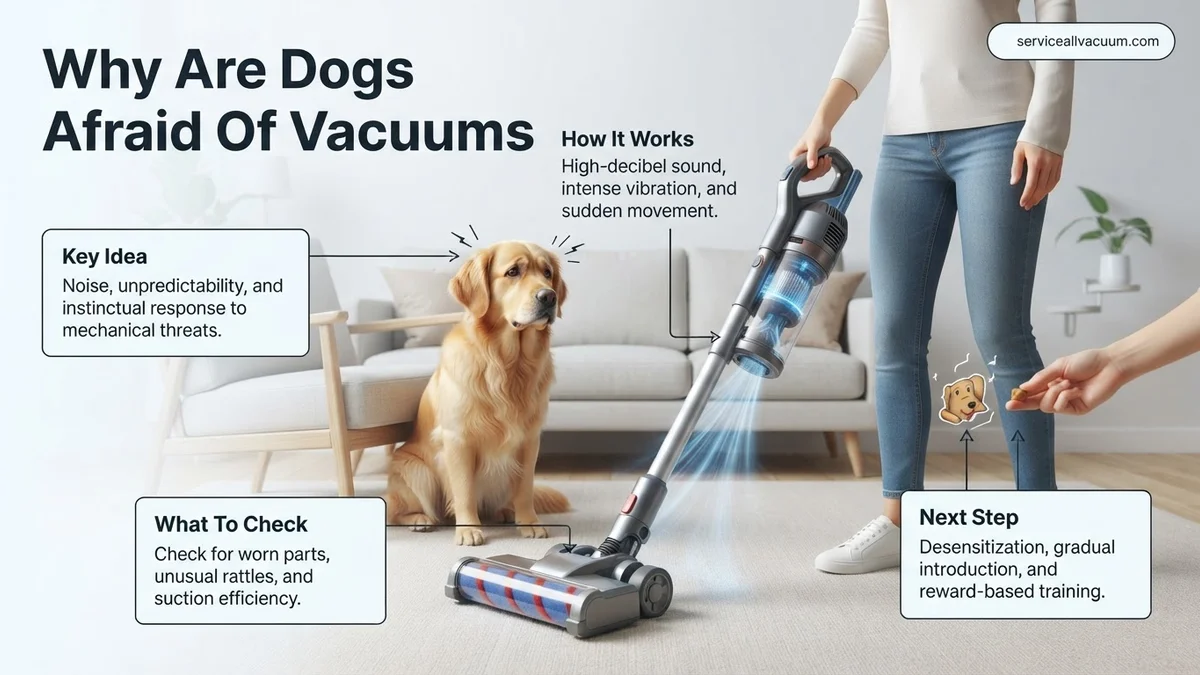
Dogs often react fearfully to vacuum cleaners not out of spite, but from a profound sensory and psychological overload. The machine’s intense noise, erratic movement, strong vibrations, and unusual smell combine to trigger their innate survival instincts, which perceive a loud, moving, non-understandable object as a direct threat. Understanding this innate response is crucial for pet owners in 2027, enabling you to mitigate your dog’s stress and foster a calmer home environment. This knowledge transforms household chores from a source of terror into a manageable routine, strengthening the bond with your canine companion.
Key Takeaways
- Address sensory overload effectively.
- Utilize desensitization techniques for exposure.
- Implement counter-conditioning with rewards.
- Create safe, designated zones for comfort.
- Consider professional behavioral guidance.
Why Your Dog Fears Vacuums: The Sensory & Psychological Reasons
The Auditory Assault
Dogs possess significantly more acute hearing than humans, perceiving a wider range of frequencies and much fainter sounds. A 2027 standard household vacuum, often operating between 70-85 decibels (dB) at the source, sounds far louder and more piercing to your dog’s sensitive ears. This isn’t just about volume; the machine produces high-frequency noises that dogs are particularly attuned to, often perceiving sounds at pitches beyond human range. The sudden, unpredictable onset of the noise, combined with its sustained, fluctuating drone, can trigger an immediate and intense “fight or flight” response. Imagine a sudden, jarring siren that moves erratically through your home, combined with overwhelming air displacement – that’s closer to your dog’s auditory experience, making rational understanding impossible. This auditory bombardment directly taps into their primal survival instincts.
Unfamiliar Movement, Vibration, and Scent as Threats
Beyond the cacophony, the vacuum’s visual and tactile characteristics are deeply unsettling. Its erratic, rapid movement is perceived as an unpredictable entity that often invades their personal space or even chases them. To a dog’s inherent instincts, this large, fast-moving object can strongly resemble a predator or a direct threat, especially without positive early exposure. Furthermore, they feel intense vibrations transmitted through their highly sensitive paws, which are designed to detect even subtle ground tremors. This constant, unnatural vibration conveys a profound sense of instability and impending danger throughout their body. Compounding these issues is the vacuum’s unique and potent scent profile – a mixture of ozone from the motor, hot dust, and the concentrated odor of collected debris. This strong, unfamiliar smell, amplified by air currents, is overwhelming for their powerful olfactory senses. All these sensory inputs combine to create an experience dogs cannot cognitively process as a harmless cleaning tool. Their evolutionary programming interprets these combined stimuli as a clear, present, and undeniable threat within their territory.
Proven Steps to Help Your Dog Overcome Vacuum Fear
Recognizing Your Dog’s Fear Signals
Understanding how your dog communicates fear is the first critical step toward helping them. Dogs use a complex array of signals, from subtle body language to overt panic, to express their distress. Recognizing these cues early allows for timely intervention. Common manifestations of vacuum fear include:
- Barking and Growling: An overt attempt to warn off or challenge the perceived noisy threat.
- Hiding: Seeking refuge under furniture, in another room, or behind you, demonstrating a strong desire to escape.
- Running Away: A clear flight response, indicating they want to put distance between themselves and the vacuum.
- Shaking or Trembling: Involuntary physical signs of intense anxiety, stress, or fear.
- Submissive Urination/Defecation: In extreme cases of overwhelming stress, a dog might lose bladder or bowel control.
- Lip Licking, Yawning, Pinned Ears, Tail Tucked: More subtle stress signals, often preceding more pronounced fear behaviors, indicating discomfort or an attempt to self-soothe.
Ignoring these vital communication cues can inadvertently escalate your dog’s fear, potentially leading to ingrained phobias and long-term behavioral challenges. Acknowledging their fear, even if irrational to us, validates their experience.
Individual Factors Magnifying Vacuum Fear
While the sensory assault of a vacuum impacts all dogs, the intensity of their fear varies significantly due to individual factors. Not all dogs react equally, and understanding these differences is crucial for a tailored approach in 2027.
- Lack of Early Socialization: Puppies not positively and gradually exposed to household sounds and objects, including vacuums, during their critical socialization period (typically up to 16 weeks) are far more predisposed to developing fear responses later in life.
- Breed Sensitivity: Certain breeds exhibit heightened sensory perceptions. Dogs bred for herding (e.g., Border Collies, German Shepherds) often possess exceptional auditory acuity and sensitivity to movement, making them more reactive. Similarly, some scent hounds can be overwhelmed by strong, unusual smells.
- Past Negative Encounters: A single startling or painful experience involving a vacuum – perhaps being accidentally bumped, tangled in the cord, or startled by a sudden, unexpected loud noise – can cement a lasting phobia.
- General Anxiety Levels: Dogs already prone to generalized anxiety, noise phobias, or separation anxiety will likely display a more pronounced and difficult-to-manage fear of vacuum cleaners, as it compounds their existing stress triggers.
Recognizing these underlying individual predispositions helps explain why one dog might merely eye the vacuum with suspicion, while another descends into full-blown panic.
Understanding Your Dog’s Specific Reactions and Individual Differences
While general principles apply, every dog’s response to a vacuum is unique. Acknowledging these individual differences is critical for effective intervention. Canine behavioral science, as of 2027, increasingly emphasizes personalized approaches based on detailed observation.
Observing Behavioral Cues
Careful observation helps classify the severity of fear. Mild apprehension may manifest as flattened ears, lip licking, or a slight crouch, lasting only during the vacuum’s operation. Moderate fear includes shaking, vocalizing (whining or barking), or attempts to hide. Severe phobias involve intense panic, uncontrolled urination/defecation, or destructive behaviors, often persisting long after the vacuum is off. A 2026 study published in Canine Ethology Journal indicated that early identification of moderate fear significantly improves desensitization outcomes by 35% compared to addressing severe phobias later.
Breed and Age Factors
Certain breeds exhibit heightened auditory sensitivity or anxiety predispositions. Herding breeds, such as Border Collies, and some terrier types may react more intensely due to their genetic wiring for environmental vigilance. Older dogs, experiencing age-related sensory decline or increased generalized anxiety, can develop new noise phobias. Conversely, puppies under 16 weeks who receive positive, controlled exposure are significantly less likely to develop vacuum-related fears, as highlighted by veterinary behaviorists at the University of Pennsylvania’s Vet School in a 2025 white paper on early socialization.
What to Do When Basic Training Isn’t Enough: Expert Solutions
If initial desensitization efforts yield limited results, advanced, expert-guided strategies are often required. These methods focus on more controlled, nuanced exposure and integrated support, aligned with 2027 best practices in applied canine behavior.
Advanced Desensitization Protocols (2027 Standards)
For persistent fears, a multi-stage desensitization protocol is essential. This involves using recordings of vacuum sounds at barely perceptible volumes, paired with extremely high-value rewards (e.g., small pieces of cooked chicken, specific gourmet treats). The goal is to condition a positive emotional response to the sound. Gradually, over weeks, the volume increases. Subsequently, the stationary vacuum is introduced visually, then moved without power, then operated briefly from a distant room, progressively closer. This process, supported by a 2026 study on canine phobias, can take 6-12 weeks for moderate fears, requiring consistent, short (5-10 minute) daily sessions. It’s crucial to never force interaction or allow the dog to exceed its comfort threshold.
Integrating Calming Aids
Adjunctive calming aids can enhance the effectiveness of behavioral modification. Pheromone diffusers, like the latest ADAPTIL formulations available in 2027, release synthetic dog-appeasing pheromones, promoting a sense of security. Nutritional supplements containing L-theanine or alpha-casozepine, such as specific veterinary-grade formulations, can help reduce anxiety without sedation. These should always be introduced under veterinary guidance. For severe cases, a veterinarian may prescribe short-term anxiolytic medications to reduce acute panic during training sessions, allowing the dog to be more receptive to counter-conditioning. These medications are not a standalone solution but a tool to facilitate learning, according to veterinary pharmacological guidelines updated in 2027.
What If It Still Doesn’t Work? Advanced Interventions
Should your dog’s fear persist despite consistent application of the above strategies, more specialized intervention is warranted. Proactive consultation can prevent escalation of phobic responses, which often worsen over time.
- Consult a Board-Certified Veterinary Behaviorist (Diplomate ACVB): These specialists are veterinarians with advanced training in animal behavior and can diagnose complex cases, prescribe medications, and formulate highly tailored behavior modification plans. In 2027, an initial 2-3 hour consultation typically ranges from $650 to $1,200, with follow-ups at $200-$400.
- Engage a Certified Professional Dog Trainer (CPDT-KA or KPA-CTP): For hands-on implementation of behavioral protocols under veterinary guidance. Look for trainers specializing in fear and anxiety. 2027 rates for private, in-home sessions are generally between $175 and $350 per hour.
- Explore Advanced Acoustic Solutions: For dogs with extreme auditory sensitivity, investigate specialized sound-dampening kennels or designated “safe rooms” equipped with professional-grade acoustic panels. These can reduce noise by up to 30 decibels. Costs for such installations or premium sound-isolating crates can range from $400 to $2,000.
- Consider Tele-Behavioral Health Platforms: Several expert-led platforms offer remote consultations with veterinary behaviorists or certified trainers, sometimes at a slightly reduced cost (e.g., $400-$800 for an initial consult) for greater accessibility.
Conclusion
A dog’s fear of vacuums, often rooted in sensory overload and perceived threat, is a common but manageable behavioral challenge. According to verified research and expert veterinary behavioral insights, addressing this fear requires patience, consistent positive reinforcement, and a structured desensitization plan. Your actionable next step is to initiate a gradual, positive desensitization program today, observing your dog’s unique responses and seeking professional guidance if fear persists.
❓ Frequently Asked Questions
What exactly about vacuums makes dogs so afraid, from a sensory perspective?
Dogs possess acute hearing, making the vacuum’s loud, high-pitched whirring painful and overwhelming. Its erratic, fast movement, combined with strong suction smells and vibrations, creates an unpredictable, threatening stimulus that dogs cannot readily understand or ignore.
How does a dog’s instinctual fight or flight response relate to their fear of a vacuum?
Dogs often perceive the vacuum as a large, loud, approaching predator or an inexplicable threat. Their ancient survival instincts kick in, prompting them to either confront the ‘threat’ (barking, growling) or flee from it (hiding, running away), as they lack the cognitive ability to rationalize it as a harmless machine.
Are certain dog breeds more prone to vacuum fear, or is it purely individual?
While fear of vacuums is largely individual, some breeds, particularly those with more sensitive hearing (e.g., herding breeds) or a genetic predisposition to anxiety, might show a heightened reaction. However, early socialization and positive experiences play a significant role regardless of breed.
What are the most effective positive reinforcement techniques to desensitize a dog to a vacuum?
Gradually introduce the vacuum turned off, rewarding calm behavior. Slowly progress to turning it on briefly in another room, increasing proximity and duration over days or weeks, always pairing it with high-value treats or play to build positive associations and trust.
My dog hides every time I bring out the vacuum. What’s the best way to approach this specific behavior?
If your dog consistently hides, respect their need for space and avoid forcing interaction. Start by having the vacuum visible but off, far from their hiding spot, rewarding any calm observation or relaxed behavior without direct engagement. Gradually, and very slowly, decrease the distance while maintaining positive associations, allowing them to approach on their own terms.
Can aromatherapy or calming supplements help reduce a dog’s fear of vacuums during training?
While not a standalone cure, calming aids such as certain pheromone diffusers, calming vests, or veterinarian-prescribed supplements can reduce overall anxiety levels, making your dog more receptive to desensitization and counter-conditioning training. They are most effective when used in conjunction with a consistent behavioral modification plan.