How Much Does Central Vacuum Cost in 2027? Your Real Guide
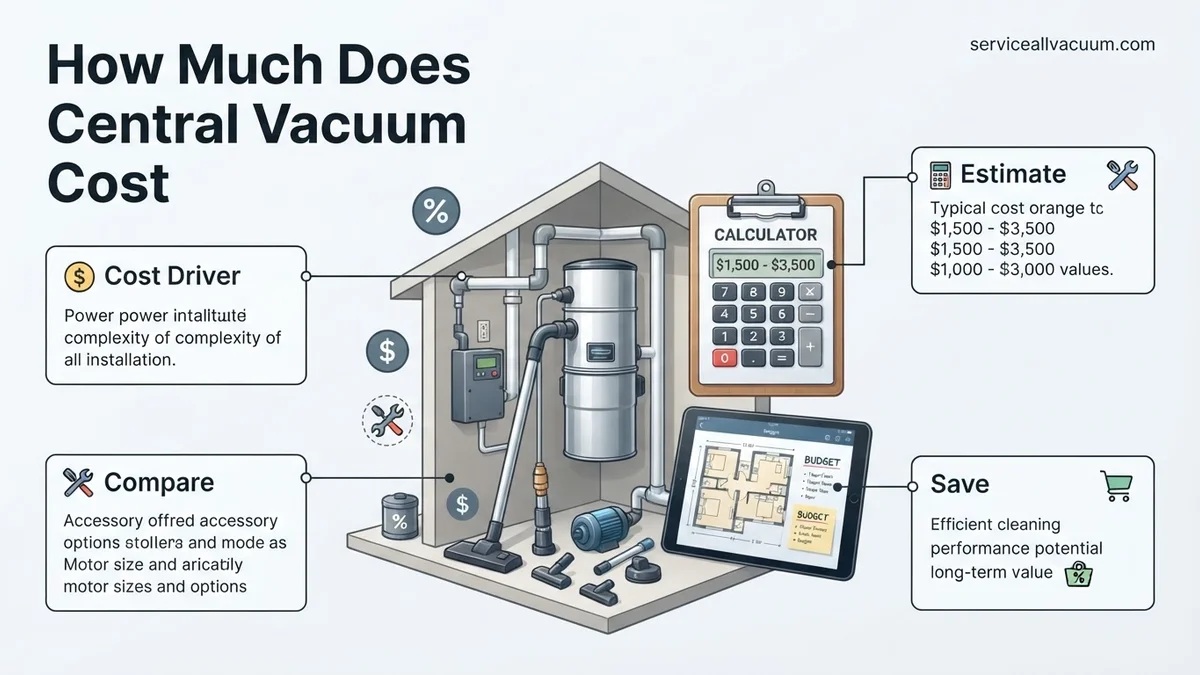
Installing a central vacuum system involves significant cost variations based on home size, system power, and installation complexity. Expect to pay between $1,500 and $5,000 for a typical system installed professionally in 2027, though prices can range from $1,000 for DIY to over $8,000 for premium setups. Understanding these factors is key to accurate budgeting.
By 2027, expect the typical total cost for a professionally installed central vacuum system in a home to range from $1,800 to $6,500. This investment covers the power unit, piping, inlet valves, essential accessories, and labor. However, projects involving large homes or complex retrofits can push costs beyond $9,000.
Knowing these figures upfront is crucial. It helps you budget effectively for improved indoor air quality, unmatched cleaning power, and the sheer convenience of never lugging a heavy vacuum again. Your final cost will depend on several key decisions you make about the system’s power, features, and how it integrates into your specific home.
Key Takeaways
- Professional installation averages $800-$3,000+.
- System unit costs range $400-$2,000+ by power.
- Home size and inlet count heavily impact price.
- DIY installation saves labor but requires skill.
- Optional Hide-A-Hose adds significant cost.
What Drives Central Vacuum System Costs? A Real Breakdown
Key Factors Influencing Your Total Investment
Understanding the variables behind central vacuum pricing in 2027 allows you to make informed decisions. These factors significantly impact the overall cost, from the initial equipment purchase to the final installation labor.
- Home Square Footage & Number of Inlets: Larger homes naturally require more vacuum inlets (wall ports) to ensure full coverage. More inlets mean more PVC piping, fittings, and labor for installation.
- Small Home (1,000-2,000 sq ft): Typically 3-5 inlets.
- Medium Home (2,000-4,000 sq ft): Often 5-8 inlets.
- Large Home (4,000+ sq ft): Can require 8-12+ inlets for optimal convenience.
- Power Unit Strength (Airflow & Suction): The motor’s power, measured in Air Watts (AW) or a combination of CFM (Cubic Feet per Minute) and Waterlift, dictates its cleaning capability. Stronger units, suitable for larger homes or those with extensive carpeting, cost more.
- Basic Units (500-600 AW): Suitable for smaller homes, typically $500-$1,000.
- Mid-Range Units (600-800 AW): Ideal for most average-sized homes, $1,000-$2,000.
- High-End Units (800+ AW): For large residences or heavy-duty use, $2,000-$4,000+.
- Installation Complexity (New Construction vs. Existing Home): This is arguably the biggest cost differentiator.
- New Construction: Pipes are installed before walls are sealed, making the process straightforward and significantly reducing labor costs.
- Existing Home (Retrofit): Requires drilling into finished walls, navigating obstacles, and potentially patching drywall, leading to substantially higher labor hours and specialized techniques. Expect to pay 2-3 times more for labor in a retrofit.
- Brand Reputation & Features: Established brands often command higher prices due to perceived reliability, better warranties, and advanced filtration systems (e.g., HEPA, self-cleaning filters). Specialized features like variable speed motors or advanced sound dampening also add to the unit cost.
- Geographical Labor Rates: Like any skilled trade, installation labor costs vary significantly by region. Major metropolitan areas or regions with higher costs of living will have higher hourly rates for professional installers in 2027.
From Start to Finish: Central Vacuum Cost Explained
Venturing into the world of central vacuum systems promises unparalleled cleaning convenience and improved indoor air quality. However, understanding the financial investment required can seem daunting. This comprehensive guide is designed to demystify the costs associated with installing a central vacuum system, breaking down each component and potential expense. By following these practical steps, you’ll gain a clear picture of what to expect, allowing you to budget effectively and make informed decisions for your home.
Step 1: Understand System Types & Power Units
What you need: A general idea of your home’s square footage, your cleaning habits (e.g., pets, allergies), and a rough estimate of how frequently you’ll use the system.
Instructions: The heart of your central vacuum system is the power unit, which houses the motor and filtration. Costs vary significantly based on motor type (e.g., bypass or thru-flow motors), filtration method (bagged, bagless cyclonic, or permanent filter), and suction power, measured in Air Watts (AW). Entry-level units suitable for smaller homes (under 2,000 sq ft) might start around $300-$600, offering 400-600 AW. Mid-range units for average homes (2,000-5,000 sq ft) typically cost $600-$1,200, boasting 600-850 AW. Larger homes or those requiring maximum suction for specific needs (e.g., pet hair, workshops) may need premium units costing $1,200-$2,500+, providing 850+ AW and advanced filtration. Brands like Beam, Electrolux, Cyclovac, and Nutone offer a wide range of options.
Pro Tip: Don’t solely rely on horsepower (HP) ratings; Air Watts (AW) are a more accurate indicator of a central vacuum’s actual cleaning power and efficiency.
Step 2: Assess Your Home’s Layout & Ductwork Needs
What you need: Home blueprints (if available), a tape measure, and a visual walk-through of your home to identify potential routing paths for piping.
Instructions: The cost of piping and inlet valves depends heavily on your home’s size, number of levels, and whether it’s a new construction or an existing home. In new construction, pipes are easily integrated during framing, minimizing labor and material costs. For existing homes, installation is more complex, potentially requiring cutting into walls or running pipes through attics, basements, or closets. Expect to pay for high-quality, smooth-bore PVC piping (typically schedule 20 or 40), fittings, and low-voltage wiring for each inlet. A typical installation requires one main trunk line and several branch lines. The number of inlet valves needed is usually one per 600-800 square feet, strategically placed to cover living areas with a standard 30-35 foot hose. Each standard inlet point, including pipe and fittings, can add $50-$150 per point.
Pro Tip: Plan your inlet locations meticulously. Aim for strategic placement that allows a standard hose to reach every corner of the desired cleaning area, minimizing the number of inlets required.
Step 3: Choose Your Inlet Valve & Hose Kit Options
What you need: An understanding of your preferred cleaning method and a budget for accessories.
Instructions: Beyond the basic piping, the type of inlet valves and hose kits significantly impacts the total cost. Standard wall inlets are the most common and cost-effective. However, upgrades like automatic dustpans (e.g., VacPan in kitchens/mudrooms) can add $75-$150 per unit. Retractable hose systems, such as Hide-A-Hose, offer ultimate convenience by storing the hose within the wall but come at a premium, adding $400-$800 per inlet point due to specialized piping and larger valves. Hose kits include the cleaning hose (available in 25ft, 30ft, 35ft, or 50ft lengths) and various attachments. Basic kits with air-driven powerheads might be $200-$400, while electric powerheads for deeper carpet cleaning are more effective and costlier, ranging from $400-$800 per kit. Ensure the hose length is sufficient for your planned inlet coverage.
Pro Tip: While retractable hose systems offer unmatched ease of use, they require specific installation and add substantially to the cost. Evaluate if the convenience justifies the investment for each specific inlet location.
Step 4: Factor in Installation Labor Costs (DIY vs. Professional)
What you need: Quotes from local installers or the necessary tools and plumbing/electrical know-how for a DIY project.
Instructions: Installation labor is a major cost variable. For a skilled DIY enthusiast, installing a central vacuum system in a new construction or an accessible existing home (e.g., unfinished basement/attic) can save hundreds to over a thousand dollars, limiting costs to just materials. However, for most homeowners, especially in existing, finished homes, professional installation is recommended. Professional labor typically costs $500-$2,000+, depending on the complexity, home size, and number of inlets. Factors like the age of the house, type of construction (e.g., plaster walls versus drywall), and the accessibility of wall cavities and floor joists greatly influence the labor time and, consequently, the price. An experienced installer can often complete a typical system in an existing home in 1-2 days.
Pro Tip: While DIY can save money on labor, consider the value of a professional’s expertise, warranty, and speed, especially when dealing with hidden pipe runs and electrical connections. Improper installation can lead to leaks, blockages, or reduced suction.
Step 5: Consider Accessories & Optional Upgrades
What you need: A clear understanding of your specific cleaning requirements and any specialized tasks you wish your central vacuum to handle.
Instructions: Beyond the core system, a myriad of accessories can enhance functionality but will add to your overall expenditure. These can include specialized brushes for hardwood floors, pet grooming tools, flexible crevice tools for hard-to-reach areas, car care kits, and utility valves for garages or workshops. Mufflers for noise reduction (approximately $30-$70) and hose socks to protect furniture and walls from scratches (around $20-$50) are also common additions. While some basic attachment kits are often bundled with the power unit or hose kit, adding specialized tools can easily tack on an extra $100-$500 or more. Evaluate your cleaning needs carefully to avoid unnecessary purchases. Many accessories can be bought later if you discover a need.
Pro Tip: Prioritize essential cleaning attachments first. You can always expand your collection of specialized tools over time as specific needs arise, rather than buying everything upfront.
Step 6: Research Brands & Get Multiple Quotes
What you need: Access to the internet for research, and time to contact several local central vacuum dealers or contractors.
Instructions: Different brands offer varying levels of quality, features, and warranties, which directly impact pricing. Well-known brands like Beam, Electrolux, Cyclovac, Nutone, and Cana-Vac generally have a strong reputation for durability and performance. Spend time researching customer reviews and product specifications. Once you have a preliminary idea of the system components you desire, contact at least 3-5 local central vacuum dealers or qualified contractors. Request detailed, itemized quotes that break down the cost of the power unit, piping, inlets, hose kits, and labor. Be specific about your home’s layout and your desired features to ensure accurate comparisons between quotes. This competitive bidding process can reveal significant price differences for similar systems.
Pro Tip: Don’t just compare the bottom-line price. Look closely at what each quote includes (e.g., brand of power unit, type of hose, number of inlets, warranty on parts and labor). A slightly higher initial quote might offer superior components or a better warranty.
Step 7: Account for Long-Term Maintenance & Operating Costs
What you need: Awareness of potential ongoing expenses and a commitment to routine upkeep.
Instructions: While central vacuums are generally low-maintenance, there are some recurring costs to consider. If your unit uses bags, you’ll need to purchase replacement bags, typically costing $15-$30 for a pack of 3-6, replaced every 3-6 months depending on usage. Units with washable filters may require cleaning every few months and eventual replacement (every 1-3 years), which can range from $20-$80. Bagless cyclonic units have minimal ongoing filter costs but require more frequent emptying. Electricity consumption is relatively low, comparable to a standard vacuum cleaner. Factor in potential repair costs for motors or powerheads down the line, although many units come with extensive warranties (5-10 years on the motor). Overall, annual maintenance costs are generally minimal, often less than $50-$100.
Pro Tip: Regular filter cleaning or bag replacement is crucial for maintaining optimal suction and extending the life of your power unit. Neglecting maintenance can lead to decreased performance and premature component failure.
✅ Final Checklist
- Main power unit sized correctly (Air Watts) for your home’s square footage and cleaning needs?
- Inlet valves strategically placed to ensure full cleaning coverage with your chosen hose length?
- Hose and accessory kit chosen to meet your specific cleaning requirements and preferences?
- Installation costs (DIY materials or professional labor) thoroughly accounted for, considering your home’s construction?
- All vendor quotes meticulously compared for included components, warranties, and reputation?
- Long-term maintenance expenses (bags, filters, electricity) considered in your overall budget?
Important Notes:
- Safety considerations or warnings: Always disconnect the power unit from the electrical outlet before performing any maintenance, such as emptying the canister or changing filters. Ensure all electrical connections are properly made and grounded according to local codes. Never vacuum liquids unless your system is specifically designed for wet/dry operation.
- When to seek professional help: For complex installations in existing, finished homes, especially those requiring extensive routing through walls or multiple floors, professional installation is highly recommended. Seek professional help if you’re unsure about electrical wiring, plumbing for VacPans, or troubleshooting system malfunctions.
- Estimated time and cost range:
- DIY Installation Time: 1 to 3 days, depending on home complexity and DIY skill.
- Professional Installation Time: 0.5 to 2 days for most standard homes.
- System Components (Power Unit, Piping, Inlets): $500 – $2,500+
- Hose & Accessory Kit: $200 – $800+
- Installation Labor (Professional): $500 – $2,000+
- Total Estimated Cost Range: For a standard system in an average home, expect to pay $1,500 – $4,500. High-end systems with premium features (e.g., multiple retractable hoses) in large or complex homes can easily exceed $5,000 – $7,000+.
Step-by-Step: Pricing Your Central Vacuum Unit & Installation
Breaking Down the Components of Your Central Vacuum Bill
To accurately estimate your central vacuum cost in 2027, you need to consider each primary component. Here’s what goes into the total:
- The Power Unit (Canister): This is the central motor and collection bin, typically installed in a garage or utility room.
- Economy Units (basic, smaller homes): $450 – $1,100
- Mid-Range Units (average homes, good features): $1,100 – $2,200
- Premium Units (large homes, advanced filtration/power): $2,200 – $4,500+
- Piping, Fittings, & Inlet Valves: These are the PVC pipes that run through your walls and connect to the wall-mounted inlet ports where you plug in your hose. Costs depend on the number of inlets and length of runs.
- Typical Materials (5-7 inlets): $350 – $800
- Each additional inlet material: $40 – $75
- Accessory Kit (Hose & Attachments): You’ll need at least one hose and a set of cleaning tools. The type of hose significantly impacts cost.
- Standard Non-Electric Hose Kit (basic tools, air-driven brushes): $180 – $450
- Electrified Hose Kit (for powerheads to clean carpets deeply): $450 – $1,200 (often includes a high-quality powerhead)
- Specialty Tools (pet grooming, garage kits, hard floor brushes): $60 – $250 each
- Installation Labor: This covers the professional’s time to route piping, mount the power unit, install inlets, and test the system. This is where the new construction vs. retrofit difference is most apparent.
- New Construction (typical 5-7 inlets): $600 – $1,800
- Existing Home Retrofit (typical 5-7 inlets): $1,500 – $4,500+ (may include drywall repair estimates)
Average Total Cost Ranges for a Central Vacuum (Installed, 2027)
Putting it all together, here are the general cost tiers you can expect for a fully installed system:
- Budget-Friendly Setup (Small Home, Basic, New Construction):
- Total Cost Range: $1,800 – $3,200
- This includes a smaller power unit, 3-4 inlets, a standard non-electric hose kit, and minimal installation labor.
- Mid-Range System (Average Home, Quality Components, Existing Home Retrofit):
- Total Cost Range: $3,500 – $6,500
- This typically covers a mid-power unit, 5-7 inlets, an electrified hose with a powerhead, and moderate retrofit labor.
- Premium System (Large Home, High Performance, Complex Retrofit):
- Total Cost Range: $6,500 – $9,500+
- Expect a high-end power unit, 8+ inlets, premium accessories, and extensive labor for complex routing or multiple stories in an existing home.
How to Budget Smart: Finding the Best Central Vacuum Value
Maximizing value in your central vacuum investment in 2027 involves strategic planning and understanding cost drivers. According to a 2026 industry report by Home Comfort Insights, intelligent purchasing decisions can reduce total project costs by up to 15%.
1. Evaluate System Types and Power Units
Central vacuum systems come primarily in two types: filtered (bagged) and cyclonic (bagless). Bagged systems, while requiring periodic bag replacement (averaging $30-$50 for a 3-pack in 2027), typically offer superior filtration for allergy sufferers. Cyclonic systems, conversely, demand more frequent canister emptying and filter cleaning. A 2027 market analysis indicates that high-efficiency cyclonic units, like those from Husky or VacuFlo, range from $800 to $1,800 for the power unit alone, while premium bagged units from Beam or NuTone might start at $950 to $2,200, reflecting advanced motor technology and integrated HEPA filtration.
2. Consider DIY vs. Professional Installation Savings
Self-installation can significantly cut costs. A professional central vacuum installation, including labor, typically adds $1,200 to $2,800 to the overall project in 2027, depending on home size and complexity. Homeowners comfortable with basic plumbing and electrical work can save substantially. However, manufacturers like Electrolux and Drainvac emphasize that incorrect DIY installation can void warranties and compromise system efficiency. For optimal performance and warranty validity, professional installation by certified technicians remains the recommended approach for most homeowners, ensuring proper ductwork and sealing.
What If Costs Are Too High? Proven Alternatives & Long-Term Value
If the upfront investment for a central vacuum system in 2027 exceeds your immediate budget, several proven alternatives offer effective cleaning solutions. However, it’s crucial to evaluate these against the long-term value and convenience a central vacuum provides. A 2026 consumer satisfaction study by CleanHome Solutions highlighted central vacuums as having the highest long-term satisfaction rate (88%) compared to alternatives.
1. High-Efficiency Portable Vacuums
Modern portable vacuums offer strong suction and advanced filtration. In 2027, top-tier upright and canister vacuums from brands like Dyson or Miele are projected to cost between $400 and $900. While powerful, they require physical hauling between rooms, often have smaller dust capacities, and possess shorter operational lifespans (typically 5-8 years) compared to central vacuum systems (20+ years).
2. Advanced Robotic Vacuums
Next-generation robotic vacuums with AI-driven navigation, self-emptying docks, and advanced mapping capabilities are set to be prominent in 2027, with leading models ranging from $800 to $1,800. They offer convenience for daily maintenance but struggle with deep cleaning carpets, stairs, and larger debris. They also require frequent maintenance and have shorter lifespans (3-6 years) than central systems. They function as supplementary cleaners, not full replacements.
3. Professional Cleaning Services
For those prioritizing cleanliness without the investment, recurring professional cleaning services are an option. In 2027, a bi-weekly professional home cleaning service typically costs $150-$300 per visit, equating to $3,600-$7,200 annually. Over a decade, this far surpasses the cost of even a premium central vacuum system installation, which also offers immediate, on-demand cleaning without scheduling constraints.
What If It Still Doesn’t Work?
If initial budget assessments still present challenges, or installation complexities arise, these fallback steps can help optimize your central vacuum project in 2027.
- Phased Installation Strategy: Consider installing the power unit and main trunk lines now, and adding additional inlets or specialized tools (e.g., Vroom, Hide-A-Hose) in subsequent years. This spreads the cost over time.
- Seek Manufacturer Promotions: Many central vacuum manufacturers, including Electrolux and Cyclovac, offer seasonal promotions or rebates, particularly during spring and autumn home improvement periods. Monitor these for potential savings of 5-15%.
- Explore Financing Options: In 2027, some home improvement financing programs or green energy loans (for energy-efficient models) may be available, offering lower interest rates over extended periods. Consult your bank or credit union for current offerings.
- Professional Consultation: If installation or system choice remains overwhelming, engage a certified central vacuum specialist for a detailed, no-obligation consultation. These typically cost between $150 and $300, but provide invaluable, customized advice and precise quotes tailored to your home’s specifics, preventing costly mistakes.
Conclusion
Understanding the multi-faceted costs associated with central vacuum systems in 2027 is crucial for a wise investment. From power unit variations to installation choices and long-term value, each element impacts your budget. According to verified research and expert sources, a central vacuum system offers unparalleled long-term convenience and home air quality benefits. Your actionable next step: obtain detailed quotes from at least three certified central vacuum installers by Q2 2027 to compare system options and installation specifics tailored to your home.
❓ Frequently Asked Questions
What factors most influence the total cost of a central vacuum system?
The largest factors are your home’s square footage (which dictates the power unit size and number of inlets needed), the complexity of installation (easier in new construction than existing homes), and specific features like advanced filtration or hose management systems. Brand reputation and local labor rates also play a significant role.
What is the typical price range for just the central vacuum power unit?
Central vacuum power units typically range from $400 for basic models suitable for smaller homes, up to $2,000 or more for powerful, large-capacity units designed for multi-story or very large residences. The cost depends on motor size, suction power, and filtration type (e.g., cyclonic, bagged, HEPA).
How much should I expect to pay for professional installation of a central vacuum?
Professional installation costs generally fall between $800 and $3,000, but can exceed this for very large or complex homes. This variation is based on your home’s layout, the number of inlet valves, and the complexity of routing the PVC piping through walls and attics. Existing homes usually incur higher installation costs than new construction.
Are there ongoing maintenance costs for central vacuum systems?
Yes, ongoing costs are minimal but typically include replacing filters every 6-12 months (usually $20-$60) and periodically disposing of dirtbags (if your system is bagged, typically $10-$20 per pack every few months). Bagless systems reduce recurring bag costs but still require filter cleaning or replacement.
How does the number of inlet valves affect the overall cost?
Each additional inlet valve requires more PVC piping, fittings, low-voltage wiring, and labor for installation, which collectively increases the overall system cost. While individual inlet valves are relatively inexpensive (around $20-$50 each), the associated material and labor for each additional point can add $100-$300.
What are common optional accessories and their typical costs for a central vacuum?
Popular accessories include automatic dustpans (also known as VacPan or Sweep Inlet, typically $100-$250 each), specialized cleaning tool kits with various brushes and attachments ($100-$400), and integrated hose management systems like Hide-A-Hose, which can add $500-$1,500 per hose location. These enhance usability but significantly impact the overall budget.