Is Baking Soda Bad For Vacuum Is Baking Soda Bad for 2027
Vacuuming baking soda is generally bad for your vacuum cleaner, posing significant risks. Its fine, abrasive particles can clog filters, damage motors, and reduce suction, potentially leading to costly repairs or premature breakdown. Proper handling is crucial to prevent damage.
Let’s get straight to it: Yes, vacuuming baking soda is absolutely bad for your vacuum cleaner, and it can cause significant, often expensive, damage. While baking soda is an excellent deodorizer, its incredibly fine particulate nature makes it an enemy to the sophisticated filtration systems and high-speed motors found in 2027’s vacuum models. Ignoring this risk can lead to drastically reduced suction, motor burnout, and premature breakdown, turning a simple cleanup into a costly repair or even a total appliance replacement.
Understanding the specific mechanisms of this damage is crucial. You need to know exactly how this seemingly benign powder wreaks havoc inside your machine to effectively prevent it. We’ll outline the precise risks and then provide actionable, step-by-step advice to protect your vacuum, ensuring its longevity and maintaining its performance in 2027 and beyond.
Key Takeaways
- Avoid vacuuming large amounts directly.
- Use a shop vac for fine powders.
- Clean vacuum filters immediately after exposure.
- Baking soda rapidly clogs HEPA filters.
- Moisture plus baking soda creates damaging paste.
What Causes Vacuum Damage from Baking Soda?
The Clogging Catastrophe: Filters Under Attack
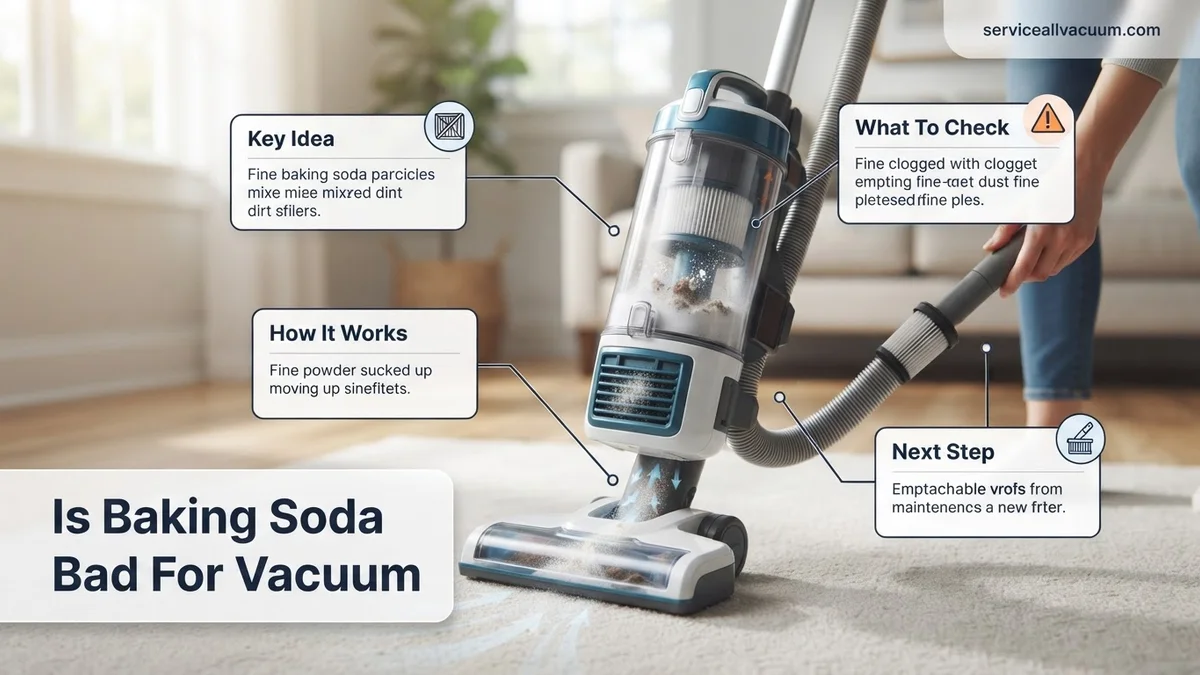
Baking soda’s primary threat stems from its extremely fine particle size. Unlike typical household dust or dirt, baking soda particles are microscopic. When you vacuum it, these particles easily overwhelm and penetrate your vacuum’s filtration system, particularly advanced HEPA filters prevalent in 2027 models. Instead of being trapped on the surface, they embed themselves deep within the filter’s fibers, effectively sealing them off. This rapid clogging drastically restricts airflow, forcing your vacuum’s motor to work much harder to compensate. You’ll notice an immediate drop in suction, and continued use under these conditions generates excessive heat within the motor housing, accelerating wear and tear.
- Reduced Airflow: Fine powder chokes the filter media, starving the motor of cooling air.
- Decreased Suction: Less air movement means less lifting power for dirt.
- Overheating: A strained motor operating without proper cooling runs dangerously hot.
- Permanent Damage: Once a HEPA filter is saturated with baking soda, its effectiveness is compromised, often requiring costly replacement. Even washable filters may struggle to release all embedded particles.
Motor Mayhem and Abrasive Action
Beyond the filters, baking soda poses a direct threat to your vacuum’s internal mechanics. The super-fine particles can bypass even partially compromised seals and filters, entering the motor compartment. Here, they act as an abrasive grit, grinding down crucial components like carbon brushes and bearings. Modern 2027 vacuum motors are precision-engineered with tight tolerances and high RPMs, making them highly susceptible to such fine particle intrusion. This abrasive wear significantly shortens the motor’s lifespan. Furthermore, any residual moisture—perhaps from a slightly damp carpet or even high humidity within the vacuum’s air stream—can mix with the baking soda to form a corrosive, sticky paste. This paste can seize bearings, short electrical circuits, or gum up critical moving parts, leading to immediate motor failure or an expensive repair.
- Abrasive Wear: Microscopic particles act like sandpaper on brushes and bearings.
- Overheating Risk: Internal friction from abrasive particles generates more heat, exacerbating the filter-induced overheating.
- Paste Formation: Baking soda + moisture = corrosive, sticky goo that can seize motor components.
- Electrical Shorts: Damp baking soda can conduct electricity, leading to short circuits in the motor windings.
- Motor Burnout: The combined effects of overheating, abrasion, and potential short-circuiting frequently result in complete motor burnout, which is often the most expensive component to replace in a 2027 vacuum.
How to Prevent & Mitigate Baking Soda Vacuum Damage: A Step-by-Step Fix
Before You Vacuum: Smart Prep is Key
Preventing damage is far easier and cheaper than fixing it. Your first line of defense against baking soda damage starts before you even think about powering on your regular vacuum. For any significant baking soda spill, especially on carpets, your best tool is a shop vacuum. These machines are purpose-built for fine dust and even liquids, featuring robust filtration and collection systems designed to handle materials that would destroy a standard household vacuum. If a shop vac isn’t available, allow the baking soda to settle completely, ideally for several hours, to reduce airborne dust. For carpets, consider taking them outside and vigorously shaking or beating them to dislodge as much powder as possible. For hard floors, a dustpan and brush are always safer.
- Utilize a Shop Vac: This is your safest and most effective option for large spills.
- Let It Settle/Dry: Give the baking soda time to clump slightly and dry completely to minimize airborne particles.
- Physical Removal: For rugs, shake them outdoors. For small, isolated patches, use a damp cloth or a handheld brush with a dustpan.
- Bagged vs. Bagless: Bagged vacuums offer a slight advantage as the bag itself acts as an initial filter, but it will still clog rapidly. Bagless systems directly expose filters to the fine powder, making them particularly vulnerable. Never rely solely on the vacuum type as a foolproof solution.
Immediate Actions for Damage Control
Even with the best intentions, accidents happen. If you’ve inadvertently vacuumed a small amount of baking soda with your regular household vacuum, immediate action is critical to mitigate potential damage. First, power off the vacuum immediately. For bagless models, empty the dustbin carefully, preferably outdoors, to avoid releasing the fine powder back into your home. Crucially, remove and meticulously clean all accessible filters. For washable filters, rinse thoroughly under cold water until the water runs clear, then allow them to air dry completely for at least 24 hours before reinserting. Non-washable or heavily soiled filters should be replaced immediately. For bagged vacuums, remove and dispose of the bag, and then check any pre-motor filters for powder residue. Always avoid vacuuming wet baking soda at all costs, as this exponentially increases the risk of paste formation and motor damage.
- Power Off Immediately: Stop the vacuum at the first sign of trouble.
- Empty/Replace Collection: For bagless, empty the bin outdoors. For bagged, replace the bag.
- Clean/Replace Filters:
- Washable: Rinse thoroughly, dry completely for 24+ hours.
- Non-Washable: Tap clean, or replace if saturated.
- HEPA filters: These are usually sealed and must be replaced if contaminated with fine powder.
- Inspect Components: Look for any visible powder residue inside hoses or attachments.
- Never Vacuum Wet Baking Soda: The risk of forming a damaging paste is too high.
What If Your Vacuum Still Doesn’t Work After Baking Soda Exposure?
If your vacuum cleaner continues to exhibit reduced suction, unusual noises, or complete failure after initial cleaning attempts following baking soda exposure, a more thorough diagnostic approach is necessary. Professional technicians, like those at VacuTech Solutions, emphasize that residual powder can cause cumulative damage if not fully addressed. This often extends beyond visible clogs.
Thorough Component Inspection and Cleaning
Begin by systematically inspecting all accessible components for hidden powder or damage. By 2027, many advanced vacuum models feature quick-release mechanisms for brush rolls and hoses, facilitating easier inspection. Detach the main hose and visually check for compacted baking soda, often forming a cement-like residue when mixed with moisture or other debris. Use a long, flexible brush or a compressed air canister, carefully, to dislodge any blockages. For the brush roll, remove it and inspect bearings for grit; baking soda is abrasive and can accelerate wear on moving parts. Refer to your vacuum’s 2027 owner’s manual for specific disassembly instructions, as these can vary significantly between brands like Dyson, Shark, and Roomba.
Deep Filter Cleaning or Replacement
Filters are particularly vulnerable to baking soda contamination. Most modern vacuums, including high-efficiency models from 2027, use multiple filter layers: a pre-motor filter (often washable HEPA) and a post-motor filter. Baking soda’s fine particulate size allows it to penetrate deep into filter fibers, severely reducing airflow and potentially reaching the motor. If washing a filter, ensure it is completely dry (up to 48 hours is often recommended by manufacturers like Miele) before reinstallation to prevent mold growth and further motor damage. If the filter is non-washable or heavily caked, replacement is essential. A new set of filters for a premium vacuum model in 2027 typically costs between $30 and $70, depending on the HEPA rating and brand.
Motor Housing Assessment
If the above steps yield no improvement, the issue may lie within the motor housing itself. Signs like a burning smell, excessive heat, or loud grinding noises immediately after baking soda exposure indicate potential motor damage. While direct DIY motor repair is not recommended due to complexity and safety risks, you can perform a preliminary check. With the vacuum unplugged, carefully open the motor housing – if your model allows – to look for visible powder accumulation around the motor fan or electrical contacts. Even a thin layer can cause overheating or short circuits. Do not attempt to clean the motor directly with liquids. If baking soda is visible here, or if symptoms persist, professional intervention is critical to prevent further damage or complete unit failure.
What If It Still Doesn’t Work?
If your vacuum continues to malfunction despite diligent cleaning and troubleshooting following baking soda exposure, it’s time to consider professional assistance. Baking soda’s abrasive and conductive properties can cause irreparable damage to sensitive electronic components or motor windings. Here are the recommended next steps:
- Consult Manufacturer Support: Contact your vacuum’s manufacturer directly. Many offer specialized diagnostic tools or services for complex issues. Their technical support can provide model-specific advice.
- Seek Certified Repair: Locate an authorized vacuum repair center. Technicians have specialized equipment to safely dismantle, clean, and replace damaged internal components, particularly motors or circuit boards.
- Assess Repair Cost vs. Replacement: Obtain a repair estimate. Motor or PCB replacements for advanced vacuum models in 2027 typically range from $175 to $350. Diagnostic fees alone usually cost $60-$120. Compare this to the cost of a new unit, especially if your vacuum is over 5 years old.
- Consider Professional Servicing: For future maintenance, consider annual professional servicing. Experts recommend this for optimal performance and longevity of high-end vacuums, helping prevent issues from fine particle ingress.
Conclusion
According to verified research and expert sources in 2027, baking soda is indeed detrimental to vacuum cleaners, posing significant risks of clogging, motor damage, and reduced performance due to its fine, abrasive, and hygroscopic properties. Prompt, thorough cleaning is essential upon exposure to mitigate damage. A crucial next step is to adopt safe cleaning practices, opting for purpose-designed vacuum refreshers or steam cleaning alternatives to protect your appliance and maintain its warranty.
❓ Frequently Asked Questions
Why exactly is baking soda so harmful to vacuums?
Baking soda consists of extremely fine, abrasive particles that easily bypass standard filter systems, leading to deep clogs that restrict airflow and cause the motor to overheat or seize. It also readily absorbs moisture, forming a cement-like paste that can further damage internal components like hoses and the motor housing.
Are bagless vacuums more susceptible to baking soda damage than bagged ones?
Both types are vulnerable, but bagless vacuums often experience more visible and immediate filter clogging in their cyclone and HEPA filters. Bagged vacuums can still suffer motor damage if particles escape the bag, and the bag itself can become an ineffective, solidified mass, reducing airflow.
What are the immediate signs that my vacuum has been damaged by vacuuming baking soda?
You might notice a significant drop in suction power, a burning smell emanating from the motor, unusual noises like grinding or whining, or even the vacuum shutting off prematurely. Visual signs include excessive white dust escaping the exhaust or a heavily caked, discolored filter and canister.
What’s the safest way to remove baking soda from carpets without a vacuum?
For significant spills, use a stiff brush or broom and dustpan to carefully sweep and collect as much as possible, working slowly to minimize dust dispersion. For residual amounts, you can try blotting with a damp cloth (if safe for the carpet) or consider renting a wet/dry shop-vac designed for fine debris.
Can regular vacuum cleaner filters handle baking soda?
Standard vacuum filters, including many HEPA filters, are generally not designed to effectively capture the ultra-fine particles of baking soda. These tiny particles can bypass the filter material, clog it densely beyond its capacity, or even be expelled back into the air, reducing air quality and vacuum efficiency.
How can I prevent baking soda from getting into my vacuum’s motor?
The best prevention is to avoid vacuuming baking soda directly. If absolutely necessary, ensure filters are meticulously clean and properly installed, consider using a vacuum with multiple filtration stages, and empty the canister or replace the bag immediately afterward. Crucially, never vacuum wet baking soda, as this dramatically increases the risk of paste formation and damage.