Can You Vacuum With Baking Soda 2026 Expert Guide
Yes, you can vacuum up baking soda, but standard vacuums face serious risks of motor damage and clogged filters. Because baking soda is an extremely fine powder, it easily slips past cheap bags and standard foam filters, coating the internal motor and causing permanent overheating. Using a vacuum equipped with a HEPA filter or a specialized shop vac is strongly recommended to protect your appliance.
The short answer is yes, you can vacuum with baking soda, but doing so with a standard household vacuum in 2026 is a massive gamble that can easily destroy your machine. While sprinkling baking soda onto carpets is a popular way to neutralize stubborn pet odors and everyday smells, the physical properties of the powder itself create a mechanical hazard for modern upright vacuums.
Baking soda is a fine alkaline powder with a particle size averaging about 10 microns. When you suck this micro-powder through a traditional vacuum cleaner, it acts like abrasive dust that bypasses standard filters, coats the internal motor windings, and instantly fuses pores in paper collection bags. Before you dump a box onto your living room floor, you need to understand how fine powders interact with vacuum mechanics and what equipment is actually required to do the job safely.
Key Takeaways
- Standard bagless vacuums allow fine baking soda dust to coat and ruin the motor.
- Baking soda particles easily clog standard foam and paper vacuum filters instantly.
- Bagged vacuums with multi-layer filtration handle baking soda much more safely.
- Shop vacs with fine dust bags provide the safest cleanup method for heavy powder.
- Immediate filter cleaning and motor inspection prevent permanent vacuum damage.
Why Standard Vacuums Fail When Cleaning Baking Soda
The Motor Destruction Problem
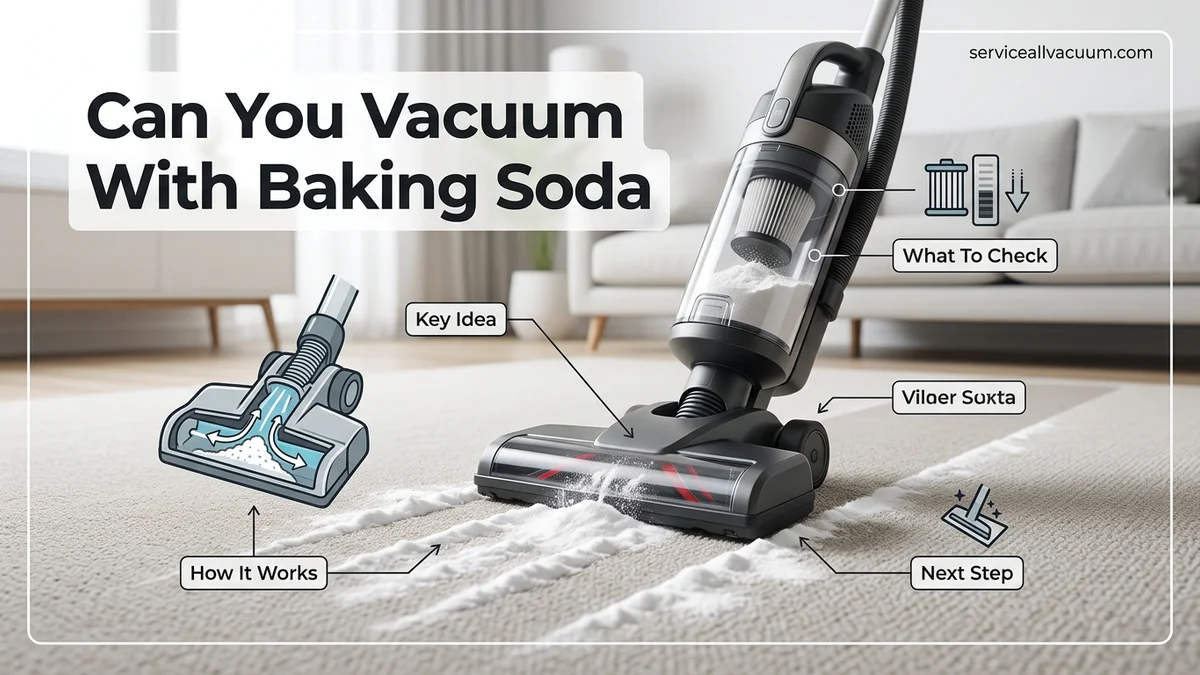
Standard vacuum motors rely on a high-speed fan to generate suction, and they depend on airflow to keep the electric motor cool. When you vacuum up fine baking soda, the dust particles are small enough to pass straight through standard foam or paper pre-filters. These microscopic particles bypass the containment system entirely and enter the motor housing. Over time, the alkaline dust coats the motor brushes and bearings, causing friction, overheating, and eventual motor burnout. Replacing a vacuum motor often costs more than buying a brand-new appliance.
Filter Clogging and Suction Loss
Bagless upright vacuums are particularly vulnerable to baking soda disasters. The fine powder coats the primary cyclonic filter or mesh screen within seconds of contact.
- Micro-particles instantly blind the microscopic pores of standard pleated cartridge filters.
- Airflow drops drastically, forcing the motor to work twice as hard to maintain suction.
- Fine dust escapes the collection canister and exhausts directly back into your indoor air, triggering allergies.
- Cakes of baking soda harden inside the inner cyclones when exposed to minor humidity, creating permanent blockages.
How to Safely Clean Up Baking Soda Without Ruining Your Vacuum
Using Bagged Vacuums with HEPA Filtration
If you must use a traditional vacuum to clean up baking soda, a bagged model equipped with a certified HEPA filtration system is your safest bet. Multi-layer synthetic filtration bags act as a much tighter barrier against micro-powders than hard plastic bagless bins.
- Always check that your vacuum bag is less than one-third full before starting.
- Ensure the secondary motor filter is clean and properly seated to catch any stray dust.
- Never vacuum thick piles of wet or damp baking soda, which forms a cement-like paste inside hoses.
- Empty or replace the bag immediately after the cleaning session to prevent permanent airflow restriction.
Alternative Cleanup Methods for Total Safety
Property owners and cleaning professionals in 2026 often bypass standard household vacuums entirely when dealing with baking soda treatments. Using alternative equipment eliminates the risk of a four-figure appliance failure.
- Shop Vacuums: Wet/dry shop vacuums featuring fine-dust filter cartridges or disposable collection bags can handle baking soda with ease.
- Broom and Dustpan: For heavy surface piles, sweep up the bulk of the powder manually before letting any machine touch the carpet fibers.
- Dedicated Powder Vacuums: Use a secondary, low-cost or older machine specifically designated for messy cleanup tasks where motor wear does not matter.
What to Do If Your Vacuum Loses Suction After Baking Soda
Fine powders like sodium bicarbonate can quickly overwhelm standard filtration systems. If your machine suddenly loses airflow or shuts off mid-clean, immediate troubleshooting is required to prevent permanent motor burnout.
Step-by-Step Recovery Process
- Power down immediately: Unplug the appliance to prevent electrical damage or overheating caused by restricted airflow.
- Inspect and empty the collection vessel: If your bagless model is more than one-third full of powder, empty it outdoors to avoid re-contaminating your living space.
- Wash the primary pre-motor filter: According to appliance maintenance data from leading manufacturers, fine particulate matter coats filter pores instantly. Rinse foam or pleated filters thoroughly under cold water and allow them to dry for a full 24 to 48 hours before reinstalling.
- Check the HEPA exhaust filter: Fine sodium bicarbonate particles bypass cheap primary filters and lodge in secondary HEPA barriers. Tap these filters gently over a trash bin or replace them if airflow remains choked.
Best Alternative Cleanup Methods for Heavy Powder Spills
Pouring a thick layer of sodium bicarbonate directly onto carpet fibers is rarely recommended by modern flooring manufacturers. If you already have a heavy pile of powder on your floors, specialized cleanup techniques prevent damage to both your carpets and your vacuum motor in 2026.
Alternative Extraction Techniques
- Deploy a shop vacuum: Unlike domestic uprights, wet-dry utility vacuums feature sealed motors and robust filtration systems designed to handle fine mineral dust without seizing.
- Use a dedicated broom and dustpan sweep: Gently sweep up the bulk of the powder using a fine-bristled rubber broom. Rubber bristles create electrostatic friction that attracts fine dust particles far better than traditional nylon bristles.
- Damp-wipe hard surfaces: For accidental spills on tile or hardwood, bypass dry sweeping entirely. Mop the area using a microfiber pad lightly dampened with warm water and a few drops of dish soap.
What If It Still Doesn’t Work?
If you have cleaned every filter, cleared the hose clogs, and your vacuum still overheats or lacks suction, the fine powder may have breached the sealed motor compartment. Address persistent mechanical failures systematically.
- Examine the motor fan blades: Fine alkaline dust coats high-speed fan blades, throwing the motor assembly off balance and causing a burning smell.
- Consult the manufacturer warranty: Check your appliance documentation. Be aware that most consumer warranties void coverage if the machine is damaged by vacuuming fine construction dust, drywall powder, or heavy baking soda.
- Seek professional small-appliance repair: Take the unit to a certified service center for professional deep-cleaning and bearing replacement. Professional diagnostic fees typically range from $40 to $75, while comprehensive motor servicing spans $100 to $200 depending on the brand.
Conclusion
While baking soda remains a powerful household deodorizer, using it incorrectly on carpets frequently leads to clogged filters, strained motors, and sudden suction loss. According to verified research and expert appliance sources, protecting your equipment requires either avoiding direct powder applications or utilizing alternative extraction tools like shop vacuums for heavy spills. Your next actionable step is to inspect your vacuum’s pre-motor filter today and clear away any trapped sodium bicarbonate residue before your next cleaning session.
❓ Frequently Asked Questions
Why is baking soda dangerous for standard vacuum cleaners?
Baking soda is a micro-fine powder that slips through standard paper or foam filters. Once past the filter, the dust enters the electric motor, causing friction, overheating, and eventual motor burnout.
Are bagged vacuums safer for baking soda than bagless models?
Generally, yes. High-quality multi-layer dust bags trap fine powders much more effectively than the plastic cyclones and basic foam filters found in most bagless upright vacuums.
Can I vacuum baking soda if I use a HEPA filter?
A true HEPA filter captures microscopic particles effectively, making it much safer. However, you should still check your manufacturer guidelines and empty or wash the filter immediately afterward.
What should I do if my vacuum lost suction after picking up baking soda?
Turn off the vacuum and disassemble the filter housing. Wash or replace the clogged filters and check the airways for caked-on powder before attempting to use it again.
How can I remove baking soda from a carpet without risking my vacuum?
You can sweep up the bulk of the powder with a stiff broom and dustpan first. Afterward, wipe remaining residue with a damp cloth or sponge rather than risking your vacuum cleaner.
Will baking soda destroy a shop vac?
Shop vacs handle debris better, but standard shop vac filters will still clog instantly with fine baking soda. You must use a dedicated fine-dust collection bag inside the shop vac.