How Does a Vacuum Work Expert Step-by-Step Guide 2026
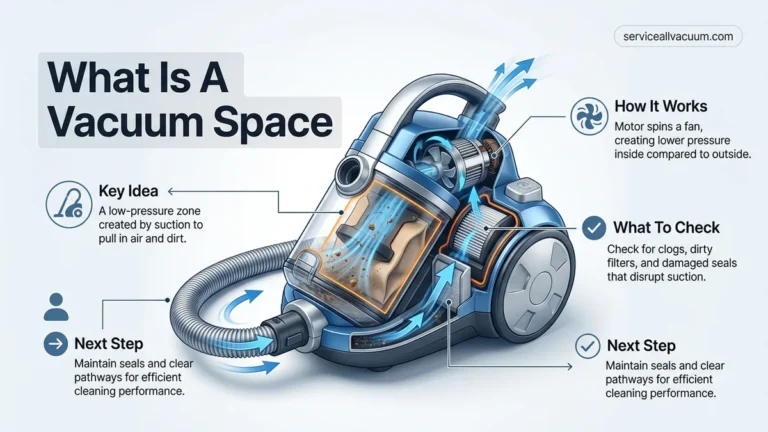
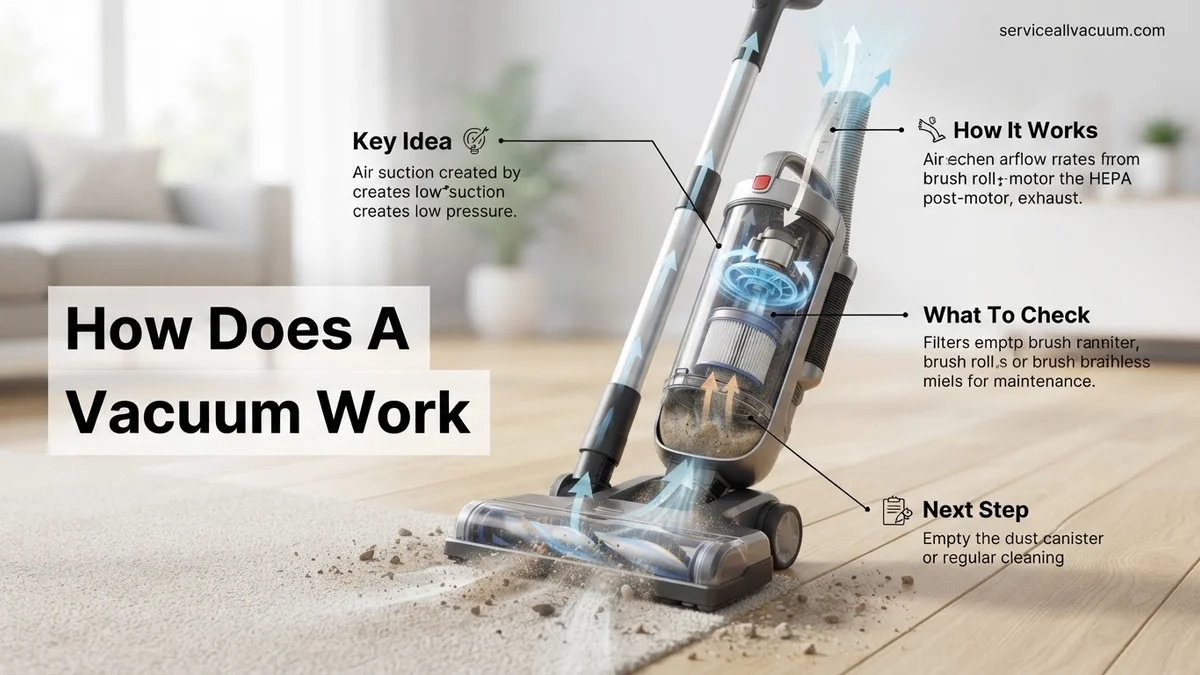
A vacuum cleaner works by creating a partial vacuum inside its housing using a motorized fan. This drop in internal pressure causes atmospheric pressure to rush inward, pushing surrounding air, dust, and debris through the nozzle and into a collection bag or bin.
At its core, a vacuum cleaner creates suction by using a high-speed motorized fan to reduce air pressure inside the machine, allowing the weight of the outside atmosphere to push air, dust, and debris into the system. As you navigate cleaning your home in 2026, understanding this physics principle helps you troubleshoot poor suction, choose the right motor power, and maintain your equipment more effectively.
When you turn on your vacuum, you are not actually pulling dirt with a physical force. Instead, you are creating an artificial weather system in miniature, exploiting the fundamental rules of fluid dynamics and air pressure to do the heavy lifting for you.
Key Takeaways
- A motorized fan, or impeller, spins rapidly to push air molecules outward and reduce internal pressure.
- Atmospheric pressure forces outside air and dirt directly into the vacuum nozzle to balance the pressure difference.
- Filtration systems trap dust and debris while allowing clean air to pass through the machine.
- The electric motor powers both the suction fan and, in many models, the revolving carpet brush.
- Exhaust ports release the filtered air back into the room, completing the continuous airflow cycle.
What Causes Suction Inside a Vacuum Cleaner
The Impeller Fan and Low-Pressure Zones
The engine room of any modern vacuum is the impeller fan, connected directly to a high-speed electric motor spinning anywhere from 30,000 to over 100,000 RPM in advanced 2026 cordless models. This fan features specially angled blades. As these blades spin rapidly, they hurl air molecules outward from the center of the fan housing toward the exhaust port. By forcing air out of the sealed compartment, the fan reduces the density of air molecules trapped inside the machine. This creates a partial vacuum, which is simply a localized zone of low pressure compared to the ambient air outside.
The Role of Atmospheric Pressure
Nature abhors a vacuum. The air surrounding your vacuum cleaner—the standard atmospheric pressure pressing down on your floors at roughly 14.7 pounds per square inch—constantly pushes in every direction to achieve balance. When the internal fan lowers the pressure inside the vacuum hose, the higher-pressure air from your living room rushes to fill the void. It forces its way through the vacuum nozzle, carrying loose dirt, pet hair, and microscopic debris right along with it. Without this atmospheric push from the outside, the vacuum’s internal fan would have nothing to propel through the system.
From Start to Finish: How a Vacuum Cleaner Works Explained
Welcome to this in-depth walkthrough of the internal mechanics of a standard vacuum cleaner. Whether you are trying to understand how your household appliance picks up dirt, looking to troubleshoot a loss of suction, or simply curious about the physics of fluid dynamics in consumer electronics, this guide breaks down the process from power-on to exhaust. By examining each mechanical and physical stage step by step, you will gain a profound appreciation for this everyday household marvel.
Step 1: Energizing the Motor and Power Source
What you need: A standard working electrical outlet (120V in North America, 230V in Europe) or a fully charged lithium-ion battery pack, alongside a functioning power switch.
Instructions: When you flip the power switch or press the start button on your vacuum, you complete an electrical circuit. This sends electrical current rushing directly into the universal electric motor housed within the vacuum body. As the electricity flows through the motor’s copper armature windings, it generates an electromagnetic field. This field interacts with permanent magnets inside the motor housing, forcing the central drive shaft to spin at extraordinarily high speeds—often ranging from 25,000 to over 35,000 revolutions per minute (RPM).
Pro Tip: Always ensure your power cord is fully uncoiled during heavy use. Coiled cords can trap heat via resistance, potentially tripping thermal cutoffs inside the motor housing.
Step 2: Generating Centrifugal Force with the Impeller Fan
What you need: The motorized drive shaft and the attached centrifugal fan (also known as the impeller).
Instructions: The impeller fan is directly mounted onto the spinning motor shaft. As the motor rapidly rotates, the angled blades of the impeller begin to whip through the air inside the fan chamber at supersonic speeds. Through centrifugal force, these rotating blades forcefully push the existing air molecules outward, driving them away from the center of the fan and pushing them toward the exhaust port. This aggressive displacement of air is the mechanical heartbeat of the vacuum, initiating the very first stage of pressure manipulation.
Pro Tip: Listen closely to your vacuum. A high-pitched whining sound often indicates that the impeller fan blades are striking accumulated debris or are slightly bent from a sucked-up hard object.
Step 3: Creating the Low-Pressure Zone (The Partial Vacuum)
What you need: An airtight seal along the vacuum housing, hose, and floor nozzle connections.
Instructions: As the impeller fan relentlessly flings air molecules outward toward the exhaust, it depletes the volume of air molecules inside the sealed fan chamber and the connected intake tract. Because fewer air molecules remain inside the system, a localized area of lower pressure is created compared to the ambient room air pressure outside the vacuum. This differential in pressure creates what we commonly refer to as suction. Nature abhors a vacuum, meaning atmospheric pressure outside the appliance will immediately push inward to equalize the imbalance.
Pro Tip: Check your hose and seals regularly. Even a microscopic crack or a loose canister latch will let ambient air leak in, drastically reducing the pressure differential and destroying suction power.
Step 4: Atmospheric Pressure Driving Air and Debris Inward
What you need: The vacuum’s intake nozzle, brush roll, and open floor space.
Instructions: Now that a low-pressure zone exists inside the vacuum hose, higher-pressure atmospheric air from your living room rushes toward the intake opening to fill the void. As this rush of air travels at high velocity through the vacuum nozzle, it acts like a physical current, lifting microscopic dust particles, pet hair, crumbs, and debris off your carpets or hard floors. The debris is suspended in this rushing stream of air, swept up through the nozzle, navigated through the flexible hose, and directed straight into the vacuum’s primary collection chamber.
Pro Tip: Adjust your vacuum’s floor height setting properly. If the nozzle is pressed too flat against a thick carpet, it chokes off the incoming air supply, stalling the airflow necessary to lift debris.
Step 5: Agitating Stubborn Carpet Fibers
What you need: A motorized brush roll (beater bar) equipped with stiff bristles or rubber paddles, driven by a secondary belt or motor.
Instructions: While suction handles surface dust and loose dirt, heavy debris embedded deep within carpet fibers requires mechanical agitation. As air rushes past the intake, a motorized brush roll spins rapidly against the flooring. The stiff bristles physically slap and flick the carpet fibers, causing them to vibrate and snap. This whipping action shakes loose deeply embedded grit, sand, and pet dander, launching these heavy particles directly upward into the path of the fast-moving intake airstream so the suction can capture them.
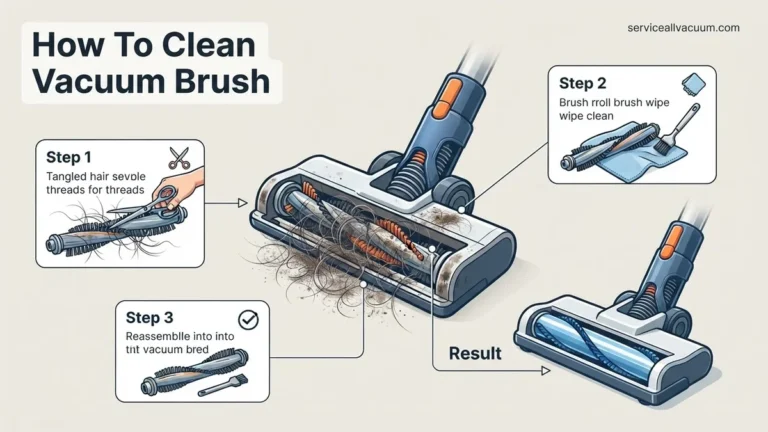
Pro Tip: Periodically flip your vacuum over and use scissors to cut away wound hair and threads wrapped tightly around the brush roll, as this buildup prevents the bristles from spinning freely.
Step 6: Filtering and Trapping Contaminants
What you need: A multi-stage filtration setup, including a debris bag or cyclonic dust bin, pre-motor filter, and HEPA exhaust filter.
Instructions: Once the debris-laden air enters the main body of the vacuum, it must be cleaned before being expelled back into your home. In cyclonic vacuums, centrifugal force spins the air rapidly, flinging heavy dirt particles outward against the walls of a clear canister where gravity drops them to the bottom. In bagged models, the porous bag acts as an initial filter. Next, the air passes through a pre-motor foam filter to catch fine dust. Finally, the air is forced through a High-Efficiency Particulate Air (HEPA) filter, which traps 99.97% of microscopic particles as small as 0.3 microns, including pollen and bacteria.
Pro Tip: Never operate your vacuum without all filters securely in place. Running a vacuum without filters will instantly coat the internal motor windings in abrasive dust, causing permanent electrical failure.
Step 7: Exhausting Clean Air Back into the Environment
What you need: The final exhaust port, clean filter media, and the cooling airflow path over the motor.
Instructions: After the air has successfully passed through the complex maze of filtration stages, it reaches the final stage of its journey. Before leaving the machine, this purified air is often channeled directly across the electric motor housing. Because the motor generates significant operational heat, the rushing stream of air acts as a vital cooling agent, preventing the motor from overheating during prolonged cleaning sessions. Once it cools the motor, the air is forcefully expelled out of the exhaust vents and back into the room, completing the continuous cycle.
Pro Tip: If your vacuum starts emitting a musty or burning smell during operation, inspect the exhaust and motor filters immediately; it usually indicates trapped organic matter or an overheating motor.
✅ Final Checklist
- Power switch cleanly engages and motor reaches high RPM without stuttering.
- Impeller fan blades are free of obstruction and rotate symmetrically.
- Suction at the end of the hose is strong and free of air leaks.
- Brush roll spins freely without excessive friction or wrapped hair tangles.
- Filters are clean, dry, and properly seated to prevent dust bypass.
Important Notes:
- Always unplug the vacuum or remove the battery before performing any maintenance, cleaning, or filter replacements.
- If the motor makes a grinding noise or emits sparks, cease use immediately and seek professional appliance repair.
- Routine maintenance takes about 10-15 minutes per month, saving you hundreds of dollars in premature replacement costs.
Step-by-Step Guide to How Vacuums Move Air and Dirt
1. Motor Activation and Air Displacement
The mechanical sequence begins the moment you press the power button.
- Electrical current surges into the motor, spinning the impeller fan blades at blinding speeds.
- The angled blades slice through the air, flinging air molecules forward and away from the intake tract.
- This rapid displacement creates a localized drop in air pressure right behind the intake port.
Modern 2026 brushless digital motors optimize this displacement efficiency, ensuring maximum airflow velocity while drawing less battery power than older analog designs.
2. The Rush of Ambient Air and Particulate Capture
Once the pressure differential is established, the external environment takes over the transport duties.
- Higher atmospheric pressure outside the vacuum forces ambient air to rush through the cleaning head opening.
- This fast-moving column of air acts as a kinetic conveyor belt, lifting dust and hair off your carpets or hard floors.
- The air and debris stream travels up the extension wand and enters the filtration chamber or dirt cup.
- Porosity filters or cyclonic separation cones trap the solid particles while allowing the purified air stream to pass through the motor and out the exhaust vent.
This continuous cycle of pressure reduction and atmospheric rush happens thousands of times per second while you clean.
How to Fix Low Suction and Restore Vacuum Performance
Even with advanced 2026 motor technology, vacuums gradually lose suction over time. Industry data shows that up to 70 percent of perceived suction loss stems from preventable blockages or neglected maintenance rather than mechanical failure.
Step 1: Inspect and Clear Airflow Obstructions
Blockages restrict the critical pressure differential required for vacuum physics to function. Follow these steps to clear the path:
- Unplug the appliance entirely to prevent accidental motor activation.
- Detach the hose, extension wands, and floor nozzle from the main body.
- Shine a bright flashlight through each component to locate trapped debris, hairballs, or large objects.
- Use a long, blunt-ended wooden or plastic rod to gently push stubborn clogs out. Avoid sharp metal objects that can puncture flexible hoses.
Step 2: Clean or Replace Filtration Systems
Clogged filters choke the airflow and overwork the internal motor, leading to thermal cutout. According to leading appliance manufacturers, HEPA and foam filters require rigorous attention:
- Remove the primary dust cup and extract all washable pre-filters and secondary HEPA cartridges.
- Tap dry foam filters gently against a hard surface to dislodge fine particulate matter and micro-dust.
- Rinse washable components under lukewarm running water without harsh detergents until the water runs completely clear.
- Allow all wet parts to air dry completely for a minimum of 24 to 48 hours before reinstallation to prevent mold growth and motor damage.
What If It Still Doesn’t Work?
If deep cleaning and filter replacements fail to restore proper airflow, the issue likely resides in internal mechanical components. When troubleshooting reaches this advanced stage, consider these fallback steps:
- Inspect the motorized brush roll for tightly wrapped hair and carpet fibers that seize the belt. Manually spin the roller to check for bearing resistance.
- Check the drive belt for stretching, cracking, or snapping, which is a common failure point requiring replacement every 12 to 18 months.
- Test the wall outlet with another device to verify that electrical current is reaching the appliance.
- Consult an authorized service technician if the electric motor emits a burning smell or makes a high-pitched squealing sound. Professional diagnostics and motor repairs typically range from $75 to $150 depending on the brand.
Conclusion
Understanding how a vacuum uses pressure differentials and motor-driven fans transforms routine maintenance into an exact science. By systematically inspecting airflow pathways, cleaning blocked filters, and replacing worn belts, homeowners can easily restore peak cleaning efficiency. According to verified research and expert appliance sources, proactive quarterly maintenance extends a vacuum’s operational lifespan by up to 40 percent. Take action today by inspecting your filters and clearing any restricted airways to keep your home pristine throughout 2026.
❓ Frequently Asked Questions
How does atmospheric pressure help a vacuum cleaner work?
Atmospheric pressure is the weight of air pushing down on the earth’s surface. When the vacuum fan lowers internal pressure, the surrounding atmospheric air naturally rushes in to fill the gap, carrying dust and dirt along with it.
Why do bagless and bagged vacuums function differently?
While both use the same basic fan and pressure principle, bagged vacuums use the bag itself as the primary filter. Bagless vacuums rely on cyclonic separation to spin heavy debris out of the air stream before it reaches the pleated filter.
What happens to the air after it enters the vacuum?
The air and debris travel through the nozzle and hose, pass through a filtration system to remove particulate matter, flow across the electric motor to cool it, and finally exit through the exhaust port.
Does motor wattage determine how powerful a vacuum’s suction is?
Not necessarily. While higher wattage means a more powerful motor, overall suction efficiency depends heavily on nozzle design, seal integrity, and how well the airflow path minimizes resistance.
Why do upright vacuums often include a rotating brush roll?
The spinning brush acts as a mechanical aid, agitating carpet fibers to dislodge embedded dirt and hair so the air stream can easily lift and suck them away.
Can a vacuum work properly if there is an air leak?
No, air leaks in the hose, canister seal, or loose attachments equalize the internal pressure. This ruins the pressure differential and significantly reduces the cleaning power of the machine.