
What Can You Vacuum Seal? Expert Guide for 2026
Knowing what can you vacuum seal helps dramatically extend the shelf life of meats, dry goods, and non-food household items. However, certain foods pose serious safety risks due to anaerobic bacteria and require specific preparation before sealing.
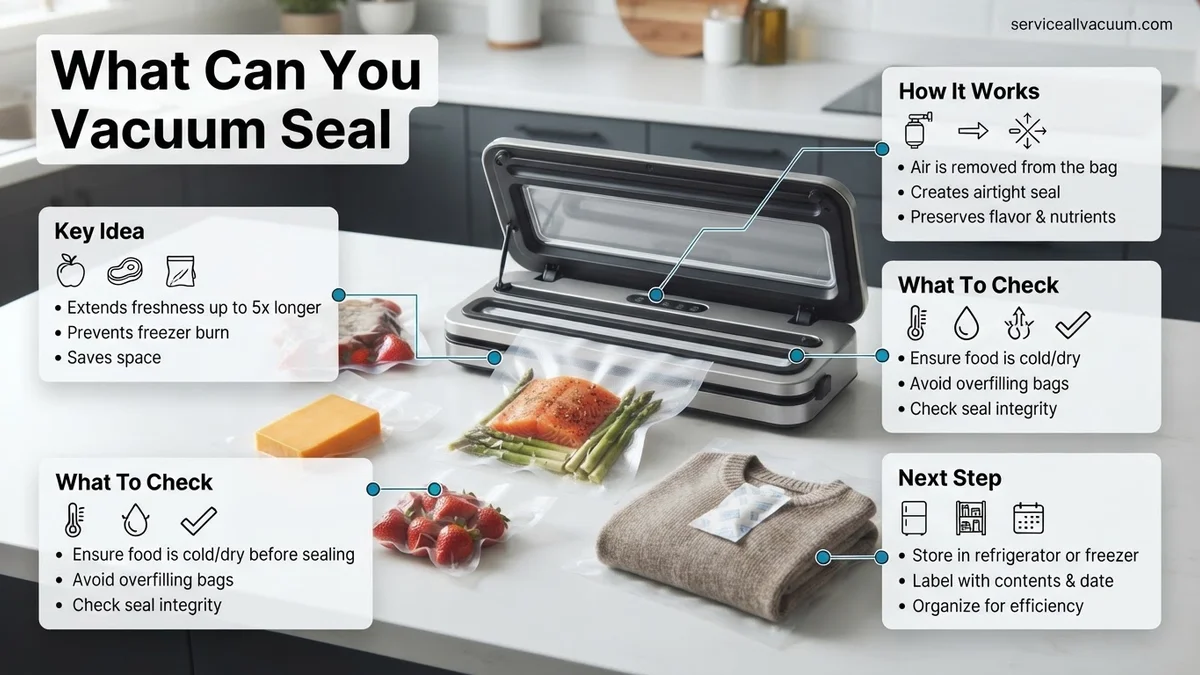
You can vacuum seal almost anything that is dry, frozen, or properly prepared, from bulk cuts of meat and seasonal garden vegetables to emergency documents, camping gear, and silverware that tarnishes easily. Removing oxygen prevents freezer burn, retards oxidation, and extends the shelf life of perishable items by up to five times compared to standard storage methods.
As you plan your food preservation and organization projects for 2026, knowing exactly what belongs in a vacuum bag—and what to keep out—saves you money, prevents food waste, and protects your household valuables from moisture and decay.
Key Takeaways
- Meats, poultry, and fish last up to five times longer when vacuum sealed and frozen.
- Vegetables must be blanched before sealing to deactivate enzymes that cause spoilage.
- Dry goods like flour, coffee, and rice stay fresh by blocking out oxygen and moisture.
- Never vacuum seal raw garlic, mushrooms, or soft unpasteurized cheeses due to botulism risks.
- Non-food items like silver, documents, and emergency kits protect well against moisture and tarnish.
What Can You Vacuum Seal — Foods, Goods, and Materials
Vacuum sealing is much more than a kitchen trend; it is a versatile preservation tool for both edible and non-edible items. Organizing your approach by category helps you maximize the utility of your machine without risking spoilage or damage.
Edible Items Suited for Sealing
- Meats and Poultry: Raw steaks, chicken breasts, and fish extend from 6 months in a standard freezer to 2–3 years when vacuum sealed.
- Dry Goods: Rice, flour, beans, and pasta stay fresh for years, completely protected from pantry pests and humidity.
- Leftovers and Prepared Meals: Soups, casseroles, and cooked grains can be portioned, frozen, and reheated easily in the bag.
- Coffee Beans: Roasted beans retain their aromatic oils and flavor profile much longer when oxygen is stripped away.
Non-Food Household Goods and Materials
- Emergency Supplies: Matches, first-aid kits, dry socks, and emergency documents stay bone-dry during floods or outdoor excursions.
- Silverware: Sterling silver and silver-plated flatware will not tarnish in storage if you remove the air that causes oxidation.
- Camping Gear: Keep extra clothes, sleeping bag liners, and electronic accessories compact and protected from morning dew.
- Collectibles: Comic books, vintage textiles, and important certificates avoid mold and environmental degradation in airtight protection.
Why Certain Items Spoil or Require Special Preparation
While vacuum sealing creates an airtight environment that stops most aerobic bacteria and mold, it creates a distinct challenge for anaerobic organisms. Without oxygen, certain bacteria thrive and produce dangerous toxins, making specific items unsafe to seal without rigorous pre-treatment.
The Danger of Anaerobic Bacteria and Botulism
- Clostridium Botulinum: This dangerous bacterium thrives in oxygen-free environments, making raw foods like garlic in oil, unacidified mushrooms, and unpasteurized soft cheeses unsafe for long-term room-temperature or refrigerated vacuum storage.
- Risk Profiles: Foods that sit at room temperature after sealing are prime breeding grounds for botulism spores, which do not alter the smell or taste of the food.
- Safety Rule: Always store perishable vacuum-sealed items strictly in the refrigerator or freezer, and consume vulnerable leftovers within standard safety windows.
Produce Gases and Texture Collapse
- Cruciferous Vegetables: Broccoli, cabbage, cauliflower, and Brussels sprouts naturally emit gases even after harvest, causing sealed bags to inflate and pop open. Blanching these vegetables stops the enzymatic process and releases trapped gases before sealing.
- Soft and Delicate Foods: Fresh berries, soft bread, and ripe tomatoes will be crushed by the intense pressure of a standard suction sealer, turning into mush unless you freeze them solid first or use a chamber sealer.
How to Safely Prep and Vacuum Seal Different Categories
Proper preparation prevents bacterial growth and texture degradation across different food categories. Food safety guidelines from the USDA emphasize that vacuum sealing alone does not kill anaerobic bacteria like Clostridium botulinum.
Dry Goods and Pantry Staples
Dry grains, flour, and coffee beans require minimal prep but benefit from specific steps. Follow this protocol to seal dry goods effectively:
- Ensure the moisture content of the item is below 15 percent to prevent mold.
- Place oxygen absorbers inside the bag for long-term storage extending past 2026 standards.
- Use a double-seal setting on your machine to guarantee an airtight closure against fine powders.
Meats, Fish, and Poultry
Raw proteins harbor high moisture levels that interfere with the sealing strip. Take these precautions before pressing start:
- Pat the surface completely dry with paper towels to remove excess exterior liquid.
- Pre-freeze soft meats or delicate fish for 1 to 2 hours on a baking sheet to lock in shape.
- Select the moist food setting on your vacuum sealer to adjust sealing bar temperature and duration.
What If Items Contain Too Much Moisture or Produce Gases
High-moisture foods and certain fresh produce create unique hurdles during the vacuum sealing process. Liquid gets sucked into the machine pump, while cruciferous vegetables release natural gases that cause bags to reinflate.
Handling Excess Liquids
Liquids disrupt the thermal seal and ruin vacuum pumps. Implement these operational safeguards:
- Freeze soups, stews, and purees into solid blocks inside container molds before inserting them into vacuum bags.
- Fold the top cuff of the bag downward before filling to keep the sealing zone completely dry.
- Use specialized pulse-vacuum functions to manually control suction strength for semi-liquid items.
Managing Respiration and Gases
Fresh vegetables like broccoli, cabbage, and onions release carbon dioxide after harvest. Counteract gas production using these methods:
- Blanch vegetables in boiling water for 1 to 3 minutes to deactivate enzymes that produce gas.
- Cool and thoroughly dry the blanched produce before sealing and freezing.
- Store gassing items in perforated bags instead of traditional hermetic seals if long-term freezing is not required.
What If It Still Doesn’t Work?
If your vacuum sealer fails to achieve a secure seal despite correct preparation, mechanical or material issues are usually the cause. Work through these diagnostic troubleshooting steps:
- Inspect the foam gaskets for cracks, warping, or trapped debris, wiping them clean with a damp microfiber cloth.
- Check the heating element strip for burnt residue; clean gently with isopropyl alcohol if discoloration appears.
- Verify that you are using textured channel bags rather than smooth plastic commercial bags, which fail to vent air properly in external clamp sealers.
- Test the machine with a fresh roll of food-grade nylon-polyethylene composite material, ensuring the thickness matches manufacturer specifications (typically 3 to 4 mil for standard bags).
- Consult a certified appliance repair technician if the internal vacuum pump fails to draw negative pressure, with professional diagnostic and labor costs ranging from $75 to $150.
Conclusion
Mastering what you can vacuum seal transforms home food preservation, extending the shelf life of proteins and dry goods by up to five times. According to verified research and expert sources from food safety authorities, proper temperature control and pre-treatment remain vital to completely eliminate spoilage risks. Take the next step today by auditing your current pantry inventory and testing your sealer on a small batch of pre-frozen meats.
❓ Frequently Asked Questions
How much longer does food last when vacuum sealed?
Vacuum sealing typically extends the freezer life of meats from 6 months up to 2-3 years, while refrigerator and pantry items can last 3 to 5 times longer.
Why is vacuum sealing raw garlic dangerous?
Raw garlic and onions contain low-acid environments and lack oxygen when sealed, which creates ideal conditions for Clostridium botulinum spores to grow.
Do I need to freeze soups or sauces before vacuum sealing?
Yes, liquid items will get sucked into the vacuum channel and ruin the machine’s seal if they are not frozen solid beforehand.
Why do cruciferous vegetables like broccoli release gas in vacuum bags?
Broccoli, cabbage, and cauliflower naturally release gases even after harvesting, which causes vacuum bags to puff up and lose their tight seal over time.
Can dry goods like coffee beans be vacuum sealed?
Yes, vacuum sealing blocks oxygen and preserves aromatic oils, though roasted coffee beans should off-gas for 24-48 hours before sealing.
How do you prevent soft foods like berries from getting crushed?
You can freeze delicate foods like berries or baked goods on a baking sheet first before placing them into vacuum seal bags.

![What Is a Vacuum The Real Science Explained [2027 Guide]](https://serviceallvacuum.com/wp-content/uploads/2026/09/what-is-a-vacuum-featured-768x432.webp)