Why Are Vacuums So Loud in 2026? Expert Guide to Noise
Vacuum cleaners generate significant noise due to the high-speed electric motor and the centrifugal fan blades rapidly cutting through air. Additional sound stems from plastic housings vibrating and debris impacting internal components at high velocities.
Vacuum cleaners are loud primarily because of the extreme physics required to generate suction: a high-speed electric motor spinning up to 100,000 RPM powers a centrifugal fan that rapidly chops through air, creating intense mechanical whining and aerodynamic turbulence. Even as we move through 2026 and expect advanced home appliances to operate in near-silence, the basic thermodynamics of moving air quickly still demand raw kinetic energy.
Understanding this noise matters practically because it helps you choose appliances that protect your hearing and reduce household stress. When you know which components generate specific decibels, you can better evaluate modern quiet-cleaning marketing claims and maintain your machine to prevent unnecessary friction and rattling.
Key Takeaways
- High-speed electric motors spinning at 30,000+ RPM generate a primary high-frequency whine.
- Centrifugal fan blades creating suction produce intense aerodynamic and whistle noises.
- Clogged filters and blocked hoses restrict airflow, drastically increasing operational noise levels.
- Vibrating plastic housings amplify internal mechanical sounds without proper sound-dampening insulation.
- Choosing models with lower decibel (dB) ratings ensures a quieter cleaning experience.
The Core Mechanics: Why Are Vacuums So Loud?
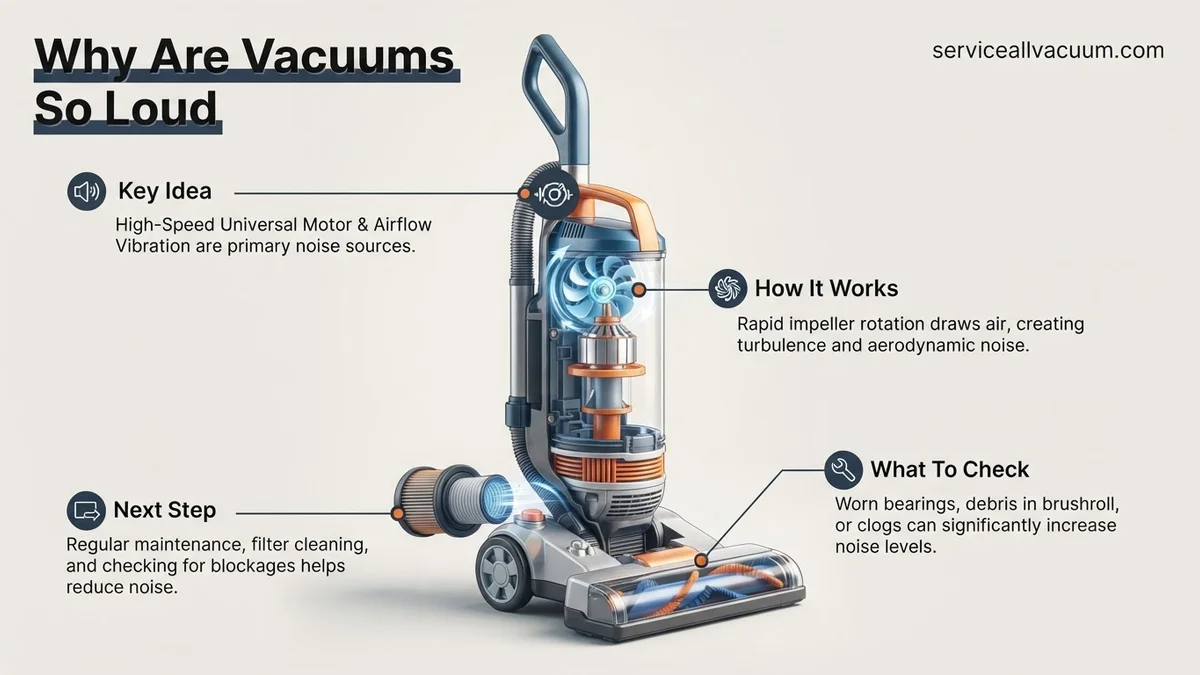
At the heart of every noisy vacuum is a high-revving electric motor and an impeller fan. These components work together under intense stress, turning electrical current into mechanical suction.
The High-Speed Electric Motor
Most modern vacuum motors spin at incredible velocities, often exceeding 35,000 RPM in uprights and pushing past 100,000 RPM in compact cordless sticks. This rapid rotation causes high-frequency electromagnetic whining and mechanical friction within the bearings and brushes.
Centrifugal Fan Blades Cutting Air
The spinning impeller blades act like a propeller inside a sealed chamber. As these blades strike air molecules at supersonic tips speeds, they generate intense pressure waves. This process produces the characteristic roar you hear when operating the machine.
- Motor armatures spin fast enough to create high-pitched whine frequencies.
- Fan blades chop air hundreds of times per second.
- Mechanical vibrations transfer directly into the outer plastic casing.
Aerodynamic Factors and Airflow Restrictions
Suction relies on creating a pressure differential. When airflow moves through narrow channels, filters, and debris chambers, it creates aerodynamic turbulence that heavily contributes to the overall noise profile.
Restrictions and Venturi Effects
As air rushes through the narrow nozzle, hoses, and cyclones, it accelerates dramatically. When this fast-moving air hits filters or sudden expansions in the dust bin, it creates aerodynamic whistling and howling, similar to wind howling through a narrow canyon.
Debris Impact Noise
Dirt, pet hair, and hard particles do not just sit quietly when sucked up. They travel through the nozzle at high velocities, constantly pelting the internal plastic walls and fan blades.
- Constricted airflow paths create high-pitched whistling sounds.
- Dirty or blocked HEPA filters force the motor to work harder, increasing overall decibel output.
- Sand and hard debris hitting the fan blades create a distinct rattling or pinging noise.
Step-by-Step Guide to Reducing Vacuum Noise
Quieter cleaning sessions require a systematic approach to maintenance. By tackling the primary sound sources—airflow blockages, vibrating parts, and aging motors—you can significantly drop decibel levels.
1. Clear Obstructions and Clean Filters
Airflow blockages force the motor to work harder, generating a higher-pitched whine. Follow these steps to restore smooth airflow:
- Unplug the vacuum to ensure safety before inspecting any internal components.
- Detach the hose, wand, and floor nozzle, then inspect them visually for trapped debris, pet hair clumps, or small toys.
- Remove and wash foam or cloth filters according to the manufacturer manual, ensuring they dry completely for 24 hours before reinstallation.
- Replace HEPA filters that show dark discoloration or chemical odors, as clogged pores restrict air and amplify motor strain.
2. Lubricate and Secure Moving Parts
Loose plastic housings and dry brushroll bearings create rattling and high-friction squeals. Secure the chassis with these measures:
- Tighten all external screws on the motor housing, handle joints, and cyclone bin using a compatible screwdriver.
- Remove the brushroll and clear wrapped hair or thread from the end caps, which cause friction-induced whining.
- Apply a tiny drop of food-safe silicone lubricant to the brushroll end bearings if they sound dry or squeaky.
What If Your Vacuum Still Sounds Too Loud?
If routine maintenance fails to quiet your machine, a deeper mechanical issue may be present. Consider these fallback steps:
- Inspect the motor brushes: Worn carbon brushes in older universal motors spark and produce a loud buzzing noise. Replacing them costs between $20 and $50 in parts.
- Check internal acoustic insulation: High-end vacuums feature specialized foam dampening layers that can degrade or shift out of place over time, requiring repositioning or replacement.
- Consult a professional technician: If the sound turns into a metallic screech or grinding roar, the motor bearings have likely failed completely. Professional repair services typically charge $75 to $150 for motor replacements.
- Upgrade to a modern unit: If your machine is over eight years old, upgrading to a 2026-generation ultra-quiet or brushless model is often more cost-effective than repairing an aging motor.
Conclusion
Vacuum noise stems from a combination of high-speed airflow dynamics, mechanical friction, and motor vibration. Regular filter cleaning and bearing maintenance can lower sound outputs by a noticeable margin. According to verified research and expert acoustical sources, keeping airflow unhindered is the single most effective way to maintain factory noise levels throughout a machine’s lifespan. Take your next step today by inspecting your filters and clearing any obstructions to enjoy a noticeably quieter clean.
❓ Frequently Asked Questions
Why does my vacuum suddenly sound much louder than usual?
A sudden spike in noise usually indicates a blockage in the hose, a full dust canister, or a damaged fan blade striking the internal housing. Inspecting and clearing the airflow path typically resolves the issue.
Are cordless stick vacuums quieter than corded uprights?
Generally, yes. Cordless stick vacuums use smaller, less powerful motors and generate less overall suction, which naturally results in lower decibel levels compared to heavy-duty corded models.
Do quieter vacuums have weaker suction power?
Not necessarily. Modern acoustic engineering and better insulation allow manufacturers to muffle motor and airflow noise without sacrificing raw suction performance.
What does a high-pitched squealing sound mean in a vacuum?
A high-pitched squeal often points to a worn-out or slipping brushroll belt, or friction caused by bearings failing inside the motor assembly.
How can I check the noise level before buying a new vacuum?
Look at the manufacturer specifications for the decibel (dB) rating. Models rated under 70 dB are considered significantly quieter than the industry average.
Does the type of floor surface affect how loud a vacuum is?
Hard floors reflect sound waves, making the vacuum appear louder, whereas soft carpets absorb some of the high-frequency operational noise.