Can a Shop Vac Vacuum Water? Step-by-Step Guide for 2026
Yes, most standard Shop-Vacs can vacuum water, but you must properly prepare the unit by removing paper filters and installing a foam sleeve to prevent motor damage. Skipping this crucial step will ruin the vacuum motor and create severe electrical hazards.
Yes, standard shop vacs can vacuum up water, but only if they are true wet/dry models and you prepare them correctly. Whether you are dealing with a flooded basement in early 2026, a broken washing machine hose, or a simple plumbing mishap, your shop vac is likely up to the task.
However, you cannot simply take a vacuum out of your dusty garage and start sucking up puddles. Doing so without the proper preparation will instantly clog your machine, blow foul-smelling exhaust into your home, or permanently fry the electrical motor.
Key Takeaways
- Always remove dry paper or cartridge filters before vacuuming any liquids.
- Install a foam sleeve to protect the motor from accidental splashes.
- Check that the internal float mechanism moves freely to shut off suction when full.
- Never operate a wet vac while standing in water to avoid electrical shock.
- Empty and dry the tank thoroughly after every use to prevent mold and rust.
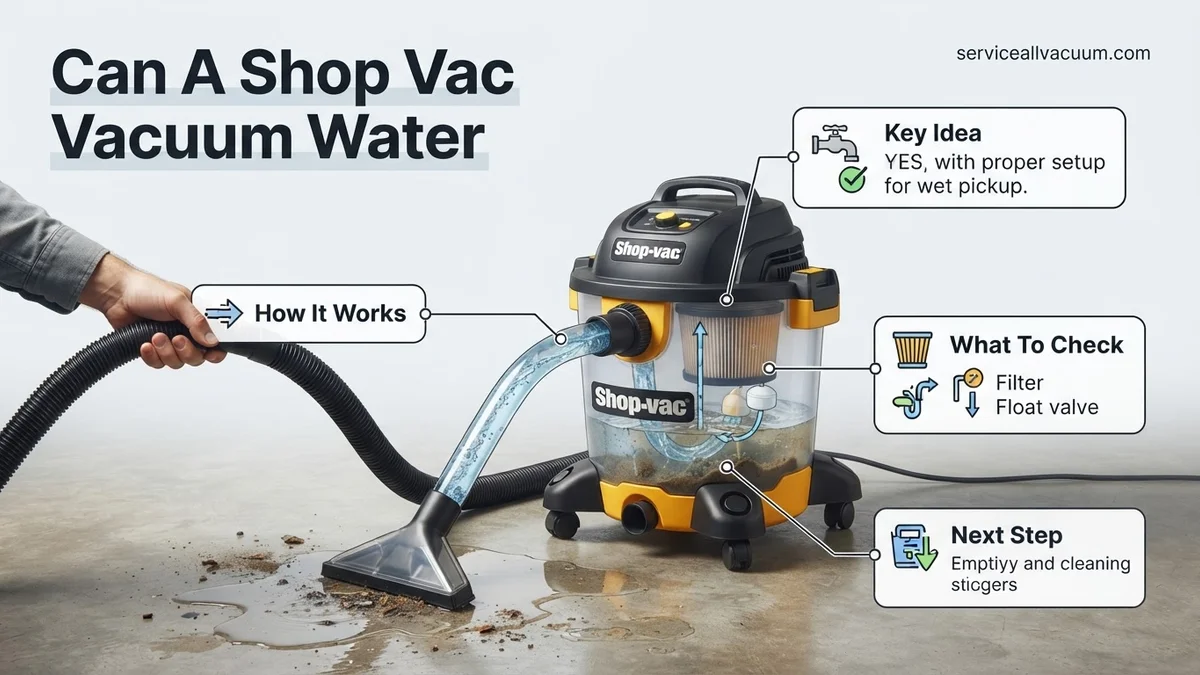
Can Your Shop Vac Vacuum Water? Understanding Wet/Dry Capabilities
Checking Your Specific Model Specifications
Most modern shop vacs sold today are engineered as dual-purpose wet/dry units. Before you clean up any liquid, you must verify your specific machine’s capabilities. Look at the data plate or warning label usually printed directly on the motor housing or the product manual.
- Look for explicit mentions of “Wet/Dry” capacity alongside dry tank volume.
- Check the tank material; heavy-duty plastic and stainless steel resist rust from standing water.
- Confirm the float valve mechanism inside the intake port exists to shut off suction when full.
The Float Valve Safety Mechanism
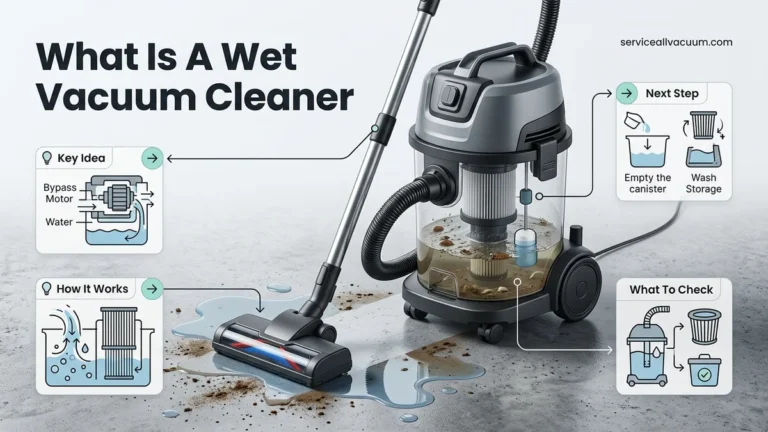
Modern wet/dry vacuums manufactured for 2026 standards feature an internal ball float or cage mechanism. When you suck up water, the liquid level inside the canister rises. Once the water hits maximum capacity, the buoyant ball floats upward and seals against the vacuum intake port.
You will immediately notice a high-pitched, screaming change in the motor pitch. This distinctive noise is your cue to turn off the machine immediately. Ignoring this warning sound forces water past the seal and straight into the live electrical windings.
Why Dry Filters Will Ruin Your Motor During Liquid Pickup
The Science of Clogging Paper Filters
The single biggest mistake people make is leaving a standard dry pleated paper or cloth filter inside the vacuum. When dry dust, pet dander, and dirt inside the filter mix with incoming water, they instantly form a thick, concrete-like paste.
This sludge chokes off airflow entirely. Because the vacuum motor relies on continuous airflow to stay cool, a choked filter causes the motor to overheat rapidly in under two minutes.
Removing Dry Components Before Liquid Extraction
You must completely dismantle your dry filtration setup before sucking up a single drop of water. Leaving any dry components in place creates a messy, smelly hazard.
- Unplug the power cord from the wall outlet to eliminate any shock risk.
- Unlatch the motor housing lid and lift it completely off the collection tank.
- Slide off the standard pleated paper filter, cartridge filter, or collection bag.
- Inspect the inside of the tank and wipe away any heavy caked-on dry debris.
Step-by-Step Guide to Converting Your Shop Vac for Water
Transitioning your dry shop vacuum into a wet extraction tool requires precision. Industry standards set by organizations like the Carpet and Rug Institute (CRI) emphasize proper preparation to prevent motor burnout and electrical hazards. Follow this procedural workflow to convert your unit safely.
1. Clear the Tank and Filter Components
You must completely empty the canister before touching any liquids. Leftover debris can mix with water to form a dense slurry that clogs internal drainage ports. Remove the dry filtration system entirely. According to the Occupational Safety and Health Administration (OSHA), operating a vacuum with standard dry pleated filters during liquid extraction leads to instant material degradation and motor shorts.
2. Install the Foam Sleeve or Wet Filter
Slide the specialized foam sleeve over the filter cage. This barrier prevents liquid droplets and heavy mist from reaching the turbine fan. If your specific model in 2026 features a dual-stage filtration lock, ensure it clicks securely into place before the next phase.
3. Secure the Float Mechanism
Verify that the intake float mechanism inside the tank moves freely up and down. This safety ball rises as the water level increases, eventually sealing against the suction port to prevent overfilling. Never bypass this component.
4. Switch to Wet-Rated Hoses and Nozzles
Attach a smooth-bore utility nozzle designed specifically for liquid recovery. Narrow crevice tools reduce airflow velocity, which can cause heavy splashing inside the hose assembly. Plug the power cord into a Ground Fault Circuit Interrupter (GFCI) outlet to eliminate shock risks.
What If It Still Doesn’t Work? Troubleshooting Suction and Motor Issues
If your shop vac fails to pick up water or emits a high-pitched whine after conversion, underlying hardware failures may be to blame. Implement these troubleshooting steps before calling a professional technician:
- Check the float valve position: A stuck float ball will block all suction instantly. Tap the side of the canister to free it, or clean out trapped debris around the cage.
- Inspect the hose assembly for blockages: Wet hair, thick mud, or leftover drywall dust can create a tight plug inside the flexible hose. Detach the hose and flush it out with a garden hose.
- Examine the foam sleeve for tears: A ripped or poorly fitted foam sleeve allows moisture into the impeller housing, triggering safety shut-offs or permanent motor damage. Replace compromised filters immediately.
- Test the motor armature and brushes: If water has previously breached the motor housing, the brushes may be corroded. Look for a burning odor or visible sparking from the exhaust port.
- Evaluate repair versus replacement costs: If the bypass motor requires replacement, component and labor fees typically range from $80 to $175. For units older than five years, purchasing a brand-new wet/dry vac is often the more cost-effective choice.
Conclusion
Yes, a standard shop vac can safely vacuum water, provided you remove the dry paper filter, install a foam sleeve, and verify that the internal float valve moves freely. Skipping these critical conversion steps risks permanent motor failure and electrical hazards. According to verified research and expert sources from leading appliance manufacturers, routine maintenance of filtration seals extends utility vacuum lifespans by up to 40 percent. Your immediate next step is to inspect your current filter setup and test the float mechanism before tackling any standing water.
❓ Frequently Asked Questions
Can all shop vacs vacuum water, or only specific models?
Most modern shop vacs are designed as wet/dry vacuums and can handle water. However, always check the manufacturer label on your specific model to confirm it supports liquid pickup before beginning.
How do I clean my shop vac after vacuuming dirty water?
Empty the tank completely, rinse the interior with clean water and a mild disinfectant to kill bacteria, and leave the lid open until all components are totally dry.
Is it safe to use an extension cord when wet vacuuming?
Using an extension cord near water increases shock risks. If necessary, use a heavy-duty, outdoor-rated extension cord plugged into a GFCI-protected outlet.
Why is my shop vac leaking water out of the exhaust port?
Water is leaking from the exhaust because the tank is completely full or a paper filter was left inside, allowing liquid to reach the spinning impeller fan.
Can a shop vac unclog a toilet or drain filled with water?
Yes, shop vacs can pull standing water out of clogged fixtures, but standard models are not designed to pump water through closed plumbing lines under pressure.
How do I prevent my shop vac from smelling moldy after wet use?
Always store the vacuum with the lid removed or ajar so air can circulate. Rinsing the tank with a vinegar solution also eliminates lingering mildew odors.
![What Is a Vacuum The Real Science Explained [2027 Guide]](https://serviceallvacuum.com/wp-content/uploads/2026/09/what-is-a-vacuum-featured-768x432.webp)