How Often Should You Vacuum Your Carpet Expert Guide 2026
Most homes need to vacuum their carpets at least once to twice a week to prevent dirt buildup and maintain fiber health. However, households with pets, children, or allergy sufferers require a more frequent schedule of daily to every other day to manage dust and trapped allergens effectively.
As a general rule, you should vacuum low-traffic rooms once a week, high-traffic areas twice a week, and pet-heavy zones every single day. Sticking to this schedule removes abrasive dirt before it cuts through carpet fibers and destroys your flooring investment.
Many homeowners in 2026 still underestimate how quickly dust, skin cells, and microscopic debris accumulate beneath the surface. Knowing your exact vacuuming frequency protects your indoor air quality and extends the life of your carpet by years.
Key Takeaways
- Vacuum general low-traffic rooms once a week to prevent dust accumulation.
- High-traffic hallways and living rooms require vacuuming twice weekly.
- Homes with shedding pets need daily vacuuming to control fur and dander.
- Vacuum slowly over heavy-traffic zones to effectively extract embedded dirt and debris.
- Regular vacuuming protects carpet fibers from microscopic damage and extends floor lifespan.
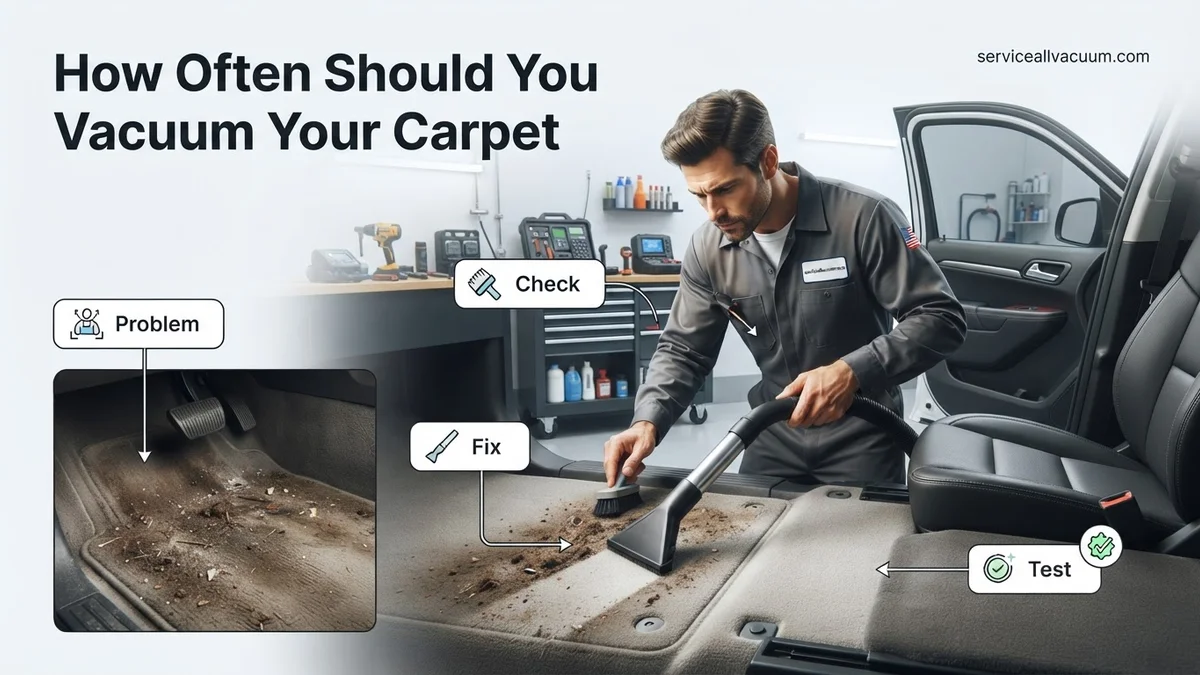
What Causes Rapid Dirt Buildup and Why Regular Vacuuming Matters
Carpet acts like a massive floor-level air filter, trapping everything that falls onto it. Understanding what creates this daily debris helps you realize why skipping a vacuuming session causes hidden damage to your home.
The Hidden Sources of Household Debris
Every day, an average household generates pounds of unseen dry particulate matter. If you do not remove these particles promptly, they work their way down to the carpet backing.
- Shed skin cells and hair: Humans and pets shed millions of microscopic skin cells daily, feeding dust mites deep within carpet padding.
- Outdoor tracking: Footwear brings in soil, lawn chemicals, asphalt residue, and vehicle exhaust particles that settle into low yarn twists.
- Fabric lint and fibers: Clothing, blankets, and upholstery constantly shed micro-fibers that weave themselves permanently into carpet loops.
Carpet Longevity and Indoor Air Quality Impacts
Neglecting your vacuuming routine does more than make your floors look dull; it actively destroys the material and your indoor atmosphere.
- Abrasive fiber cutting: Trapped dirt acts like microscopic sandpaper against your carpet strands every time someone walks across the room.
- Allergen recirculation: Walking on dirty carpet launches trapped pet dander and mold spores right back into your breathing zone.
- Premature matting: Heavy debris weight compresses carpet pile permanently, making high-traffic paths look flat and worn out within months.
How to Fix Your Vacuuming Schedule Based on Household Traffic and Pets
No two homes have the exact same flooring needs. Your ideal cleaning frequency depends entirely on who lives under your roof and how heavily you use specific rooms in 2026.
Low-Traffic and Solo Living Spaces
If you live alone, work outside the home, or have a minimalist household without pets or children, your maintenance routine is straightforward and manageable.
- Guest bedrooms and formal parlors: Vacuum these low-use areas every 10 to 14 days to keep surface dust under control.
- Main living zones: A thorough pass once a week keeps single-occupant or couple households completely free of embedded grit.
- Staircases and entryways: Even in low-traffic homes, high-touch zones need attention every 5 to 7 days due to constant friction.
Families with Children and Multiple Pets
Kids and pets change the rules entirely, turning standard living rooms and hallways into high-impact debris zones that demand aggressive cleaning frequencies.
- Pet owners: Homes with shedding dogs or cats require daily high-suction vacuuming in favorite animal resting spots and heavy-use corridors.
- Households with toddlers: Kids playing on the floor track in playground sand and drop food crumbs, requiring high-traffic zones to be vacuumed 3 to 4 times weekly.
- Allergy sufferers: If family members struggle with seasonal or pet allergies, upgrade to a HEPA-filter vacuum and run it across main rooms every 48 hours without fail.
Step-by-Step Guide to Vacuuming Your Carpets for Maximum Effectiveness
Simply pushing a vacuum across the floor is not enough to extract microscopic allergens and embedded grit. Following a structured procedure ensures your 2026 household routine protects your flooring investment.
1. Clear the Floor and Prep the Machine
Pick up small toys, coins, and cords that can damage the internal motor or roller brush. Empty the vacuum bag or canister before it reaches the two-thirds full mark, as the Carpet and Rug Institute (CRI) notes that half-full containers reduce suction efficiency by up to 30 percent.
2. Execute the Slow, Multi-Directional Pass
Move the vacuum head forward and backward slowly to allow the airflow adequate time to lift dirt from the base of the fibers. According to leading flooring manufacturers, you should make at least two slow passes over heavy-traffic lanes. For optimal particle extraction, alternate your direction by vacuuming north-to-south first, then east-to-west.
3. Utilize Specialized Attachments
Finish your routine by attaching the crevice tool to edge along baseboards and around furniture legs where dust bunnies accumulate. According to indoor air quality studies, utilizing a certified HEPA-filtration vacuum during these steps traps 99.97 percent of particles down to 0.3 microns.
What If Regular Vacuuming Still Doesn’t Keep Your Carpets Clean?
Even with a strict 2026 vacuuming schedule, carpets can eventually look dull, harbor stubborn odors, or retain deep-set stains that surface fibers cannot hide. When standard suction fails, implement these expert fallback steps:
- Deep Clean the Roller Brush: Tangled hair and carpet fibers wrap tightly around the agitator bar, preventing it from beating the carpet effectively. Cut away debris using scissors and wipe down the belt.
- Upgrade Your Filtration: If allergy symptoms persist, your current vacuum may be leaking fine particulates back into the air. Switch to a model with sealed HEPA system compliance.
- Invest in Professional Hot Water Extraction: Schedule a professional truck-mounted steam cleaning service to flush out oils and sticky residues that bind dirt to fibers. Industry guidelines recommend this deep cleaning every 12 to 18 months, with professional services typically costing between $150 and $350 depending on your home square footage.
Conclusion
Establishing a consistent vacuuming schedule is the single most effective way to extend the lifespan of your flooring and maintain a healthy indoor environment. By matching your vacuum frequency to your household traffic and utilizing proper multi-directional techniques, you prevent premature fiber degradation. According to verified research and expert sources from the Carpet and Rug Institute, adhering to these maintenance protocols protects your indoor air quality and preserves warranty coverage. Take your next step today by inspecting your vacuum’s filter and scheduling your deep-cleaning rotation for 2026.
❓ Frequently Asked Questions
How often should you vacuum your carpet if someone in the house has allergies?
If allergy sufferers live in your home, you should vacuum high-traffic areas two to three times a week using a vacuum equipped with a HEPA filter to trap microscopic allergens.
Is it possible to vacuum a carpet too often?
While daily vacuuming is fine for heavy-traffic zones, vacuuming delicate or low-pile carpets excessively with a harsh beater brush can cause premature fiber wear over the years.
Should I change how often I vacuum depending on the season?
Yes, you may need to increase your vacuuming frequency during spring and autumn due to higher pollen counts, tracked-in mud, and increased indoor activity.
How many passes should I make over the carpet when vacuuming?
Make two slow passes—one forward and one backward—over standard areas, and up to four passes in high-traffic zones or pet lounging spots for thorough cleaning.
Does vacuuming frequency vary based on carpet pile type?
Thick shag or high-pile carpets trap more hidden debris and often require slower, more frequent vacuuming sessions compared to low-pile commercial carpets.
What happens if I neglect vacuuming my carpet for months?
Neglecting your carpet allows sharp dirt particles to sink deep into the backing, matting the fibers together and permanently dulling the appearance and texture of the material.
![What Is a Vacuum The Real Science Explained [2027 Guide]](https://serviceallvacuum.com/wp-content/uploads/2026/09/what-is-a-vacuum-featured-768x432.webp)