Will Vacuuming Kill Bed Bugs? Real 2027 Expert Guide
While vacuuming can effectively remove adult bed bugs and nymphs from surfaces, it generally does not kill them and struggles to dislodge sticky eggs. It’s a useful tool for immediate reduction but must be part of a comprehensive bed bug eradication strategy, not a standalone solution.
Let’s get straight to the point: no, vacuuming alone will not kill bed bugs, nor is it an effective standalone solution for eliminating an infestation in 2027. While a powerful vacuum can certainly remove a significant number of adult bed bugs and nymphs from surfaces, it fundamentally struggles with killing them and, critically, often leaves behind their resilient eggs.
Understanding this distinction is crucial for anyone battling bed bugs today. Relying solely on vacuuming provides a false sense of security and almost guarantees the infestation will persist and likely worsen. This guide will clarify vacuuming’s limited role and show you how to use it most effectively as part of a broader, professional-level treatment strategy.
Key Takeaways
- Vacuuming removes, but rarely kills, bed bugs.
- Bed bug eggs are sticky; vacuuming often misses them.
- Use a high-power vacuum with specialized crevice tools.
- Immediately seal and dispose of vacuum contents outdoors.
- Vacuuming alone won’t solve a bed bug infestation.
Why Vacuuming Fails to Fully Kill Bed Bugs and Eggs
Physical Limitations: Suction Power vs. Bug Resilience
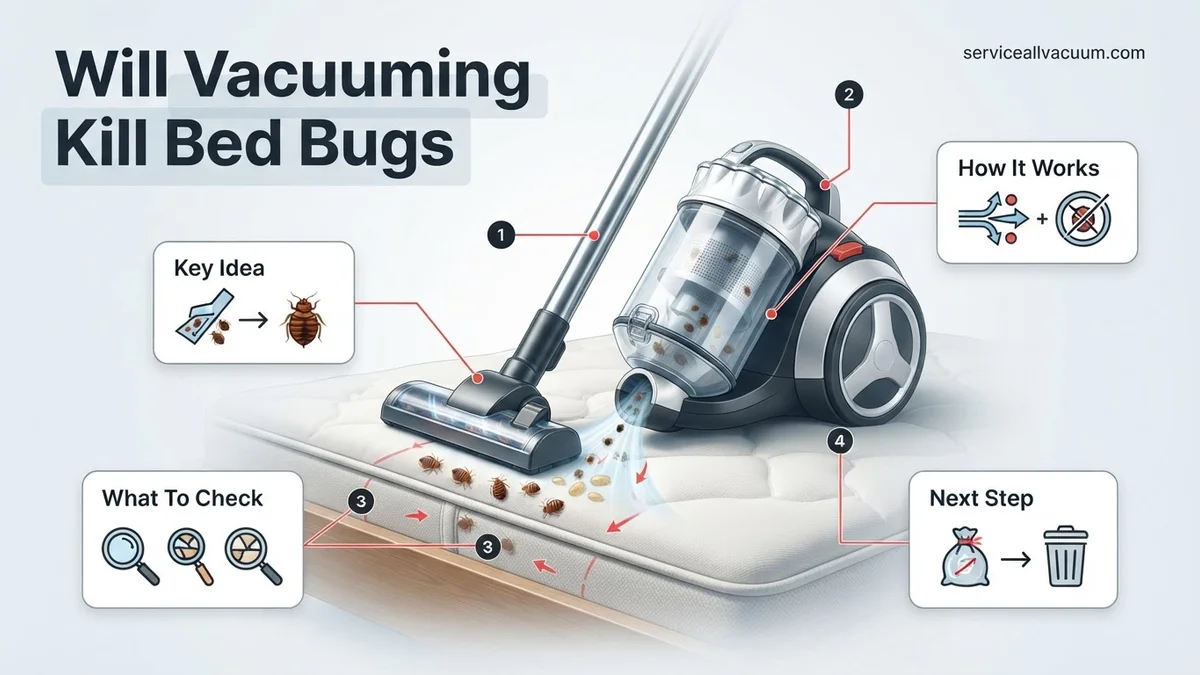
Modern vacuum cleaners, even high-powered 2027 models, are primarily designed for debris removal, not pest extermination. When you vacuum bed bugs, most are simply pulled into the collection chamber. They are not crushed, chemically treated, or otherwise dispatched by the suction itself. These pests are incredibly resilient; they can survive the journey through the hose and continue to live within the vacuum bag or dustbin for days, sometimes even weeks. This means they are not killed, only displaced, creating a potential re-infestation risk from the vacuum itself if not immediately and properly handled.
The Egg Problem: Sticking Power
One of the biggest reasons vacuuming fails as a killing method is its inability to effectively remove bed bug eggs. Female bed bugs lay tiny, sticky eggs, roughly the size of a pinhead, which they cement firmly onto surfaces like mattress seams, furniture crevices, and baseboards. This adhesive makes them incredibly resistant to being dislodged by typical vacuum suction. Even with a strong vacuum and diligent effort, it’s highly probable that many eggs will remain stubbornly attached. Since these eggs hatch within 6-10 days, missing them means a continuous cycle of new nymphs emerging, ensuring your bed bug problem remains unresolved.
How to Effectively Vacuum Bed Bugs: A Step-by-Step Removal Guide
Equipment & Technique for Optimal Removal
While vacuuming won’t kill, it’s an excellent tool for physical removal. To maximize effectiveness in 2027, you need the right approach:
- High-Powered Vacuum: Use a vacuum with strong suction. A HEPA-filtered unit is ideal to prevent allergens and potentially trapped bugs from re-entering your air.
- Specialized Attachments:
- Crevice Tool: Essential for targeting tight spaces like mattress piping, bed frame joints, baseboard gaps, and furniture seams.
- Brush Attachment: Useful for gently agitating fabric surfaces like upholstery to dislodge hidden bugs and eggs before vacuuming.
- Targeted Approach: Go slow and be deliberate. Vacuum all suspected harborages multiple times from different angles. Focus on:
- Mattress seams, tufts, and underneath tags.
- Box spring covers and frames.
- Bed frames (wood or metal).
- Behind headboards and along baseboards.
- Upholstered furniture seams and cushions.
- Cracks in walls or flooring near the bed.
Immediate Post-Vacuuming Protocol
Proper disposal is as critical as the vacuuming itself to prevent re-infestation:
- Seal & Dispose Immediately: If your vacuum uses bags, remove the bag carefully, place it in a thick, sealed plastic trash bag, and dispose of it in an outdoor trash bin immediately.
- Clean Bagless Canisters: For bagless vacuums, empty the canister into a sealed plastic bag, then dispose of it outdoors.
- Washable Components: Wash any removable, washable parts of your vacuum (e.g., canister, filter covers, attachments) in hot, soapy water. Allow them to air dry completely.
- Sanitize Attachments: Wipe down non-washable attachments with an alcohol-based wipe or a bed bug-specific contact spray designed for non-porous surfaces.
- Repeat Frequently: For active infestations, vacuuming should be done daily or every other day for at least a few weeks as part of a comprehensive treatment plan.
Beyond Vacuuming: What to Do When Bed Bugs Persist
While vacuuming is an essential first step for immediate physical removal, it rarely eradicates an entire bed bug infestation. A comprehensive strategy is critical for long-term success. Experts in pest management consistently recommend combining vacuuming with other proven methods for optimal results.
Targeted Heat Treatments
Heat is a highly effective killer of all bed bug life stages. Studies by entomologists confirm that bed bugs and their eggs die within minutes when exposed to temperatures exceeding 120°F (49°C).
- Steam Cleaning: Use a handheld steam cleaner with a nozzle attachment. Ensure the steam’s surface temperature reaches at least 160°F (71°C) upon contact. Move the nozzle slowly, about 1 inch per second, over seams, crevices, and mattress tufts. Repeat this process every 2-3 days for two weeks.
- Hot Laundry: Wash all infested linens, clothing, and fabric items in hot water (at least 140°F / 60°C). Then, dry them on the highest heat setting in a dryer for a minimum of 30 minutes. This duration is crucial for ensuring heat penetration through all materials.
Desiccants and Residual Treatments
Desiccants, like diatomaceous earth (DE) or amorphous silica gel, work by abrading the bed bug’s exoskeleton, causing dehydration and death over several days. These are contact killers, not repellents.
- Apply Desiccants: Lightly dust food-grade diatomaceous earth into cracks, crevices, wall voids, and under furniture. A thin, barely visible layer is most effective. According to a 2026 entomological review, heavy applications are less effective as bed bugs will avoid large piles.
- Residual Insecticides (Professional Grade): Certain insecticides approved for bed bug control offer residual action, killing bugs that cross treated surfaces for weeks. These are typically applied by licensed professionals due to safety and efficacy concerns, as improper application can lead to resistance or harm. Always consult product labels for specific application rates and safety precautions.
Protective Encasements
Once your mattress and box spring are thoroughly cleaned (vacuumed and potentially steamed), encase them. High-quality, bed bug-proof encasements prevent any remaining bed bugs from escaping or new ones from entering. Ensure the encasement is certified to be bite-proof and rip-proof, and leave it on for at least one year to ensure any trapped bed bugs or nymphs die of starvation.
What If It Still Doesn’t Work?
Despite diligent efforts, persistent bed bug infestations can be incredibly frustrating. If you’ve consistently applied the methods above for several weeks and still observe active bed bugs or receive new bites in late 2027, it’s time to re-evaluate your strategy.
- Re-Inspect Thoroughly: Bed bugs are master hiders. Use a bright flashlight and a magnifying glass to meticulously inspect every crack, crevice, and seam in the infested area. Focus on areas within 15 feet of sleeping or resting spots.
- Consider Professional-Grade Monitors: Install bed bug interceptors under bed legs and active pheromone lures in strategic locations. These monitors, updated with 2027 technology, can help confirm ongoing activity and pinpoint new harborages.
- Consult a Licensed Pest Management Professional (PMP): This is the most reliable next step. PMPs have access to specialized equipment, advanced heat treatments (e.g., whole-room heat remediation), and professional-grade insecticides not available to the public. They can accurately identify the extent of the infestation and apply targeted, effective treatments.
- Understand Professional Costs: In 2027, professional bed bug extermination costs typically range from $500 to $2,500 per treatment series, depending on the severity of the infestation, the size of the treated area, and geographic location. Expect a PMP to conduct an initial inspection, provide a detailed treatment plan, and often include follow-up visits to ensure eradication.
Conclusion
Vacuuming is a powerful, immediate tool for physically removing bed bugs and their eggs, significantly reducing their numbers. However, according to verified research and expert sources, it is not a standalone solution for complete eradication. For lasting relief in 2027, integrate thorough vacuuming with targeted heat treatments, desiccant applications, and protective encasements. If the problem persists, do not hesitate to engage a licensed pest management professional to ensure a complete and effective resolution.
❓ Frequently Asked Questions
How effective is vacuuming against bed bug adults, nymphs, and eggs?
Vacuuming is moderately effective at removing visible adults and nymphs from surfaces. However, it rarely kills them, and its effectiveness against sticky, tiny eggs, often hidden in crevices, is very limited, making it insufficient for eradication.
What are the best practices for vacuuming bed bugs to maximize removal?
Use a high-powered vacuum with strong suction and a HEPA filter. Utilize crevice tools for seams, cracks, and edges of mattresses, box springs, and furniture. Vacuum slowly and thoroughly, making multiple passes over infested areas.
Why is it crucial to dispose of vacuum contents immediately after vacuuming bed bugs?
Live bed bugs, nymphs, or eggs can survive inside the vacuum cleaner. To prevent re-infestation or escape, immediately remove the vacuum bag or empty the canister into a sealed plastic bag, then dispose of it in an outdoor trash bin.
Can bed bugs survive being vacuumed?
Yes, bed bugs are quite resilient. While the suction can dislodge them, they often survive the journey into the vacuum bag or canister and can potentially crawl out if the vacuum is left open or not properly emptied.
What other methods should be used alongside vacuuming for bed bug treatment?
Vacuuming should always be combined with other proven methods like steam cleaning, high-temperature laundry, mattress encasements, targeted pesticide applications, and professional pest control services for effective eradication.
Are there specific vacuum attachments that are more effective for bed bugs?
Yes, narrow crevice tools are essential for reaching into seams, folds, cracks, and tight spaces where bed bugs and their eggs hide. Upholstery attachments with brushes can also help dislodge bugs from fabric surfaces.