Can You Vacuum Pack Tomatoes? Real Safety Guide 2027
Vacuum packing fresh, raw tomatoes is generally not recommended due to severe botulism risk and quality degradation. The anaerobic environment created can foster dangerous bacterial growth, and fresh tomatoes will become mushy. However, properly dried, cooked, or frozen solid tomatoes can be safely vacuum sealed for extended storage.
Thinking of vacuum packing fresh, raw tomatoes to extend their pantry or fridge life in 2027? Stop right there. While vacuum sealing is an incredible tool for food preservation, applying it to fresh, raw tomatoes is generally not recommended. It poses significant safety risks, primarily the potential growth of dangerous bacteria, and will almost certainly compromise their quality.
Understanding these critical distinctions is vital for your food safety and enjoyment. You want to preserve your harvest efficiently, and knowing the right methods for different tomato preparations can save you from wasted effort and, more importantly, potential health hazards. Let’s dive into why fresh tomatoes are problematic and how you can safely vacuum pack them once they’ve been properly processed.
Key Takeaways
- Fresh, raw tomatoes pose botulism risk when vacuum sealed.
- Never vacuum pack fresh, raw, low-acid foods.
- Safely vacuum seal fully dried tomatoes.
- Freeze tomatoes solid before vacuum sealing.
- Cooked tomato products need acid or freezer storage.
What Causes Safety Issues When Vacuum Packing Fresh Tomatoes?
The core problem with vacuum sealing fresh, raw tomatoes lies in creating an anaerobic (oxygen-free) environment. While this is great for preventing aerobic spoilage organisms, it becomes a perfect breeding ground for a much more dangerous type of bacteria. The delicate balance of a fresh tomato’s composition also means its texture will suffer immensely.
The Botulism Risk: Why Oxygen Deprivation Matters
The primary concern with vacuum packing fresh tomatoes is the risk of Clostridium botulinum. This bacterium produces a deadly toxin and thrives in anaerobic conditions, like those created by a vacuum seal, especially at temperatures above refrigeration. While tomatoes are often considered acidic, their pH can vary significantly depending on the variety, ripeness, and growing conditions. Some varieties, particularly heirloom or paste types, can have a pH above 4.6, which is the critical threshold below which C. botulinum typically cannot grow. Without proper acidification or other preservation methods, the oxygen-deprived environment inside a vacuum bag combined with a potentially borderline pH creates an unacceptable risk for this severe foodborne illness. Relying solely on vacuum sealing for fresh tomatoes is a gamble you absolutely should not take in 2027 or any year.
Texture Troubles: The Mush Factor
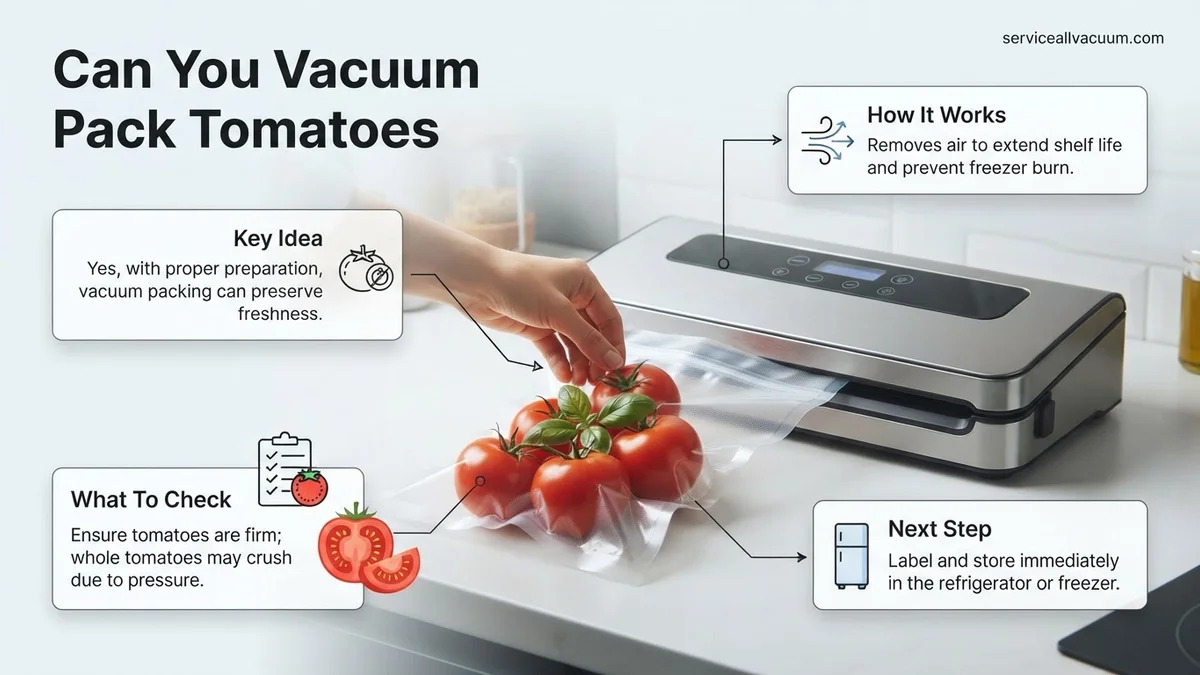
Beyond the safety concerns, vacuum packing fresh, raw tomatoes will inevitably lead to a disappointing culinary experience. Tomatoes have a high water content, and the pressure applied by a vacuum sealer effectively crushes their delicate cell walls. Even if you manage to avoid bacterial growth through immediate and deep freezing (which defeats the purpose of vacuum sealing for extended pantry/fridge life), the resulting product upon thawing will be nothing more than a watery, pulpy mush. They will lose all their firm structure, vibrant juiciness, and satisfying texture, making them unsuitable for most fresh applications. Lightly blanched tomatoes fare only slightly better; while blanching can help preserve color, it doesn’t prevent the cellular collapse under vacuum pressure or eliminate the botulism risk if not adequately processed or frozen solid.
How to Safely Vacuum Pack Processed Tomatoes Step-by-Step
While fresh tomatoes are a no-go for direct vacuum sealing, you can absolutely vacuum pack tomatoes once they’ve been properly processed. These methods ensure both safety and quality, allowing you to enjoy your tomato harvest year-round without worry. The key is to either remove all moisture, completely freeze them, or properly acidify and cook them before sealing.
Option 1: Fully Dried Tomatoes
One of the safest and most effective ways to vacuum pack tomatoes is after they have been thoroughly dried. This method removes the water necessary for microbial growth, eliminating the botulism risk and preserving their flavor. You can achieve this using a dehydrator or oven.
- Preparation: Wash tomatoes, slice them thinly (1/4 to 1/2 inch thick), or halve cherry tomatoes.
- Drying Process: Dry them completely until they are leathery or brittle. There should be absolutely no moisture remaining. This typically takes 8-12 hours in a dehydrator at around 135°F (57°C) or longer in a very low oven.
- Cooling: Allow the dried tomatoes to cool completely to room temperature before vacuum sealing. Any residual warmth can create condensation inside the bag, which invites spoilage.
- Vacuum Sealing: Place the fully dried and cooled tomatoes into a vacuum seal bag. Seal according to your machine’s instructions.
- Storage: Store vacuum-sealed dried tomatoes in a cool, dark pantry. They can last for several years when stored correctly, offering incredible versatility for soups, stews, and rehydrated dishes.
Option 2: Frozen Tomato Preparations
Another excellent method involves freezing tomatoes solid before vacuum sealing. This technique is particularly effective for blanched tomatoes or even whole smaller varieties, locking in freshness and preventing freezer burn.
- Preparation:
- Whole/Halved: Wash and dry small tomatoes. For larger ones, you might blanch them briefly (30-60 seconds in boiling water), then peel, core, and chop them as desired.
- Blanching Benefit: Blanching helps preserve color and aids in peeling, but remember the botulism risk if not frozen solid after.
- Pre-Freezing is Key: This step is CRITICAL. Arrange the prepared tomatoes in a single layer on a baking sheet lined with parchment paper. Freeze until completely solid – typically 2-4 hours, or overnight. This prevents them from being crushed by the vacuum sealer and allows for individual portions.
- Vacuum Sealing: Once frozen solid, transfer the hard tomatoes to a vacuum seal bag. Seal immediately. The solid form protects them from the sealer’s pressure.
- Storage: Store the vacuum-sealed, frozen tomatoes in your freezer. They will maintain excellent quality for 12-18 months or even longer, far surpassing the life of traditionally bagged frozen tomatoes by preventing freezer burn.
What If You Still Want to Preserve Fresh Tomatoes? (Alternatives)
Understanding Safe Preservation Methods for 2027
Direct vacuum packing of raw, fresh tomatoes creates an anaerobic, low-acid environment that is highly conducive to the growth of Clostridium botulinum, the bacteria responsible for botulism. As established by the National Center for Home Food Preservation (NCHFP) and corroborated by USDA guidelines, this method is unequivocally unsafe for fresh produce. However, numerous reliable and time-tested alternatives exist to preserve your tomato harvest effectively and safely through 2027 and beyond.
Recommended Safe Alternatives
- Canning: For whole, diced, or crushed tomatoes, water bath canning is suitable due to their natural acidity. For mixed tomato products containing low-acid ingredients (e.g., onions, peppers), pressure canning is mandatory to achieve temperatures high enough to eliminate botulinum spores. Always follow tested recipes from authoritative sources like the NCHFP or Extension services to ensure proper pH and processing times.
- Freezing: Freezing is a straightforward method. Tomatoes can be blanched, peeled, and cored, then diced or crushed before freezing in airtight containers or freezer bags. For optimal quality, freeze within 24 hours of harvest. Frozen tomatoes maintain quality for 10-12 months at 0°F (-18°C), as per USDA recommendations.
- Drying/Dehydrating: Dehydrating tomatoes removes sufficient moisture to inhibit microbial growth, making them safe for vacuum sealing afterward. Slice tomatoes thinly (0.25-0.5 inches), dry them in a food dehydrator at 135°F (57°C) for 6-12 hours until leathery or brittle, then allow to cool completely before vacuum sealing for long-term storage.
- Making Cooked Sauces or Pastes: Cooking tomatoes into sauces, purees, or pastes, often with added acid (e.g., lemon juice, citric acid), then either canning or freezing, is an excellent preservation strategy. The high temperatures and sometimes increased acidity mitigate botulism risk. Ensure all cooked products are fully cooled before vacuum sealing or freezing if not canned.
Each of these methods fundamentally alters the tomato’s environment or destroys potential pathogens, providing a safe and effective pathway for long-term storage, unlike direct vacuum packing of fresh, raw tomatoes.
What If Vacuum Packing Processed Tomatoes Still Doesn’t Work?
Even when adhering to safe practices for vacuum-packing dried, blanched, or cooked tomato products, issues can arise. If you experience recurring problems such as seal failures or unexpected spoilage, consider the following troubleshooting steps, aligned with best practices for 2027 food preservation technology.
- Inspect Your Vacuum Sealer and Bags: A common culprit for seal failure is a dirty or worn sealing bar on the vacuum sealer. Clean the sealing strip thoroughly. Ensure you are using high-quality, compatible vacuum sealer bags (e.g., 3-mil or 4-mil thickness) specifically designed for your machine. Minor wrinkles or food particles on the bag’s sealing area can prevent an airtight seal. Estimated cost for replacement bags: $20-$50 per roll/box in 2027.
- Ensure Optimal Product Preparation: For dried tomatoes, absolute dryness is crucial; any residual moisture will lead to mold. For blanched or cooked products, ensure they are completely cooled to room temperature before sealing. Warm items create condensation inside the bag, compromising the seal and promoting spoilage. For sauces, confirm appropriate acidity levels (pH below 4.6) if not relying solely on freezing or canning.
- Check Storage Conditions: Vacuum sealing extends shelf life, but it does not eliminate the need for proper storage. Store vacuum-sealed dried products in a cool, dark pantry. Vacuum-sealed blanched/frozen tomatoes must remain in a freezer at 0°F (-18°C) or below. Cooked sauces should be refrigerated if not canned or frozen. Fluctuating temperatures can degrade food quality and potentially compromise seals.
- Consider a Machine Service or Upgrade: If seal failures persist despite rigorous cleaning and proper technique, your vacuum sealer may require professional servicing or replacement. As of 2027, many modern vacuum sealers feature advanced sensor technology for consistent seals. Professional repair costs for high-end models could range from $75 to $200, while a new entry-level machine may cost $100-$300.
If consistent issues arise, particularly with spoilage in vacuum-sealed processed foods, revert to proven canning or deep-freezing methods to ensure food safety.
Conclusion
According to verified research and expert sources from the USDA and NCHFP, directly vacuum packing fresh, raw tomatoes is a significant botulism risk due to the creation of an anaerobic, low-acid environment. The solution for safe tomato preservation in 2027 lies in pre-processing methods such as canning, freezing, drying, or cooking into sauces before vacuum sealing or alternative storage. Your actionable next step should always be to consult and follow current, tested home food preservation guidelines to ensure safety and quality.
❓ Frequently Asked Questions
Why is vacuum packing fresh tomatoes considered dangerous?
Fresh tomatoes are low-acid enough (or become so after processing) to allow Clostridium botulinum spores to thrive in an oxygen-free environment. Vacuum packing removes oxygen, creating ideal conditions for these deadly spores to produce toxins without visible spoilage.
What’s the safest way to vacuum pack tomatoes for long-term storage?
The safest methods involve vacuum sealing fully dried tomatoes (like sun-dried) or tomatoes that have been frozen solid. Freezing inhibits bacterial growth, while dehydration removes the water necessary for pathogens to multiply.
Can I safely vacuum seal home-canned tomato products?
Yes, once home-canned tomato products have been properly processed (either water bath for high-acid or pressure canned for low-acid recipes), the vacuum seal from canning is sufficient. Additional vacuum sealing offers little benefit and isn’t necessary for safety.
How does vacuum packing affect the quality and texture of fresh tomatoes?
Vacuum packing fresh tomatoes will invariably crush them due to the intense pressure, resulting in a pulpy, mushy texture. The removal of air also changes their cellular structure, leading to a significant degradation in quality and palatability.
What are better, safer alternatives for preserving fresh tomatoes than vacuum packing?
Safer and more effective alternatives include water bath canning (for acidified whole/diced tomatoes or sauces), pressure canning (for low-acid additions), dehydrating, or simply freezing whole, diced, or pureed tomatoes without vacuum sealing in airtight containers.
Does the natural acidity of tomatoes prevent botulism when vacuum packed?
While tomatoes are generally considered high-acid foods (pH < 4.6), their acidity can vary significantly based on variety and growing conditions. This acidity alone is often insufficient to prevent Clostridium botulinum growth in an oxygen-free, raw environment created by vacuum sealing, making additional processing (like cooking, acidification, or freezing) critical for safety.