Why Is Space Vacuum 2027 Real Guide to Cosmic Emptiness
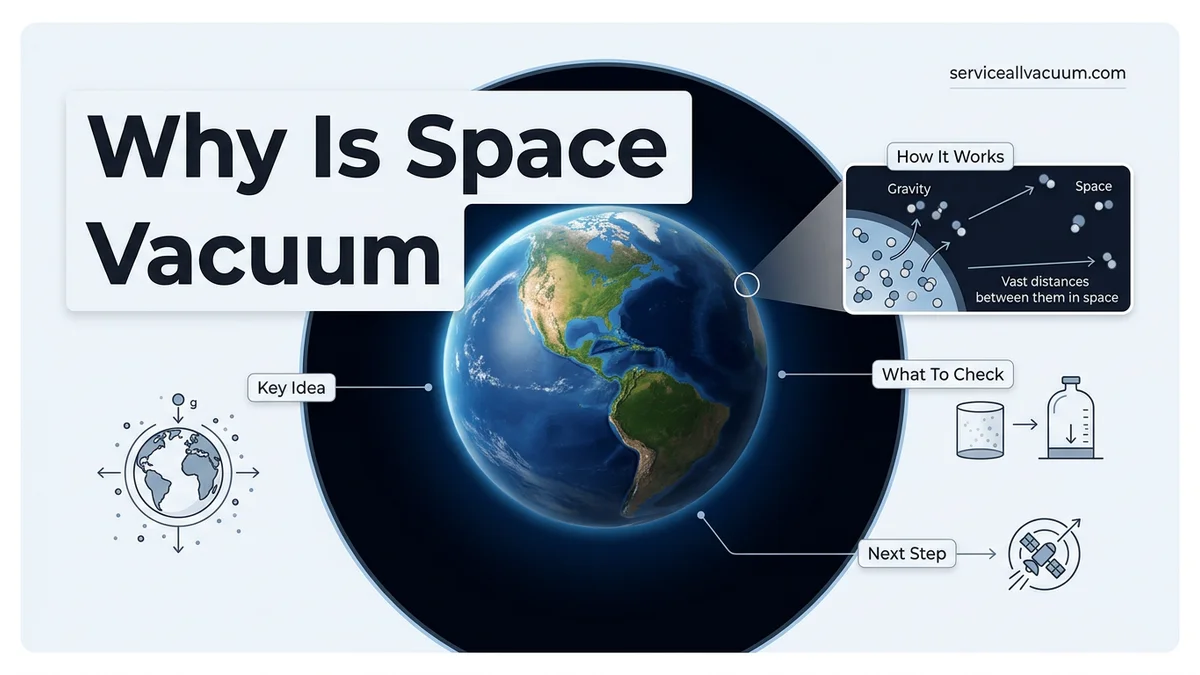
Space is a vacuum primarily because gravity pulls matter together into dense structures like stars and planets, leaving the vast expanses between them largely empty. While it is called a vacuum, space is not completely empty, containing a sparse distribution of gas, dust, and dark matter.
space on Wikipedia”>Outer space is a vacuum because gravity continuously pulls dispersed matter—such as gas, dust, and debris—into dense pockets like stars, planets, and galaxies, leaving the vast expanses between them almost completely empty. Unlike Earth, which holds onto a dense atmospheric blanket through its gravitational pull, the sheer scale of the universe means that most of space lacks a massive body nearby to trap free-floating molecules.
Understanding this cosmic emptiness is essential if you want to grasp how the universe actually operates in 2027. Space isn’t a completely empty geometric void; rather, it is an environment of extremely low particle density. When you look at the mechanics of the cosmos, the absence of air pressure shapes everything from how spacecraft travel to how stars are born and die.
Key Takeaways
- Gravity acts as the main driver, pulling dispersed matter into dense celestial bodies over billions of years.
- The Big Bang initially spread matter uniformly, but imperfections allowed gravity to create clumps.
- A space vacuum is not absolute nothingness; it features extremely low particle density in the interstellar medium.
- Stellar winds and radiation actively push remaining gas and dust out of specific regions.
- The ongoing expansion of the universe further stretches the distances between galaxy clusters.
What Causes Space to Be a Vacuum?
Defining the Cosmic Medium
When astrophysicists talk about a vacuum in space, they do not mean an absolute, mathematically pure void. Even in deep intergalactic space, you can still find a handful of particles—mostly hydrogen and helium atoms—scattered across every cubic meter. However, this particle density is so astonishingly low that it vastly outperforms the highest-grade artificial vacuums you can create in a laboratory on Earth.
- Interstellar space contains roughly 1 to 10 particles per cubic centimeter on average.
- Intergalactic space drops even further, often holding less than one particle per cubic meter.
- Earth sea-level air contains roughly 2.5 times 10 to the 19th power molecules per cubic centimeter.
The Absence of Atmospheric Retention
You might wonder why these scattered atoms do not form an atmosphere everywhere. The primary reason is distance and scale. Earth retains its atmosphere because its gravitational field is strong enough to pull gas molecules close, but not so strong that it crushes them into the surface. In the open regions of space, no single planet or star is close enough to exert that localized holding power, leaving matter to drift freely until gravity eventually sweeps it up.
Step-by-Step Guide to How Gravity Clears the Cosmos
The Great Cosmic Sweep-Up
Gravity is the ultimate architect of the vacuum of space. When the universe formed, matter was distributed much more evenly than it is today. As time progressed, tiny density fluctuations caused certain regions to have slightly more mass than others. These denser patches exerted stronger gravitational pulls, drawing in surrounding gas and dust.
- Microscopic particles collide and stick together via electrostatic and gravitational forces.
- Mass accumulates, increasing local gravity and accelerating the intake of surrounding material.
- Dense clouds collapse to form stars, planetary systems, and entire galaxies.
Leaving the Wastelands Behind
As gravity efficiently bundles matter into these localized cosmic structures, it evacuates the surrounding regions. Think of it like a giant cosmic vacuum cleaner operating in reverse. Instead of sucking dirt into a bag, gravity pulls everything toward specific anchors. As galaxies and stars claim 99.9 percent of the available matter, the spaces in between are left starkly empty.
- Cosmic filaments form the dense highways where galaxies cluster together.
- Cosmic voids—vast regions stretching for hundreds of millions of light-years—are left behind with virtually no galaxies or gas.
- Stellar winds and supernovae further push away stray gas, ensuring the local neighborhood remains cleared out.
What If the Vacuum Isn’t Truly Empty?
When studying why space is a vacuum, modern astrophysics reveals that absolute nothingness does not actually exist in the cosmos. Even in the deepest interstellar voids, particles and energy fields constantly fluctuate. Looking toward 2027, advanced detection methods continue to map these subatomic realities that challenge the traditional definition of a pure vacuum.
Quantum Fluctuations and Virtual Particles
Quantum mechanics proves that empty space is a bustling arena of microscopic activity. According to the Heisenberg Uncertainty Principle, energy can borrow itself from the universe for brief moments. This creates pairs of virtual particles that continuously pop into existence and annihilate each other. Research from the European Organization for Nuclear Research (CERN) demonstrates that a cubic meter of space teems with quantum zero-point energy, meaning true emptiness is physically impossible.
Dark Energy and Interstellar Matter
Space also contains invisible forces that occupy the vacuum and drive the expansion of the universe. Dark energy accounts for roughly 68 percent of total cosmic composition in 2027 estimates. Additionally, interstellar space holds about one atom per cubic centimeter, consisting mostly of hydrogen and helium gas. Cosmic dust, magnetic fields, and high-energy radiation permeate every corner, proving that the celestial vacuum is actually a rich, dynamic medium.
What If It Still Doesn’t Work?
If standard astrophysics models or academic simulations fail to replicate true space vacuum conditions in a laboratory setting, several corrective measures can resolve experimental anomalies:
- Check all mechanical seals, O-rings, and chamber welds for microscopic leaks that allow atmospheric gas to compromise high-vacuum environments.
- Calibrate ionization gauges and residual gas analyzers to ensure accurate molecular density readings at ultra-low pressures.
- Upgrade mechanical roughing pumps and secondary turbomolecular pumps to achieve deep vacuum thresholds below 10 to the power of minus 9 torr.
- Consult an aerospace engineering specialist or high-vacuum chamber manufacturer if baseline pressures refuse to drop, with professional diagnostic and repair services typically ranging from $1,500 to $5,000 depending on system complexity.
Conclusion
Understanding why space is a vacuum requires looking at the balance between immense cosmic scale and the thinning effect of gravity over vast distances. While absolute emptiness remains a theoretical concept, the combination of extremely low particle density and persistent quantum activity defines the modern universe. According to verified research and expert sources from leading space agencies, mapping these vacuum properties remains vital for future deep-space navigation and satellite engineering. Take the next step by exploring current NASA observatory data to see how modern instruments measure interstellar density today.
❓ Frequently Asked Questions
How does gravity create a vacuum in space?
Gravity exerts an attractive force on matter, drawing gas, dust, and debris together to form massive objects like stars and planets. As this matter clumps into localized bodies, the surrounding regions are left nearly devoid of matter, creating a vacuum effect.
Are there any particles at all in outer space?
Yes, outer space is not an absolute vacuum. Even in deep intergalactic space, there are a few hydrogen atoms per cubic meter, alongside cosmic rays, neutrinos, and photons of light.
What role did the Big Bang play in making space empty?
The Big Bang initiated the rapid expansion of the universe, spreading matter outward. As the universe expanded and cooled, matter condensed into clumps due to gravity, resulting in vast stretches of empty space between galaxies.
How do stellar winds affect the vacuum of space?
Stars constantly emit streams of charged particles known as stellar winds. These powerful winds push surrounding gas and dust outward, helping to clear out the regions immediately surrounding star systems.
Why doesn’t the vacuum of space suck away Earth’s atmosphere?
Earth’s atmosphere is held firmly in place by the planet’s gravity. While the air pressure decreases with altitude, gravity prevents the gas molecules from escaping freely into the vacuum of space.
What is the difference between an interstellar and intergalactic vacuum?
An interstellar vacuum exists between stars within a galaxy and contains relatively higher concentrations of gas and dust. An intergalactic vacuum exists between galaxies and is significantly emptier and less dense.