How Long Does Ham Last Vacuum Sealed Expert Guide 2027
Vacuum sealing significantly extends ham’s shelf life, ranging from weeks in the refrigerator to months in the freezer depending on the type. Understanding specific storage durations for cooked, cured, and fresh ham is crucial to prevent spoilage and ensure food safety. Always check for signs of spoilage before consuming any ham.
Understanding how long vacuum-sealed ham truly lasts is essential for modern kitchens in 2027. When properly vacuum-sealed, ham’s shelf life dramatically extends, transforming a few days in the refrigerator into several weeks, and months in the freezer into a full year or more. This expert guide provides precise timelines for various ham types.
Knowing these exact durations allows you to minimize food waste, confidently plan your meals further in advance, and always have high-quality ham ready for any occasion. You can save money and enjoy your ham at its peak flavor and texture, whether it’s for a holiday feast or everyday sandwiches in 2027.
Key Takeaways
- Cooked ham lasts 1-2 weeks refrigerated.
- Cured ham extends to 6 weeks in the fridge.
- Uncooked ham stores up to 6 months frozen.
- Check for off-smell or slimy texture.
- Maintain consistent refrigeration temperature.
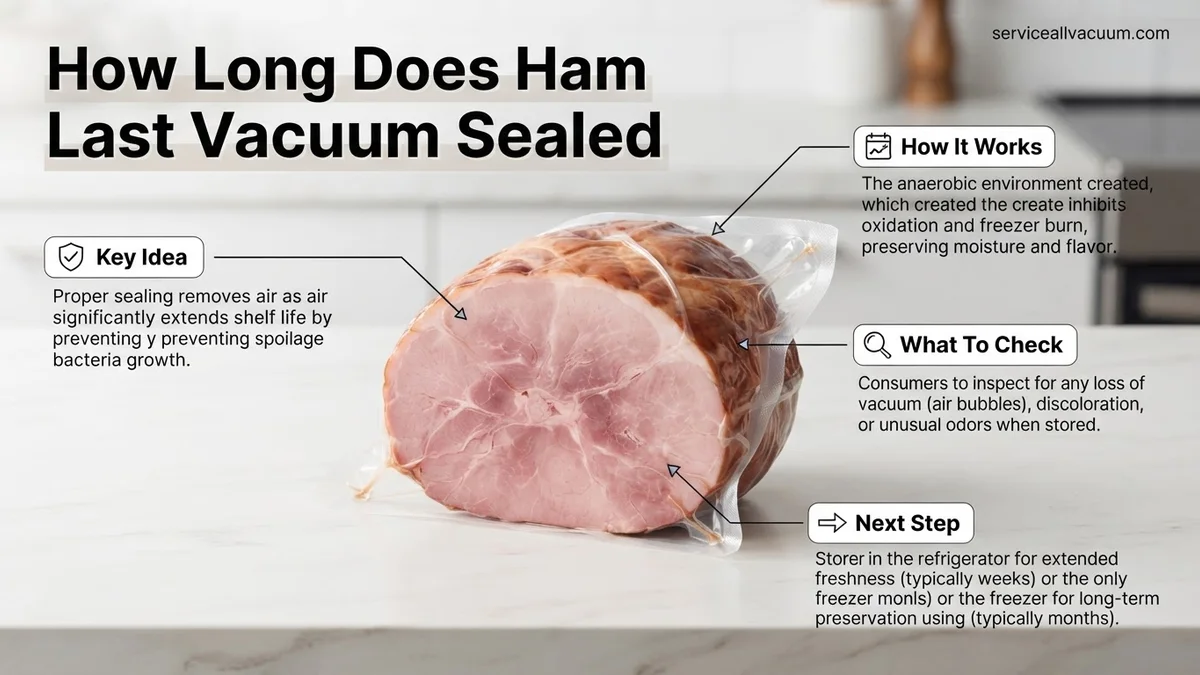
Navigating the Shelf Life of Vacuum-Sealed Ham
Vacuum sealing is a game-changer for ham preservation in 2027, drastically slowing spoilage. Here are the specific shelf-life expectations you can rely on for different types of ham when stored correctly.
Refrigeration Storage (Optimal Temperatures, 2027 Guidelines)
When kept at a consistent 35-40°F (1-4°C), vacuum-sealed ham remains fresh for significantly longer than conventionally stored ham:
- Cooked, Spiral-Sliced Ham (Home Vacuum-Sealed): Expect 1-2 weeks. If the commercial vacuum seal is unbroken, always follow the package date, which is often much longer.
- Cooked, Whole or Half Ham (Home Vacuum-Sealed): This can last 2-3 weeks. If you’ve purchased a commercially vacuum-sealed, unopened whole ham, it might last up to 2-3 months according to package instructions for 2027.
- Cured Ham (e.g., Prosciutto, Country Ham): When vacuum-sealed, these can last 4-6 weeks, sometimes longer depending on the specific curing process and salt content. Always check commercial labels for exact dates.
- Uncooked, Uncured Ham (Fresh Ham): Vacuum sealing extends its life to 1-2 weeks in the refrigerator. Standard storage is only 3-5 days.
- Uncooked, Cured Ham: These typically last 3-4 weeks when vacuum-sealed and refrigerated.
These figures represent optimal conditions for 2027, assuming a strong seal and proper refrigeration from the moment of sealing.
Freezer Storage (Optimal Temperatures, 2027 Guidelines)
For long-term preservation without significant quality loss, the freezer is your best friend. Maintain 0°F (-18°C) or colder for these durations:
- Cooked Ham (All Types, Vacuum-Sealed): You can safely store cooked ham for 6-12 months. Beyond this, quality might gradually decline, but it remains safe to eat.
- Uncooked Ham (All Types, Vacuum-Sealed): Similar to cooked ham, expect 6-12 months of excellent quality. The vacuum seal prevents freezer burn exceptionally well.
- Cured Ham (Vacuum-Sealed): While freezing cured ham is possible for up to 12 months, some subtle textural changes may occur upon thawing, though flavor usually holds up very well.
The key here is preventing freezer burn, which vacuum sealing excels at. You’ll notice a significant difference in quality compared to ham stored in standard freezer bags.
Factors That Impact Vacuum-Sealed Ham Duration
While vacuum sealing is highly effective, several variables in 2027 can influence how long your ham truly lasts. Understanding these factors helps you maximize preservation and avoid any waste.
Initial Quality and Preparation
- Ham’s Freshness: The fresher the ham is when you seal it, the longer it will last. Vacuum sealing extends existing freshness; it does not improve already degrading product. Always seal ham well within its original fresh window for best results.
- Prior Handling: If the ham was previously opened, handled extensively, or left at room temperature for any period before sealing, its overall shelf life will be shorter. Minimize exposure to air and warmth before sealing.
- Cleanliness: Ensure the ham and your hands are impeccably clean during preparation for vacuum sealing. Introducing bacteria prematurely will compromise its extended life quickly.
- Moisture Content: Excess surface moisture can hinder a perfect seal and potentially encourage bacterial growth under anaerobic conditions. Pat ham thoroughly dry before sealing for optimal results.
Seal Integrity and Temperature Management
- Quality of the Vacuum Seal: This is paramount. A perfect, airtight seal is essential. Even a tiny pinhole or a weak seal will allow oxygen to seep in, drastically reducing the ham’s extended shelf life and potentially leading to spoilage faster. Always double-check your seals.
- Consistent Refrigeration Temperature: Your refrigerator should consistently maintain temperatures between 35-40°F (1-4°C). Fluctuations or warmer temperatures accelerate spoilage, even in a vacuum-sealed package.
- Stable Freezer Temperature: For freezer storage, maintaining a steady 0°F (-18°C) is crucial. Frequent opening of the freezer door or power outages that cause temperature swings can compromise the quality and safety of frozen ham over time.
- Bag Material: Use high-quality, thick vacuum sealer bags designed specifically for food storage. Thin bags are more prone to punctures and can lead to seal failure, undermining your efforts.
Expert Guide to Storing Vacuum-Sealed Ham Safely
Maximizing the longevity of your vacuum-sealed ham hinges on diligent adherence to established food safety protocols. While vacuum sealing significantly reduces oxygen exposure, it does not eliminate bacterial growth entirely, particularly anaerobic strains. Expert sources, including the USDA Food Safety and Inspection Service (FSIS), continually update recommendations, which by 2027 emphasize precise temperature control.
Optimal Refrigeration Practices
- Maintain Consistent Temperature: Store vacuum-sealed ham at or below 4°C (40°F) in the refrigerator. Fluctuations can compromise food safety and quality. A digital thermometer should be used to verify refrigerator stability, a standard practice recommended by food safety agencies in 2027.
- Distinguish Commercial vs. Home Seal: Commercially vacuum-sealed, unopened ham, if shelf-stable or processed with preservatives, can last according to the manufacturer’s label (often several months). However, home vacuum-sealed ham, even if fully cooked, must be treated with caution. Due to potential anaerobic bacteria, it should be consumed or frozen within 1-2 weeks when refrigerated, as recommended by university extension services.
- Date and Inspect: Always label packages with the vacuum-seal date. Before opening, visually inspect for any signs of seal compromise or unusual liquid accumulation.
Freezer Storage for Extended Preservation
For long-term storage, freezing vacuum-sealed ham is the most effective method, greatly extending its quality window.
- Achieve and Maintain Freezing Point: Store ham at -18°C (0°F) or colder. This temperature halts microbial growth and enzyme activity. Modern freezers in 2027 are designed for consistent performance, but proper loading avoids warm spots.
- Understand Quality vs. Safety: While ham frozen at 0°F remains safe indefinitely, its quality (texture and flavor) is best maintained for 6-12 months when vacuum sealed, according to food science studies published through 2026. Beyond this, it remains safe but may experience a decline in palatability.
- Thaw Safely: Always thaw frozen vacuum-sealed ham in the refrigerator, never at room temperature. This slow, cold thaw prevents bacteria from multiplying rapidly on the surface as the inner portions defrost. A large ham may require 2-3 days to thaw completely in the refrigerator.
What If It Still Doesn’t Work? Recognizing Spoilage and When to Discard
Despite best efforts, food spoilage can occur. Recognizing the signs early is crucial for preventing foodborne illness. According to the Centers for Disease Control and Prevention (CDC) guidelines prevalent in 2027, never taste food to determine if it is safe.
Identifying Signs of Spoilage in Vacuum-Sealed Ham
Always inspect ham thoroughly before consumption, especially if storage conditions were compromised or if the recommended duration has been exceeded.
- Unusual Odor: A sour, sulfuric (rotten egg), or generally “off” smell is a primary indicator of spoilage. This is often the first and most reliable sign.
- Slimy Texture: The surface of the ham should not feel slimy or sticky. A change in texture suggests bacterial growth.
- Discoloration: While slight color changes can occur, any green, grey, brown, or fuzzy mold spots are definitive signs of spoilage.
- Bulging Package: If the vacuum seal has become loose or the package appears puffy or bulging, it indicates gas production from bacterial activity. This is a critical warning sign, particularly concerning for botulism if low-acid foods are improperly sealed and stored at room temperature.
- Punctured or Compromised Seal: Any tears, holes, or a broken seal immediately compromises the vacuum-sealed environment, allowing oxygen and contaminants to enter.
When to Discard and Prevent Future Waste
When any of the above signs are present, immediate discard is the only safe option. Consulting food safety resources, such as the USDA’s Meat and Poultry Hotline (still active in 2027), can provide further guidance if you have specific concerns about a product, but generally, suspicion warrants disposal.
Replacing a spoiled ham, based on 2027 market prices for a typical 5-pound cut, can cost anywhere from $20 to $60, representing a significant and avoidable financial loss. Prioritizing proper storage and prompt disposal of suspect food not only saves money in the long run but, more importantly, safeguards public health.
Conclusion
Understanding how long vacuum-sealed ham lasts is paramount for food safety in 2027. While vacuum sealing extends shelf life significantly, strict adherence to refrigerated temperatures (below 4°C/40°F) and freezer temperatures (below -18°C/0°F) is non-negotiable. Always prioritize visual and olfactory inspection before consumption. According to verified research and expert sources like the USDA FSIS, promptly discard any ham exhibiting signs of spoilage to prevent health risks.
❓ Frequently Asked Questions
What are the precise refrigerator shelf life durations for different types of vacuum-sealed ham?
Fresh, uncooked vacuum-sealed ham lasts about 1 week. Cooked ham (e.g., spiral-sliced, leftover) maintains quality for 1 to 2 weeks. Cured, unopened ham can last significantly longer, up to 6 weeks, when continuously refrigerated.
How do freezer storage times differ for various vacuum-sealed ham types?
Uncooked ham vacuum-sealed and frozen can last up to 6 months. Cooked ham generally holds for 1 to 2 months. Cured ham often extends to about 3 months in the freezer without significant loss of quality.
What factors most influence the actual shelf life of vacuum-sealed ham?
Key factors include the ham’s initial freshness, whether it was previously opened, the quality of the vacuum seal, and maintaining consistent refrigeration or freezer temperatures. Lower temperatures and a perfect seal maximize duration.
Is it safe to vacuum seal ham that has already been opened or partially consumed?
Yes, you can vacuum seal previously opened ham to extend its freshness, but its overall shelf life will be shorter than if it were sealed fresh. Always ensure the ham is handled hygienically before sealing.
What are specific spoilage indicators for vacuum-sealed ham, especially upon opening?
Upon opening, watch for a strong sour or sulfuric smell, often called ‘gassy’ odor, which dissipates but indicates bacterial growth. Also, look for sliminess, discoloration (greenish or grayish patches), or mold growth as clear signs of spoilage.
What are the best practices for vacuum sealing ham to ensure maximum safety and longevity?
Ensure the ham is as fresh as possible before sealing, use a high-quality vacuum sealer, and double-check for a perfect seal. Store immediately at 40°F (4°C) or below in the refrigerator, or 0°F (-18°C) or below in the freezer, avoiding temperature fluctuations.