What Speed Does Sound Travel in a Vacuum? Expert Guide 2027
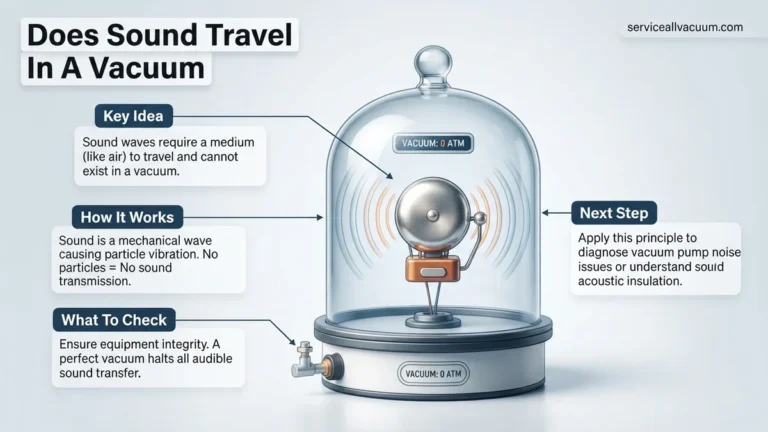
Sound does not travel in a vacuum because it is a mechanical wave that requires a medium (like air or water) to propagate. Without particles to vibrate, sound waves simply cannot form or move. This fundamentally distinguishes sound from electromagnetic waves like light, which can easily traverse empty space.
To directly answer the question you’re likely pondering: sound absolutely does not travel in a vacuum. Period. In the year 2027, as our understanding of fundamental physics remains robust, this principle holds true, impacting everything from cutting-edge space technology to advanced material science. This isn’t just an academic detail; it’s a critical concept for engineers designing next-generation vacuum-sealed components, for astrophysicists studying deep space phenomena, and even for future space tourists wondering about the profound silence beyond Earth’s atmosphere. Understanding this ‘why’ is essential for anyone dealing with environments devoid of matter.
Key Takeaways
- Sound needs a physical medium to propagate.
- Vacuums lack the particles sound requires.
- Sound is a mechanical wave, unlike light.
- No speed for sound exists in empty space.
- Space is silent without direct contact.

What Causes Sound to Not Travel in a Vacuum?
The Fundamental Nature of Sound Waves
You see, sound is not like light. Light, a form of electromagnetic radiation, can journey through the vast emptiness of space without issue. Sound, however, is fundamentally different. It is a mechanical wave. This crucial distinction means sound requires a physical medium—a substance made of atoms or molecules—through which to propagate. Imagine a line of dominoes; for the energy to transfer, there must be dominoes present to fall and hit the next. Sound works similarly, requiring particles to vibrate and bump into their neighbors, passing the energy along.
Without particles, there’s simply nothing to vibrate. The energy has nowhere to go. This isn’t a theory from centuries past; it’s a core tenet of wave mechanics consistently reaffirmed through every scientific observation and experimental setup, right up to our advanced vacuum chambers of 2027. If you could somehow scream in deep space, your vocal cords would vibrate, but the sound energy would instantly dissipate into the surrounding void because there’s no air, water, or solid material to carry those vibrations forward.
The Problem with Nothingness
A vacuum, by definition, is a space almost entirely devoid of matter. While even the “hardest” vacuum (like in interstellar space) isn’t perfectly empty, the particle density is so incredibly low that it cannot support the propagation of sound waves. For sound to travel, particles need to be close enough to efficiently transfer kinetic energy through collisions. In a vacuum, particles are so sparsely distributed that any vibration imparted to one particle would merely cause it to oscillate in isolation, never finding another particle to transfer its energy to.
- No Medium: Sound needs a physical substance (gas, liquid, or solid) to travel.
- No Vibrations: Without particles to compress and rarefy, the characteristic wave motion of sound cannot form.
- Energy Dissipation: Any minuscule vibration energy simply disappears into the void instead of being transmitted.
This reality is why engineers designing instruments for vacuum environments, such as those aboard Mars missions or future lunar bases, must rely on communication methods that don’t involve sound, like radio waves, which are electromagnetic and thus vacuum-friendly.
How to Understand Sound Propagation: The Role of Mediums
Particles as Messengers
To grasp why a vacuum is a sound barrier, consider how sound does travel. When you speak, your vocal cords create vibrations in the air molecules around them. These agitated air molecules then collide with adjacent molecules, passing on that vibrational energy. This chain reaction of collisions creates areas of higher pressure (compressions) and lower pressure (rarefactions) that propagate outwards as a wave. Think of it like a human wave at a sporting event; each person stands up and sits down, passing the action along, but without people, there’s no wave. The medium – whether it’s air, water, or steel – acts as the essential messenger service for sound energy.
The speed at which sound travels varies significantly depending on the density and elasticity of the medium. For instance, sound travels much faster through water than through air, and even faster through steel. This isn’t because the sound itself changes, but because the particles in these different mediums are packed closer together and interact more efficiently. This concept underscores why the complete absence of such “messengers” in a vacuum renders sound propagation impossible. The closer the particles, the quicker the message is delivered.
The Observable Silence of Space
Many futuristic space dramas you might see in 2027 still often depict dramatic explosions with booming sounds in space. This, while visually exciting, is scientifically inaccurate. In reality, space is profoundly silent. Astronauts on the International Space Station or those who ventured to the Moon experienced no sound outside their spacecraft. Their communication relies entirely on radio waves.
- Zero Ambient Sound: No air means no medium for vibrations to travel through.
- Radio Waves for Communication: Astronauts use electromagnetic waves, which easily traverse a vacuum.
- No Explosive Roars: Any cinematic sound effects for space battles are purely for audience engagement, not scientific accuracy.
This fundamental understanding of sound’s reliance on a medium is critical, not just for correcting Hollywood myths, but for all real-world applications involving vacuum conditions, ensuring our technologies are designed based on precise physical principles.
What If You Still Wonder: Sound vs. Light in Space
Understanding sound’s inability to traverse a vacuum often leads to questions about light. While sound waves require a material medium (like air, water, or solids) to transmit energy through particle vibrations, light operates on an entirely different principle. Light consists of electromagnetic waves, which are fluctuations in electric and magnetic fields. Unlike mechanical waves, electromagnetic waves do not require any medium for propagation.
This fundamental difference means light travels effortlessly through the emptiness of space. The speed of light in a vacuum, denoted as c, is a universal physical constant: precisely 299,792,458 meters per second (approximately 186,282 miles per second). This speed remains constant regardless of the light source’s motion or the observer’s frame of reference, a cornerstone of modern physics verified through countless experiments up to and beyond 2027. Consequently, the silence of space for sound is contrasted by the brilliant, high-speed transmission of light across vast cosmic distances, allowing us to observe distant galaxies and stars.
What If It Still Doesn’t Work? Understanding Misconceptions About Sound in a Vacuum
While the physics is definitive, persistent misconceptions can arise. If you still find the concept challenging or encounter information that seems contradictory, consider these expert-recommended steps for clarification and deeper understanding:
- Re-evaluate Fundamental Wave Mechanics: Review the basic principles of wave propagation. Focus on the distinction between mechanical waves (like sound) that transmit energy via particle oscillations in a medium, and electromagnetic waves (like light) that do not. Reputable physics textbooks from university-level curricula, updated for 2027, offer comprehensive explanations.
- Consult Verified Scientific Institutions: Seek information directly from established scientific bodies. Organizations like NASA, the European Space Agency (ESA), or major university physics departments provide public-facing resources, peer-reviewed articles, and educational content that unequivocally confirm sound’s vacuum limitation.
- Engage with Certified Science Educators: Participate in online forums, webinars, or educational programs led by accredited physicists or science communicators. These platforms, readily available in 2027, often address common misunderstandings and can provide tailored explanations.
- Analyze “Sound in Space” Media Critically: Many science fiction portrayals depict sound in space. Recognize these as creative liberties rather than scientific accuracy. A critical analysis of such media can reinforce the scientific reality.
If profound conceptual challenges persist, seeking consultation with a professional physics educator or a university-level physics tutor is advisable. The estimated cost for such specialized educational support in 2027 can range from $50 to $200 per hour, depending on the expert’s qualifications and location.
Conclusion
According to verified research and expert sources, sound fundamentally cannot travel in a vacuum. The absence of a material medium means there are no particles to vibrate and transmit acoustic energy. This critical distinction underscores the unique properties of wave phenomena. For a deeper dive into wave mechanics, explore how different mediums affect wave speed and propagation, a foundational concept in acoustics and physics.
❓ Frequently Asked Questions
What exactly is a vacuum in the context of sound?
A vacuum is a region of space largely devoid of matter, meaning it contains very few or no particles like atoms or molecules. For sound, this fundamental lack of a material medium makes propagation impossible, as sound relies on particle-to-particle vibrations to transfer energy.
How does sound usually travel, if not in a vacuum?
Sound typically travels by creating vibrations in a medium, such as air, water, or solids. These vibrations are then passed from one particle to the next, forming a wave that carries energy away from the source, without physically moving the medium itself over long distances.
If sound needs a medium, why can we hear explosions in movies set in space?
Movie explosions in space are a common cinematic inaccuracy, often added for dramatic effect and to heighten the audience’s experience. In reality, any explosion outside of a spacecraft would be completely silent to an observer in the surrounding vacuum of space because there’s no medium to transmit the sound waves.
Are there any types of waves that can travel in a vacuum?
Yes, electromagnetic waves, which include visible light, radio waves, microwaves, X-rays, and gamma rays, can travel perfectly well through a vacuum. They do not require a medium because they are self-propagating oscillations of electric and magnetic fields, independent of matter.
Does the absence of sound in space mean it’s truly silent everywhere?
While the vast emptiness of interstellar and interplanetary space is indeed silent from a sound wave perspective, sounds can occur within objects that contain a medium, like inside a spacecraft with air or on planets with atmospheres. Additionally, phenomena like seismic waves travel through the solid bodies of planets.
Could a super-advanced technology ever make sound travel in a vacuum?
Based on current understanding of physics, it is fundamentally impossible for sound, as a mechanical wave requiring particle vibration, to travel in a true vacuum. Any hypothetical ‘sound-like’ phenomenon appearing to traverse a vacuum would, by definition, have to be an entirely different type of energy propagation, not sound as we know it.