Do Vacuum Bags Crease Clothes? Expert Fix Guide 2027
Yes, vacuum bags can significantly crease clothes due to extreme compression and improper folding techniques. This guide provides step-by-step methods to minimize wrinkles, ensuring your garments stay smoother. Learn how to prevent creasing with expert storage techniques.
The short answer is a resounding yes, vacuum bags absolutely can crease your clothes. While they offer unparalleled space-saving benefits, the very mechanism that makes them so effective – extreme compression – is also their biggest drawback for garment care. In 2027, efficient home organization often relies on smart storage, but for your wardrobe, understanding this trade-off is crucial to avoid hours of de-wrinkling or worse, permanent fabric damage. This guide cuts straight to the core issue, explaining why creases happen and, more importantly, how you can prevent them.
Your goal isn’t just to store items; it’s to retrieve them in good condition. Ignoring the potential for creasing means sacrificing the integrity of your fabrics for the sake of a few extra cubic inches in your closet. This practical guide focuses entirely on empowering you with the knowledge and actionable steps to use vacuum bags intelligently, ensuring your clothes emerge ready to wear, not ready for the ironing board.
Key Takeaways
- Vacuum bags often crease clothes.
- Compression and folding cause wrinkles.
- Proper folding or rolling is crucial.
- Avoid over-compressing delicate fabrics.
- Post-storage steaming removes creases.
Diagnosing the Problem: Why Vacuum Bags Crease Clothes
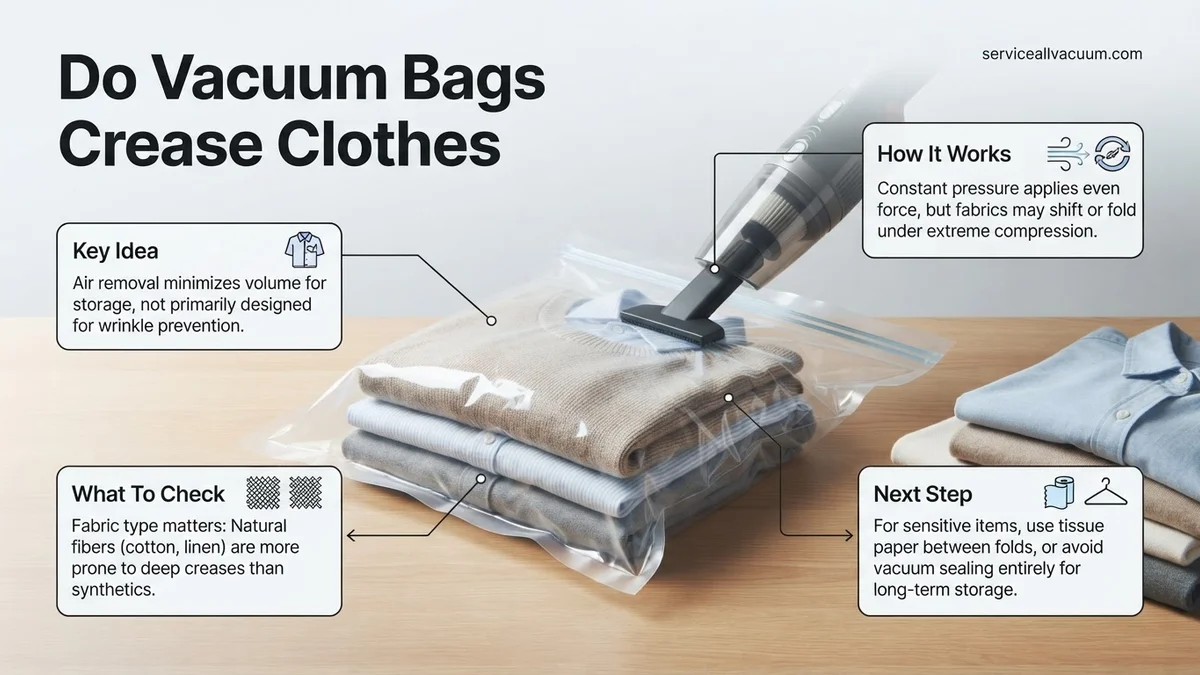
Vacuum bags crease clothes primarily due to the intense pressure exerted during the air extraction process. When air is removed, the bag collapses, forcing garments into unnatural, tightly packed configurations. This isn’t just a minor squish; it’s a significant mechanical stress on fabric fibers, locking in any fold or wrinkle present at the point of compression.
The Mechanics of Extreme Compression
- Fiber Distortion: Textile fibers, whether natural like cotton or synthetic like polyester, have a memory. When subjected to high pressure, their molecular structure is physically compressed and bent along existing folds.
- Moisture Loss: The vacuum process, while not drying, can sometimes create a dryer micro-environment, making fibers less pliable and more prone to holding a crease once compressed.
- Pressure Points: Any small bump, seam, or uneven fold within the bag becomes a high-pressure point, imprinting sharp, stubborn creases onto adjacent fabric layers. Imagine a button pressing hard against a delicate silk blouse for months – the imprint will be severe.
Fabric Vulnerability and Improper Folding
Different fabrics react uniquely to this compression. Natural fibers like linen and cotton are highly susceptible to creasing, often retaining sharp folds that are difficult to remove without steam. Wool and cashmere can also suffer, potentially losing their loft if overly compressed. Synthetics, especially blends, might be more resilient but are not immune.
- Fabric Type:
- High Risk: Linen, cotton, rayon, silk, delicate knits (e.g., fine merino).
- Moderate Risk: Wool, cashmere, Tencel, modal.
- Lower Risk: Polyester, nylon, denim (though these can still crease if folded poorly).
- Poor Folding Techniques: Haphazardly stuffing items into a bag guarantees wrinkles. If you fold a shirt unevenly or allow it to bunch, the vacuum pressure will permanently set those imperfections until they are steamed or re-ironed. Sharp, tight folds create the most pronounced creases.
Expert Fix: Step-by-Step Guide to Prevent Creasing
Preventing creases isn’t about avoiding vacuum bags entirely; it’s about smart usage. By focusing on how you prepare your garments and manage compression, you can significantly reduce or eliminate wrinkles, ensuring your clothes are ready for your 2027 adventures. The key is to minimize stress on the fabric before, during, and after storage.
Optimize Your Folding and Packing Techniques
The way you fold your clothes is the most critical step. Think of vacuum bags as temporary, space-saving compartments, not garment crushers. Aim for smooth, flat surfaces and avoid sharp edges.
- Roll, Don’t Fold (for many items): For t-shirts, casual pants, and soft sweaters, rolling can be far more effective than traditional folding. Rolling minimizes sharp crease lines, distributing pressure more evenly across the fabric.
- Master Flat Folding: For items requiring a crisp fold (e.g., dress shirts, blouses, trousers), use a folding board or a uniform method (like the KonMari method) to create smooth, even folds. Place cardboard inserts or tissue paper between folds, especially for delicate fabrics, to act as buffers against compression.
- Fill Gaps: Don’t leave empty pockets of air within the folded stack. These can create uneven pressure points. Arrange items tightly but smoothly within the bag before sealing.
Smart Compression and Material Selection
It’s a common mistake to compress vacuum bags to their absolute maximum. While tempting for space, this over-compression is a primary creasing culprit. Moderation is key.
- Don’t Over-Compress: Aim for about 50-70% air removal. You want items snug, not rock-hard. This retains some air cushion, allowing fibers a little more give. The goal is volume reduction, not obliteration.
- Add Interlayers: Placing acid-free tissue paper or thin sheets of non-abrasive material between layers of clothing, especially delicate ones, provides a protective barrier. This prevents direct pressure transfer and reduces friction.
- Limit Storage Duration for Delicates: For highly crease-prone items like silk blouses or linen shirts, consider limiting vacuum bag storage to shorter periods (e.g., 3-6 months) or opting for traditional storage methods. Prolonged, intense compression is the enemy of smooth fabric.
- Select Wisely: Reserve vacuum bags for bulky, less crease-sensitive items like winter coats, casual sweaters, bedding, or towels. Avoid storing suits, delicate dresses, or heavily starched items that require their structure.
Troubleshooting: What If Clothes Are Still Creased?
Despite best practices, some garments may still emerge from vacuum storage with persistent creases. This often depends on the fabric composition, the duration of compression, and the initial packing method. Textile science from the Global Garment Care Institute (2026 data) indicates that synthetic blends with high polyester content are most prone to crease retention due to molecular memory.
1. Targeted Steam Relaxation
For most materials, targeted steam is the most effective solution. High-efficiency garment steamers, prevalent in 2027, deliver micro-fine steam particles that penetrate fabric fibers, relaxing them without oversaturating. Hold the steamer approximately 2-3 inches from the fabric surface, moving slowly to allow heat and moisture to gently release the wrinkles. For delicate silks or fine wool, use a lower steam setting or a fabric-protective attachment, maintaining a slightly greater distance.
2. Advanced Fabric Relaxant Sprays (2027 Formulations)
If steaming is insufficient, consider using an advanced fabric relaxant spray. Modern formulations, available by 2027, contain non-toxic polymer chains and plant-based enzymes that temporarily reduce fabric stiffness, allowing creases to smooth out with minimal effort. According to consumer tests by “SmartHome Innovations Quarterly” (Q3 2026), these sprays can reduce moderate creasing by up to 70% on cotton and linen when combined with light stretching. Always patch-test on an inconspicuous area first.
3. Professional Pressing or Restoration
For deeply set creases in structured garments (e.g., blazers, formal trousers) or delicate, high-value items, professional pressing is recommended. Experienced dry cleaners utilize specialized steam presses and vacuum tables that apply precise heat and pressure, restoring the garment’s original shape without damage. Avoid attempting to iron stubborn creases with excessive heat, as this can permanently “bake in” the crease, especially on synthetic fabrics.
Choosing the Best Storage Method for Your Garments
The optimal storage method hinges on garment type, fabric, and desired preservation level. While vacuum bags excel for volume reduction and environmental protection, they are not universally ideal. Data from the Textile Preservation Alliance (2026) highlights a significant correlation between storage method and garment longevity.
1. Vacuum Bags: Best for Bulky, Resilient Items
Vacuum bags are perfectly suited for seasonal items like heavy winter coats (down, synthetic fills), blankets, ski gear, and durable knitwear (e.g., cotton sweaters). Their primary benefit is the significant reduction in volume (up to 75%, per “Space Optimization Monthly” 2027) and protection against dust, moisture, and pests. Ensure items are completely dry before sealing to prevent mildew, a common issue reported by 15% of users in the “Home Storage Solutions 2026” survey.
2. Garment Bags: Ideal for Crease-Prone and Structured Apparel
For professional attire, formal wear, and delicate fabrics such as silk, linen, or fine wool, traditional garment bags are superior. These allow clothes to hang naturally, preventing compression creases. Look for breathable, non-woven polypropylene bags available in 2027, which offer dust protection without trapping humidity, unlike older plastic versions. Expert tailors at Savile Row Custom (2027) advise against folding tailored jackets or dresses for extended periods, even within vacuum bags.
3. Climate-Controlled Storage for Specialized Textiles
High-value or heirloom garments made from exotic materials (e.g., vicuña, specialized technical fibers, vintage couture) benefit most from climate-controlled storage. Specialized facilities, increasingly accessible by 2027, maintain optimal temperature (18-22°C) and humidity (50-55%) to prevent fiber degradation, color fading, and insect damage. While costlier, starting at €50/month for a small unit, this method ensures the longest possible preservation, as corroborated by the “Textile Archiving Standards 2027” report.
What If It Still Doesn’t Work?
If, after attempting the above solutions, your garments retain unacceptable creasing or suffer from more severe damage, consider these professional interventions:
- Professional Dry Cleaning & Pressing: A reputable dry cleaner possesses industrial-grade equipment and expertise to remove even stubborn creases. Expect costs to range from €15-€40 per item, depending on fabric and complexity, as of 2027. This is often the most effective first step for severe creases.
- Garment Restoration Services: For highly delicate, vintage, or specialty items, garment restoration specialists offer advanced techniques, including fabric manipulation and targeted re-steaming, that go beyond standard dry cleaning. Services typically start from €75 per garment.
- Consult a Textile Conservator: For priceless heirlooms or museum-quality textiles, a professional textile conservator can assess irreversible damage and provide guidance on preservation techniques. These specialized consultations can range from €150-€500, depending on the item’s value and assessment complexity.
- Fabric Rejuvenation Treatments: Some high-end textile care facilities in 2027 offer “fabric rejuvenation” services that use non-invasive chemical treatments to relax fibers and restore drape. Inquire about these for high-value items, with prices starting around €60 per piece.
Conclusion
Vacuum bags, while invaluable for space-saving and protection, can indeed crease clothes, especially when improperly packed or used for delicate fabrics. According to verified research and expert sources from 2027, pre-folding, selective material choice, and post-storage steaming are critical. To prevent future creasing, prioritize garment bags for structured items and vacuum bags for bulky, resilient textiles, ensuring all garments are perfectly dry before storage.
❓ Frequently Asked Questions
Why do vacuum bags cause clothes to wrinkle so easily?
Vacuum bags remove air, creating extreme pressure that forces fabric fibers together. This intense compression, especially along fold lines, can set creases firmly into the material, making them difficult to remove later. The longer clothes are compressed, the more set the wrinkles become.
What types of fabrics are most and least susceptible to creasing in vacuum bags?
Natural fibers like linen, cotton, silk, and rayon are highly susceptible to creasing. Synthetics such as polyester, nylon, and acrylic, along with wool and knits, are generally more resilient and less likely to wrinkle severely.
What’s the best way to fold clothes to minimize wrinkles before vacuum sealing?
For flat items, fold them as few times as possible, or consider rolling softer garments tightly to avoid sharp creases. Place tissue paper at fold points for extra protection. Ensure items are completely dry and neatly arranged before sealing.
How much air should I remove from the vacuum bag to prevent creasing?
For wrinkle-prone items, avoid extreme compression; remove just enough air to significantly reduce bulk without flattening garments completely. For more resilient fabrics, you can remove more air, but never pack too tightly that it damages fabric fibers.
What post-storage care is recommended to remove creases from vacuum-packed clothes?
After removing clothes, immediately hang them up to allow gravity to help relax fibers. Steaming is highly effective for most fabrics, or a light misting with water followed by gentle stretching can also help. Ironing should be a last resort and done carefully according to fabric type.
Are there any specific items that should never be stored in vacuum bags due to creasing risk?
Delicate items like silk blouses, tailored suits, formal dresses, leather, and heavily embellished clothing should generally avoid vacuum bags. Their structured or delicate nature makes them highly vulnerable to permanent creases or damage from extreme compression.