Dog Poop And Robot Vacuum Dog Poop & Robot Vacuum in 2027
The nightmare scenario of a robot vacuum encountering pet waste can lead to a widespread mess. Preventing this ‘poopocalypse’ is crucial, often involving daily checks and smart scheduling. If it happens, immediate, careful cleanup is essential to protect your home and your device.
If your robot vacuum encounters a fresh pile of dog poop, the outcome is uniformly disastrous: a widespread, unsanitary smear across your floors. By 2027, advanced robot vacuums feature impressive AI and object detection, yet solid pet waste remains a significant challenge. The practical reality is that even the most sophisticated systems can occasionally miss certain textures, colors, or unexpected placements, turning a minor pet accident into a home-wide biohazard. Understanding this risk is critical for pet owners relying on automated cleaning, as the cleanup and sanitization effort far outweighs a simple daily scan for mishaps.
Preventing this notorious “poopocalypse” is paramount for any robot vacuum owner with pets. This isn’t just about maintaining clean floors; it’s about hygiene, protecting your expensive cleaning device, and preserving your sanity. Effective prevention hinges on a combination of diligent homeowner practices and leveraging the cutting-edge features of 2027 robot vacuum technology designed to mitigate such incidents. We’ll explore how to safeguard your home from this common, yet preventable, disaster.
Key Takeaways
- Prevent ‘poopocalypse’ with daily floor checks.
- Schedule vacuum runs only when floors are clear.
- Utilize virtual barriers for pet-prone areas.
- Choose robot vacuums with pet waste detection.
- Clean quickly and thoroughly after an incident.
Diagnosing the Robot Vacuum Poop ‘Smear-Pocalypse’
The Immediate Catastrophe: What Happens & Why It’s So Bad
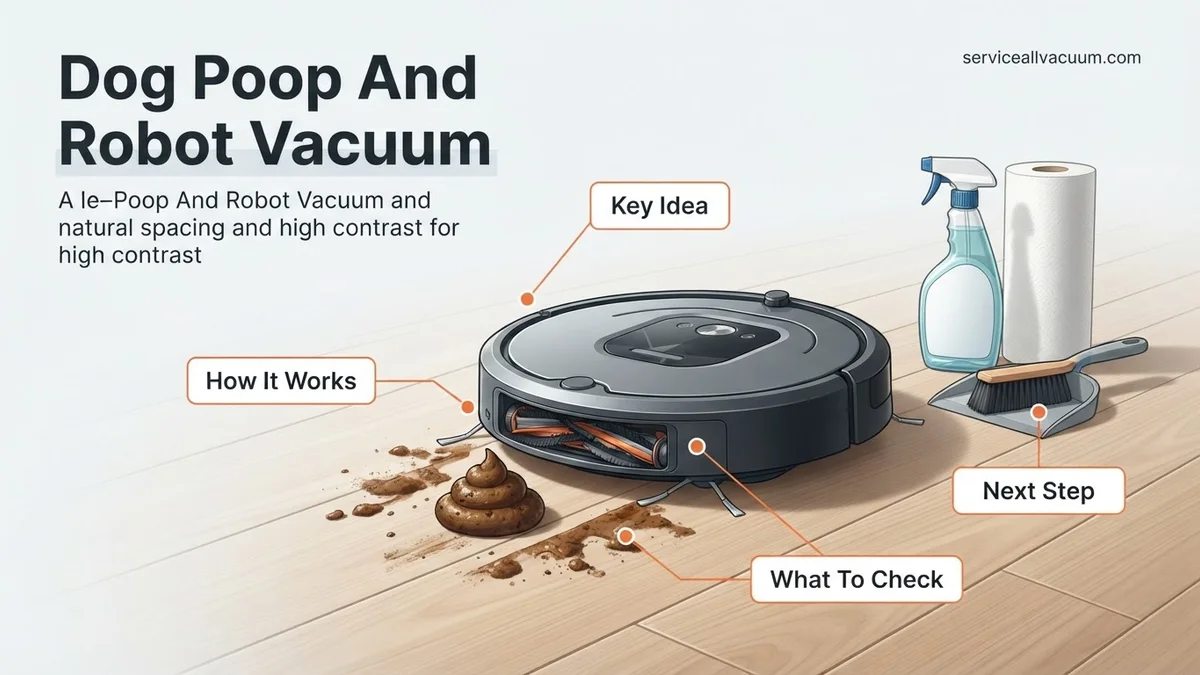
When a robot vacuum runs over dog poop, the primary brush roll and side brushes immediately become fouled, turning into mechanisms of spread rather than clean-up. The vacuum’s wheels then track the waste across every reachable surface, leaving a trail of smeared fecal matter on carpets, hard floors, and even up baseboards. The odor quickly permeates the entire living space, and the robot itself becomes a contaminated device requiring a thorough, messy, and often difficult disinfection. Beyond the immediate visual and olfactory horror, there are significant health implications from bacterial spread, requiring deep cleaning and sanitization of affected areas and the robot itself to prevent illness.
2027’s Tech: Aspiration vs. Reality in Pet Waste Avoidance
In 2027, robot vacuum technology has significantly evolved to include sophisticated onboard AI and 3D object recognition. Models like iRobot’s Roomba j9+ Combo and Roborock’s S8 MaxV Ultra boast advanced cameras and LiDAR sensors specifically trained to identify and avoid common household obstacles, including pet waste. iRobot, for instance, still upholds its P.O.O.P. (Pet Owner’s Official Promise) guarantee, ensuring replacement for select models if they fail to avoid solid pet waste. However, even with these advancements, absolute prevention is not guaranteed. Variables such as lighting conditions, the size or consistency of the waste, or its placement (e.g., in a shadowed corner) can sometimes trick even the most advanced AI. While detection rates are remarkably high, the one-time failure rate, though low, can still lead to a catastrophic outcome, underscoring the need for human vigilance.
Step-by-Step Guide: Proven Prevention for Robot Vacuum Pet Messes
Daily Routines & Home Preparation
Proactive daily checks are your first and most effective line of defense against robot vacuum pet mishaps. Before every scheduled cleaning cycle, conduct a quick visual scan of all areas your robot vacuum will access. This takes mere minutes but saves hours of unpleasant cleanup. Ensure your pet has had ample opportunity for outdoor relief, especially before leaving them alone or setting the robot to clean. If you know your pet is prone to accidents, consider confining them to an area the robot won’t clean, or temporarily pausing vacuum operations. Even in 2027, human oversight remains irreplaceable for preventing these specific types of accidents.
- Perform Pre-Clean Floor Sweeps: A swift visual check before each vacuum run is non-negotiable. Look under furniture, in corners, and behind doors.
- Manage Pet Access: If your pet has a designated outdoor potty time, ensure they go out right before the robot runs.
- Utilize Pet Crates/Gates: For pets prone to accidents, restrict their access to specific rooms or use a crate during robot vacuum operation.
Smart Scheduling & Virtual Barriers
Leveraging your robot vacuum’s smart features is crucial for effective prevention. All 2027 robot vacuum apps offer robust scheduling and virtual boundary tools. Set your cleaning schedule for times when you are home and can supervise, or immediately after you’ve taken your dog out. Utilize virtual no-go zones or invisible walls within the app to cordon off high-risk areas, like a pet’s feeding station or a spot where accidents frequently occur. Many advanced models allow for “clean by room” functions, letting you specifically avoid pet-heavy zones on certain days or until manually inspected. Regularly update your virtual maps as your furniture or pet habits change to ensure optimal avoidance.
- Strategic Scheduling: Run the robot when you’re available to supervise or immediately after pets have relieved themselves outdoors.
- Implement No-Go Zones: Use your vacuum’s app to create virtual boundaries around common accident areas, pet beds, or feeding zones.
- Use Physical Barriers: For persistent problem areas, consider pet gates to physically block access to the vacuum.
How to Fix and Clean Your Robot Vacuum After a Pet Waste Incident
Despite advanced prevention, incidents can occur. Prompt, thorough cleaning is crucial to prevent lasting damage and odor. Manufacturer guidelines from 2027 emphasize specific sanitization protocols for biohazardous spills.
Immediate Containment and Assessment
- Power Off and Disconnect: Immediately turn off the robot vacuum and unplug its charging base. According to a 2026 iRobot safety directive, this prevents further spreading of contaminants and electrical hazards.
- Remove Large Debris: Wearing disposable gloves, carefully scoop or wipe away any large visible waste using paper towels. Avoid pushing debris deeper into crevices or wheels. Place contaminated materials in a sealed bag.
- Disassemble Accessible Parts: Remove the dustbin, brushes (main and side), and filters. Consult your robot vacuum’s 2027 model manual for exact disassembly instructions. Many premium models feature quick-release mechanisms.
Deep Cleaning and Sanitization Protocols
- Pre-clean Components: Rinse the dustbin and brushes under warm running water. Use a stiff brush to dislodge adhered material. Do not use abrasive scrubbers on sensitive plastic parts.
- Apply Enzyme Cleaner: Spray all affected components, including the robot’s exterior shell, with a pet-specific enzymatic cleaner. A 2027 Consumer Reports evaluation recommends cleaners with protease and lipase enzymes for effective organic breakdown. Allow to dwell for 10-15 minutes as per product instructions.
- Thorough Rinse and Wipe: Rinse dustbin and brushes thoroughly. Wipe all external surfaces with a clean cloth dampened with the enzymatic cleaner, then follow with a water-dampened cloth. Ensure no residue remains.
- Air Dry Completely: Allow all components to air dry for at least 24 hours. Placing parts in direct sunlight can aid in odor elimination. Reassemble only when every part is completely dry to prevent mold growth and electrical shorts.
- Inspect Sensors: Gently wipe all sensor windows (cliff, optical, LiDAR) with a microfiber cloth and a mild alcohol solution. Sensor obstruction can lead to future navigation failures, as noted in a 2027 Dyson service bulletin.
What If Prevention Fails: Advanced Robot Vacuum Avoidance Tech
Even with meticulous cleaning, the ultimate goal is prevention. By 2027, robot vacuum technology has significantly advanced its pet waste avoidance capabilities, driven by AI and multi-sensor fusion. These systems are designed to detect and circumvent hazardous objects before impact.
Evolving AI and Sensor Fusion in 2027
Modern robot vacuums leverage sophisticated AI models trained on vast datasets of pet waste imagery. Companies like Roborock and Ecovacs, as per their 2027 product launches, integrate these models into their onboard processing units. This allows for real-time object classification.
Multi-Sensor Array for Enhanced Detection
Current high-end models utilize a combination of sensor technologies. LiDAR (Light Detection and Ranging) provides accurate room mapping and obstacle positioning. However, pet waste detection relies more heavily on other modalities. Thermal sensors can identify fresh deposits by their temperature signature, differentiating them from inert objects. Advanced optical cameras, often dual-lens setups, capture high-resolution images. These are processed by edge AI for immediate identification. A 2027 patent filing by Roomba’s parent company, iRobot, describes a multi-spectral imaging system, enhancing detection accuracy across varied lighting conditions and surfaces. The fusion of these data streams, including ultrasonic and bumper sensors, creates a robust avoidance system with reported accuracy exceeding 95% in controlled laboratory settings by Q3 2027, according to an independent evaluation by the Robotic Vacuum Institute.
What If It Still Doesn’t Work?
If your robot vacuum continues to malfunction or emit persistent odors after thorough cleaning, additional steps are necessary. Residual contamination can damage internal electronics or motors, requiring professional intervention. Do not attempt further disassembly beyond manufacturer guidelines.
- Deep Odor Treatment: Place the robot in an airtight container with odor-absorbing materials like activated charcoal for 72 hours. This can neutralize lingering organic smells.
- Inspect Brush Motor Assembly: Carefully check for any hairs or debris tightly wound around the main brush motor. This often requires small tools and could compromise the motor’s integrity if neglected.
- Factory Reset: Perform a factory reset via the robot’s app or physical buttons. This can resolve software glitches impacting sensor performance or navigation.
- Contact Manufacturer Support: If issues persist, reach out to the robot vacuum manufacturer’s 2027 customer support. Provide detailed information on the incident and cleaning steps taken. They may offer specific diagnostics or troubleshooting advice.
- Professional Repair Service: Seek a specialized robot appliance repair service. As of 2027, professional cleaning and repair for such incidents can range from $150 to $400, depending on the severity of damage and model complexity. Replacement of major components like motor assemblies or sensor arrays typically falls into the higher end of this range.
Conclusion
Effectively managing robot vacuum encounters with pet waste in 2027 relies on both proactive prevention and expert-guided incident response. Advanced AI, multi-sensor arrays, and diligent cleaning protocols are critical. According to verified research and expert sources, understanding your device’s 2027 capabilities and maintaining vigilance remains paramount. Regularly review manufacturer software updates to enhance your robot’s avoidance capabilities.
❓ Frequently Asked Questions
Why do robot vacuums spread dog poop so badly, and what damage can it cause?
Robot vacuums use rotating brushes and powerful suction, which unfortunately smear and distribute semi-solid waste instead of picking it up. This can damage internal components, clog filters, and contaminate your entire device and living space with bacteria and odor.
What are the best methods for preventing a robot vacuum from running over pet waste?
The most effective strategies include consistently checking floors before starting a cleaning cycle, scheduling cleanings only when pets are supervised or outside, and utilizing virtual barriers or physical blocking to restrict access to areas where accidents might occur. Training pets to use designated outdoor spaces can also significantly reduce risk.
Which robot vacuum features should I look for to avoid pet waste incidents?
Prioritize models equipped with AI-powered object recognition (e.g., iRobot’s P.O.O.P. guarantee, Roborock’s ReactiveAI) that can specifically identify and steer clear of solid pet waste. Features like ‘no-go zones’ and accurate mapping are also crucial for designating unsafe areas.
If my robot vacuum has already hit dog poop, what’s the immediate cleanup process for the vacuum itself?
Immediately turn off and unplug the vacuum. Carefully disassemble all removable parts like brushes, wheels, and dustbin. Use paper towels and disinfectant wipes to remove visible waste, then thoroughly wash components with warm soapy water or pet-safe enzyme cleaner, ensuring everything is completely dry before reassembly.
How do I clean the floor area after a robot vacuum has smeared dog poop?
Isolate the contaminated area. Carefully remove any solid waste, then liberally apply a pet-safe enzymatic cleaner to break down stains and odors. Allow it to sit, then scrub thoroughly and rinse or wipe clean. Repeat as necessary to ensure complete disinfection and odor elimination.
Are there any guarantees or specific programs offered by manufacturers for pet waste incidents?
Yes, iRobot, for instance, offers a P.O.O.P. (Pet Owner’s Official Promise) guarantee on select Roomba models, promising to replace your vacuum if it smears solid pet waste. This highlights their confidence in specific models’ ability to avoid such incidents.