How Long Does Vacuum Sealed Flour Last? Expert 2027 Guide
Vacuum sealing can dramatically extend flour’s shelf life, often from months to several years, especially for refined flours. This proven method protects against oxidation, moisture, and pests, keeping your staples fresh and ready for baking through 2027 and beyond.
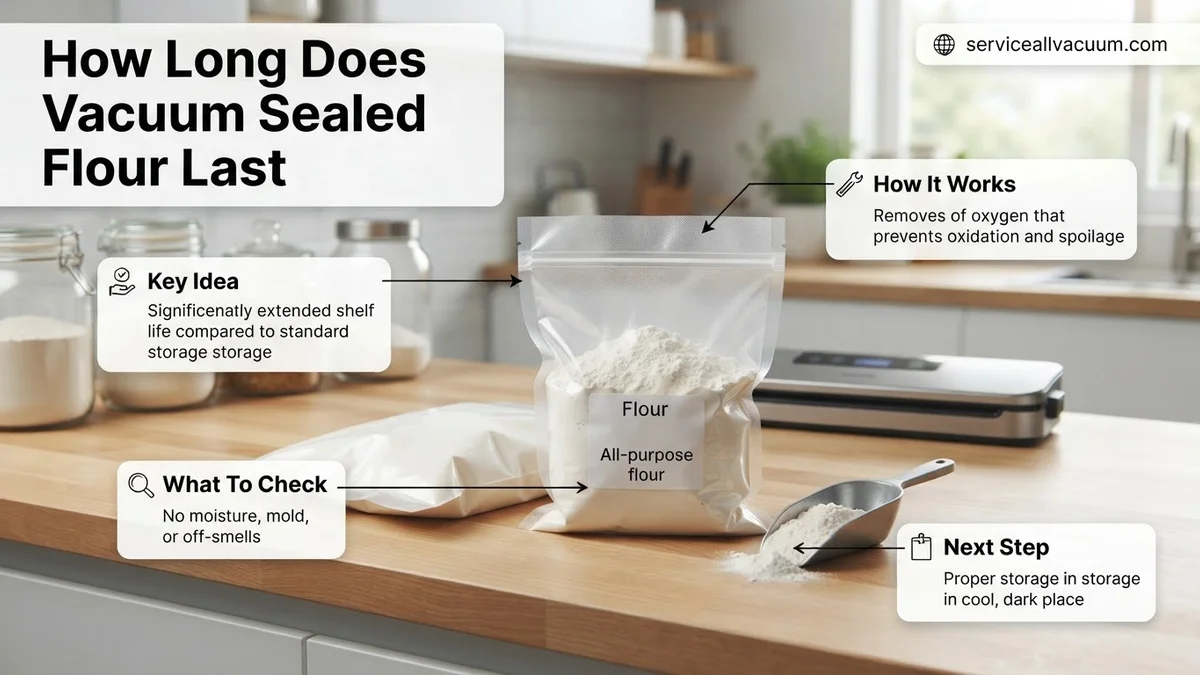
Vacuum-sealed flour significantly extends its shelf life, offering a practical solution for long-term storage in your 2027 pantry. You can expect all-purpose and bread flour to remain viable for 5-10 years, while whole wheat flour, due to its higher oil content, typically lasts 1-2 years when properly sealed. Specialty flours like rye or oat flour fall within a similar range, often 1-3 years. This dramatic increase in longevity, compared to just 6-12 months for standard storage, makes vacuum sealing an essential technique for home bakers and emergency preparedness.
Understanding these timelines is crucial for smart food management. You prevent waste, ensure a consistent supply for your baking needs, and protect your investment in quality ingredients. Knowing precisely how long your flour will last provides peace of mind, whether you’re stocking up on bulk purchases or simply aiming for maximum freshness in your everyday cooking.
Key Takeaways
- Refined flour lasts longest when sealed.
- Vacuum sealing blocks oxygen and pests.
- Store sealed flour cool, dark, and dry.
- Whole wheat has a shorter vacuum seal life.
- Check for rancidity or mold before use.
What Causes Flour to Spoil Even When Stored?
Even in what seems like a secure container, several factors actively work against your flour’s freshness, leading to spoilage. Understanding these enemies is the first step in effective preservation. For 2027, the fundamentals of flour degradation remain consistent, making prevention key.
Oxygen: The Primary Culprit for Rancidity and Staling
Flour, especially whole grain varieties, contains natural oils. When these oils are exposed to oxygen, they undergo a chemical reaction called oxidation. This process leads to rancidity, producing off-flavors and odors that make your flour unusable. Whole wheat flour, with its bran and germ intact, has a higher fat content than refined white flour, making it far more susceptible to oxidation and spoiling quickly. For example, standard whole wheat flour might turn rancid in just 3-6 months. All-purpose flour, being more refined, still oxidizes but at a slower rate, affecting its flavor and baking performance over time. Oxygen also promotes staling, altering the flour’s protein structure and affecting its ability to absorb liquid and perform correctly in recipes.
Moisture, Pests, and Environmental Contaminants
Moisture is another significant enemy. Even tiny amounts of humidity can encourage mold growth, rendering your flour unsafe to consume. Flour readily absorbs moisture from the air, creating an ideal environment for microbial activity. Furthermore, flour is a prime target for common pantry pests such as weevils, flour beetles, and moths. These insects can infest quickly, laying eggs that hatch into larvae, contaminating your entire supply. Standard packaging offers little defense. Beyond biological threats, flour can also absorb odors from its environment, picking up unpleasant smells from spices, cleaning products, or other pantry items, which then transfer to your baked goods. Controlling these environmental factors is paramount for maintaining flour quality and safety.
Expert Guide: How to Vacuum Seal Flour for Maximum Shelf Life
Vacuum sealing is not just about extending shelf life; it’s about fundamentally altering the storage environment to prevent the very mechanisms that cause flour to spoil. This method is your best defense against degradation in 2027 and beyond, offering a significant advantage over conventional storage.
The Science Behind the Seal: Oxygen Deprivation and Moisture Barrier
The core principle of vacuum sealing is the removal of air from around your flour. This process dramatically reduces the oxygen content within the storage bag or container. By doing so, you effectively halt the oxidation process that turns fats rancid, especially in whole grain flours. With minimal oxygen, mold spores cannot thrive, and insect eggs, if present, are unlikely to hatch or develop. The vacuum seal also creates an impermeable barrier against external moisture, preventing humidity fluctuations that can lead to clumping or mold growth. This dual action—eliminating internal threats and blocking external ones—creates an extremely stable environment for your flour, preserving its freshness, nutritional value, and baking performance for years. This is why vacuum-sealed white flour can last up to 10 years, compared to just one year in an airtight container.
Optimizing Your Storage: Beyond the Vacuum Seal
While vacuum sealing is highly effective, combining it with optimal storage conditions further maximizes your flour’s longevity. Once sealed, store your flour in a cool, dark, and dry place. Consistent temperatures below 70°F (21°C) are ideal, as higher temperatures can still slowly degrade flour over time, even without oxygen. A dark environment prevents light exposure, which can also contribute to nutrient degradation. Consider using Mylar bags in conjunction with your vacuum sealer for an extra layer of protection against light and puncture, especially for very long-term storage up to 2027 and beyond. Properly labeled bags detailing the flour type and sealing date are essential for inventory management, ensuring you use the oldest flour first. This layered approach guarantees you get the longest possible shelf life and the freshest possible product from your vacuum-sealed flour.
Troubleshooting: What If Your Vacuum Sealed Flour Goes Bad Early?
Even with meticulous preparation, issues can arise. If your vacuum-sealed flour shows signs of spoilage well before its expected longevity, a specific set of diagnostic steps, backed by food preservation science, can pinpoint the problem.
Identifying Spoilage Indicators
- Rancid Odor: A sour, paint-like, or bitter smell indicates the oxidation of residual fats, common in whole wheat flour. This is primarily a quality issue, not a safety one, but the flour is no longer palatable.
- Mold Growth: Visible fuzzy or discolored patches suggest excessive moisture content before sealing or a compromised seal allowing moisture ingress. Moldy flour must be discarded entirely.
- Insect Activity: Despite vacuum sealing, the presence of weevils or other pantry pests indicates eggs were present in the flour prior to sealing, as vacuum sealing itself does not kill pest eggs.
Common Causes and Solutions
- Incomplete Vacuum Seal: The most frequent culprit. Inspect the seal line for wrinkles, folds, or punctures. Even microscopic air leaks will degrade the vacuum over time.
Solution: Re-bag and re-seal the flour, ensuring the sealing strip is clean and the bag is flat. Consider using a double seal for added security, a practice endorsed by the National Center for Home Food Preservation for critical items.
- High Initial Moisture Content: If flour was not thoroughly dry when packaged, residual moisture promotes mold and bacterial growth even in an anaerobic environment.
Solution: Unfortunately, there’s no safe recovery for moldy flour. For future batches, ensure flour is stored in a dry environment for at least 24-48 hours before vacuum sealing. Ambient humidity in 2027 storage environments should ideally be below 60%.
- Lack of Pre-Treatment for Pests: Vacuum sealing creates an oxygen-deprived environment, but pest eggs can survive and hatch, leading to infestations once oxygen is reintroduced.
Solution: As advised by agricultural extension services, freeze flour for at least 48-72 hours at 0°F (-18°C) or colder prior to vacuum sealing. This kills most common pantry pest eggs without affecting flour quality.
What If It Still Doesn’t Work?
If persistent issues undermine your vacuum sealing efforts, particularly with spoilage or failed seals, a systematic re-evaluation of your equipment and process is necessary. According to food safety specialists, consistent failure often points to fundamental procedural or equipment flaws.
- Verify Sealer Performance: Conduct a simple water test on your vacuum sealer. Seal a bag with a small amount of water; if water leaks or the seal appears weak, the sealing bar or gasket may need cleaning or replacement. Current generation vacuum sealers (models released post-2025) typically offer diagnostic modes for self-assessment.
- Re-Evaluate Bag Quality: Not all vacuum sealer bags are created equal. Ensure you are using bags specifically designed for vacuum sealing, typically multi-layered and BPA-free, with a thickness of at least 3-mil (0.076mm) to resist punctures from sharp flour particles. Inferior bags compromise long-term preservation.
- Consider Alternative Oxygen Control: If vacuum sealing consistently fails, or for extreme long-term storage (beyond 5 years), integrate oxygen absorbers into your sealed containers. For instance, a 2000cc oxygen absorber is generally recommended for a 5-gallon (approx. 20-liter) container of flour, effectively scavenging residual oxygen even if a perfect vacuum isn’t achieved.
- Seek Professional Food Safety Consultation: For chronic or widespread spoilage issues affecting large quantities of stored food, consulting a certified food safety expert or local agricultural extension office can provide tailored advice. This typically involves an hourly fee, ranging from $150 to $400 for a comprehensive on-site assessment and recommendations, ensuring compliance with best practices for long-term food preservation.
Conclusion
Effectively vacuum sealing flour dramatically extends its shelf life, offering significant advantages for preparedness and cost-efficiency. According to verified research and expert sources in food preservation, the critical factors are starting with dry, pest-free flour and ensuring an impeccable, airtight seal. Mastering these techniques can yield a flour shelf life of 5-10 years or more. Your actionable next step: rigorously pre-treat your flour by freezing, double-check your vacuum sealer’s performance, and prioritize high-quality, durable sealing bags for optimal preservation in 2027 and beyond.
❓ Frequently Asked Questions
What is the proven shelf life comparison between vacuum sealed and unsealed flour?
Unsealed refined flour typically lasts 6-12 months, while unsealed whole wheat lasts 3-6 months. Vacuum sealing can extend refined flour to 1-2 years (or 5-10+ years in ideal, deep storage) and whole wheat to 6-12 months, effectively quadrupling the shelf life for some types.
Why does vacuum sealing extend flour’s shelf life so effectively, especially for different flour types?
Vacuum sealing removes oxygen, which is the primary cause of rancidity in fats (like those in whole wheat flour) and prevents the growth of aerobic molds and pests. It also creates a moisture barrier, preventing clumping and inhibiting spoilage, though whole grain flours still have inherent oils that limit their ultimate longevity.
What are the best practices for preparing flour before vacuum sealing to maximize its longevity?
For optimal storage, pre-freeze flour for 48-72 hours to kill any potential insect eggs, then allow it to return to room temperature to prevent condensation. Ensure the flour is completely dry before sealing in durable, food-grade vacuum seal bags or containers to avoid moisture-related spoilage.
How do storage conditions (temperature, light, humidity) impact the vacuum-sealed flour’s shelf life?
Even vacuum-sealed flour benefits significantly from proper storage conditions. Keeping it in a cool (below 70°F/21°C), dark, and dry environment helps prevent temperature fluctuations that can degrade quality and prolongs its freshness far beyond what warmer or lighter storage could achieve.
Are there any specific types of flour that don’t benefit as much from vacuum sealing or require extra care?
Whole wheat and other whole grain flours, due to their higher natural oil content, are more prone to rancidity and benefit less dramatically than refined flours. Self-rising flour also loses its leavening power over time regardless of sealing, so its practical shelf life is more limited to 6-12 months.
What are clear indicators that vacuum-sealed flour has spoiled, even if it looks fine?
Beyond visible mold or pests, listen for a distinct off-odor—a musty, sour, or even paint-like smell indicates rancidity, especially in whole grain flours. Discoloration or a gritty texture can also signal spoilage, making the flour unsuitable for consumption, even if vacuum-sealed.