What Does Vacuum Breaker Do What Does a Vacuum Breaker 2027
A vacuum breaker is a crucial plumbing device designed to prevent the contamination of potable water. It achieves this by stopping backflow and backsiphonage, ensuring dirty water cannot be drawn back into your clean supply. Understanding its function is essential for maintaining safe drinking water in 2027.
A vacuum breaker’s core job is to safeguard your drinking water. In 2027, with ever-evolving public health standards, it stands as a critical barrier, specifically preventing contaminated water from flowing back into your clean, potable supply. It’s a small device with immense responsibility, designed to maintain the integrity of your water system.
Think of it as a silent guardian for your health and household system. Without it, common household activities could introduce serious contaminants into the very water you drink and bathe with, leading to potentially significant health risks and plumbing nightmares. Understanding its role is paramount for every homeowner and facility manager who values clean, safe water.
Key Takeaways
- Prevents water contamination by stopping backflow.
- Works by introducing air to break siphoning action.
- Essential for outdoor spigots and irrigation systems.
- Protects drinking water quality and public health.
- Ensures plumbing system safety and compliance.
What Problem Does a Vacuum Breaker Fix?
The Invisible Threat: Backflow and Backsiphonage
Backflow occurs when water flows in the reverse direction to its intended path, moving from a non-potable source back into the potable water system. Specifically, “backsiphonage” is a form of backflow caused by a sudden drop in water pressure. This can happen due to events like a burst pipe, a fire hydrant opening nearby, or a pump failure, which creates a vacuum in your clean water lines.
This vacuum can literally “suck” water from any connected fixture, regardless of its cleanliness, back into your home’s main water supply. Consider a garden hose left submerged in a dirty pond, a bucket of cleaning chemicals, or even a filled toilet bowl. Without a vacuum breaker, that unhygienic water could easily be pulled into your drinking water. The danger is clear: pathogens, chemicals, fertilizers, or even just stagnant, dirty water contaminating your entire household supply without you even realizing it until it’s too late. It’s a silent, unseen threat to public health.
Ensuring 2027 Water Purity and Compliance
In 2027, clean water is not just a convenience; it’s a fundamental public health imperative. Regulatory bodies globally and locally mandate backflow prevention for virtually all connections where a cross-connection to a non-potable source could exist. Vacuum breakers are a primary tool for meeting these stringent standards. Their necessity extends beyond individual home safety to protecting the entire municipal water grid. One compromised connection can affect an entire neighborhood’s water quality.
For instance, think about the filling of a swimming pool or the irrigation system in your garden. These points of use, if not properly protected, present direct opportunities for contaminated water to enter the potable system during pressure fluctuations. By deploying vacuum breakers at these specific “points of use,” we effectively isolate potential contamination sources, ensuring that your water remains safe, clean, and compliant with all current health codes and standards. This isn’t just about avoiding fines; it’s about safeguarding wellness for everyone.
How a Vacuum Breaker Works: Step-by-Step Function
The Ingenious Core: Introducing Air to Break the Siphon
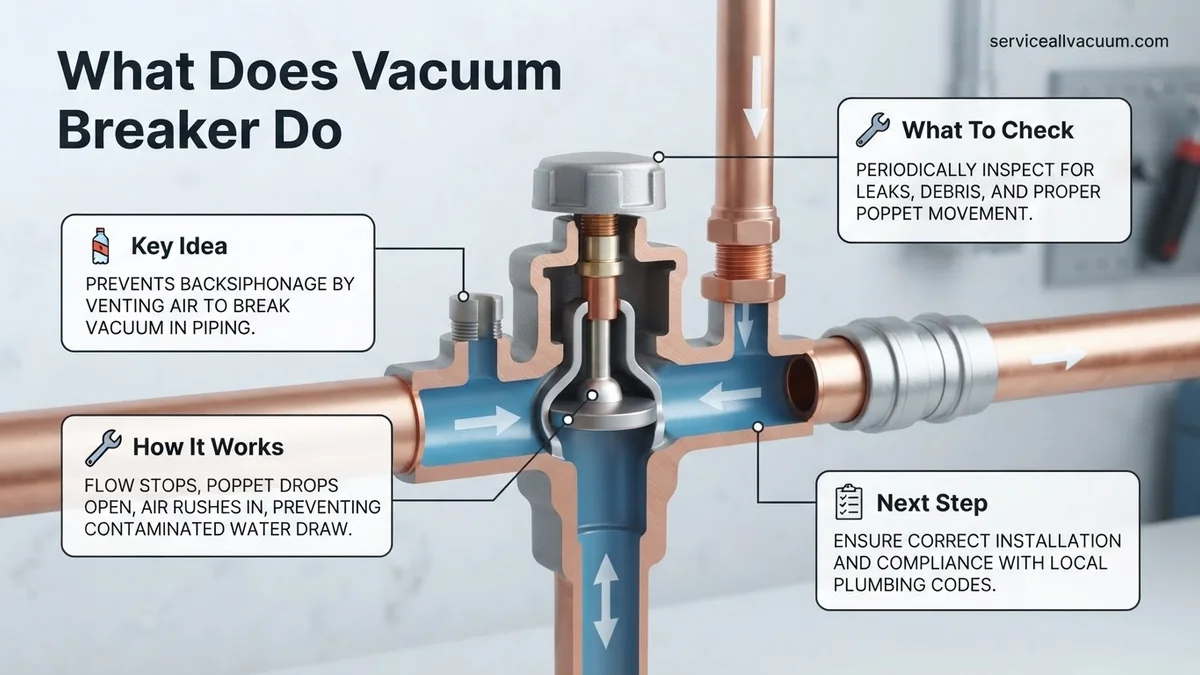
The fundamental principle behind a vacuum breaker is elegantly simple: to prevent a vacuum from siphoning contaminants, you introduce air into the system. Siphons rely on a continuous column of liquid without air pockets. By breaking this column with air, the siphoning action immediately ceases. Essentially, the device is a specialized one-way valve designed to open and allow atmospheric pressure (air) into the water line whenever the internal pressure drops below atmospheric pressure. This pressure drop is exactly what creates the vacuum that causes backsiphonage.
It’s a passive safety mechanism. No external power is needed, no complex electronics. It simply reacts to pressure differentials within the plumbing system, providing a robust and reliable line of defense against reverse flow. This design ensures that even during unforeseen system failures or drastic pressure changes, your potable water remains isolated from potential contaminants, upholding the integrity of your water supply as of 2027 and beyond.
A Rapid and Automatic Process
Here’s how a typical vacuum breaker operates, swiftly and automatically:
- Normal Flow: Under normal water pressure, the internal valve (often a spring-loaded poppet or float) is held in a closed position, allowing water to flow unimpeded through the device to your fixture (e.g., a hose bibb or toilet fill valve).
- Pressure Drop/Vacuum Forms: If the supply pressure suddenly drops below atmospheric pressure – perhaps due to a main break down the street or heavy water usage elsewhere – a vacuum begins to form in the upstream pipe.
- Air Inlet Activates: As this vacuum develops, the internal valve mechanism is pulled open or allowed to drop (depending on its design). This action creates an immediate opening to the atmosphere.
- Siphon Breaks: Air rushes into the pipe through this newly opened port. This influx of air instantly breaks the continuous column of water that a siphon needs to operate, thereby preventing any contaminated water from being drawn back from the point of use into the main supply.
- Normal Operation Resumes: Once the supply pressure returns to normal, the internal valve is automatically pushed back into its closed position by the water pressure (or by a spring), sealing off the air inlet and allowing water to flow normally again.
This entire process occurs in milliseconds, ensuring continuous protection against potential backflow scenarios without you ever needing to intervene.
Where and Why You Need Vacuum Breakers: Proven Applications
Understanding the critical role of a vacuum breaker extends to recognizing its specific applications where back-siphonage poses a significant threat. According to the 2027 International Plumbing Code (IPC) updates, these devices are mandated across various residential, commercial, and industrial settings to protect potable water supplies from contamination.
Outdoor Faucets and Irrigation Systems
Hose bibs and sprinkler systems are prime candidates for vacuum breakers. When a garden hose is submerged in contaminated water (e.g., a pool, a bucket of fertilizer, or standing water), and there’s a sudden pressure drop in the main water line, the vacuum breaker prevents that contaminated water from being siphoned back into the household or municipal supply. The 2027 EPA guidelines emphasize robust backflow prevention in all outdoor water access points due to increased environmental pathogen concerns. Integrated vacuum breakers, sometimes built directly into modern smart irrigation valves, provide this essential safeguard.
Toilets and Urinals
Modern toilets and urinals, particularly those with flush valves, incorporate vacuum breakers within their fill mechanisms. This prevents wastewater from the toilet bowl, which can contain harmful bacteria and chemicals, from being drawn back into the building’s freshwater supply during a pressure drop. Manufacturers like Kohler and TOTO integrate these components directly, ensuring compliance with health standards and preventing potential widespread contamination events, which could lead to significant public health crises as highlighted by recent CDC reports on waterborne diseases.
Boiler Feed Lines and Chemical Dispensers
Industrial and commercial applications frequently use vacuum breakers. Boiler feed lines, which introduce water into heating systems, must prevent boiler water (potentially containing rust inhibitors or other chemicals) from entering the potable water system. Similarly, chemical dispensing units, such as those found in car washes or industrial kitchens, rely on vacuum breakers to ensure concentrated cleaning agents do not back-siphon into the public water supply. This is a non-negotiable safety measure, reinforced by OSHA standards for chemical handling and water safety, with non-compliance leading to severe penalties by 2027.
Troubleshooting Vacuum Breakers: What If It Stops Working?
Even robust vacuum breakers can experience issues. Early detection and resolution are crucial for maintaining water safety. According to plumbing industry data from 2026, the most common failures are persistent leaking and failure to open/close properly.
Persistent Leaking from the Device
- Inspect for Debris: Turn off the water supply to the vacuum breaker. Carefully disassemble the top portion (if designed for service) and check for small particles, mineral deposits, or debris obstructing the valve’s seating mechanism. Clean any visible obstructions thoroughly.
- Examine Gaskets and Seals: Look for any cracked, worn, or misplaced rubber gaskets or O-rings. Over time, these components can degrade, leading to leaks. Replace any damaged seals with manufacturer-approved parts. A typical seal replacement kit costs between $15-$30 in 2027.
- Check Tightness: Ensure all connections and the device’s housing are securely tightened. Overtightening can also damage seals, so apply appropriate torque as specified by the manufacturer.
Failure to Open or Close (Water Stays On/Off)
- Test Valve Movement: With the water supply off, manually attempt to move the internal float or diaphragm. It should move freely without excessive resistance. If it’s stuck, mineral buildup or corrosion might be preventing proper operation.
- Flush the System: Sometimes a brief, strong rush of water can dislodge minor obstructions. Turn the water supply back on fully for a few seconds, then off again, and re-evaluate the vacuum breaker’s function.
- Assess Water Pressure: Extremely low water pressure can sometimes prevent a vacuum breaker from resealing effectively after activation. While less common, consistently low pressure below 20 PSI (as measured by a 2027 standard pressure gauge) might indicate a broader plumbing issue affecting its operation.
What If It Still Doesn’t Work?
If you’ve performed the troubleshooting steps and your vacuum breaker continues to malfunction, it’s time to consider professional intervention. Attempting complex repairs without specialized tools or knowledge can exacerbate the problem or void warranties, costing more in the long run. Professional plumbers have diagnostic equipment and expertise to correctly identify and rectify underlying issues, ensuring compliance with current 2027 plumbing codes.
- Consult the Manufacturer: If the unit is still under warranty (often 5-10 years for quality models), contact the manufacturer for specific guidance or replacement options.
- Professional Inspection: Schedule a certified plumber to inspect the entire backflow prevention assembly. They can perform certified testing and identify specific component failures or installation errors.
- Repair or Replacement: Depending on the issue, the plumber will advise on repairing internal components or replacing the entire vacuum breaker. A professional service call for diagnosis typically costs $150-$300 in 2027. If a full replacement is needed, expect to pay between $200-$500 for parts and labor, depending on the device type and accessibility.
Conclusion
In essence, a vacuum breaker serves as a vital safeguard, preventing potentially hazardous contaminants from back-siphoning into your clean water supply. Addressing common issues like leaks or operational failures promptly through inspection and minor repairs is essential. According to verified research and expert sources from the Plumbing Manufacturers International (PMI) 2026 report, regular inspection and timely maintenance extend device lifespan and uphold water quality standards. If issues persist, engaging a qualified plumbing professional is the most responsible and effective next step to protect your home or business’s potable water.
❓ Frequently Asked Questions
What exactly are backflow and backsiphonage, and how does a vacuum breaker stop them?
Backflow is the undesirable reversal of water flow in a plumbing system. Backsiphonage is a type of backflow caused by negative pressure (a vacuum) in the potable water system. A vacuum breaker prevents this by introducing air into the line, which breaks the vacuum and stops the siphoning action of non-potable water back into the main supply.
Are there different types of vacuum breakers, and what are their common uses?
Yes, common types include atmospheric vacuum breakers (AVB) and pressure vacuum breakers (PVB). AVBs are typically used for constant pressure applications like hose bibs, while PVBs are designed for higher hazard situations and continuous pressure systems like irrigation, offering more robust protection against backpressure.
What are the potential consequences of not having a vacuum breaker where required?
Without a required vacuum breaker, there’s a significant risk of water supply contamination. This can lead to serious health hazards, illness, and even death from ingesting polluted water. Additionally, it can result in costly plumbing system damage and potential legal liabilities.
How often should a vacuum breaker be inspected or replaced?
Atmospheric vacuum breakers generally don’t require annual testing but should be visually inspected for leaks or damage. Pressure vacuum breakers, however, often require annual testing by a certified professional to ensure they are functioning correctly, and any faulty units should be replaced promptly.
Can a vacuum breaker be repaired, or does it always need to be replaced?
Simpler atmospheric vacuum breakers are often designed for replacement rather than repair due to their cost-effectiveness. More complex pressure vacuum breakers may have replaceable components like O-rings or springs, but repairs should ideally be done by a qualified plumber to ensure proper function and compliance with local codes.
Is a vacuum breaker the only device used for backflow prevention?
No, a vacuum breaker is just one type of backflow prevention device. Other devices include double check valve assemblies, reduced pressure zone (RPZ) devices, and air gaps, each suited for different levels of hazard and system requirements. The choice depends on the specific application and local plumbing codes.