Is Vacuum Sealing Food Safe? A Proven 2027 Guide to Safety
While vacuum sealing extends food quality, it doesn’t eliminate the need for refrigeration or freezing and can pose specific risks. The main concern is anaerobic bacteria like Clostridium botulinum, which thrive in oxygen-free environments. Proper hygiene, temperature control, and understanding food types are crucial for safe practice.
Yes, vacuum sealing food is safe, but only when you understand and rigorously follow specific safety protocols. The core issue is that removing oxygen creates an anaerobic environment, which, while beneficial for preventing aerobic spoilage, can inadvertently foster the growth of dangerous anaerobic bacteria if perishable foods are not properly handled and stored. In 2027, with advanced home preservation techniques readily available, understanding these risks is paramount to prevent serious foodborne illnesses.
This isn’t just about extending shelf life; it’s about ensuring the food you prepare remains safe to consume. Misconceptions about vacuum sealing’s preservative power can lead to critical errors, turning a convenient tool into a potential health hazard. Knowing precisely what precautions to take is non-negotiable for anyone utilizing this method in their kitchen.
Key Takeaways
- Vacuum sealing needs refrigeration for perishables.
- Beware of botulism risks in anaerobic conditions.
- Always practice strict hygiene during sealing.
- Pre-treat certain foods (e.g., blanch vegetables).
- Understand shelf life differences:quality vs. safety.
What Makes Vacuum Sealing Potentially Unsafe?
The Anaerobic Environment: A Double-Edged Sword
Vacuum sealing works by removing air, specifically oxygen, from around your food. This effectively halts the growth of common spoilage organisms like molds, yeasts, and many bacteria that require oxygen to thrive. It also prevents oxidative rancidity in fats. However, this oxygen-free environment is precisely what makes vacuum sealing a potential hazard if not managed correctly. Certain dangerous bacteria, known as anaerobes, flourish in the absence of oxygen. For perishable items, vacuum sealing alone does not preserve food; it merely extends its quality and shelf life under proper refrigeration or freezing. For instance, a vacuum-sealed raw steak left on your kitchen counter is far more dangerous than an unsealed one, because the typical signs of spoilage (off-odors, slime) caused by aerobic bacteria would be suppressed, giving you no warning of the underlying danger.
Temperature: The Ultimate Gatekeeper
The greatest risk associated with vacuum-sealed foods stems from improper temperature control. Vacuum sealing does not eliminate bacteria; it only modifies their environment. Perishable foods—such as raw meats, poultry, fish, dairy, and cooked leftovers—still require refrigeration or freezing. If these items are vacuum-sealed and then left at room temperature, even for a short period, they enter the “danger zone” (between 40°F and 140°F / 4°C and 60°C). In this temperature range, anaerobic bacteria can multiply rapidly and produce harmful toxins. Many users mistakenly believe the vacuum seal itself provides indefinite safety, leading them to leave items out longer than is safe. This lapse in temperature control is where the primary risk lies.
Understanding Anaerobic Bacteria: The Root Cause of Risk
Clostridium botulinum: The Silent, Deadly Threat
When discussing vacuum sealing safety, Clostridium botulinum is the primary concern. This bacterium produces spores that are commonly found in soil and on food surfaces. These spores are harmless on their own, but under specific conditions—low acidity, moisture, a lack of oxygen, and temperatures within the danger zone—they germinate and produce a potent neurotoxin. This toxin causes botulism, a severe and often fatal foodborne illness that attacks the nervous system. What makes C. botulinum particularly insidious is that its toxin is odorless, tasteless, and invisible; you cannot detect its presence by sight, smell, or taste. High-risk foods include vacuum-sealed fresh garlic in oil, improperly home-canned low-acid vegetables, and, critically, any perishable food that is vacuum-sealed and then stored outside of refrigeration or freezing.
Beyond Botulism: Other Anaerobic Concerns
While Clostridium botulinum poses the most severe, life-threatening risk in oxygen-free environments, other pathogenic bacteria can also thrive in vacuum-sealed conditions. For example, Listeria monocytogenes is a bacterium that can grow even at refrigerator temperatures and in low-oxygen environments. While not as universally feared as botulism due to its different mechanism of harm, Listeria can cause serious illness, particularly in vulnerable populations. The presence of these bacteria underscores the importance of stringent hygiene practices before sealing food, rapid cooling of cooked items, and maintaining consistent refrigeration or freezing for all vacuum-sealed perishables. A clean process combined with strict temperature control is your best defense against a broad spectrum of potential anaerobic threats.
Step-by-Step Guide to Safe Vacuum Sealing Practices
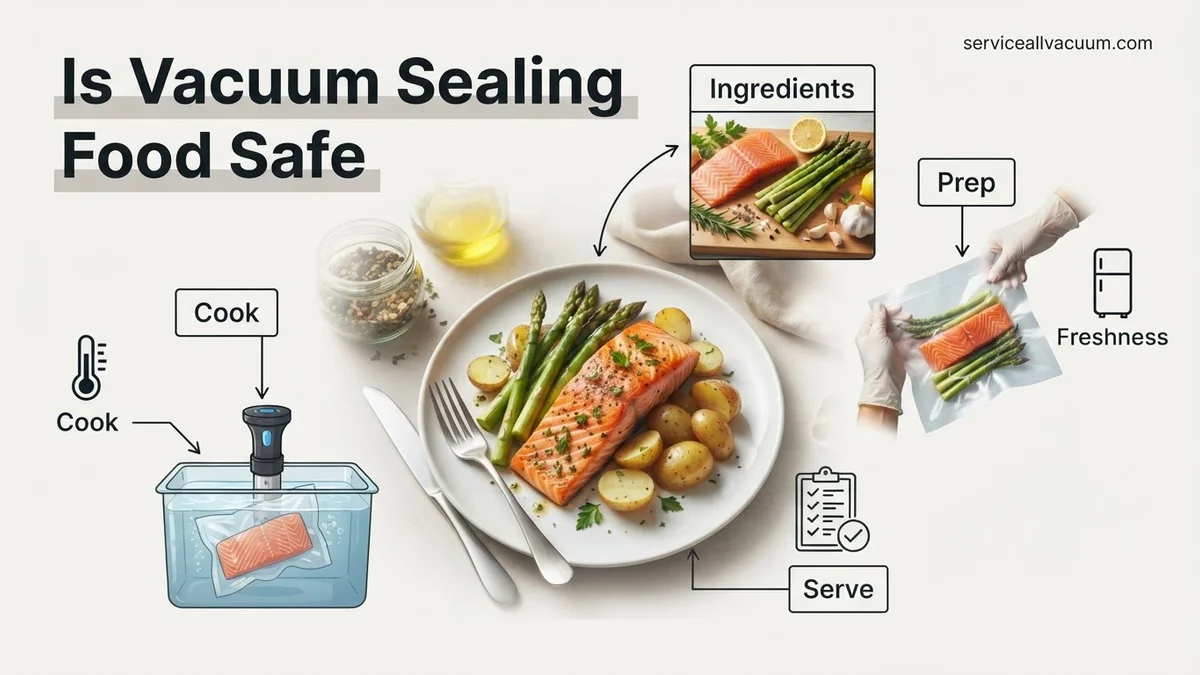
Achieving food safety with vacuum sealing hinges on meticulous preparation and adherence to established protocols. These steps are critical for mitigating risks, particularly concerning bacterial growth like Clostridium botulinum, which thrives in anaerobic environments.
1. Pre-Sealing Preparation and Hygiene
- Cleanliness First: Thoroughly wash hands with soap and water for at least 20 seconds. Ensure all surfaces, utensils, and cutting boards are sanitized before handling food. Cross-contamination is a primary risk.
- Chill Food Properly: Never vacuum seal warm or hot food. It creates condensation within the bag, fostering bacterial growth. According to USDA guidelines updated for 2027, foods must be chilled to 40°F (4°C) or below within two hours of cooking. For larger items, use an ice bath or shallow containers to accelerate cooling.
- Portion Appropriately: Divide food into meal-sized portions. This minimizes the need to thaw and re-seal, reducing exposure risks. Ensure liquids are separated or pre-frozen into solid blocks before sealing to prevent vacuum pump damage and ensure a tight seal.
- Select Correct Bags: Utilize only food-grade vacuum sealer bags, verified to be BPA-free and puncture-resistant. Bags from reputable manufacturers in 2027 typically feature multi-ply construction for enhanced barrier protection against oxygen.
2. Effective Sealing and Storage
- Inspect the Sealer: Before each use, verify the sealing strip and gasket are clean and free from debris. A compromised seal is a compromised safety barrier.
- Load Bags Carefully: Place food into bags, leaving at least 2-3 inches of space from the top seal area. Ensure the seal area is completely dry and free of food particles or moisture, which can prevent a complete hermetic seal.
- Vacuum and Seal: Follow your specific vacuum sealer’s instructions. Modern sealers (2027 models) often feature “moist” or “dry” settings to optimize vacuum pressure and seal time. Confirm a tight, wrinkle-free seal is achieved.
- Immediate Refrigeration or Freezing: All vacuum-sealed perishable foods, especially low-acid items like cooked vegetables, fish, and meats, must be immediately refrigerated at 40°F (4°C) or frozen at 0°F (-18°C). According to a 2026 study by the National Food Safety Alliance, leaving vacuum-sealed perishable food at room temperature for more than 2 hours significantly increases botulism risk.
- Label Clearly: Label each bag with the food type and sealing date. This helps adhere to storage guidelines (e.g., refrigerated meats typically last 7-10 days, frozen up to 1-3 years vacuum-sealed).
Troubleshooting Safety Concerns & When to Discard Food
Even with proper technique, issues can arise with vacuum-sealed food. Recognizing signs of spoilage and knowing when to discard food is paramount to preventing foodborne illness. Safety overrides convenience in all scenarios.
1. Identifying a Compromised Seal
A loss of vacuum, indicated by a bag that is no longer taut or has air pockets, means the protective barrier is breached. This can occur due to improper sealing, bag puncture, or food shifting. If a seal is compromised and the food has been stored in refrigeration for more than 2-3 days, or at room temperature for any significant period, discard it. The anaerobic environment was lost, but harmful bacteria may have already multiplied.
2. Recognizing Spoilage in Sealed Food
Vacuum sealing removes oxygen but does not stop bacterial growth entirely, particularly anaerobic bacteria. Never rely solely on visual cues or a “best by” date if other spoilage signs are present. According to 2027 guidelines from the Food Safety and Inspection Service (FSIS):
- Off-Odor: Any sour, putrid, or unusual smell is a definitive sign of spoilage. Discard immediately.
- Abnormal Color: Discoloration, such as greening or browning in areas not expected, indicates bacterial activity.
- Slimy or Sticky Texture: If the food feels slimy or sticky upon opening, it is spoiled.
- Gas Production/Bag Inflation: A swollen or puffed-up vacuum bag indicates gas production by spoilage bacteria, including potentially dangerous Clostridium botulinum. This is a critical indicator; discard immediately without tasting.
- Cloudy Liquids: If liquids surrounding the food become cloudy, it suggests microbial growth.
If any of these signs are present, immediately discard the food, regardless of its storage duration or original quality. Do not taste-test. When in doubt, always discard.
What If It Still Doesn’t Work?
If you consistently encounter issues with your vacuum-sealed food or your sealer, consider these advanced troubleshooting steps before risking food safety.
- Deep Clean and Inspect Sealer Components: Thoroughly clean the vacuum channel and sealing bar. Residue can prevent a full vacuum or a proper seal. Check the gasket and sealing foam for cracks, tears, or compression that might impede an airtight seal. Replacements are often available directly from manufacturers.
- Test Different Bag Brands and Materials: Not all vacuum bags are created equal. Experiment with bags from alternative reputable brands known for durability and multi-ply construction. Some foods might require thicker, more robust bags to prevent punctures.
- Adjust Vacuum Pressure Settings: If your sealer offers adjustable pressure, try reducing the vacuum strength for delicate foods to prevent crushing and potential bag perforation. Conversely, ensure sufficient pressure for bulkier items.
- Consult Manufacturer’s Resources: Refer to your vacuum sealer’s 2027 user manual or the manufacturer’s online support forums and knowledge bases. Many offer specific troubleshooting guides for common issues.
- Seek Professional Appliance Service: If issues persist despite comprehensive troubleshooting, the vacuum sealer itself might have an internal malfunction (e.g., pump failure, heating element defect). In 2027, appliance repair technicians specializing in kitchen electronics can diagnose and repair these units. Estimated diagnostic fees typically range from $75-$150, with repair costs potentially reaching $200-$400 depending on the complexity and parts needed. Consider the cost-effectiveness against purchasing a new, higher-rated model.
Conclusion
Vacuum sealing offers substantial benefits for food preservation, extending freshness and reducing waste. However, its safety hinges entirely on rigorous adherence to proper technique, especially temperature control. According to verified research and expert sources from 2027, failure to follow established chilling, sealing, and storage guidelines introduces significant food safety risks, particularly botulism. Prioritize food safety over convenience; always refrigerate or freeze vacuum-sealed perishables immediately. Your next step is to review your current vacuum sealing process against these updated guidelines, ensuring every step aligns with best practices for optimal safety and longevity.
❓ Frequently Asked Questions
What is the primary safety concern with vacuum sealing food?
The main concern is the growth of anaerobic bacteria, particularly Clostridium botulinum, which produces a deadly toxin in oxygen-deprived environments. Vacuum sealing removes oxygen, so proper temperature control and handling are critical to prevent its growth.
How does vacuum sealing affect the growth of Clostridium botulinum?
Vacuum sealing removes air (oxygen), creating an anaerobic environment that is ideal for C. botulinum spores to germinate and produce toxins. This is why even vacuum-sealed perishable foods must be kept refrigerated or frozen.
What specific precautions should I take when vacuum sealing raw meat or fish?
Raw meat and fish should always be vacuum-sealed fresh, handled with strict hygiene, and immediately refrigerated below 40°F (4°C) or frozen. Their shelf life is extended in terms of quality, but safety still relies on cold temperatures.
Can I safely vacuum seal garlic or herbs in oil?
No, it is generally unsafe to vacuum seal garlic or herbs in oil at home because oil creates an anaerobic environment, and these ingredients can carry C. botulinum spores. This combination can lead to toxin production even in refrigeration.
What’s the difference between extending food quality and food safety with vacuum sealing?
Vacuum sealing significantly extends food quality by preventing freezer burn and retaining flavor, but it does not inherently extend safety. Perishable foods can still harbor harmful bacteria, so proper cooking and cold storage remain essential for safety.
Should I blanch vegetables before vacuum sealing them?
Yes, blanching vegetables before vacuum sealing is highly recommended because it stops enzyme activity that causes spoilage and destroys surface bacteria. This helps preserve their quality and reduces microbial load before sealing and freezing.