Why Does My Vacuum Smell Bad? Fix It in 2027
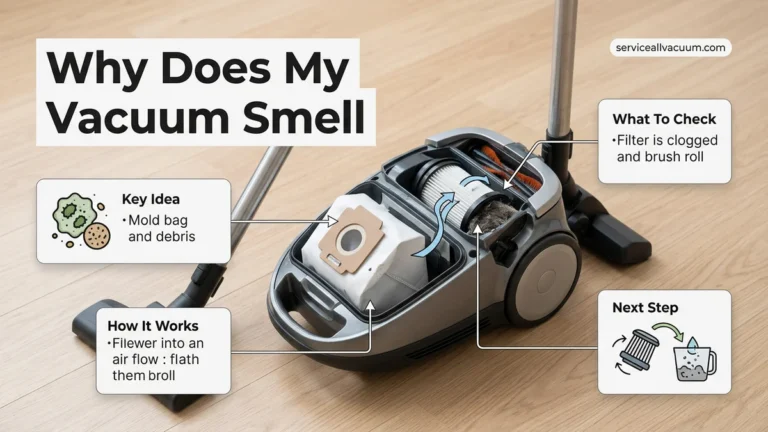
A foul-smelling vacuum is usually caused by trapped pet hair, moldy filters, or a burning belt circulating unpleasant odors into your home. Fixing this issue requires locating the specific source of the smell, thoroughly cleaning or replacing contaminated parts, and clearing blockages. Regular preventative maintenance will keep your machine smelling fresh and extend its lifespan.
Your vacuum smells bad because organic debris like pet hair, food particles, and fine dust are trapped inside the system, creating a breeding ground for bacteria and mold. When you turn on the machine, the motor heats up this trapped organic matter and blows the foul odor straight back into your living space.
Dealing with a foul-smelling vacuum makes house cleaning miserable. Fixing this issue not only freshens your home air immediately in 2027, but it also prevents motor burnout and extends the overall lifespan of your cleaning appliance.
Key Takeaways
- Dirty filters and trapped pet hair are the most frequent causes of vacuum odors.
- Washable filters should be cleaned monthly and dried completely before reinstallation.
- A burning rubber smell usually indicates a jammed brush roll or a worn-out belt.
- Deodorize your dust canister or bag using baking soda to neutralize lingering smells.
- Regularly checking for clogs prevents debris buildup and foul-smelling stagnation.
Why Does My Vacuum Smell Bad? Top Causes and Diagnosis
The Filter and Canister Culprits
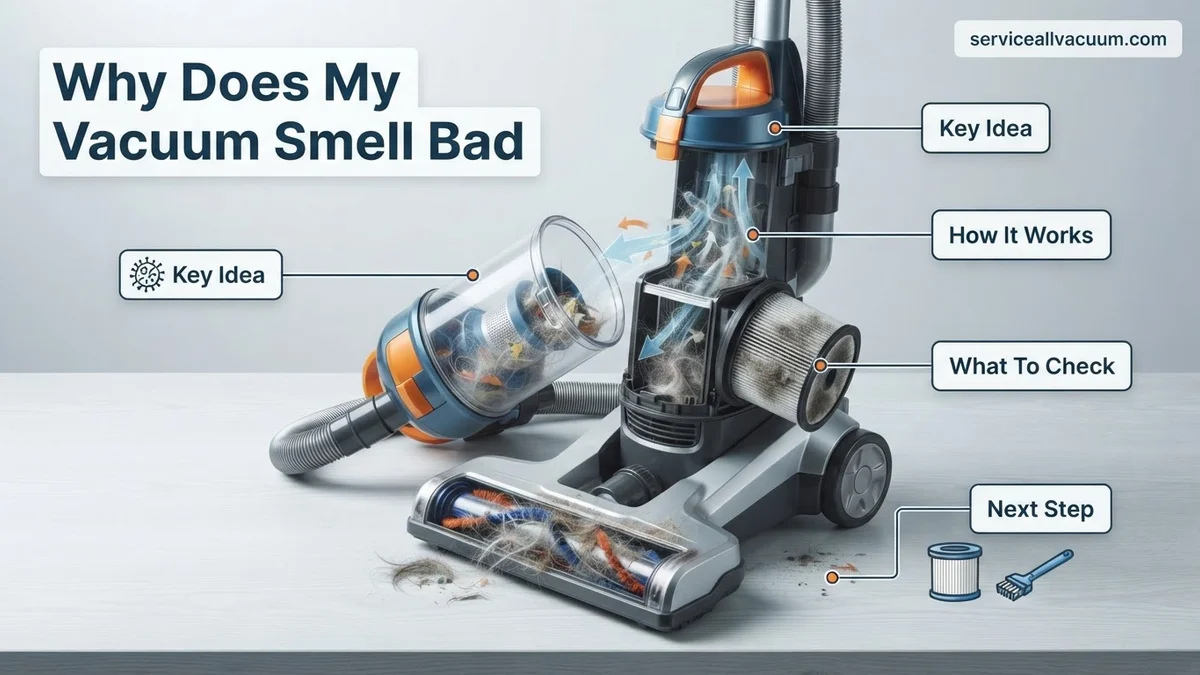
Most vacuum odors originate right at the filtration system or collection bin. If you have a bagless vacuum, fine dust coats the inner plastic walls and dampens over time. HEPA and foam filters also trap microscopic odor-causing bacteria that multiply rapidly in dark, enclosed spaces.
- Stagnant pet dander trapped in pleated HEPA filters.
- Moisture pulled into the dust bin from damp carpets.
- Decomposing organic debris sitting in unemptied canisters for weeks.
Brush Roll and Hose Blockages
Your brush roll acts like a comb, pulling up hair, carpet fibers, and hidden spills. When these items wrap tightly around the rotating bar, friction heats them up and releases a distinct burning or rotting smell. Similarly, partial clogs in the flexible hose trap damp lint and food crumbs that turn sour.
- Hair and carpet fibers wrapped around the agitator bar creating friction heat.
- Silliness like spilled cereal or pet accidents sucked deep into the corrugated hose.
- Mold growth inside sealed hose ridges due to high ambient humidity.
Step-by-Step Guide to Cleaning and Deodorizing Your Vacuum
Deep Cleaning Filters and Bins
Start your remediation process by completely disconnecting the vacuum from power. Empty the dust canister into an outdoor trash bin to avoid indoor dust clouds. Wash hard plastic components with warm water and a few drops of dish soap, ensuring every trace of old debris is rinsed away.
- Remove foam or washable pre-filters and rinse them thoroughly under cold running water until the water runs completely clear.
- Allow all washed filters and plastic canisters to air dry completely for at least 24 to 48 hours before reinstallation. Never reinstall damp components.
- Replace non-washable HEPA filters entirely, especially if they are past their recommended lifespan for 2027 maintenance guidelines.
Clearing the Brush Roll and Deodorizing
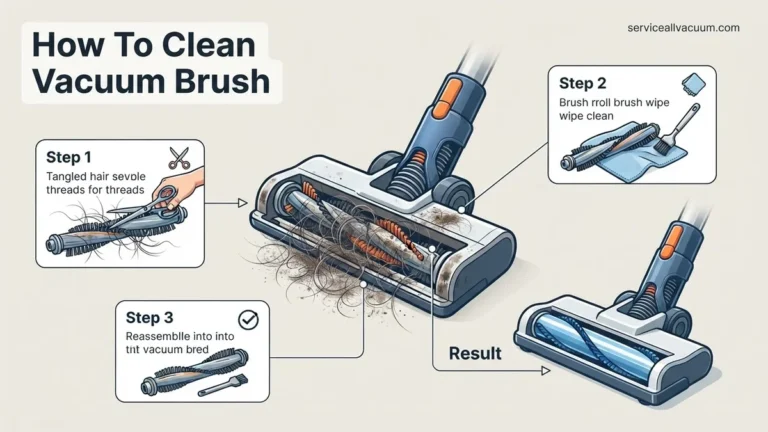
Flip your vacuum over to inspect the floor head. Use a pair of sharp scissors or a seam ripper to carefully slice through hair and threads wrapped around the brush roll without damaging the bristles. Pull the tangled debris away completely.
- Wipe down the interior of the floor head and the brush roll chamber with an antibacterial wipe.
- Sprinkle two tablespoons of baking soda onto a clean carpet and vacuum it up to neutralize internal lingering odors.
- Check the flexible hose by detaching both ends and passing a broom handle through it to dislodge hidden blockages.
How to Fix Burning Smells and Mechanical Issues
A burning odor requires immediate attention to prevent motor failure or a household fire. According to appliance safety data, burning smells typically stem from two primary sources: a jammed brush roll or a worn-out drive belt. When hair and carpet fibers wrap tightly around the roller brush, the internal motor strains to turn it, creating friction that overheats the rubber belt and motor bearings.
Step-by-Step Mechanical Troubleshooting
- Unplug the vacuum immediately to eliminate electrical hazards before inspecting any moving parts.
- Turn the vacuum over and locate the bottom plate covering the brush roll mechanism.
- Remove the screws or release the latches holding the plate in place, then lift it off to expose the belt and roller.
- Cut away tangled hair and threads using a seam ripper or sharp scissors, making sure the brush spins freely by hand.
- Inspect the rubber drive belt for signs of stretching, cracking, or melting; replace it with an OEM-certified part if any damage is visible.
If the belt and brush roll are completely clear and the burning odor persists, the vacuum motor itself may be failing. Electrical arcing inside the motor housing requires professional diagnostic evaluation rather than a simple DIY fix.
What If It Still Doesn’t Work?
If you have deep-cleaned the bin, replaced the filters, and cleared the brush roll, but the foul odor stubbornly remains, deeper structural contamination is usually to blame. Modern vacuums require comprehensive system resets when standard maintenance fails to resolve lingering smells.
- Soak washable components, such as foam pre-filters and non-motorized plastic canisters, in a solution of warm water and mild dish soap for 30 minutes, ensuring they dry completely for 24 hours before reinstallation.
- Inspect the flexible hose and extension wands by feeding a damp microfiber cloth attached to a flexible rod through the interior to dislodge trapped organic buildup.
- Check the exhaust housing for degraded sound-dampening foam, which can absorb years of fine dust and rot over time.
- Consult a certified local vacuum repair technician if the motor housing itself smells like electrical ozone or burnt plastic. Professional diagnostic services typically range from $40 to $75, while a complete motor replacement can cost between $100 and $180 depending on the brand.
Conclusion
Dealing with a foul-smelling vacuum usually comes down to addressing trapped organic debris, neglected washable filters, or friction from a jammed brush roll. Regular maintenance prevents unpleasant odors from disrupting your cleaning routine and extends the lifespan of your appliance. According to verified research and expert appliance sources, replacing filters annually and clearing the brush roll monthly ensures optimal suction and fresh exhaust air. Take action today by inspecting your vacuum’s filters and scheduling a deep-cleaning session to restore total freshness to your home.
❓ Frequently Asked Questions
Why does my vacuum smell bad when I turn it on?
When you turn on the vacuum, the rapid airflow forces air through dirty filters, damp debris, and clogged hoses, immediately pushing trapped odors out into your room.
Is it safe to use a vacuum that smells like burning?
No, you should turn off and unplug the vacuum immediately. A burning smell indicates friction from a jammed part or an electrical issue that can become a fire hazard.
Can I put essential oils or scent beads in my vacuum?
Use caution with liquids or oils, as they can ruin the motor or clog filters. Instead, sprinkle a little baking soda or dedicated vacuum scent crystals inside the bag or canister.
Why does my bagless vacuum still smell after I emptied it?
Fine dust, pet dander, and bacteria cling to the inner cyclone assembly, canister walls, and foam filters. Wiping out the canister and washing the filters will remove this hidden residue.
How do I clean hair and debris wrapped around the brush roll?
Unplug the vacuum, turn it over, and use a pair of scissors or a seam ripper to carefully slice through wrapped hair without damaging the bristles before pulling it free.
When should I completely replace my vacuum filter?
If you have washed your filter multiple times and a musty or sour smell persists, or if the filter material is visibly degraded, it is time to buy a replacement.