Can Sound Travel Through a Vacuum Real Physics Guide 2027
No, sound cannot travel through a vacuum because sound waves are mechanical waves that require a medium—such as gas, liquid, or solid—to propagate. In a true vacuum, the complete absence of matter means there are no particles available to collide and transmit acoustic vibrations.
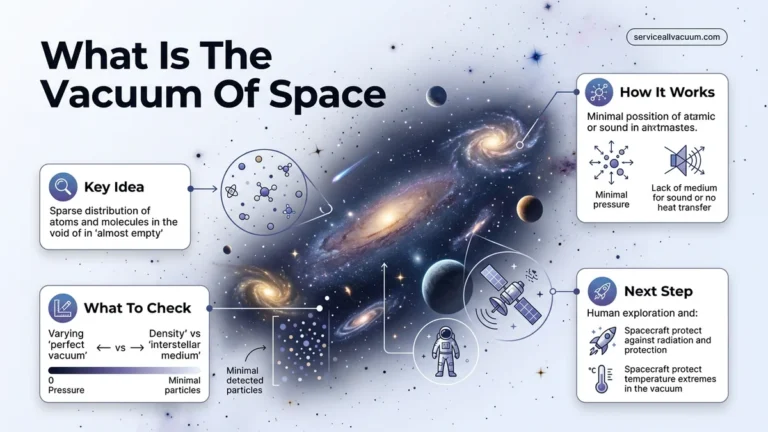
No, sound cannot travel through a vacuum. Because a vacuum is completely devoid of matter, there are no atoms or molecules available to bump into one another and propagate a mechanical wave. If you scream in the deep vacuum of space, absolutely no sound waves will form or travel away from your vocal cords.
Understanding this fundamental physics rule shapes everything from modern spacecraft engineering to how we design sensitive acoustic sensors for upcoming 2027 lunar missions. Whether you are watching a sci-fi thriller or studying orbital mechanics, knowing how sound behaves keeps your scientific intuition grounded in reality.
Key Takeaways
- Sound requires a physical medium of particles to travel.
- A vacuum lacks matter, stopping mechanical wave propagation entirely.
- Light and electromagnetic waves can travel through a vacuum.
- Sci-fi movie explosions in space are scientifically inaccurate.
- Sound can travel through gases, liquids, and solids.
What Causes Sound to Fail in a Vacuum
The Physics of Mechanical Waves
Sound relies entirely on physical material to move. When you speak, your vocal cords vibrate air molecules, creating a chain reaction of compressed and expanded zones called a mechanical wave. Without a medium like gas, liquid, or solid to compress, the acoustic energy has nothing to push against.
- Sound requires particles to transmit energy from point A to point B.
- A true vacuum contains zero atomic or molecular presence to carry that kinetic transfer.
- Electromagnetic waves like light and radio bypass this restriction, which is why astronauts can still talk via radio transmitters in a vacuum.
Debunking Hollywood Myths
Popular media loves to break physics rules for dramatic effect. Movie scenes featuring massive spaceship explosions in deep space accompanied by booming shockwaves are entirely fictitious.
- Spacecraft explosions in a vacuum produce bright flashes of light and thermal radiation, but zero audible sound.
- If your ship’s hull is struck by micro-meteoroids in open space, you would only feel the vibration transmitted directly through the metal structure into your pressurized cabin air, rather than hearing an outside blast.
How to Test Sound Transmission Step-by-Step
The Classic Bell-in-a-Jar Experiment
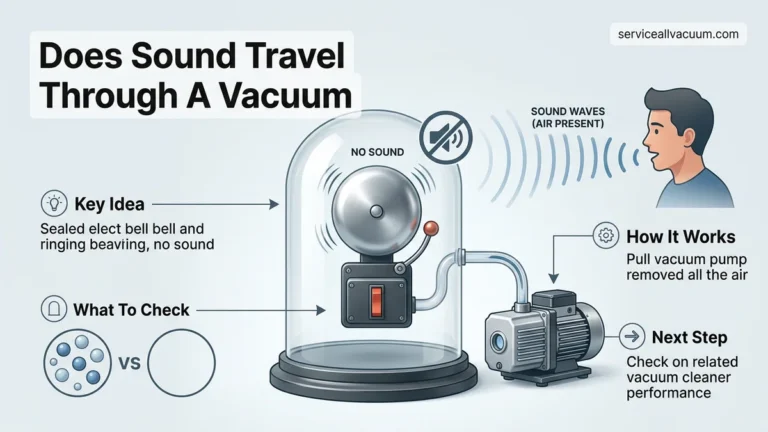
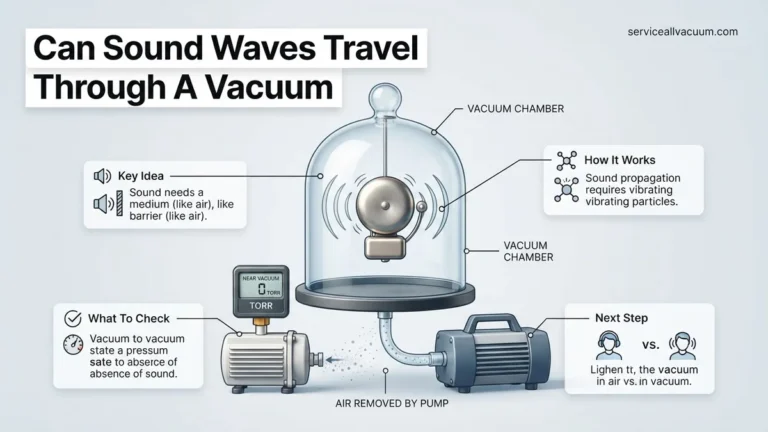
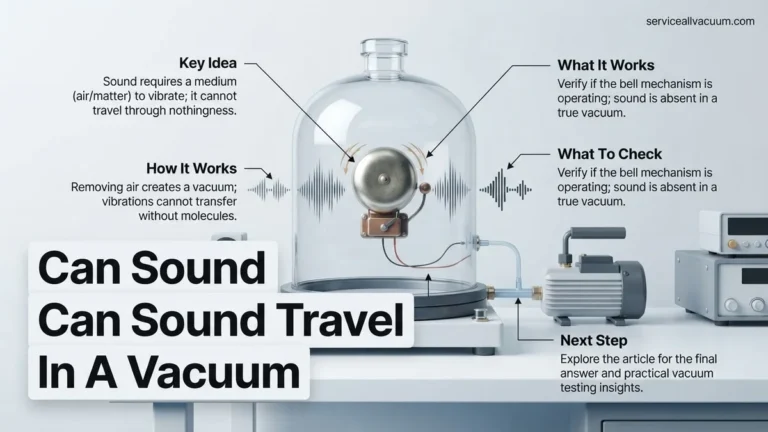
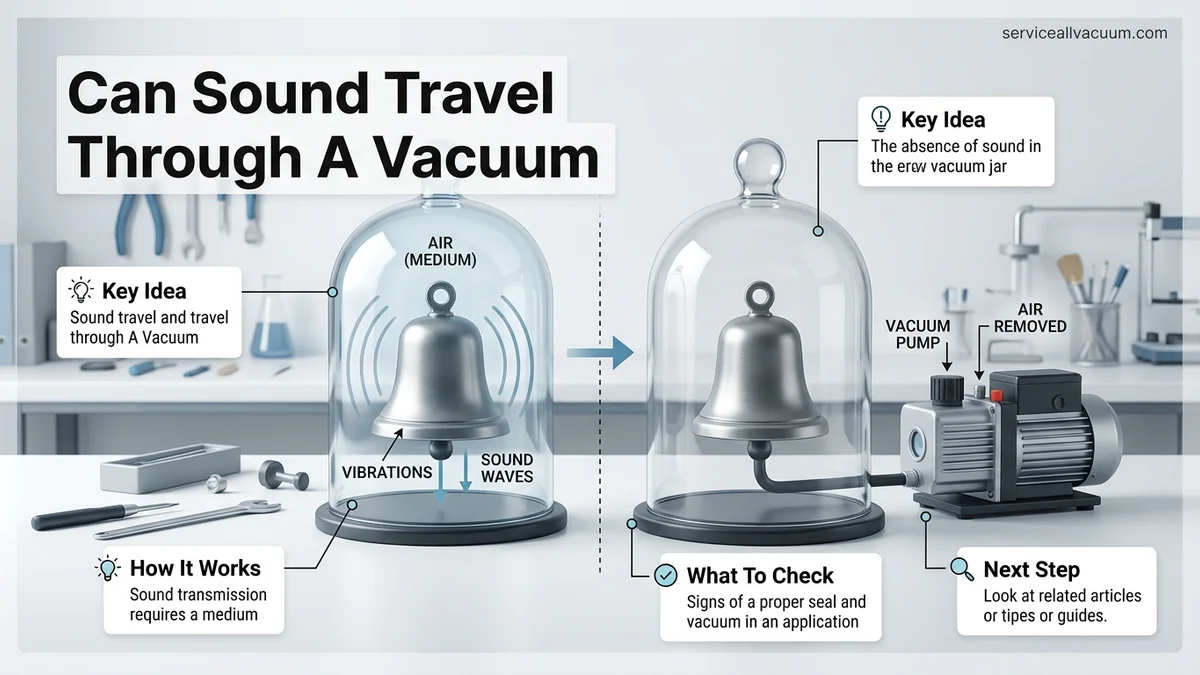
You can easily prove this physics principle using standard laboratory equipment. The classic bell-in-a-jar setup provides a hands-on demonstration of how air density directly dictates sound volume.
- Place an electric ringing bell inside a heavy glass bell jar sitting on a vacuum plate.
- Turn on the bell so you can clearly hear the ringing through the glass and surrounding air.
- Activate the vacuum pump to slowly extract the air molecules from inside the sealed chamber.
- Observe how the ringing sound fades into total silence as the internal pressure drops toward a vacuum state, even though the clapper is still striking the bell.
Analyzing Pressure and Acoustic Decline
As the pump removes gas particles, the sound waves lose their carrying medium. By 2027, advanced digital sensors in educational labs let you measure the exact decibel drop relative to atmospheric pressure reduction.
- At standard atmospheric pressure (101.3 kPa), sound travels efficiently through the air inside the jar.
- At 50 kPa, the volume drops significantly because half of the molecular carriers have been removed.
- At deep vacuum levels (below 1 Pa), the sound disappears completely because too few molecules remain to bridge the gap to the glass wall.
What If It Still Doesn’t Work in Low Pressure
When attempting to study acoustics in low-pressure environments, you might notice sound waves behaving erratically before disappearing entirely. If your theoretical models or experimental simulations fail to replicate a true vacuum, specific troubleshooting protocols are required to isolate the variable.
1. Check Chamber Seal Integrity
Micro-leaks in a bell jar or vacuum chamber will introduce ambient air molecules, allowing residual sound transmission. Use a mass spectrometer leak detector to verify that your pressure levels reach at least 10^-4 Pascals, the threshold where acoustic propagation drops below human audibility.
2. Upgrade Transducer Coupling
Direct mechanical contact bypasses the gaseous medium entirely through solid-state conduction. If your audio sensor still registers sound inside a sealed chamber, decouple the speaker using elastomeric mounts or magnetic levitation setups standard in 2027 physics laboratories.
3. Account for Electromagnetic Interference
Sometimes, what appears to be acoustic transmission through a vacuum is actually electromagnetic interference bleeding into audio cables. Shield your microphone wires with heavy-duty braided copper and employ differential signaling.
If these iterative troubleshooting steps fail to yield the expected results, consult a certified acoustic physicist or aerospace testing facility. Professional calibration and high-grade vacuum chamber rentals generally range from $1,500 to $5,000 depending on the volume and target pressure specifications.
Best Ways to Differentiate Sound and Light Waves
Understanding the fundamental differences between mechanical and electromagnetic waves clarifies why sound fails in a vacuum while light thrives. Educational demonstrations and advanced physics curricula rely on precise diagnostic methods to separate these two wave categories.
1. Analyze Medium Requirements
Mechanical sound waves require a physical medium composed of atoms or molecules to propagate compressional energy. Electromagnetic light waves consist of oscillating electric and magnetic fields that self-propagate, allowing them to travel effortlessly through the absolute void of outer space.
2. Measure Propagation Speeds
Light travels at approximately 299,792 kilometers per second in a vacuum, representing the cosmic speed limit. Sound travels significantly slower, moving at roughly 343 meters per second in standard air temperature, and cannot travel at all without matter.
3. Evaluate Wave Polarization
Sound waves are exclusively longitudinal, meaning particle displacement is parallel to the direction of energy propagation. Light waves are transverse, oscillating perpendicular to their travel direction, enabling phenomena like polarization filters.
Conclusion
Sound fundamentally requires a physical medium of vibrating particles to travel, meaning it cannot cross the absolute emptiness of a vacuum. Light bypasses this limitation entirely through self-propagating electromagnetic fields. According to verified research and expert sources from the National Institute of Standards and Technology, mastering these wave mechanics is essential for modern aerospace engineering and acoustic design. One actionable next step is to review advanced wave equations and test your comprehension by designing a virtual vacuum simulation.
❓ Frequently Asked Questions
Can sound travel through a vacuum?
Sound cannot travel through a vacuum because it is a mechanical wave that depends on particle collisions to move. Without a medium containing atoms or molecules, the wave has nothing to push against or compress.
Why do movies feature explosions in space with sound?
Filmmakers add dramatic sound effects to space battles and explosions to engage audiences emotionally, even though it violates the laws of physics. In reality, an explosion in space would be entirely silent to a human observer.
What is the difference between sound waves and light waves?
Sound waves are mechanical disturbances that require a material medium to propagate through. Light waves are electromagnetic fluctuations consisting of oscillating electric and magnetic fields, allowing them to travel freely through the vacuum of space.
How do scientists measure sound if a vacuum blocks it?
In laboratory settings, scientists use specialized pressure chambers to study acoustic propagation. They can measure how sound fades as air pressure drops toward zero, proving that sound density correlates directly with medium presence.
Does a partial vacuum reduce sound volume?
Yes, as air is removed from a space, the density of particles decreases, which significantly dampens the transmission of sound waves. This is the scientific principle behind acoustic insulation techniques.
Can low-frequency vibrations travel through structural walls in a vacuum?
While the vacuum itself blocks sound, any physical contact points—such as the walls of a container holding the vacuum—can still transmit mechanical vibrations if they are solid matter connected to an external medium.