Can I Vacuum Glass? Expert Guide for 2027
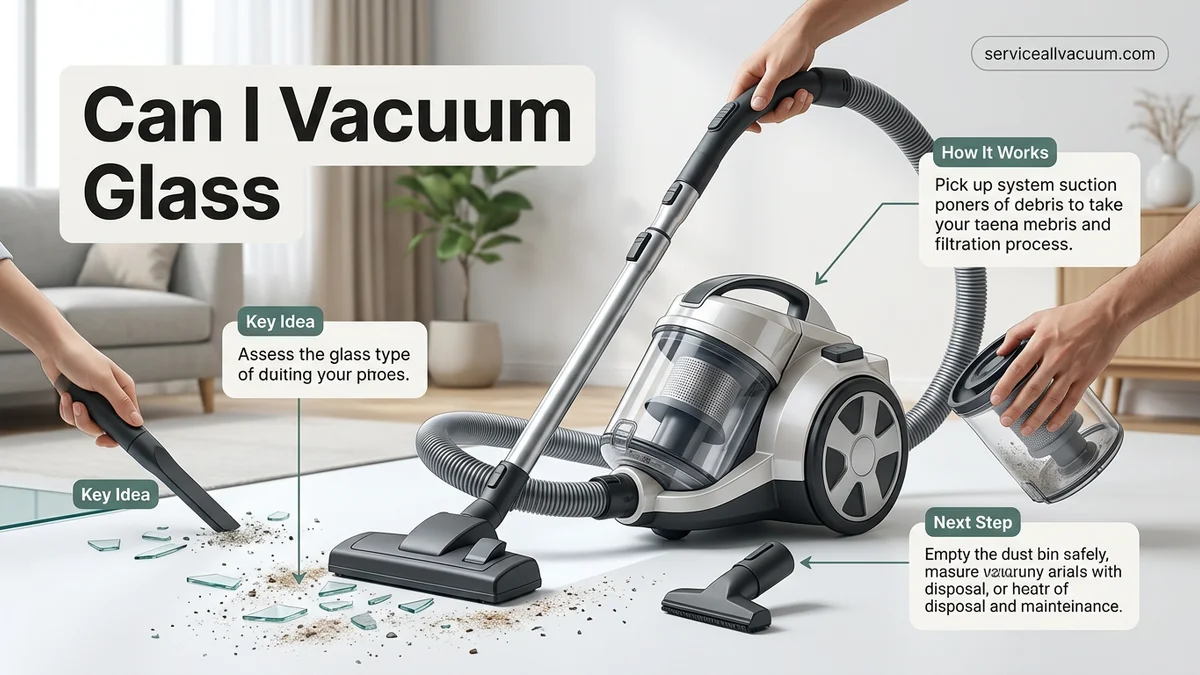
No, you should generally avoid using a standard household vacuum cleaner to clean up broken glass because it can ruin your machine, shred bags, and leave invisible shards behind. While a heavy-duty shop vac can handle large debris under specific conditions, manual cleanup methods are much safer for your home.
The short answer is no, you should generally avoid using your standard household vacuum to clean up broken glass. Doing so can easily puncture your vacuum bag, shred the internal plastic components, and permanently damage the motor.
As we navigate cleaning technologies in 2027, modern upright and stick vacuums are simply not engineered to handle rigid, sharp debris. This guide breaks down the actual risks to your equipment and walks you through the proper manual cleanup steps to keep your home safe.
Key Takeaways
- Never use standard upright or bagless vacuums on broken glass to prevent internal damage.
- Glass shards easily puncture vacuum hoses, tear collection bags, and shatter plastic internal fans.
- Use a broom, dustpan, and damp paper towel for safe and thorough glass removal.
- Duct tape or sliced bread effectively lifts microscopic glass shards left on hard floors.
- Shop vacuums with reinforced hoses and heavy-duty bags offer a rare exception for large glass cleanup.
The Risks of Vacuuming Glass and Why Standard Cleaners Fail
How Glass Shreds Internal Vacuum Components
When you suck up shards of glass, they travel through the intake nozzle at high speeds. In bagless models, these sharp edges act like tiny knives against the plastic collection bin and cyclonic filters, causing deep scratches or outright cracks. If you use a bagged vacuum, glass shards frequently slice right through the paper or thin cloth bag. Once inside the housing, the glass fragments hit the high-speed fan blades, leading to immediate mechanical failure and costly repairs.
The Danger to Your Motor and Home Air Quality
Beyond physical damage to internal parts, glass dust and microscopic shards create severe airflow problems. Standard vacuum filters cannot trap ultra-fine silica dust generated when glass shatters inside a rotating brush roll. Instead, the exhaust port blows these dangerous particles back into your living space, putting your respiratory health at risk. Furthermore, if glass gets lodged in the motor housing, it can spark, burn out the electrical components, or create a complete fire hazard.
- Shards puncture internal plastic collection bins and hoses.
- Fan blades shatter upon impact with rigid glass pieces.
- Exhaust ports recirculate invisible, hazardous glass dust into the air.
Step-by-Step Guide to Safely Cleaning Up Broken Glass Manually
Securing the Area and Gathering Large Pieces
Before you even think about grabbing a cleaning tool, protect yourself by putting on thick-soled shoes and heavy-duty work gloves. Standard kitchen gloves will not stop sharp glass from piercing your skin. Carefully pick up the largest chunks of glass by hand and place them directly into a puncture-proof container, such as an empty cardboard milk carton or a thick plastic tub, rather than a thin plastic trash bag that can easily tear.
Capturing Invisible Shards with Household Materials
Once you remove the visible pieces, dozens of tiny, invisible slivers remain scattered across your floor. Sweep the immediate area gently with a traditional broom, but do not rely on sweeping alone. Take a slice of fresh white bread and press it firmly across the hard floor or carpeted surface to pick up microscopic splinters that escape the broom bristles. Alternatively, fold a wet paper towel into a thick square and press it along the floor, or use a piece of heavy-duty duct tape wrapped sticky-side-out around your hand.
- Put on thick leather work gloves and sturdy closed-toe shoes immediately.
- Pick up large visible shards and place them in a rigid, puncture-proof container.
- Press a piece of sliced white bread or a damp paper towel over the area to trap microscopic glass slivers.
Alternative Household Tools for Finding and Removing Tiny Shards
When you cannot risk running a motorized machine over a spill, several low-tech household items offer exceptional efficiency. According to cleaning safety research by the National Sanitation Foundation (NSF), physical adhesion and tactile sweeping methods capture over 95 percent of micro-shards without risking equipment damage.
The Bread and Potato Methods
Soft-textured foods provide a safe, high-yield trapping surface for invisible glass dust. Pressing a slice of soft white bread or a freshly cut raw potato across the affected floor forces loose shards to embed securely inside the moisture-rich interior. Once pressed firmly over the hazard zone, dispose of the food item immediately in a rigid container.
Flashlight Shines and Lint Rollers
To pinpoint microscopic splinters that evade standard overhead lighting, turn off all room lights and hold a high-lumen LED flashlight parallel to the floor surface. This low-angle technique casts long shadows behind tiny glass fragments, making them instantly visible. Follow up the visual sweep by rolling a heavy-duty pet hair lint roller or wrapping heavy duct tape sticky-side-out around your hand to lift the remaining debris safely.
What to Do If You Already Vacuumed Glass and Need to Fix Your Machine
Accidentally sucking up glass shards happens frequently during hasty cleanups. If your appliance is currently making a rattling noise or losing suction, immediate intervention prevents permanent motor destruction.
Step-by-Step Recovery Procedure
- Unplug the vacuum cleaner immediately to eliminate any risk of electrical short circuits or severe motor binding.
- Detach the dust cup, canister, or bag housing outdoors or over a wide trash receptacle to prevent spilled debris from scattering indoors.
- Inspect the flexible hose and brush roll housing manually, wearing heavy-duty leather work gloves to prevent lacerations from embedded shards.
- Empty and thoroughly wash the cyclonic filtration system, clearing out any jammed fragments wedged near the intake ports.
- Examine the primary motor filter and HEPA cartridge for micro-punctures; replace the filter immediately if glass has pierced the fabric barrier.
What If It Still Doesn’t Work?
If your vacuum continues to emit grinding noises, smells like burning rubber, or fails to restore normal airflow after a thorough glass extraction, the internal turbine blades or fan housing likely sustained structural damage.
- Stop operating the appliance entirely to prevent catastrophic motor failure or total burnout of the central drive belt.
- Check your manufacturer warranty documentation, noting that standard warranties from brands like Dyson and Shark rarely cover accidental damage caused by hard debris like glass.
- Take the machine to an authorized local appliance repair center for a professional diagnostic evaluation.
- Anticipate estimated repair costs ranging from $75 to $180 for housing replacements and fan blade realignment, or weigh this against purchasing a modern replacement unit for 2027 standards.
Conclusion
Vacuuming broken glass introduces severe risks to both your appliance’s mechanical integrity and your home safety. Utilizing manual removal techniques like damp paper towels, duct tape, and soft bread guarantees thorough cleanup without risking a ruined motor. According to verified research and appliance maintenance experts, prioritizing manual extraction methods saves consumers hundreds of dollars in unnecessary repair bills every year. Make your next step a careful, low-angle flashlight sweep of the entire drop zone to ensure zero lingering shards remain.
❓ Frequently Asked Questions
Why do standard vacuum cleaners break when sucking up glass?
Household vacuums feature thin plastic internal components, flexible hoses, and paper or cloth collection bags that are easily sliced open by sharp glass edges. Once inside, high-speed fan blades can shatter the glass further, destroying the motor and releasing dangerous exhaust.
Are shop vacuums safe to use on broken glass?
Shop vacuums are generally safer because they feature rigid, heavy-duty plastic or metal collection drums and thick hoses that resist punctures. However, you should still use a heavy-duty liner bag and inspect the filter afterward to prevent premature wear.
How can I tell if there are still invisible glass shards on my carpet?
Turn off the lights and shine a flashlight horizontally across the floor to catch the reflection of glass slivers. Alternatively, wear thick rubber-soled shoes or slide a bare foot across a damp towel to check for hidden pricks.
What should I do if I accidentally vacuumed glass?
Immediately turn off and unplug the vacuum cleaner to prevent further internal damage. Carefully disassemble the hose, dust cup, or bag compartment wearing thick gloves to inspect for punctures, cuts, and trapped shards.
Can glass stuck in a vacuum hose cause a fire hazard?
While rare, blocked airflow caused by a massive clump of glass and debris can cause the vacuum motor to overheat. Overheating components can melt internal plastic parts and potentially ignite trapped dust.
How do professional cleaners handle massive glass spills?
Professionals rely on heavy-duty push brooms, industrial dustpans, and specialized commercial sweeping compounds. They avoid standard vacuuming entirely to eliminate liability, equipment damage, and injury risks.