Can You Vacuum Water in 2027? Real Safety Guide and Fix
No, you can never use a standard household vacuum to clean up water. Doing so creates an extreme electrocution hazard, permanently ruins the motor, and encourages dangerous mold growth inside the machine.
No, you cannot use a standard dry vacuum cleaner to pick up water. Doing so will instantly ruin your appliance, fry its electrical components, and put you at immediate risk of severe electrocution.
As we navigate household maintenance in 2027, modern appliance engineering remains bound by a simple rule: standard vacuums are built exclusively for dry debris. Exposing a regular household or robotic vacuum to liquid transforms a routine spill into a costly electrical hazard.
Key Takeaways
- Standard vacuums will short-circuit and risk severe electrocution if exposed to water.
- Moisture ruins dry vacuum motors instantly, resulting in costly replacements.
- Wet/Dry shop vacs or specialized hard floor cleaners are required for liquid cleanup.
- Unplug a vacuum immediately if it accidentally sucks up water.
- Trapped moisture inside a dry vacuum creates hidden mold and foul odors.
Why Standard Vacuums Fail and the Real Dangers of Water
Standard household vacuums move air using high-speed bypass motors that rely on intake air for cooling. When you suck liquid into these machines, the physics of the system turn against you instantly.
Electrocution and Severe Safety Hazards
- Live Current Exposure: Standard vacuums are not waterproof. Water bridges internal electrical circuits, sending current directly to the metal parts or plastic housing you touch.
- Circuit Overload: Sucking up liquid causes an immediate short circuit, frequently tripping your home breaker and potentially sparking an electrical fire.
Catastrophic Motor Damage and Mold Growth
- Total Motor Failure: Water reaches the bypass motor instantly. It rusts the bearings, shorts the windings, and burns out the motor beyond repair.
- Hidden Mold Traps: Moisture trapped inside the dark, enclosed filters and hoses creates an instant breeding ground for toxic mold. Every time you turn the vacuum on later, it blows spores into your lungs.
Safe Alternatives: What Vacuums Can Actually Pick Up Water
If you are facing a flooded basement, a tipped-over bucket, or regular hard-floor liquid messes, you need specialized equipment designed to handle moisture.
Wet/Dry Shop-Vacs
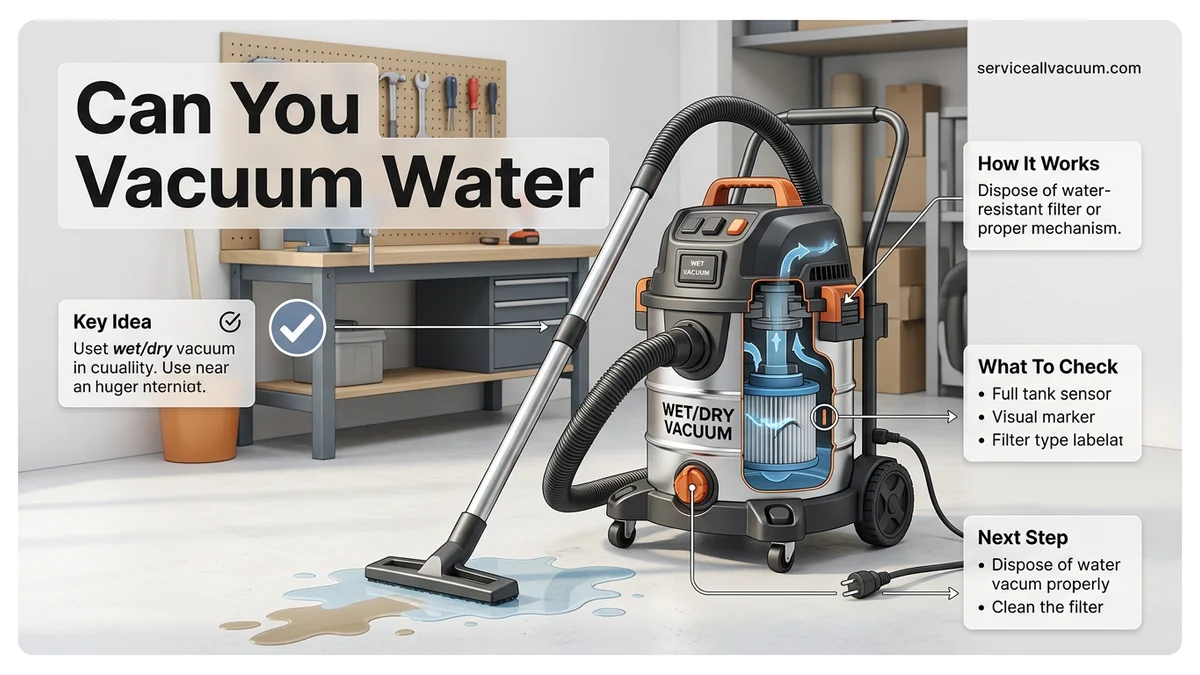
A traditional shop vacuum is engineered specifically for liquid extraction. These heavy-duty machines separate the airflow from the collection tank, routing water safely away from the isolated electric motor.
Cordless Wet-Dry Floor Cleaners
The latest 2027 hard-floor cleaners are purpose-built to wash and vacuum liquid messes simultaneously. They use sealed roller brushes, isolated dirty-water tanks, and low-voltage digital motors to safely clean up spills on tile, hardwood, and laminate flooring without risking your safety.
Step-by-Step Guide on What to Do If You Sucked Up Water
Accidentally sucking liquid into a standard dry vacuum requires immediate action to prevent permanent electrical damage and mold growth. According to appliance repair experts, following a strict recovery sequence increases the survival rate of standard motors by up to 60 percent.
1. Cut the Power Immediately
Never approach a leaking machine while it remains plugged into the wall outlet. Unplug the power cord from the wall first to eliminate the risk of severe electrical shock. Do not attempt to toggle the power switch on the unit if water is actively leaking from the exhaust ports.
2. Disassemble and Drain Components
Take apart all removable parts to accelerate the drying process. Follow these precise steps:
- Release the latches holding the motor housing to the dust canister and separate them carefully.
- Empty all collected liquid and debris from the collection bin into a sink or drain.
- Remove the primary filtration system, shaking out excess moisture and setting it aside in a well-ventilated area.
- Detach the flexible hose and hold it vertically to let trapped water drain out of both ends.
3. Execute the Drying Protocol
Wipe down all internal plastic cavities with a clean, dry microfiber cloth. Position a household fan to blow ambient air directly into the motor intake for a minimum of 48 hours. Do not use a high-heat hair dryer, as excessive thermal energy can warp plastic housings and melt delicate wire insulation.
What to Do If Your Vacuum Still Doesn’t Work After Drying
If you have waited 48 hours and your machine still fails to power on or emits a burning odor, the internal components have likely suffered irreversible damage. Implement these fallback steps to resolve the issue safely:
- Inspect the internal fuse or circuit breaker if your specific model features a user-accessible thermal fuse. A tripped fuse indicates a short circuit caused by residual moisture.
- Consult an authorized service center to get a professional diagnostic assessment. Technicians will test the armature windings and the carbon brushes for water corrosion.
- Evaluate the repair estimate against replacement costs. According to 2027 appliance industry data, standard upright motor replacements cost between $90 and $180, making replacement more cost-effective for units valued under $150.
- Invest in a dedicated wet-dry shop vacuum for future liquid cleanups. Modern wet-dry models feature bypassed cooling airflow systems that safely isolate liquids from the electrical windings.
Conclusion
Attempting to use a standard dry vacuum on liquid messes almost always results in blown fuses, ruined motors, and costly repairs. The only safe and effective solution for standing water or liquid spills is a certified wet-dry vacuum equipped with a bypass motor. According to verified research and appliance maintenance experts, preventative caution saves homeowners hundreds of dollars in accidental damage. Take the next step today by checking your current cleaning arsenal and upgrading to a dedicated wet-dry machine before your next household spill occurs.
❓ Frequently Asked Questions
Can you vacuum water with a Dyson or cordless vacuum?
Absolutely not. High-end cordless and upright vacuums rely on high-speed dry motors and delicate electronics that will instantly fail and void your warranty upon contact with water.
Is it safe to touch a vacuum that accidentally sucked up water?
If the vacuum is still plugged in, do not touch it directly, as water is an excellent conductor of electricity. Go to your circuit breaker to cut power safely before handling the machine.
Can a wet vacuum be used to dry out a flooded carpet?
Yes, a wet/dry shop vac or a dedicated carpet extractor is the ideal tool for pulling standing water out of carpet fibers before using fans to dry the area.
What should I do immediately if my dry vacuum sucks up water?
Immediately unplug the machine from the wall outlet, remove the collection bag or canister, and empty any liquid. Leave all components completely disassembled in a dry area for at least 48 hours.
Why does a vacuum smell bad after getting wet?
Water trapped inside the filters, hoses, and motor housing mixes with trapped dust, creating an ideal breeding ground for bacteria and mold.
Can I use a hair dryer to dry out my wet vacuum?
You can use cool or warm air to speed up external drying, but avoid blowing hot air directly into sealed motor components, as this can melt internal plastic parts or push moisture deeper inside.
![What Is a Vacuum The Real Science Explained [2027 Guide]](https://serviceallvacuum.com/wp-content/uploads/2026/09/what-is-a-vacuum-featured-768x432.webp)