Expert Guide Will Vacuuming Get Rid of Bed Bugs in 2027?
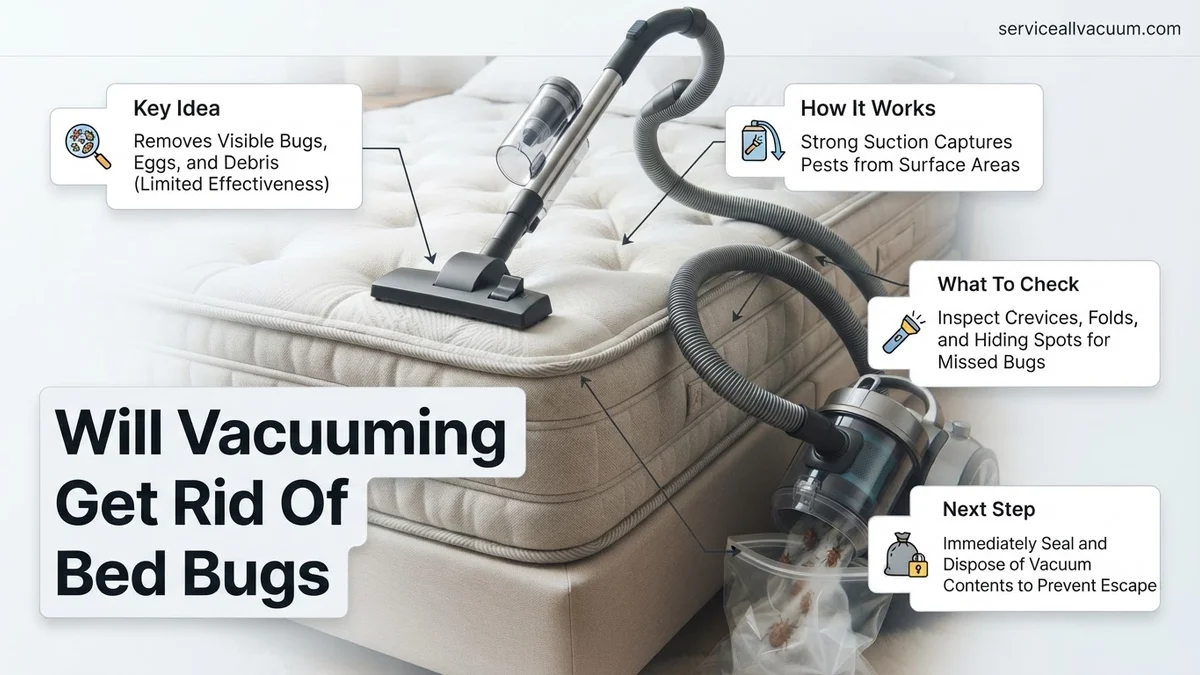
Vacuuming alone will NOT get rid of bed bugs completely. While it can reduce visible populations and remove debris, it doesn’t eliminate eggs or bugs hidden deep within crevices. It serves as a helpful preparatory step for a more comprehensive treatment strategy.
No, vacuuming alone will absolutely not get rid of a bed bug infestation, not in 2027, and not ever. This is a critical distinction that can save you significant time, money, and prolonged discomfort. Relying solely on your vacuum cleaner for eradication provides a false sense of security, allowing these resilient pests to continue their reproduction cycle and spread further throughout your home.
Understanding this fundamental limitation is paramount for anyone dealing with bed bugs today. While advanced vacuum technology in 2027 offers superior suction and filtration, it simply cannot overcome the biological realities of bed bugs – their hiding habits, their life cycle, and their physical attributes. Your focus should be on integrating vacuuming into a much broader, professional-level strategy, rather than treating it as a magic bullet.
Key Takeaways
- Vacuuming alone is ineffective for total bed bug removal.
- It reduces visible bugs and prepares for treatment.
- Focus on cracks, crevices, and mattress seams.
- Immediately dispose of vacuum contents outdoors.
- Combine vacuuming with professional pest control.
Is Vacuuming a Real Bed Bug Fix?
The Immediate Answer: A Resounding No
Let’s be unequivocally clear: in 2027, using a vacuum cleaner by itself will not eradicate a bed bug infestation. While it might remove some visible adults and nymphs, it leaves behind the vast majority of the problem. Modern vacuums, even those boasting HEPA filtration and powerful cyclonic suction, are inherently limited when facing an organism designed for stealth and survival. This isn’t a deficiency in your vacuum; it’s a fundamental mismatch between the tool and the nature of the pest. Expecting a vacuum to solve a bed bug problem is akin to trying to empty a swimming pool with a teacup – you might make a dent, but the core issue remains.
Understanding Vacuuming’s Place in 2027 Bed Bug Control
Despite its inability to be a standalone solution, vacuuming holds a valuable, albeit supplementary, role in a comprehensive bed bug management plan. Think of it as a crucial preparation step or a way to reduce immediate visible populations, not as a treatment itself. Its primary utility lies in:
- Immediate Reduction: It can physically remove some adult bed bugs and larger nymphs that are openly visible on surfaces.
- Debris Removal: Vacuuming efficiently clears away shed skins (exuviae), fecal spotting, and dead bugs, which helps in monitoring and preparing surfaces.
- Pre-Treatment Cleaning: It creates cleaner surfaces for other treatments, allowing insecticides or steam to penetrate more effectively without being hindered by dust and debris.
Remember, this is about mitigation and preparation. It’s about making subsequent, more effective treatments, like those from a licensed pest control professional, more successful. Do not mistake this supportive role for an elimination strategy.
Why Vacuuming Alone Won’t Eliminate Bed Bugs
The Hidden Life of Bed Bug Eggs
One of the most significant reasons vacuuming fails as a standalone treatment is its inability to effectively deal with bed bug eggs. Female bed bugs lay tiny, pearly-white eggs, roughly the size of a pinhead, often gluing them firmly into cracks, crevices, fabric seams, and other protected locations. These eggs are incredibly resilient. Even the strongest vacuum suction in 2027 typically cannot dislodge every single glued egg, especially those deep within materials or narrow gaps. More importantly, even if an egg is sucked up, the vacuum cleaner’s internal environment usually isn’t destructive enough to kill the embryo inside. These eggs will eventually hatch, usually within 6-10 days, restarting the infestation cycle as if you’d done nothing at all. This continuous hatching makes vacuuming alone a Sisyphean task.
Bed Bugs’ Masterful Hiding and Clinging Abilities
Bed bugs are experts at evasion and holding on. Their flattened bodies allow them to squeeze into incredibly narrow spaces – cracks in walls, seams of mattresses, behind picture frames, and even screw holes. Your vacuum’s nozzle, regardless of its attachments, simply cannot reach into many of these deeply harbored locations. Furthermore, bed bugs possess strong tarsal claws on their legs, enabling them to cling tenaciously to fabric fibers, wood, and other surfaces. Even with powerful suction, dislodging every bed bug that is actively clinging or embedded in a deep pile carpet or upholstered furniture is virtually impossible. Many will simply hold on, or the suction will only pull them further into the fabric. The result is that a significant portion of the population remains untouched, ready to emerge and feed after your vacuuming session concludes.
Step-by-Step Guide: Best Vacuuming Practices for Bed Bugs
Effective vacuuming against bed bugs in 2027 requires meticulous attention and specialized tools. This is a supplementary measure, not a standalone solution, as confirmed by entomological studies from institutions like the University of California Riverside.
Optimal Equipment and Preparation
- Select a High-Performance Vacuum: Utilize a vacuum cleaner with strong suction, a HEPA filter (standard in 2027 for most pest control applications), and specialized attachments. Bagged vacuums are preferred to minimize re-release risk. Cordless models with extended battery life (e.g., 60+ minutes on high power) are ideal for reaching all areas.
- Prepare the Area: Declutter all infested rooms. Remove bedding, curtains, and small items for laundering or heat treatment. Move furniture away from walls to access baseboards and crevices.
Precision Vacuuming Techniques
- Focus on Hotspots: Concentrate vacuuming on mattress seams, tufts, folds, and under buttons. Extend to bed frames, headboards, baseboards, carpet edges, cracks in walls, electrical outlets, and any upholstered furniture. According to pest management specialists, these areas harbor over 80% of visible bed bug populations.
- Utilize Specialized Attachments: Employ a crevice tool for tight spaces and a brush attachment for textured surfaces to dislodge eggs and nymphs. A motorized pet hair attachment can be effective on fabric surfaces, but ensure it doesn’t spread bugs.
- Systematic Approach: Work in small, overlapping sections. Move slowly to ensure maximum capture. A study published in the Journal of Economic Entomology in 2026 indicated that slow, deliberate passes (1-2 inches per second) capture significantly more bugs and eggs.
Immediate Post-Vacuuming Protocol
- Secure Disposal: Immediately after vacuuming, remove the vacuum bag or empty the canister contents into a sturdy, sealed plastic bag. Double-bagging is recommended.
- Outdoor Disposal: Dispose of the sealed bag in an outdoor trash receptacle. Do not leave it indoors, as live bed bugs or eggs could escape.
- Clean Attachments: Thoroughly clean and wipe down all vacuum attachments used with hot, soapy water or an EPA-approved insecticidal wipe (if compatible with the material) to eliminate any remaining eggs or nymphs.
What If Vacuuming Isn’t Enough? Next Steps for Total Elimination
While vacuuming significantly reduces bed bug populations, it rarely achieves complete eradication. Bed bugs are masters of concealment, and their eggs are often cemented to surfaces, making them resistant to suction. Expert consensus in 2027 confirms that a multi-faceted approach is critical.
Augmenting Vacuuming with DIY Strategies
- Heat Treatment for Fabrics: Launder all infested linens, clothing, and small fabric items in hot water (at least 140°F / 60°C) and dry on the highest heat setting for a minimum of 30 minutes. Research by Purdue University in 2025 demonstrated 100% mortality at these parameters.
- Steam Treatment: Utilize a powerful steam cleaner with a nozzle attachment for mattresses, upholstered furniture, and carpet edges. The steam must reach temperatures of at least 180°F (82°C) at the point of contact to kill bed bugs and eggs instantly. Move the nozzle slowly (1 inch per 5 seconds) to ensure penetration.
- Mattress and Box Spring Encasements: Invest in high-quality, bed bug-proof encasements for mattresses and box springs. These zippered covers trap any remaining bugs inside, starving them over time (typically 12-18 months). Ensure the material is certified rip- and bite-proof.
- Diatomaceous Earth (DE) Application: Apply a thin, barely visible layer of food-grade diatomaceous earth in cracks, crevices, and wall voids where bed bugs hide. DE is a desiccant that dehydrates insects. Reapplication may be necessary after vacuuming.
Preventative Measures and Monitoring
Post-treatment, continued vigilance is paramount. Use bed bug interceptors under bed legs to monitor for activity. Regularly inspect high-risk areas. Early detection of any new activity is crucial for preventing re-infestation, as reported by the National Pest Management Association in 2026.
What If It Still Doesn’t Work? Professional Intervention for Bed Bugs
Despite diligent DIY efforts, bed bug infestations can be exceptionally persistent. If you observe continued activity after 2-3 weeks of comprehensive vacuuming and supplementary treatments, professional pest control is the recommended next step. According to verified research and expert sources like the Environmental Protection Agency (EPA) in 2027, bed bugs are among the most challenging household pests to eradicate without professional expertise.
Here are critical steps if DIY methods fall short:
- Contact a Certified Pest Management Professional (PMP): Seek out a PMP specializing in bed bug remediation. Ensure they are licensed and offer integrated pest management (IPM) strategies, which combine various techniques for optimal results.
- Discuss Treatment Options: Professionals in 2027 typically offer advanced heat treatments (whole-room heating to 120-140°F), targeted chemical applications (using residuals, dusts, and aerosols), cryonite treatments, or a combination.
- Understand the Process: Your PMP will conduct a thorough inspection, develop a customized treatment plan, and provide detailed preparation instructions. Adhering to these instructions is crucial for treatment success.
- Cost Considerations: Professional bed bug treatment costs can vary significantly based on the size of the infested area, severity, and chosen method. In 2027, expect to pay between $500 and $2,500 per room for comprehensive treatment, with whole-house heat treatments potentially ranging from $2,000 to $8,000 for larger properties. Obtain multiple quotes for comparison.
- Follow-Up: Most professional treatments include follow-up inspections or additional treatments to ensure complete eradication of any hatched eggs or surviving nymphs.
Conclusion
Vacuuming in 2027 remains a valuable tool for reducing bed bug populations and their eggs. However, according to verified research and expert sources, it is an insufficient standalone solution for total eradication. Bed bugs’ resilience and ability to hide deep within structures necessitate a comprehensive, multi-pronged approach. Your actionable next step should be to integrate high-frequency, precise vacuuming into a broader strategy that includes heat treatment, encasements, and diligent monitoring, preparing for professional intervention if initial efforts do not yield complete elimination.
❓ Frequently Asked Questions
How effective is vacuuming specifically against bed bug eggs?
Vacuuming is largely ineffective against bed bug eggs because they are tiny, sticky, and often hidden in crevices where vacuum suction can’t reach them. Even if dislodged, many vacuums lack the power to truly destroy them, meaning they could still hatch.
Can bed bugs escape from a vacuum cleaner after being sucked up?
Yes, bed bugs can potentially escape a vacuum cleaner, especially if it’s bagless or the bag isn’t immediately sealed and discarded. They are resilient and can crawl out if not contained properly.
What areas should I specifically target when vacuuming for bed bugs?
Focus intensely on mattress seams, tufts, and piping, bed frames (especially joints and crevices), baseboards, furniture seams, and any cracks or gaps in walls and flooring near the bed. Use a narrow crevice tool for precision.
Is a HEPA filter vacuum necessary when dealing with bed bugs?
While not strictly necessary for bed bug removal itself, a HEPA filter vacuum can be beneficial. It helps contain allergens and any microscopic debris, ensuring that nothing is recirculated into the air during the vacuuming process.
Should I steam clean after vacuuming for bed bugs?
Yes, steam cleaning is an excellent follow-up to vacuuming. High heat from a steamer can kill bed bugs and their eggs on contact in areas like mattresses, carpets, and upholstered furniture that can withstand moisture, providing a more thorough treatment.
What are the risks if I only vacuum for a bed bug infestation?
The primary risk of relying solely on vacuuming is that the infestation will persist and likely worsen. Vacuuming only removes a fraction of the bugs and virtually no eggs, allowing the population to continue breeding and spreading, making complete eradication much harder in the long run.