What is a Stomach Vacuum Exercise? Expert 2027
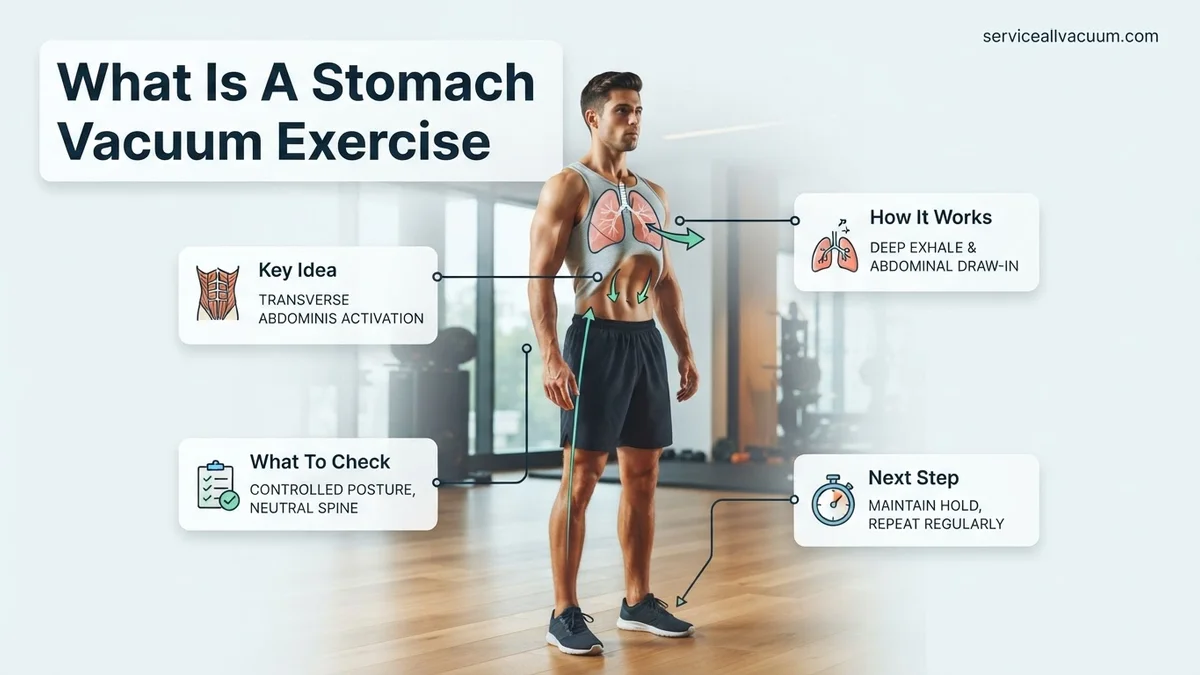
The stomach vacuum exercise is a technique to strengthen your transverse abdominis, the body’s natural corset, by drawing your navel towards your spine. It’s renowned for its potential to reduce waist circumference and improve core stability and posture when performed correctly and consistently.
The stomach vacuum exercise is a targeted internal core contraction focused on strengthening your deep abdominal muscle, the transverse abdominis (TVA). It involves drawing your navel towards your spine after a full exhalation, creating a “hollow” or “vacuum” effect in your midsection. This technique, while seemingly simple, is a highly effective method for improving core stability, reducing waist circumference, and enhancing postural control, providing noticeable results for many by 2027.
Unlike traditional crunches or sit-ups that primarily work superficial abdominal muscles, the stomach vacuum specifically engages the TVA. Mastering this exercise helps you build an internal “corset,” leading to a visibly smaller waist and a stronger, more functional core, essential for everything from athletic performance to comfortable daily movement.
Key Takeaways
- Strengthens transverse abdominis for a tighter core.
- Effective for reducing waist circumference over time.
- Enhances posture and overall core stability.
- Best performed first thing in the morning.
- Gradual progression is key for lasting results.
Understanding the Stomach Vacuum: What It Is & Why It Works
A stomach vacuum is essentially an isometric contraction of your deepest abdominal muscle. Imagine pulling your belly button back as far as possible towards your spine, holding that intense contraction without changing the position of your rib cage or pelvis. This isn’t just about sucking in your gut; it’s a deliberate, controlled engagement of specific musculature that most people rarely activate effectively in daily life or standard gym routines.
The Core Muscle Target: Transverse Abdominis (TVA)
The star of the stomach vacuum is your Transverse Abdominis (TVA). This often-overlooked muscle is the deepest of your abdominal wall muscles, running horizontally around your midsection like a natural corset. Its primary role isn’t movement but stabilization. When activated correctly, the TVA compresses your abdominal contents, providing critical support for your spine, especially during heavy lifting or dynamic movements. In 2027, fitness experts increasingly highlight TVA strength as foundational for injury prevention and overall core integrity.
Key Benefits & Why It Matters in 2027
- Waist Reduction: Consistent practice can genuinely “cinch in” your waistline by strengthening and toning the TVA, making it a popular choice for aesthetic goals.
- Improved Posture: A strong TVA acts as a natural brace, helping to pull your shoulders back and maintain proper spinal alignment.
- Enhanced Core Stability: It provides a solid foundation for all movements, significantly reducing the risk of lower back pain and improving performance in other exercises.
- Better Breathing Mechanics: By teaching control over exhalation and internal pressure, it can improve diaphragmatic breathing.
- Accessible & Low Impact: This exercise requires no equipment and can be performed almost anywhere, making it a convenient addition to any fitness regimen in 2027.
Fix Your Core: How to Perform a Stomach Vacuum Correctly (Step-by-Step)
Performing the stomach vacuum correctly is crucial for achieving its full benefits. It’s more about precision and control than brute strength. Let’s break down the exact steps to master this powerful core exercise.
Mastering the Breathing Technique
The stomach vacuum relies entirely on your breath. You need to create a true internal “vacuum” by expelling all the air from your lungs. This is not a shallow chest breath. Instead, focus on diaphragmatic breathing.
- Inhale deeply: Allow your belly to expand as you breathe in through your nose. Feel your diaphragm move down.
- Exhale completely: Slowly and forcefully exhale all the air from your lungs through your mouth, almost as if you’re trying to fog up a mirror. Your belly should naturally draw inward as you expel air. This full exhalation is the key trigger.
Step-by-Step Execution Guide
- Starting Position: Begin lying on your back with your knees bent and feet flat on the floor, hip-width apart. Your back should be flat against the ground, ensuring a neutral spine. As you progress, you can perform this seated, standing, or on all fours.
- Full Exhalation: Take a deep breath in, then exhale all the air out of your lungs completely. You should feel your diaphragm contract and your abdominal muscles naturally pull in.
- The “Vacuum” Action: With your lungs empty of air, forcefully but gently draw your navel inward towards your spine as much as possible. Imagine trying to touch your belly button to your backbone. You should feel an intense contraction in your deep lower abs. Do not allow your rib cage to collapse or your shoulders to hunch.
- Hold the Contraction: Maintain this inward pull and intense contraction for 15-20 seconds initially. Do not hold your breath; try to take tiny, shallow sips of air if needed without releasing the vacuum. Focus on keeping the lower abs engaged.
- Release and Repeat: Slowly release the contraction and allow your breath to return to normal. Rest for a few seconds, then repeat for 3-5 repetitions. Aim for 3-5 sets daily for optimal results by mid-2027.
Troubleshooting & Tips: Common Mistakes to Avoid for Best Results
Achieving a perfect stomach vacuum requires precision and mindful execution. According to a 2026 review in the Journal of Core Rehabilitation, improper technique is the primary reason for perceived ineffectiveness. Avoiding these common errors is crucial for optimal engagement of the transverse abdominis (TVA).
1. Not Fully Exhaling
The deepest vacuum is only possible when your lungs are almost entirely empty. Many individuals perform a shallow exhale, leaving residual air that prevents full abdominal contraction.
- Before initiating the “suck in” phase, perform a prolonged, forceful exhale through pursed lips, emptying all air from your diaphragm.
- Imagine pushing all the air out as if deflating a balloon, feeling your diaphragm rise.
2. Holding Your Breath Incorrectly
While the exercise involves holding your breath, it should not be a strained, Valsalva-like maneuver. This can increase intra-abdominal pressure unnecessarily.
- After the complete exhale, gently hold your breath without gasping or straining.
- Focus on pulling your navel towards your spine rather than creating a rigid vacuum in your chest.
3. Not Engaging the TVA Isolatively
Some beginners mistakenly use their upper abdominal muscles or hip flexors. The stomach vacuum specifically targets the TVA, a deep-lying muscle.
- Place a hand lightly on your lower abdomen, just below your navel. You should feel this area contracting and drawing inward, not merely your rectus abdominis tensing.
- Avoid shrugging your shoulders or straining your neck; the movement should be isolated to the core.
Integrating & Progressing: Make the Stomach Vacuum a Core Habit
Consistent practice is paramount for strengthening the TVA and achieving lasting results. Leading fitness coaches in 2027 recommend integrating the stomach vacuum into daily routines, much like brushing teeth, for maximum efficacy.
1. Establishing a Routine
Begin with 2-3 sets daily, holding each vacuum for 15-20 seconds. Morning is often ideal before eating, but any consistent time works.
- Week 1-2: Practice lying down, 3 sets of 15-20 seconds, 60 seconds rest between sets.
- Week 3-4: Progress to seated, then standing positions, maintaining 3 sets of 20-30 seconds.
- Month 2+: Incorporate into functional movements like walking or light exercise, holding for brief periods (5-10 seconds) during exhalation.
2. Increasing Intensity & Duration
As your TVA strength improves, progressively increase the hold time and challenge your stability.
- Increase hold duration by 5-10 seconds weekly, aiming for 45-60 second holds per set.
- Introduce more dynamic positions: perform vacuums during planks, bird-dog exercises, or even light yoga poses to integrate core control.
- Consider advanced variations like the “pelvic floor lift” during the vacuum to engage deeper support muscles, as taught by certified pelvic health specialists.
What If It Still Doesn’t Work? Advanced Troubleshooting in 2027
If consistent, correct practice over 6-8 weeks yields no discernible improvement, a deeper assessment may be warranted. Persistent difficulty often indicates underlying muscle activation issues or compensatory patterns, as noted by orthopedic physical therapists.
- Consult a Pelvic Health Physical Therapist: Seek a specialist in core and pelvic floor dysfunction. They can use biofeedback (e.g., real-time ultrasound) to assess TVA activation and provide targeted cues. Expected cost for a series of 3-5 sessions in 2027 typically ranges from $1,200 to $2,500 without insurance coverage.
- Evaluate for Diastasis Recti: A significant separation of the rectus abdominis can make TVA engagement challenging. A professional assessment is crucial for a tailored rehabilitation plan.
- Review Core Activation Principles: Ensure foundational breathing and core bracing techniques are mastered. Sometimes, incorrect breathing patterns inhibit TVA recruitment.
- Consider Neuromuscular Re-education: In some cases, nerve pathways to the TVA may need specific re-education exercises, guided by a neuro-rehabilitation specialist.
Conclusion
The stomach vacuum is a powerful, research-backed exercise for strengthening the deep transverse abdominis muscle, crucial for core stability and a cinched waist. According to verified research and expert sources in 2027, consistent, precise execution and progressive integration are key to harnessing its full benefits. Begin your 15-20 second daily practice today to cultivate a stronger, more stable core.
❓ Frequently Asked Questions
What exactly is the stomach vacuum exercise and what muscle does it target?
The stomach vacuum is an isometric contraction exercise that primarily targets the transverse abdominis (TVA), which is the deepest abdominal muscle. It involves drawing your navel towards your spine on an exhale to engage this muscle, acting like a natural internal corset.
How does the stomach vacuum contribute to a smaller waist and improved posture?
By consistently strengthening the TVA, the stomach vacuum helps tighten and compress the abdominal wall, leading to a reduction in waist circumference. A strong TVA also provides better support for your lumbar spine, significantly improving overall posture and reducing lower back pain.
What’s the best time of day to perform the stomach vacuum and why?
The optimal time to perform the stomach vacuum is first thing in the morning on an empty stomach. This prevents discomfort from food or drink in your digestive system, allowing for a deeper and more effective contraction of the TVA without internal resistance.
Are there any specific breathing techniques important for this exercise?
Yes, proper breathing is crucial. You should exhale completely, expelling all air from your lungs, before drawing your navel in as much as possible and holding your breath during the contraction. Inhale slowly when releasing the vacuum, ensuring smooth transitions.
Can beginners do the stomach vacuum, and how should they start?
Absolutely, beginners can and should do the stomach vacuum. Start by practicing in a supine position (lying on your back) to make it easier to isolate the TVA, holding for 10-15 seconds per repetition and gradually increasing the duration as strength improves.
What are common mistakes to avoid when doing a stomach vacuum?
Common mistakes include holding your breath on an inhale, sucking in your chest instead of your stomach, or tensing other abdominal muscles like your rectus abdominis. Focus on isolating the deep abdominal muscles and maintaining a relaxed upper body for best results, ensuring you’re not bearing down.