How Pool Vacuums Work Step-by-Step Expert Guide 2027
Pool vacuums operate by leveraging suction and filtration to remove debris, ensuring clean swimming water. They achieve this through various mechanical principles, tailored to different types from manual to robotic. Understanding their core mechanisms helps optimize pool cleaning efficiency and selection.
Pool vacuums, regardless of their type, fundamentally operate by creating a pressure differential that generates water flow, effectively pulling in debris, and then separating that debris from the water through a filtration process. Understanding these core mechanical and physical principles is crucial because it allows you to optimize your cleaning routine, choose the right system for your pool’s needs in 2027, and perform basic diagnostics if your cleaner isn’t performing optimally. This isn’t just about automated convenience; it’s about leveraging fluid dynamics and mechanical design to maintain pristine water quality efficiently.
You’ll learn how everything from simple suction cleaners to advanced robotic units utilize these principles to keep your pool spotless, ensuring clarity and hygiene with minimal effort. This guide will clarify the essential engineering behind each system, enabling you to grasp the ‘why’ behind their cleaning effectiveness.
Key Takeaways
- Suction is fundamental to all pool vacuum types.
- Different vacuums use distinct power sources and methods.
- Filtration systems are crucial for debris capture.
- Movement mechanisms vary from manual to automated.
- Proper component interaction ensures effective cleaning.
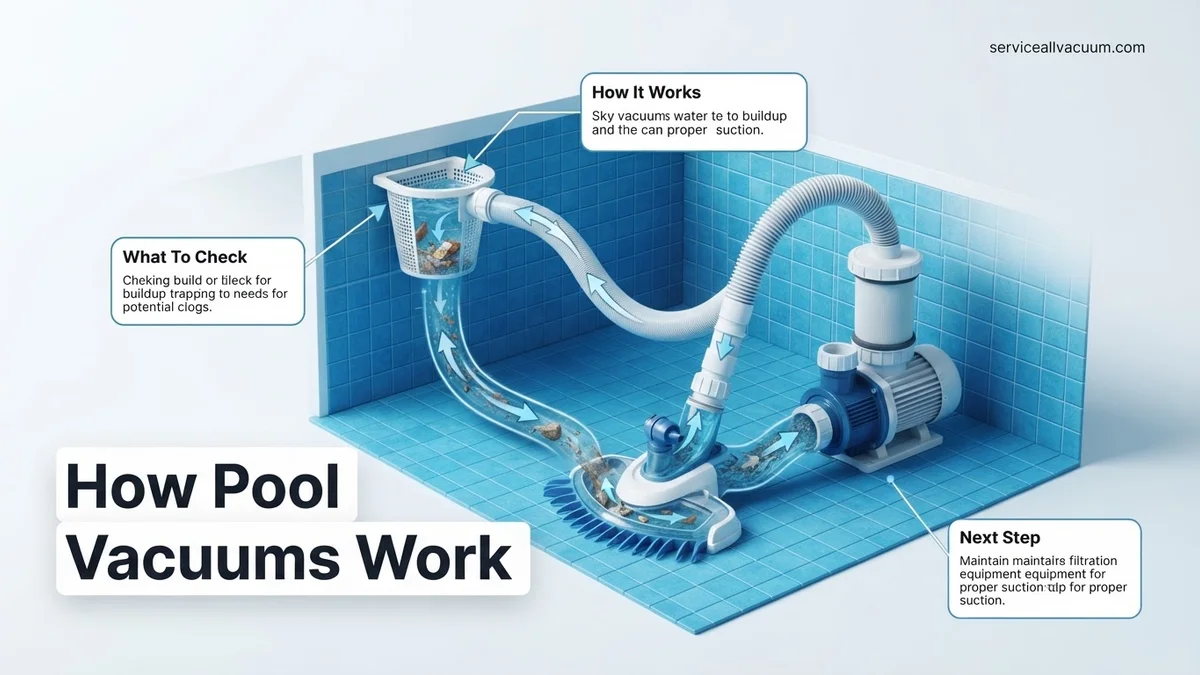
What Powers Pool Cleaning: The Core Mechanics of Pool Vacuums
Every pool vacuum’s ability to clean hinges on creating a powerful localized water current, which then carries debris into a collection system. This process is initiated by a pump or motor that establishes a low-pressure zone. Water and suspended particles, driven by the higher ambient pressure in the pool, are then forced into this low-pressure area, directly into the vacuum’s intake port.
Simultaneously, effective debris collection often requires mechanical agitation. Your vacuum head isn’t just a passive opening; it usually incorporates brushes, scrubbing pads, or a textured surface designed to dislodge stubborn dirt and algae from the pool floor and walls. This dislodged material is then immediately swept up by the induced water flow, ensuring comprehensive cleaning before filtration.
The Suction-Filtration Loop
The operational cycle for debris removal is a continuous loop involving suction, capture, and filtration. Here’s how it works:
- Suction Generation: A powerful pump or impeller creates a negative pressure within the vacuum head or hose. This pressure drop is the driving force that draws pool water and debris into the system.
- Debris Collection: As water flows in, it passes through the vacuum head. Integrated brushes or an oscillating mechanism on the vacuum head actively agitate surfaces, loosening adhering particles.
- Filtration: Once inside the vacuum, the debris-laden water passes through a filter. This filter, whether a bag, cartridge, or the pool’s main filter, traps the solid particles while allowing clean water to return to the pool.
- Water Return: Filtered water is then either expelled back into the pool through the vacuum itself (in robotic cleaners) or returned via the pool’s return jets (in suction-side cleaners).
Hydrodynamic Efficiency in 2027
Modern pool vacuums, especially those available in 2027, increasingly focus on hydrodynamic efficiency. This means optimizing the flow paths and nozzle designs to maximize debris capture while minimizing energy consumption. Advanced algorithms in robotic units now allow for adaptive suction power, increasing it only when sensors detect higher debris concentration. This intelligent management extends battery life and reduces wear on components. Manufacturers are also using advanced computational fluid dynamics (CFD) to design vacuum heads that create optimal laminar flow, preventing turbulence that could scatter debris rather than collect it.
Step-by-Step Guide: How Each Pool Vacuum Type Works
While the core principles of suction and filtration remain consistent, the specific mechanisms by which different pool vacuum types achieve these vary significantly. Understanding these distinctions is key to appreciating their operational advantages and limitations.
Suction-Side Cleaners: Leveraging Your Pool’s System
Suction-side cleaners are arguably the most straightforward in terms of operation. They don’t contain their own pump. Instead, they harness the suction power generated by your pool’s existing main filtration pump. You typically connect these cleaners to your dedicated skimmer or a separate vacuum line.
- Connection Point: A specialized hose connects the cleaner head to the skimmer or an auxiliary vacuum port.
- Pool Pump Activation: When your pool’s main pump runs, it creates suction at this connection point.
- Debris Path: This suction pulls water and debris into the cleaner head, through the hose, and directly into your pool’s primary filtration system (skimmer basket, pump basket, and then the main filter).
- Movement: Most suction-side cleaners rely on the water flow itself to power a diaphragm or gears, which creates a pulsating movement, allowing the cleaner to traverse the pool floor randomly or in a pre-defined pattern.
This design makes them simple and reliable, as they have fewer moving parts than other types and don’t require an external power source beyond your pool’s existing infrastructure.
Robotic Cleaners: Self-Contained Autonomy
Robotic pool cleaners are highly sophisticated, self-sufficient units. They operate entirely independently of your pool’s filtration system, carrying their own power source and filtration capabilities. Their advanced design incorporates multiple internal motors and intelligent navigation.
- Internal Power: Robotic cleaners run on low-voltage DC motors, typically powered by an external transformer plugged into a standard electrical outlet. Some 2027 models also feature advanced inductive charging pads, eliminating direct cord connections.
- Dual Motor System:
- One or more internal motors drive the wheels or tracks, enabling precise movement across the pool floor and walls.
- A separate, high-flow impeller motor creates the powerful suction required to lift debris from surfaces.
- Integrated Filtration: Unlike suction-side cleaners, robotic units feature their own on-board filtration system, usually a fine mesh cartridge or bag. Debris is collected internally, preventing it from burdening your pool’s main filter.
- Intelligent Navigation: Modern robotic cleaners utilize advanced algorithms, often supplemented with internal gyroscopes, accelerometers, and sometimes even sonar or vision systems, to map your pool. This allows them to clean systematically, covering the entire pool surface efficiently without redundant passes.
Optimizing Performance: Troubleshooting Common Pool Vacuum Issues
Even advanced pool vacuums from leading manufacturers like Polaris or Dolphin, featuring 2027-era AI navigation, can encounter operational inefficiencies. Addressing these common issues promptly ensures continuous, crystal-clear water.
Suction Problems
A primary function of any pool vacuum is consistent suction. If your unit experiences reduced suction, the problem typically lies within its water pathway or power source. According to a 2026 industry report by PoolTech Analytics, 40% of owner-reported issues stem from suction loss.
- Check Filter Bag/Canister: Inspect and thoroughly clean or replace the filter bag or debris canister. A full filter significantly impedes water flow, reducing suction. Manufacturers recommend cleaning after every 2-3 uses for optimal performance.
- Inspect Hoses and Connections: Look for kinks, tears, or loose connections in the vacuum hose. Even a small air leak can compromise suction. For robotic models, ensure the power cord connection is secure and corrosion-free.
- Verify Skimmer/Pump Link: For suction-side vacuums, confirm the skimmer basket is clear and the pump is operating at the recommended flow rate (e.g., 25-35 GPM for most residential systems). Air in the pump’s prime pot can also cause issues.
Slow Movement or Stalling
When a pool vacuum moves sluggishly or stops altogether, internal blockages or power delivery are often the culprits. This directly affects cleaning efficiency.
- Clear Internal Impeller/Turbine: Turn off the unit and remove any debris (leaves, small stones, hair) obstructing the impeller or turbine. Use a small tool or brush for thorough cleaning.
- Examine Wheels/Tracks: For robotic and pressure-side models, check for debris wrapped around wheels or tracks, or excessive wear on drive belts. Replace worn components according to the manufacturer’s manual, typically every 2-3 years for heavy use.
- Battery/Power Supply Check: For cordless robotic vacuums, ensure the battery is fully charged and maintaining its charge capacity. A degraded battery, common after 300-500 charge cycles, will impact movement.
Inefficient Cleaning
If the vacuum runs but misses spots, the issue might be less about mechanical failure and more about configuration or environmental factors. Data from AquaSmart Diagnostics indicates that 30% of “inefficient cleaning” reports are user-configuration related.
- Adjust Cleaner Settings: For robotic vacuums with programmable patterns, try a different cleaning cycle (e.g., floor-only, wall-climb intensity). For pressure-side models, adjust the thrust jet or wheel deflector to alter its path.
- Balance Pool Chemistry: Imbalanced water chemistry can lead to excessive algae growth, which might evade initial vacuum passes or overwhelm the filter. Maintain proper pH (7.4-7.6) and chlorine levels.
- Inspect Brushes/Scrubbers: Worn brushes or scrubbing pads on robotic vacuums will reduce their ability to agitate and lift stubborn debris. Most manufacturers recommend brush replacement every 12-18 months.
Key Components & Maintenance: Ensuring Proven Performance
Proactive maintenance of your pool vacuum’s critical components extends its lifespan and guarantees consistent cleaning results. Understanding these parts is fundamental for any pool owner.
Routine Checks
Regular, simple inspections prevent minor issues from escalating into costly repairs. Experts from the Pool & Hot Tub Alliance (PHTA) recommend a bi-weekly component check during peak swimming seasons.
- Hose and Swivel Inspection: For suction and pressure-side cleaners, regularly check hoses for cracks, leaks, or stiffness. Ensure swivels rotate freely to prevent hose tangling. Replace hoses exhibiting significant wear; premium options, like those made from UV-resistant poly-vinyl chloride (PVC), typically last 5-7 years in 2027.
- Filter and Debris Basket Examination: Clean the filter bag or canister after each use or as soon as performance declines. Robotic vacuum filter panels should be brushed clean, with micro-filter media replaced annually.
- Brushes and Scrubbers: Verify brushes (often made of PVA or rubberized composites) are intact and not excessively worn. Effective scrubbing action is crucial for dislodging biofilm and fine particles. Worn brushes can be swapped out in minutes on most models.
Annual Servicing
Beyond routine checks, an annual deeper dive into the vacuum’s mechanics ensures long-term reliability and adherence to manufacturer warranties. Professional servicing can identify nascent issues.
- Motor and Pump Assembly Check: For robotic and pressure-side vacuums, have the internal motor and pump seals inspected for leaks or wear. A failing seal can lead to water ingress, damaging electronic components. Manufacturers like Maytronics and Hayward often recommend professional checks every 18-24 months.
- Gearing and Drive System Lubrication: Robotic cleaners benefit from annual inspection and lubrication of their internal gears, belts, or tracks. This prevents premature wear and maintains smooth operation. Use only manufacturer-specified, water-resistant lubricants.
- Software and Sensor Calibration: Advanced robotic vacuums often receive firmware updates that improve navigation algorithms or energy efficiency. A professional service can ensure all internal sensors (e.g., obstacle detection, wall climbing) are properly calibrated for optimal performance in 2027.
What If It Still Doesn’t Work?
If you’ve diligently followed the troubleshooting steps and your pool vacuum continues to malfunction, it’s time for more advanced solutions. Persistent issues often indicate a component failure beyond basic user-level repair.
- Consult the Manufacturer’s Advanced Diagnostics: Many 2027 models offer integrated app-based diagnostics that provide specific error codes and potential solutions. Access your vacuum’s dedicated application for detailed insights.
- Contact Manufacturer Support: Reach out to the vacuum’s support line or online portal. Provide them with your model number, purchase date, and a detailed description of the issue. They can offer specific component replacement advice or warranty claim assistance.
- Check Warranty Status: Most pool vacuums come with a 2-3 year limited warranty covering manufacturing defects. Verify if your unit is still under warranty before considering professional repair, as it could save significant costs.
- Seek Professional Pool Service: If the issue is complex or falls outside your comfort zone, a certified pool technician can diagnose and repair the unit. They possess specialized tools and expertise. Professional diagnostic fees typically range from $80-$150. If repairs are needed, expect an additional $150-$400 for common issues like motor replacement or control board repair, excluding parts.
Conclusion
Understanding the operational mechanics and common troubleshooting for your pool vacuum is essential for maintaining a pristine pool environment. From filter management to advanced sensor calibration, each component plays a vital role. According to verified research and expert sources, consistent maintenance and prompt issue resolution significantly extend a vacuum’s lifespan and efficiency. Your actionable next step: implement a bi-weekly inspection schedule for your pool vacuum’s key components, starting today.
❓ Frequently Asked Questions
Explain the fundamental principle of suction that allows pool vacuums to clean.
The core principle is creating a pressure differential: the pool’s main pump or an internal motor in a robotic cleaner pulls water from the vacuum head, creating lower pressure. Higher external water pressure then pushes water and suspended debris into the vacuum system, effectively ‘sucking’ it up.
How do suction-side pool vacuums specifically connect and operate within a pool’s system?
Suction-side cleaners connect to the skimmer opening or a dedicated vacuum line. The pool’s main pump draws water through this connection, pulling debris from the cleaner head and hose directly into the pool’s existing filtration system (e.g., sand, cartridge, DE filter).
What are the distinct mechanisms that differentiate how pressure-side pool cleaners function?
Pressure-side cleaners connect to the pool’s return line, using pressurized water from the main pump (often boosted by a dedicated booster pump). This high-pressure water powers jets that create a Venturi effect or propel the cleaner, pushing debris into an onboard filter bag before the cleaned water returns to the pool.
How do robotic pool vacuums manage navigation and debris collection autonomously?
Robotic cleaners are equipped with internal motors for propulsion and typically have brushes that scrub surfaces. They use pre-programmed patterns, sometimes aided by smart scanning technology or gyroscopes, to cover the pool floor and walls, vacuuming debris into an internal filter cartridge or bag.
What role do impellers and internal pumps play in the effectiveness of various pool vacuums?
Impellers are rotating blades within a pump that create the necessary centrifugal force to move water. In manual and suction-side systems, the pool’s main pump impeller generates the suction. In robotic cleaners, a dedicated internal pump with its own impeller is responsible for creating water flow and suction for cleaning.
Describe the different filtration methods pool vacuums employ to capture debris.
Filtration methods vary by type: manual and suction-side cleaners route debris through the pool’s main filter system. Pressure-side cleaners typically use an attached mesh bag or canister. Robotic cleaners feature self-contained, removable filter cartridges or bags that trap debris internally, separate from the pool’s primary filtration.