How Often Should I Vacuum My Swimming Pool Expert Guide 2027
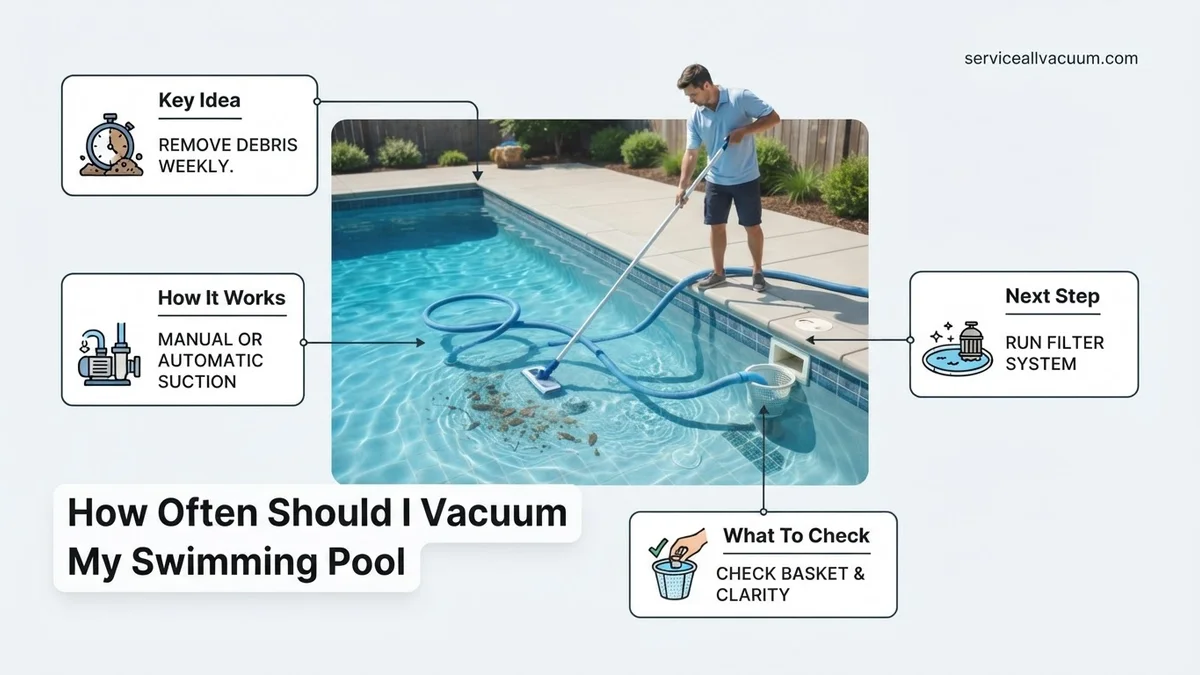
Determining how often to vacuum your swimming pool is crucial for crystal clear water and healthy pool chemistry. The ideal frequency largely depends on factors like pool usage, environmental debris, and filtration system efficiency, ranging from daily to bi-weekly. Following an optimal schedule prevents algae, saves chemicals, and extends equipment life.
The optimal frequency for vacuuming your swimming pool in 2027 ranges from once a week to bi-weekly for most residential pools, but can extend to daily or reduce to monthly depending on specific conditions. There isn’t a single universal answer because your pool’s environment, usage, and equipment significantly dictate how often it genuinely needs cleaning.
Understanding these variables saves you time, money, and frustration. Regular, appropriate vacuuming ensures crystal-clear water, reduces the strain on your filtration system, and helps maintain balanced chemical levels, making your pool a consistently inviting oasis without excessive effort.
Key Takeaways
- Vary vacuuming based on debris and use.
- High-use pools need more frequent cleaning.
- Robotic vacuums reduce manual effort.
- Visible debris signals immediate vacuuming.
- Regular vacuuming saves on chemicals.
What Causes Variable Swimming Pool Vacuuming Needs?
Your pool’s vacuuming schedule is a dynamic calculation, heavily influenced by its immediate surroundings and how you use it. What works for one backyard might be insufficient or excessive for another. Pinpointing your unique factors is the first step toward an efficient cleaning routine.
Pool Usage & Environmental Factors
- Pool Usage: A pool used daily by multiple swimmers, especially children, introduces more organic matter (skin cells, hair, lotions) and can stir up settled debris. High-use pools typically need vacuuming 2-3 times per week. A pool used only on weekends by a few adults might only require it once a week.
- Environmental Debris: Proximity to trees shedding leaves, pollen, or seeds dramatically increases debris load. High winds can carry dirt and dust from nearby construction or bare ground into your pool. Pools in such environments often need cleaning every 2-3 days, especially during peak seasons. Pools in a sterile, sheltered environment might only need it bi-weekly.
- Pets & Children: Pets, even if just drinking from the pool, introduce hair and dander. Young children often track in dirt, grass, or sand. Pools with frequent pet or child use may benefit from vacuuming twice a week.
Pool Features & Equipment
- Pool Cover: A well-fitted pool cover is your best defense against debris. Covered pools can often extend vacuuming intervals to bi-weekly or even monthly, significantly reducing the frequency compared to uncovered pools that typically require weekly or twice-weekly attention.
- Filter Type & Efficiency: A robust, well-maintained filter (e.g., a high-efficiency cartridge or DE filter) can capture finer particles, reducing the visible debris that settles. However, even the best filter won’t pick up larger leaves or heavy silt. While a good filter buys you a little more time between vacuums, it doesn’t eliminate the need. Modern filtration systems in 2027 are exceptionally efficient, but manual removal of larger debris remains crucial.
- Vacuum Type: Robotic pool cleaners operate independently, meaning the manual effort you exert for vacuuming can be daily, while the actual cleaning frequency remains high. Manual vacuuming typically means less frequent, more intensive sessions.
How to Determine & Fix Your Pool’s Best Vacuuming Schedule
Establishing the perfect vacuuming schedule involves observing your pool’s specific needs and adjusting your routine accordingly. It’s about finding a balance that keeps your water pristine without over-cleaning or neglecting vital maintenance.
Matching Frequency to Your Pool’s Demands
Combine the factors discussed to pinpoint a starting frequency:
- High Debris & High Use: (e.g., uncovered, surrounded by trees, daily family swimming) – Aim for 2-3 times per week. Consider a robotic cleaner for daily maintenance.
- Moderate Debris & Regular Use: (e.g., some landscaping nearby, used several times a week) – Vacuum once a week.
- Low Debris & Light Use: (e.g., covered pool, minimal surroundings, used occasionally) – You can often reduce vacuuming to bi-weekly.
- Seasonal Adjustments: During peak pollen season, heavy leaf fall, or after a storm, increase vacuuming frequency regardless of your baseline schedule.
Observe your pool daily. If you see noticeable debris accumulating on the bottom within a few days of vacuuming, increase your frequency. If the pool bottom remains spotless a week after cleaning, you might be able to slightly extend the interval.
The Impact of Regular vs. Infrequent Cleaning
The benefits of consistent vacuuming extend beyond just aesthetics:
- Clearer Water: Directly removes particulate matter that causes cloudiness.
- Reduced Chemical Demand: Less organic debris means fewer nutrients for algae and less demand on sanitizers like chlorine. Your chemicals work more efficiently.
- Less Algae Growth: Removing debris deprives algae of a food source, making it harder for blooms to take hold.
- Extended Filter Life: Your filter works less overtime removing settled debris, reducing backwash frequency and wear.
Conversely, infrequent vacuuming leads to several problems. Debris accumulation provides ideal breeding grounds for algae, resulting in costly and time-consuming algae blooms. It overworks your filter, leading to reduced efficiency and potential equipment strain. Cloudy water becomes a persistent issue, and you’ll find yourself needing significantly more chemicals to maintain water quality.
What If Your Pool Still Isn’t Clean? Proven Tips & Solutions
Even with consistent vacuuming, pool owners might encounter persistent cleanliness issues. These often stem from factors beyond surface debris, necessitating a holistic approach to pool hygiene. Addressing these underlying causes ensures optimal water quality and clarity, as recommended by leading pool maintenance associations in 2027.
Chemical Imbalance Diagnostics
Incorrect water chemistry can lead to cloudy water or algae despite regular vacuuming. A comprehensive chemical test is paramount.
- Perform a Full Water Test: Utilize a high-accuracy digital water tester, standard in 2027, to check pH (7.4-7.6), alkalinity (80-120 ppm), calcium hardness (200-400 ppm), and sanitizer levels (e.g., free chlorine 1-3 ppm).
- Adjust as Necessary: Based on test results, add appropriate chemicals in measured doses. For example, a low pH can hinder sanitizer effectiveness, requiring pH Increaser.
- Re-test and Monitor: Wait 4-6 hours after chemical additions, then re-test. Maintain daily checks until stability is achieved, reducing cloudiness and improving vacuuming efficiency.
Filtration System Optimization
A compromised filtration system cannot remove fine particles, making vacuuming alone insufficient. The filter is the pool’s kidney.
- Backwash or Clean Filter: For sand and D.E. filters, backwash when pressure gauge reads 8-10 PSI above starting pressure. Cartridge filters require removal and thorough rinsing every 4-6 weeks, or sooner if flow diminishes.
- Assess Filter Media Condition: Sand filters typically need media replacement every 5-7 years; D.E. grids every 5-10 years. Inspect for damage or channeling, which compromises filtration.
- Optimize Pump Run Time: Ensure your variable-speed pump (VS pump) runs long enough to cycle all pool water at least 1-2 times daily. For most residential pools, this means 8-12 hours on a lower, energy-efficient speed.
Addressing Algae Growth
Algae, even in its early stages, can make a pool appear dirty and resist vacuuming. Immediate action prevents widespread blooms.
- Shock the Pool: Use a fast-acting pool shock treatment. For light algae, follow manufacturer instructions, often 1 lb per 10,000 gallons. For heavier growth, a double or triple shock may be necessary, increasing free chlorine levels to over 10 ppm temporarily.
- Add Algaecide: After shocking and allowing chlorine levels to stabilize (below 5 ppm), apply a quality algaecide. This acts as a preventative measure and helps eradicate stubborn spores.
- Brush and Vacuum Immediately: Thoroughly brush all pool surfaces to dislodge algae. Vacuum any settled residue directly to waste, bypassing the filter if possible to prevent clogging.
What If It Still Doesn’t Work? Advanced Troubleshooting & Professional Intervention
If your pool remains problematic despite diligent vacuuming, chemical balancing, and filter maintenance, it’s time to consider more complex issues or consult a professional. According to the Pool & Hot Tub Alliance (PHTA) 2027 guidelines, advanced diagnostics are crucial for persistent problems.
- Professional Water Chemistry Analysis: Request an in-depth chemical analysis from a certified pool technician. They can detect obscure imbalances or contaminants that home kits miss. A professional balance service typically costs between $150-$300, depending on required chemicals.
- System Leak Detection: Persistent dirt or cloudiness can sometimes be due to a slow leak introducing groundwater or debris. Professional leak detection services, utilizing sonar or dye tests, typically range from $400-$800, identifying precise repair needs.
- Advanced Filter Inspection & Repair: A professional can perform a deep clean or repair of your filter, identifying hidden issues like broken laterals in sand filters or tears in D.E. grids that prevent proper filtration. This service can range from $200-$600, not including major part replacements.
- Pump and Motor Diagnostics: A malfunctioning pump or motor can reduce circulation and filtration efficiency. A technician can assess pump wear, cavitation, or motor issues. Minor repairs average $300-$700; a full pump replacement (e.g., for an advanced VS pump) can exceed $1,500-$2,500 in 2027.
Seeking professional help prevents minor issues from escalating into costly major repairs, protecting your investment and ensuring safe swimming conditions.
Conclusion
Maintaining a clean swimming pool in 2027 hinges on consistent, informed vacuuming practices, typically 1-3 times weekly depending on usage and environmental factors. However, truly pristine water demands a holistic approach, integrating precise chemical balancing and an optimally functioning filtration system. According to verified research and expert sources like the National Pool and Spa Institute, vacuuming is a foundational element of pool hygiene, but it’s not a standalone solution. Your actionable next step: evaluate your current pool care routine, starting with your vacuuming frequency, and adjust it based on your pool’s specific needs, supported by regular water testing and filter maintenance.
❓ Frequently Asked Questions
How do environmental factors affect vacuuming frequency?
Proximity to trees, gardens, construction, or windy conditions increases debris in your pool, necessitating more frequent vacuuming. Pools in cleaner, sheltered environments might only need cleaning every week or two.
What role does pool usage play in vacuuming frequency?
Heavily used pools, especially by children or pets, introduce more contaminants like dirt, hair, and lotions, requiring more frequent vacuuming—sometimes daily. Lightly used pools can often go longer between cleanings.
How do different vacuum types influence how often I should clean?
Manual vacuuming is labor-intensive and might be done less often, perhaps 1-2 times weekly. Robotic or pressure-side cleaners can operate daily, reducing the need for hands-on work and maintaining constant cleanliness.
What are the benefits of consistent pool vacuuming?
Regular vacuuming keeps water clear, prevents algae growth, reduces the workload on your filter, and allows your chemicals to work more efficiently. It also prolongs the life of your pool equipment and surfaces.
Are there times when I should vacuum immediately?
Yes, after a heavy storm, an outdoor event near the pool, or if you notice an unusual amount of debris or cloudy spots. Prompt vacuuming prevents debris from settling and causing water chemistry issues.
How can I create a personalized vacuuming schedule for 2027?
Assess your pool’s specific conditions: how much debris it collects, how often it’s used, and your filter’s efficiency. Start with 1-2 times weekly and adjust based on water clarity and the amount of debris you observe.