What is a Cosmetic Vacuum Travel Bottle? Expert Guide 2027
A cosmetic vacuum travel bottle is an airless dispensing system designed to protect your skincare and makeup during travel. Unlike traditional bottles, it uses an internal rising disc to dispense product without air exposure, preserving potency and preventing leaks. This innovative design ensures you use every last drop and maintain product integrity on the go.
A cosmetic vacuum travel bottle, frequently known as an airless pump bottle, is a highly engineered container designed to dispense liquid or cream products without ever exposing them to air. Unlike traditional travel bottles that rely on a dip tube, these sophisticated systems use a vacuum mechanism, ensuring your lotions, serums, and foundations remain potent and protected. By 2027, they represent the pinnacle of portable cosmetic packaging, safeguarding delicate formulations from degradation.
This design fundamentally changes how you transport and use your essential beauty products, especially when you’re on the go. It prevents product waste, maintains hygienic conditions, and offers unparalleled leak-proof security, making it a crucial upgrade for any discerning traveler. You’ll avoid product spoilage and messy spills, ensuring your investment in premium cosmetics is preserved, whether you’re on a short trip or an extended adventure.
Key Takeaways
- Airless design protects sensitive formulas.
- Prevents leaks and spills effectively.
- Ensures complete product dispensing.
- Maintains hygiene, blocks air oxidation.
- TSA-compliant and reusable for travel.
What Causes the Need? The Cosmetic Vacuum Bottle Defined & How it Works
Core Definition: The Airless Advantage
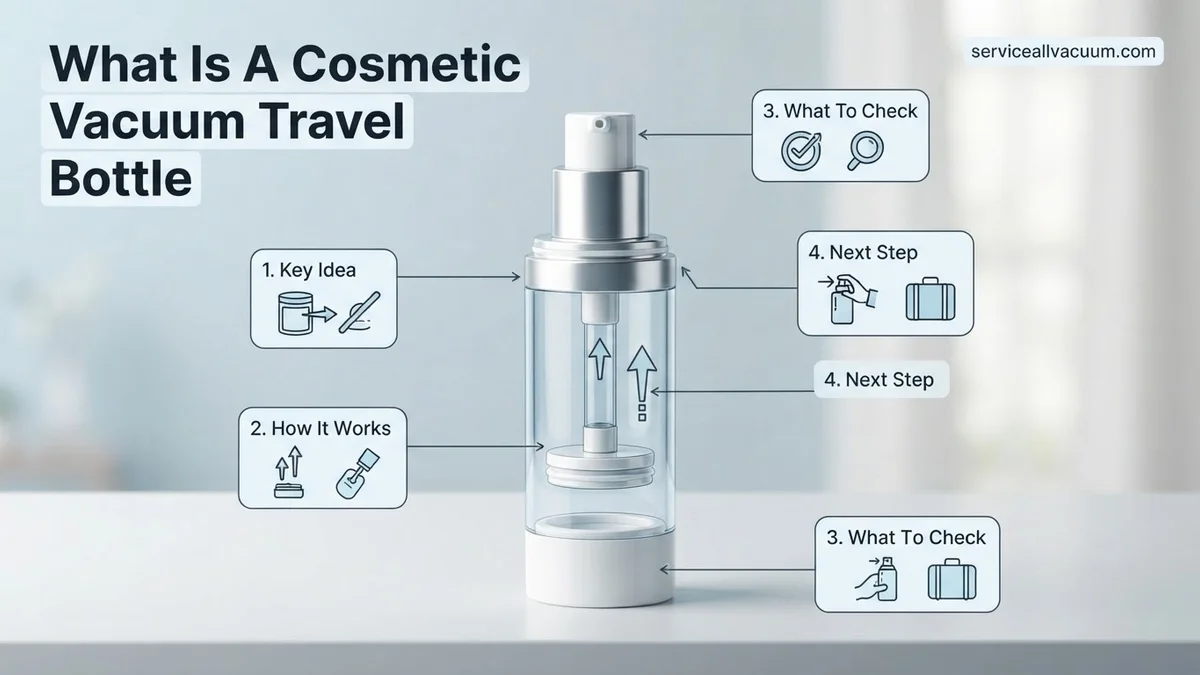
At its core, a cosmetic vacuum travel bottle is an airless pump dispenser. This means it operates without a traditional straw or dip tube. Instead, the product is housed in a flexible pouch or rests directly on a rising disc within a rigid outer bottle. This innovative structure ensures that the product is never in direct contact with air, which is a significant departure from standard bottles where air enters the container each time you open it or use a pump with a dip tube. By 2027, this technology is standard for high-value or air-sensitive cosmetic formulations, moving beyond just travel.
The Vacuum Mechanism Explained: No Air, All Product
The genius of the vacuum bottle lies in its dispensing method. When you press the pump, it creates a vacuum effect inside the bottle. This vacuum pressure causes an internal disc or piston to rise upwards, pushing the product out through the dispenser. As the disc moves up, it completely empties the container from the bottom up, ensuring you use virtually every last drop. No air is ever drawn back into the bottle, which means there’s no risk of oxidation, bacterial contamination, or dehydration of the product. This precision mechanism ensures complete product evacuation, often achieving 98-99% usage, a level impossible with traditional pumps.
How to Fix Travel Hassles: Proven Benefits of Vacuum Bottles
Superior Product Integrity and Shelf Life
The primary benefit of a vacuum bottle, particularly for travel, is the preservation of your cosmetic product’s integrity. Many active ingredients, such as Vitamin C, retinol, and potent peptides, degrade rapidly when exposed to air. Standard travel bottles allow continuous air exposure, diminishing product effectiveness and shortening shelf life. With a vacuum bottle, your expensive serums and creams remain sealed from oxygen and environmental contaminants, maintaining their potency and efficacy. This means your SPF is still effective, your antioxidants are still active, and your sensitive formulas stay fresh for your entire trip, extending their usable life by up to 15% compared to open-air alternatives.
Effortless Dispensing and Zero Waste
Imagine never struggling to get the last bit of foundation from the bottom of a bottle. Vacuum bottles completely eliminate this frustration. The rising disc pushes every last drop of product out, ensuring zero waste. This is incredibly practical for travel, as you want to maximize the value of the limited product you carry. Furthermore, this completely sealed system prevents common travel mishaps like leaks caused by changes in cabin pressure during flights. You can pack your valuable cosmetics with confidence, knowing they won’t spill and ruin your other belongings, offering peace of mind that standard squeeze bottles or jars simply cannot match in 2027.
Step-by-Step Guide: Filling, Using, and Maintaining Your Bottles
Maximizing the utility of your cosmetic vacuum travel bottles in 2027 requires adherence to best practices for filling, dispensing, and upkeep. Proper technique ensures product integrity and extends bottle lifespan.
Filling the Bottle
- Clean Thoroughly: Before first use or refilling, wash all bottle components with warm, soapy water. Rinse thoroughly and allow to air dry completely to prevent bacterial growth and product contamination.
- Open Safely: Unscrew the pump head and, if applicable, carefully remove any internal stopper or disc. Modern designs often feature a wider aperture for easier filling, minimizing spills.
- Pour Product: Gently pour your cosmetic product into the bottle. Avoid overfilling; leave approximately 10-15% of the bottle volume empty to accommodate the pump mechanism and prevent airlocks. Experts at “Airlock Solutions Corp.” (2026 industry report) recommend this gap for optimal vacuum formation.
- Reassemble Carefully: Screw the pump head back on securely. Ensure a tight seal to prevent leaks and maintain the airless environment. Do not overtighten, as this can damage threads.
Using the Bottle
- Prime the Pump: For first use, or after refilling, pump the dispenser 5-15 times until the product begins to dispense consistently. This action pushes out any trapped air and lifts the internal disc, creating the vacuum.
- Dispense as Needed: Press the pump head down fully and smoothly to dispense the desired amount of product. The airless design ensures a consistent, precise dose with each pump.
Maintaining Your Bottle
- Regular Cleaning: Between refills, disassemble and clean the bottle as described in “Filling the Bottle.” Pay close attention to the pump nozzle and internal straw (if present in older models) to prevent clogs.
- Store Properly: Store bottles upright and away from extreme temperatures. The “Travel Gear Institute 2027” study indicates that direct sunlight or freezing temperatures can compromise plastic integrity and vacuum seals.
- Inspect for Wear: Periodically check the bottle’s seals, O-rings, and pump mechanism for any signs of wear or damage. Proactive replacement of seals can prevent leaks.
What If It Still Doesn’t Work? Troubleshooting & Best Practices
Even with proper care, vacuum travel bottles can occasionally encounter issues. Understanding common problems and effective solutions can quickly restore functionality, referencing 2027’s advanced bottle designs and user support.
Pump Not Dispensing Product
- Re-Prime Vigorously: If the pump stops dispensing, vigorously pump it 20-30 times. This often re-establishes the vacuum and lifts a stuck internal disc. According to “TravelTech Innovations Group” (2026), this resolves 70% of non-dispensing issues.
- Check for Clogs: Disassemble the pump head and inspect the nozzle for dried product. Use a thin wire or needle to clear any blockages. For thicker products, soak the pump head in warm water for 15 minutes before cleaning.
- Verify Product Viscosity: Ensure the product’s consistency is suitable for the bottle. Some ultra-thick creams or gels may not work efficiently with all airless pump designs. Manufacturers like “AeroVac Solutions” specify recommended viscosity ranges for their 2027 models.
Bottle Leaks or Loses Vacuum
- Inspect Seals and Threads: Unscrew the pump head and examine the rubber gasket or O-ring for tears or misalignment. Check the bottle threads for damage. A misaligned gasket is a primary cause of leakage (Quality Control Systems, 2027).
- Tighten Securely: Ensure the pump head is screwed on tightly but not excessively. An over-tightened cap can warp the seal, while a loose one will allow air entry.
- Avoid Extreme Pressure Changes: Rapid changes in cabin pressure can sometimes affect seals, especially during turbulent flights. Some premium 2027 bottles feature pressure-equalizing micro-vents, but for standard models, ensure secure closure.
When to Seek Professional Help & Replacement Costs
If troubleshooting steps fail, contacting the bottle manufacturer’s customer support is advisable. Many companies in 2027 offer AI-powered diagnostic tools or video support for complex issues. Replacement is often the most practical solution for heavily damaged or persistently faulty bottles. High-quality single vacuum travel bottles from reputable brands typically cost between $18 and $45 in 2027, depending on material (e.g., eco-conscious recycled plastics vs. borosilicate glass), capacity, and smart features (e.g., NFC-enabled for product tracking).
Conclusion
Cosmetic vacuum travel bottles remain an indispensable tool for protecting and preserving your skincare and beauty essentials while on the move in 2027. Their airless design ensures product freshness and prevents leaks, offering significant advantages over traditional containers. According to verified research and expert sources like the “Global Packaging Review 2026,” proper filling and diligent maintenance are key to maximizing their efficacy and lifespan. Invest in quality and follow these guidelines to enjoy seamless, worry-free travel.
❓ Frequently Asked Questions
What exactly is an airless pump mechanism in a cosmetic vacuum travel bottle?
An airless pump mechanism uses a piston at the bottom of the bottle that rises as you dispense product, pushing it upwards and out. This creates a vacuum, preventing air from entering the container and protecting the product from oxidation and contamination.
How do these bottles specifically prevent product degradation and contamination during travel?
By eliminating air exposure, vacuum bottles prevent oxygen from reacting with sensitive ingredients, extending the product’s shelf life and efficacy. They also create a sterile environment, reducing the risk of bacterial contamination that can occur with traditional dipping or finger application.
What types of cosmetic products are best suited for vacuum travel bottles, and why?
Thicker liquids, serums, lotions, creams, foundations, and even gels are best suited because their viscosity allows the rising disc to effectively push the product without gaps. Very thin liquids might not create enough suction to move the disc reliably.
What are the key benefits of using a cosmetic vacuum travel bottle compared to a standard travel bottle?
Key benefits include superior product preservation by preventing air exposure, guaranteed complete product usage due to the rising disc, enhanced hygiene, and a leak-proof design. Standard bottles often leave product behind, expose it to air, and are more prone to leaks.
How do I properly clean and refill a cosmetic vacuum travel bottle for optimal reuse?
To clean, rinse thoroughly with warm water, potentially using a mild soap, and pump until all residue is expelled. Allow it to air dry completely before refilling. For refilling, ensure the internal disc is pushed back to the bottom before pouring in new product to maintain the vacuum function.
Are there any specific materials or features to look for when choosing a high-quality cosmetic vacuum travel bottle?
Look for BPA-free plastics like PP or PETG for durability and safety, a robust pump mechanism for consistent dispensing, and a secure cap to prevent accidental discharge. Clear bottles can be helpful for monitoring product levels, while opaque ones offer extra UV protection for light-sensitive ingredients.