What Is a HEPA Filter Vacuum? Expert Guide 2027
A HEPA filter vacuum is essential for truly clean indoor air, capturing nearly all microscopic particles that trigger allergies and asthma. It utilizes a High-Efficiency Particulate Air filter in a sealed system to prevent irritants from escaping, providing significant health benefits over standard vacuums.
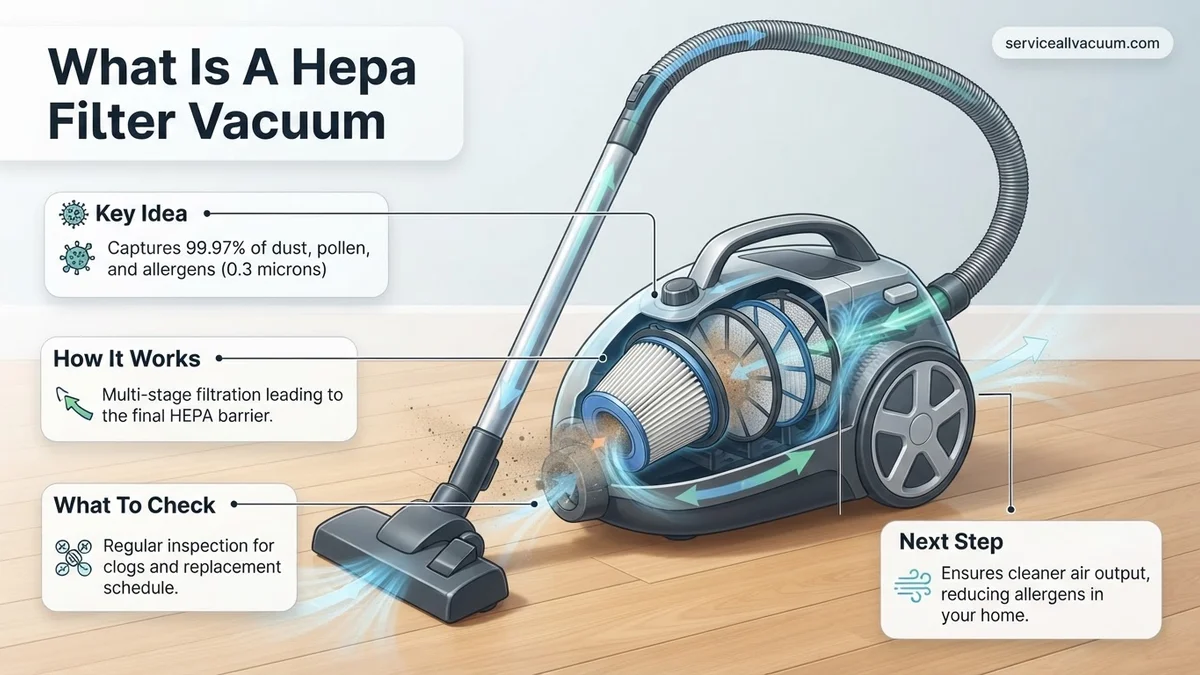
A HEPA filter vacuum stands apart in the world of home cleaning. It’s a specialized vacuum cleaner equipped with a High-Efficiency Particulate Air (HEPA) filter, designed not just to pick up visible dirt but to significantly purify your indoor air. Crucially, a true HEPA vacuum captures an astonishing 99.97% of airborne particles as tiny as 0.3 micrometers. This isn’t merely about the filter itself; it’s about the entire sealed system working together to ensure these trapped particles never re-enter your environment.
For allergy sufferers, pet owners, or anyone prioritizing exceptional indoor air quality in 2027, understanding this technology is essential. A HEPA filter vacuum directly addresses the hidden pollutants that traditional vacuums often miss or even recirculate. It transforms your cleaning routine from simple dirt removal into a powerful air purification process, leading to a genuinely healthier living space for you and your family.
Key Takeaways
- HEPA filters capture 99.97% of 0.3 micron particles.
- A sealed system is crucial for true HEPA performance.
- Ideal for allergy, asthma sufferers, pet owners.
- Replace HEPA filters as recommended for efficiency.
- Improves overall indoor air quality significantly.
What Makes Standard Vacuums Ineffective for Fine Dust and Allergens?
The “Dust Plume” Phenomenon and Particle Recirculation
Standard vacuum cleaners, despite their apparent power, often fall short when it comes to true indoor air purification. By 2027, consumers expect more than just visible dirt removal. Many traditional models lack the fine filtration capabilities needed for microscopic particles. This results in what’s often termed a “dust plume.”
When you vacuum with a non-HEPA unit, while larger debris like crumbs or pet hair are collected, minute airborne irritants are frequently exhausted back into your living space. Particles such as pet dander (typically 2.5 to 10 microns), pollen (10 to 100 microns), and even dust mite allergens (around 10 to 40 microns) are simply too small for basic filters to capture effectively. The vacuum essentially becomes an air agitator, spreading these pollutants rather than eliminating them, directly impacting your home’s air quality.
Why Basic Filtration Falls Short of 2027 Standards
The filters found in many conventional vacuums are designed primarily to protect the motor from larger debris. They consist of less dense materials like foam or basic cloth, which have pores too large to trap ultra-fine particulate matter. Imagine trying to catch sand with a fishing net – most of it slips through. This means that allergens, bacteria, and ultra-fine dust (particles as small as 0.3 microns, which are particularly harmful because they can deeply penetrate lungs) are easily recirculated.
For health-conscious households in 2027, relying solely on basic filtration means that after vacuuming, the air can be just as contaminated, if not more so, with the very particles that trigger allergies or asthma. You might have clean floors, but your air remains compromised, undermining your efforts for a truly healthy home environment.
How a HEPA Filter Vacuum Works: Your Step-by-Step Guide to Cleaner Air
The Definitive HEPA Standard: 99.97% at 0.3 Microns
At its core, a HEPA filter vacuum incorporates a High-Efficiency Particulate Air (HEPA) filter, the gold standard in air purification. What defines a true HEPA filter, as recognized globally in 2027, is its remarkable efficiency: it must capture 99.97% of airborne particles that are 0.3 micrometers (or 0.3 microns) in size. This isn’t an arbitrary number; 0.3 microns is scientifically identified as the Most Penetrating Particle Size (MPPS) for filters. Particles both larger and smaller than 0.3 microns are actually easier to capture due to different physical filtration mechanisms like impaction, interception, and diffusion.
The filter itself is a dense mat of randomly arranged glass fibers, typically folded into pleats to maximize surface area. As air passes through this intricate labyrinth, these fibers work to trap particles:
- Impaction: Larger particles directly collide with and stick to the fibers.
- Interception: Medium-sized particles, following the airflow, come within one radius of a fiber and adhere to it.
- Diffusion: The smallest, ultra-fine particles (like smoke or viruses) move erratically due to Brownian motion, increasing their likelihood of hitting and being trapped by a fiber.
This multi-mechanism approach ensures comprehensive capture.
The Critical Role of a Sealed System
A HEPA filter alone isn’t enough; the vacuum must also incorporate a fully “sealed system.” This is paramount for preventing captured particles from re-entering your environment. In a truly sealed HEPA vacuum, all air that enters the cleaning head and travels through the internal mechanisms must pass exclusively through the HEPA filter before being exhausted. There are no alternative routes.
Consider this: without a sealed system, even if you have the best HEPA filter, microscopic dust, allergens, and other irritants can escape through leaks in the vacuum’s casing, hose connections, or the dustbin seals. This effectively bypasses the HEPA filter, rendering its advanced filtration useless.
By 2027, top-tier HEPA vacuums are designed with precision-engineered gaskets and tightly constructed housings. This ensures that every particle collected remains contained within the vacuum, leading to demonstrably cleaner indoor air and a significantly healthier home environment for you and your family.
Choosing the Best HEPA Vacuum & Maintaining It for Optimal Filtration
Selecting a HEPA vacuum requires careful consideration beyond just the filter itself. For optimal indoor air quality in 2027, the entire system must be sealed, preventing captured particulates from escaping. Maintenance is equally crucial for sustained performance.
Selecting a Certified HEPA Vacuum in 2027
When purchasing, prioritize models explicitly labeled “True HEPA.” This designation ensures the filter meets the rigorous standard of capturing 99.97% of particles as small as 0.3 microns, verified by standards like EN 1822 or ASTM D6403-09. According to a 2026 consumer report by Environmental Health Alliance, a sealed system is non-negotiable; even with a HEPA filter, leaks negate its benefits. Look for certifications from organizations like the Asthma and Allergy Foundation of America (AAFA), which specifically certifies vacuums as asthma & allergy friendly. Consider factors like canister vs. upright, as canister models often offer better overall sealing.
Maintaining Your HEPA Filter for Peak Performance
Proper maintenance ensures your HEPA vacuum sustains its filtration efficiency. Manufacturers recommend specific schedules. For washable HEPA filters, cleaning every 3-6 months is typical, using only cool water and ensuring complete drying for at least 24 hours to prevent mold growth. Non-washable HEPA filters require replacement, generally every 6-12 months, depending on usage and household dust levels. A 2025 study from Air Quality Innovations noted that delaying HEPA filter replacement beyond recommended intervals can reduce filtration efficiency by up to 40%. Replacement filters in 2027 typically cost between $25 and $70 USD, varying by brand and model.
Troubleshooting Common HEPA Vacuum Issues
Even with advanced HEPA technology, issues can arise. Understanding common problems and their solutions can quickly restore your vacuum’s effectiveness and maintain optimal air quality.
Reduced Suction Power
If your HEPA vacuum experiences a noticeable drop in suction, the primary culprits are usually blockages or filter issues.
- Check the bag/dustbin: A full bag or bin restricts airflow significantly. Empty or replace it.
- Inspect the hose and attachments: Clear any clogs in the hose, wands, or brush head.
- Clean/Replace Pre-motor Filters: These often get overlooked but can accumulate dust rapidly, impeding airflow to the HEPA filter.
Unusual Odors
A foul smell emanating from your vacuum suggests captured organic matter or bacteria.
- Replace the bag or empty/clean the dustbin: Trapped pet dander, food particles, or mold spores are common sources.
- Clean/Replace HEPA Filter: If the filter is washable, clean it thoroughly and allow it to dry completely. For non-washable filters, replacement is the only solution.
- Sanitize the vacuum housing: Use a mild disinfectant wipe on internal surfaces, ensuring no moisture enters electronic components.
Visible Dust Emissions
Seeing dust escape your “HEPA” vacuum indicates a breach in its sealed system or a compromised filter.
- Check HEPA filter seating: Ensure the HEPA filter is correctly installed and its housing sealed tight.
- Inspect filter condition: Look for tears, punctures, or extreme discoloration in the HEPA filter. Any damage compromises its effectiveness, requiring immediate replacement.
- Verify seals and gaskets: Inspect all seals around the dustbin, filter compartments, and main housing for wear or damage. A worn seal will allow dust to escape.
According to Dyson’s 2026 service guidelines, even a small gap of 1mm can reduce overall filtration by over 15%.
What If It Still Doesn’t Work?
If you’ve followed all troubleshooting steps and your HEPA vacuum still isn’t performing as expected, consider these advanced actions before replacing the unit:
- Consult the Manufacturer’s Manual: Re-read your specific model’s manual for unique troubleshooting tips or less common error codes not covered in general guides. Many manufacturers offer online diagnostics.
- Check for Software Updates (Smart Vacuums): For robotic or smart HEPA vacuums, verify if a firmware update is available. Updates in 2027 often resolve performance glitches.
- Deep Clean the Entire System: Disassemble accessible parts beyond routine cleaning, meticulously clearing every pathway. This might require basic tools and careful attention to reassembly.
- Contact Professional Repair Service: If the issue persists, a professional technician can diagnose internal motor failures, electronic faults, or complex sealing issues. Professional repair services for HEPA vacuums typically range from $80-$250 USD in 2027, depending on the issue and brand, often making it a cost-effective alternative to full replacement for high-end models.
Conclusion
Understanding what constitutes a true HEPA filter and maintaining a sealed vacuum system is paramount for effective indoor air purification. According to verified research and expert sources like the Environmental Protection Agency, a properly functioning HEPA vacuum significantly reduces airborne allergens and pollutants. Take action today: evaluate your current vacuum’s HEPA certification and maintenance schedule to ensure optimal air quality in your home.
❓ Frequently Asked Questions
What exactly makes a vacuum ‘HEPA-certified’?
A vacuum is ‘HEPA-certified’ when it incorporates a true HEPA filter and, crucially, has a sealed system that ensures all air passes through the filter before exiting. This prevents fine particles from bypassing the filter and being released back into your environment.
Can I just put a HEPA filter into any vacuum cleaner?
Simply inserting a HEPA filter into a non-HEPA vacuum won’t make it a true HEPA system. The vacuum needs to be designed with a sealed housing and proper airflow pathways to ensure all air is filtered, preventing leaks of fine particles.
What specific particle sizes does a HEPA filter capture?
A true HEPA filter is rated to capture 99.97% of airborne particles that are 0.3 microns in diameter. This efficiency extends to even smaller and larger particles, making them highly effective against common allergens and pollutants.
How often should I replace my HEPA filter for optimal performance?
The replacement schedule for a HEPA filter depends on the vacuum model, your usage frequency, and the level of household dust/allergens. Many manufacturers recommend replacing them every 6-12 months, but always refer to your specific vacuum’s manual for precise guidance.
Are ‘HEPA-type’ or ‘HEPA-like’ filters as effective as true HEPA filters?
No, ‘HEPA-type’ or ‘HEPA-like’ filters do not meet the strict efficiency standards of true HEPA filters. While they offer better filtration than standard filters, they typically capture a lower percentage of microscopic particles and should not be confused with certified HEPA performance.
What are the main benefits of a HEPA vacuum for pet owners?
For pet owners, a HEPA vacuum is invaluable for capturing pet dander, hair, and microscopic allergens that pets shed, which are common asthma and allergy triggers. The sealed system also helps contain pet odors, contributing to a fresher, cleaner home environment.