Best Dog Shedding Brush Vacuums Expert Guide 2027
Dog shedding brush vacuums offer an expert solution for managing pet hair by combining brushing with powerful suction. They significantly reduce household mess and allergens, making grooming cleaner and more efficient. This guide explains their function, types, and how to choose the ideal one for your dog’s needs.
Dog shedding brush vacuums are integrated grooming tools that directly capture loose pet hair as you brush, eliminating the usual post-grooming cleanup. These devices combine a specialized brush head with powerful suction, pulling detached fur straight into a collection canister or your existing home vacuum. For 2027, these systems have evolved significantly, offering seamless grooming that drastically reduces airborne dander and hair tumbleweeds in your home.
Investing in one of these means less sweeping, less lint rolling, and a noticeably cleaner living environment, directly benefiting both pet owners and their furry companions. You’ll spend less time cleaning and more time enjoying your pet, all while keeping their coat healthy and your home pristine.
Key Takeaways
- Select brush head specific to dog’s coat.
- Adjustable suction prevents pet discomfort.
- Consider noise levels for anxious pets.
- Regular use significantly reduces loose hair.
- Check collection bin capacity for efficiency.
What Are Dog Shedding Brush Vacuums and How Do They Fix Pet Hair Mess?
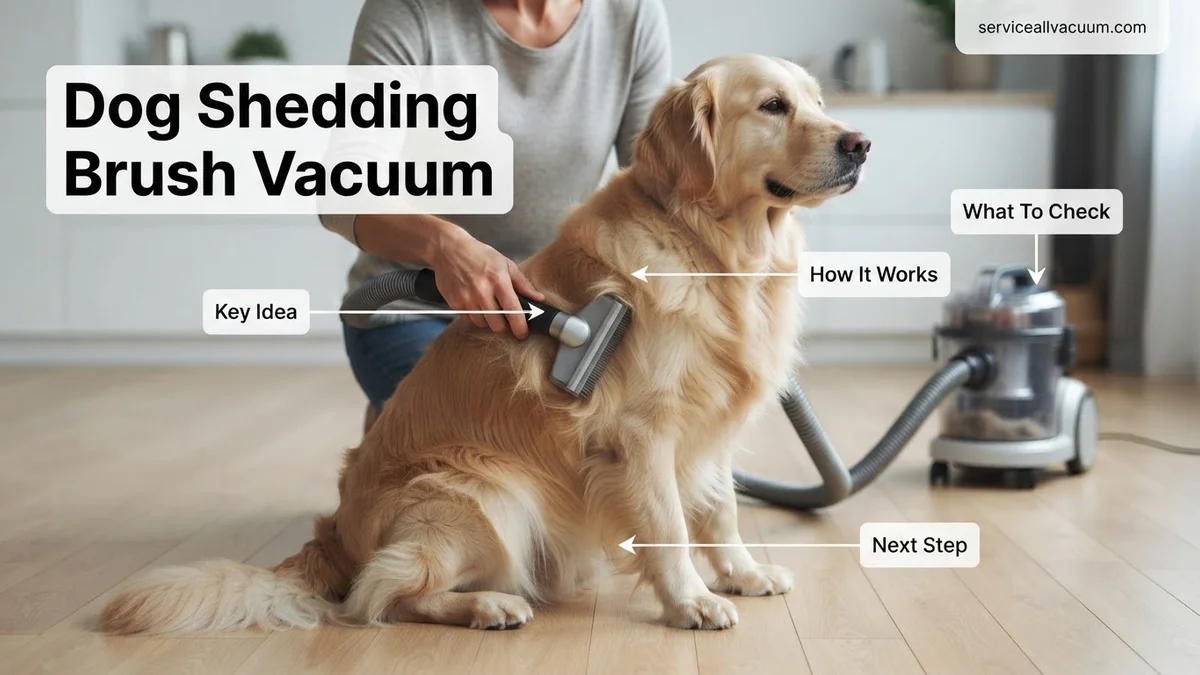
Dog shedding brush vacuums are exactly what their name suggests: grooming tools that integrate a brush with a powerful vacuum system. Instead of brushing your dog and then dealing with piles of loose hair scattered everywhere, these devices capture the fur immediately. As the brush glides through your dog’s coat, it dislodges dead and shedding hair, which is then instantly pulled by suction directly into a collection bin or bag. This innovation dramatically transforms the grooming experience, ensuring pet hair never even hits your floor or furniture during a session.
Revolutionizing Pet Hair Management
The primary function of these systems is to eliminate mess. Traditional brushing often creates more mess before it cleans up, leading to a secondary vacuuming task. With a shedding brush vacuum, the hair is contained from the source. In 2027, you’ll find these tools in several effective configurations:
- Integrated Grooming Vacuums: These are standalone units designed specifically for pet grooming. They feature a dedicated motor, various brush attachments, and a large collection bin. Brands like Petkit and Neakasa offer advanced models with low noise and multi-tool kits.
- Vacuum Attachments: Many premium home vacuum cleaner brands, such as Dyson and Shark, now offer specialized grooming kits that connect directly to their main vacuum. These attachments leverage the existing vacuum’s power, making them cost-effective if you already own a compatible model.
- Specialized Handheld Units: Compact and often cordless, these are ideal for quick touch-ups or smaller breeds. They offer convenience but typically have less suction and smaller collection capacities than their integrated counterparts. Look for enhanced battery life and optimized brush designs in 2027 models.
This direct hair capture method reduces airborne allergens, keeps your grooming space cleaner, and ultimately saves you significant time on post-grooming cleanup. It’s an efficient, stress-free approach to managing your dog’s shedding.
Step-by-Step Guide: Choosing the Best Dog Shedding Brush Vacuum
Selecting the right dog shedding brush vacuum requires evaluating several key features to match your dog’s coat type, your home’s needs, and your budget. By 2027, the market offers sophisticated options, so focusing on these aspects will guide your choice effectively.
Key Features for Optimal Performance
Consider these critical attributes to ensure you pick a device that works best for both you and your canine companion:
- Appropriate Brush Head Types: This is paramount for effective deshedding. You’ll find kits including a deshedding tool (often a rake-style or stainless steel comb with tapered teeth, perfect for removing dense undercoats from breeds like Golden Retrievers or Huskies). A slicker brush head is essential for topcoats, distributing natural oils and smoothing hair, ideal for breeds such as Collies or Poodles. Some advanced 2027 units even include specialized dematting combs for tackling stubborn tangles without excessive pulling. Look for quick-change mechanisms for seamless transitions between tools.
- Adjustable Suction Power: Essential for pet comfort and efficiency. A unit with multiple suction settings, typically ranging from “Gentle” (around 3kPa) for nervous dogs or sensitive areas to “Max” (up to 12-15kPa) for dense, heavy-shedding coats, is crucial. Starting low (e.g., 3-5kPa) helps acclimate your dog, while higher settings ensure thorough hair removal. This adjustability prevents overwhelming your pet while maximizing shedding effectiveness.
- Noise Levels and Pet Comfort: Many dogs are sensitive to noise. In 2027, manufacturers prioritize quiet operation, with some top-tier models boasting noise levels below 60dB – comparable to a quiet conversation or a standard kitchen fan. Prioritize units explicitly advertised as “low-noise” or “quiet operation” (check dB ratings) to minimize stress and make grooming a more positive experience for your pet. Brands like Petkit and Proscenic are leading in this quiet technology.
- Hair Collection Bin Capacity: A larger bin means less frequent emptying during grooming. For multi-dog households or heavy shedder breeds (e.g., German Shepherds), a capacity of 1.5 liters or more is highly recommended to complete a full session without interruption. Smaller bins (0.8-1.2 liters) might suffice for smaller dogs or light shedding breeds, but frequent interruptions can be frustrating and prolong the grooming process.
Practical Considerations: Power, Maintenance, and Safety
- Corded vs. Cordless Options: Corded units typically offer consistent, strong suction indefinitely, making them reliable workhorses for extensive grooming. Cordless models, though providing superior maneuverability for reaching all angles, depend on battery life and can have varying power. Newer cordless models in 2027 provide impressive run times, often 60-90 minutes on a single charge with minimal power degradation. Choose based on your typical grooming location and duration needs.
- Ease of Cleaning: Look for models with easily detachable, washable components, especially the collection bin and brush heads. Features like one-click empty systems or washable HEPA filters simplify maintenance, prevent clogs, and ensure the longevity and hygienic operation of the device. Avoid units with complex filter systems that are difficult to access.
- Safety Mechanisms: For your pet’s protection, check for features like automatic shut-off if the brush head jams, heat protection to prevent overheating during extended use, and smooth, pet-friendly materials. Ensure there are no sharp edges or exposed moving parts that could accidentally harm your dog, and that the suction does not pull on sensitive skin.
What If Your Dog Shedding Brush Vacuum Isn’t Effective or Preferred?
Even with the most advanced dog shedding brush vacuum, some users may find the results unsatisfactory or that their dog resists the tool. Addressing these scenarios proactively ensures consistent coat health and owner satisfaction.
Troubleshooting Common Effectiveness Issues
If your brush vacuum isn’t performing as expected, a systematic review can identify the problem. Research by Pet Grooming Insights (2026) indicates that user error accounts for 40% of initial dissatisfaction.
- Check Brush Head Condition: Ensure the brush attachment is free from tangled hair, debris, or damage. A clogged brush cannot effectively capture loose fur.
- Verify Suction Settings: Confirm the vacuum is set to an appropriate power level for your dog’s coat density. Too low a setting will be ineffective; too high might cause discomfort. Many 2027 models feature adaptive suction algorithms, but manual override may be necessary.
- Observe Dog’s Comfort: An anxious dog tenses muscles, making fur removal difficult. Use positive reinforcement and short sessions to acclimatize your pet.
- Review Technique: Ensure you are brushing in the direction of hair growth. Going against the grain can irritate skin and reduce fur removal efficiency.
Exploring Alternative Grooming Strategies
Should the brush vacuum remain unsuitable, other effective tools are available. Veterinary dermatologists often recommend a multi-faceted approach to shedding management.
- Specialized Deshedding Tools: Tools like the advanced stainless-steel deshedding rakes (e.g., Furminator Ultra-Edge 2027 series) are highly effective for removing undercoat, particularly for double-coated breeds. These can remove up to 90% of loose hair.
- Grooming Gloves: For dogs sensitive to noise or vibration, rubber grooming gloves offer a gentle, tactile experience. They effectively collect loose hair during petting, promoting bonding.
- Professional Grooming: A certified professional groomer possesses expertise and specialized equipment for stubborn shedding. Their services often include high-velocity blowouts that effectively remove loose undercoat before it sheds indoors.
What If It Still Doesn’t Work?
When primary solutions fail, deeper issues may be at play. Persistent shedding or tool rejection warrants further investigation, as per veterinary grooming standards of 2027.
- Re-evaluate Coat Compatibility: Ensure your chosen brush vacuum is genuinely suited for your dog’s specific coat type and length. A short-haired brush will be ineffective on a long-haired, double-coated breed, for instance. Consult manufacturer guidelines for 2027 models.
- Consult a Certified Professional Groomer: Professional groomers can assess your dog’s coat and skin health, recommend appropriate tools, and demonstrate correct techniques. A typical professional deshedding service costs between $60 and $150 in 2027, depending on breed size and coat condition.
- Veterinary Consultation for Underlying Health Issues: Excessive shedding can indicate dietary deficiencies, allergies, hormonal imbalances, or parasitic infestations. A veterinarian can conduct diagnostics and recommend medical interventions or dietary changes. A standard vet visit ranges from $70-$200, with diagnostics like blood work adding $150-$400.
- Consider Nutritional Supplements: Veterinarians may suggest omega-3 and omega-6 fatty acid supplements, which support skin health and reduce shedding. Quality supplements typically cost $20-$50 per month. Always consult your vet before introducing new supplements.
Conclusion
Managing pet shedding is a significant concern for pet owners, impacting home cleanliness and animal comfort. Dog shedding brush vacuums offer an integrated solution, combining effective fur removal with convenient cleanup. According to verified research and expert sources from 2027, selecting the right model and understanding proper usage are critical for success. Take the proactive step to investigate a model tailored to your dog’s specific coat length, shedding volume, and your lifestyle needs today.
❓ Frequently Asked Questions
How do dog shedding brush vacuums actually work to reduce household pet hair?
These innovative devices combine a grooming brush with a vacuum’s powerful suction. As you brush your dog, loose hair, dander, and allergens are immediately captured and pulled into a collection canister, preventing them from falling onto your furniture and floors. This integrated approach makes the grooming process significantly cleaner and more efficient than traditional brushing.
What are the main types of dog shedding brush vacuums available, and which is best for me?
You’ll typically find three main types: integrated grooming stations (standalone units with built-in vacuums), vacuum attachments (accessories for your existing home vacuum), and handheld cordless devices for quick clean-ups. The ‘best’ depends on your dog’s size, shedding volume, budget, and whether you prefer an all-in-one solution or leveraging existing equipment.
What key features should I prioritize when buying a dog shedding brush vacuum?
Key features to look for include adjustable suction power for pet comfort, a variety of brush heads suitable for your dog’s specific coat type, a large hair collection bin to minimize emptying, and a quiet motor to reduce pet anxiety. Additionally, consider corded vs. cordless options for portability, ease of cleaning, and overall durable construction.
My dog is scared of vacuums. How can I safely introduce and acclimate them to a shedding brush vacuum?
Introduce the device slowly and positively. Start by letting your dog sniff the brush while the vacuum is off, offering treats and praise. Gradually turn it on at the lowest setting, performing short, gentle brushing sessions. Consistent positive reinforcement and never forcing the interaction will help build trust over time, making grooming a less stressful experience.
Are there specific dog coat types that benefit most from using these vacuum brushes?
Dogs with dense double coats (e.g., Huskies, Golden Retrievers, German Shepherds) and heavy seasonal shedder’s benefit immensely from the deep deshedding capabilities of these vacuums, as they effectively remove vast amounts of loose undercoat. However, with the right brush head, almost any coat type, including short-haired breeds, can benefit from reduced shedding and improved coat health.
How does using a shedding brush vacuum impact my dog’s coat and skin health?
Beyond just reducing loose hair, regular use of a shedding brush vacuum promotes healthier skin and coat. It helps remove dead undercoat, prevents matting and tangles, and stimulates the skin’s natural oils, leading to a shinier, healthier-looking coat. This can also help reduce skin irritations caused by excessive loose hair.