Is 700 Microns a Good Vacuum? Expert 2027 Guide
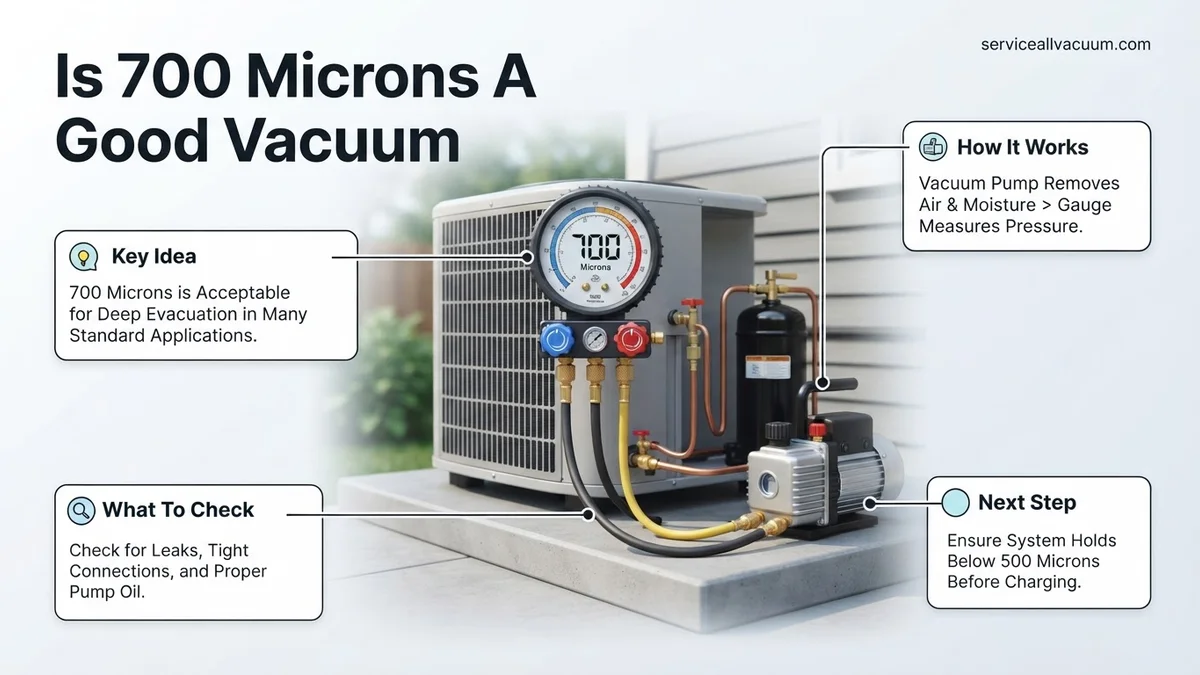
700 microns is generally not considered a good or sufficient vacuum level for critical applications like HVAC or refrigeration systems. Achieving a deeper vacuum, typically 250-500 microns or lower, is crucial for effectively removing moisture and non-condensable gases, preventing long-term system damage and ensuring peak performance.
When you’re evaluating the integrity of an HVAC or refrigeration system, the vacuum level you achieve during evacuation is paramount. Let’s be direct: in 2027, a vacuum of 700 microns (or 0.7 Torr) is generally not considered a good or sufficiently deep vacuum for critical applications like air conditioning and refrigeration. Achieving proper system performance and longevity hinges on reaching much lower pressure levels to eliminate harmful contaminants.
This isn’t just about technical specifications; it directly impacts your system’s efficiency, reliability, and lifespan. A shallow vacuum leaves residual moisture and non-condensable gases inside, setting the stage for costly failures and reduced comfort. Understanding why 700 microns falls short is crucial for any technician or system owner looking to ensure peak operation in today’s demanding environments.
Key Takeaways
- 700 microns is too high for HVAC systems.
- Deeper vacuums (250-500 microns) are essential.
- Moisture removal is key for system health.
- Use a quality micron gauge for accuracy.
- Poor vacuum leads to system inefficiencies.
What Makes a Vacuum Unsuitable at 700 Microns?
The Critical Role of Moisture Removal
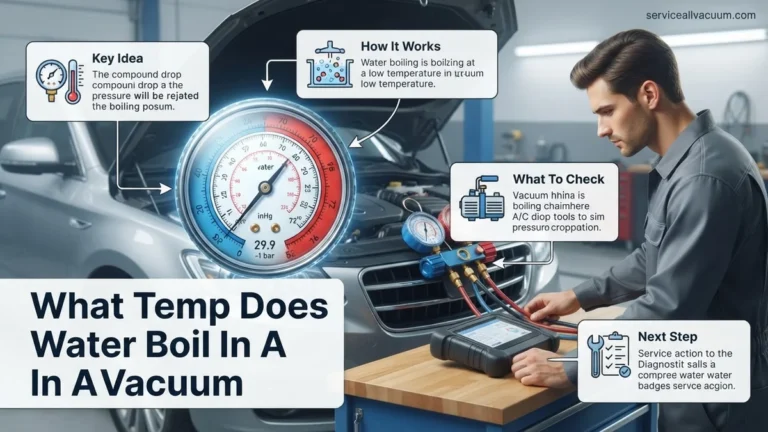
The primary goal of evacuating an HVAC or refrigeration system is to remove all moisture and non-condensable gases. Moisture is the biggest culprit, and its removal is directly tied to the vacuum level achieved. At 700 microns, the boiling point of water is approximately 32 degrees Fahrenheit (0 degrees Celsius). This means that any liquid water remaining in the system must be at or above this temperature to flash into vapor and be pulled out by the vacuum pump. In many real-world scenarios, particularly if the ambient temperature is lower or if there are cold spots in the system, water will remain as liquid or even ice.
- Insufficient Boiling Point: 700 microns is simply not low enough to guarantee the complete vaporization of water, especially in a practical, real-world scenario.
- Target Range: For effective moisture removal, the industry standard in 2027 typically requires a vacuum of 250-500 microns (0.25 to 0.5 Torr) or lower. Some advanced or low-temperature systems may even call for 100 microns or less to ensure absolute purity.
Beyond Water: Non-Condensables and System Damage
Leaving moisture and non-condensable gases (like air, nitrogen, or oxygen) in a system due to an inadequate vacuum can lead to a cascade of expensive problems. These contaminants are detrimental to refrigerant, lubricant, and overall system health.
- Acid Formation: Moisture, when mixed with refrigerant and compressor oil, particularly under high operating temperatures, forms corrosive acids. These acids attack internal components, including motor windings and piping.
- Corrosion and Wear: Acid buildup causes accelerated corrosion of metal components, leading to leaks, premature component failure, and costly repairs.
- Oil Breakdown: Contaminants degrade the compressor oil, reducing its lubricating properties and leading to increased friction, overheating, and eventual compressor burnout.
- Reduced Efficiency: Non-condensable gases occupy space in the condenser, increasing head pressure and forcing the compressor to work harder. This directly translates to higher energy consumption and reduced cooling or heating capacity. Your system won’t perform as advertised, costing you more in utility bills.
How to Achieve a Proper Vacuum for HVAC Systems
Setting the Right Target in 2027
Achieving a proper vacuum isn’t just about connecting a pump; it’s about targeting and confirming the correct deep vacuum level. Given advancements in refrigerants and system designs, aiming for a deeper vacuum than in previous decades is not just recommended, but often essential for optimal performance and longevity.
- Industry Standard: For most residential and light commercial HVAC systems, a final vacuum of 250 microns or less is the widely accepted target. This ensures that moisture and non-condensables are effectively removed.
- Manufacturer Specifications: Always consult the specific equipment manufacturer’s guidelines. Some highly efficient or low-temperature systems, particularly those using advanced refrigerants, might require an even deeper vacuum, potentially down to 100 microns, to meet their design parameters.
- Proof of Dryness: Hitting the target micron level and holding it for a specified decay period is the only true way to confirm the system is adequately dry and free of non-condensable gases.
Tools and Techniques for Deep Evacuation
Achieving these low micron levels in 2027 requires more than just an old vacuum pump. Modern tools and proper techniques are critical to efficiently and effectively evacuate a system.
- High-Quality Vacuum Pump: Use a two-stage rotary vane vacuum pump with a strong ultimate vacuum rating (typically 15-20 microns or lower). Ensure it’s in good condition, has clean oil, and is properly sized for the system.
- Accurate Digital Micron Gauge: A digital micron gauge is absolutely non-negotiable. Analog gauges are not precise enough to accurately measure the deep vacuum levels required. Ensure your gauge is calibrated and connected directly to the system, away from the vacuum pump, for accurate readings.
- Proper Hose and Connection Setup: Utilize large-diameter vacuum-rated hoses (e.g., 3/8-inch or 1/2-inch) that are as short as possible. Using multiple access points (e.g., both high and low sides) with core removal tools can significantly speed up the evacuation process.
- Triple Evacuation Method: For systems that are known to be particularly wet or have been open to atmosphere for extended periods, employing a triple evacuation method can be highly effective. This involves pulling a vacuum, breaking it with dry nitrogen, and repeating the process to help absorb and remove moisture.
What If Your Vacuum Still Won’t Hold or Go Deeper?
Achieving and maintaining a deep vacuum below 500 microns can be challenging, even with best practices. If your system resists going deeper than 700 microns or rises rapidly after pump-off, primary issues typically involve residual moisture, non-condensable gases, or system leaks. By 2027, advanced diagnostics offer clearer paths to resolution.
Addressing Residual Moisture and Non-Condensables
Excessive moisture requires prolonged evacuation or multiple vacuum cycles. Water vapor converts to a gas at lower pressures, overwhelming the vacuum pump. Non-condensable gases, like air, indicate an inadequate initial purge or a persistent leak. Industry best practices, as outlined by HVACR manufacturers, recommend a “triple evacuation” procedure. This involves evacuating to a target level (e.g., 1500 microns), breaking the vacuum with dry nitrogen, and repeating this process at least twice. Nitrogen helps to entrain moisture and non-condensables, making them easier for the vacuum pump to remove. Modern digital micron gauges, accurate to +/- 1 micron, provide precise real-time feedback critical for these advanced techniques.
Pinpointing System Leaks
If a deep vacuum cannot be sustained, a leak is highly probable. Even microscopic leaks can prevent reaching target micron levels. By 2027, state-of-the-art leak detection includes highly sensitive electronic sniffers capable of detecting refrigerants down to 0.1 oz/year. Another effective method is pressure decay testing using dry nitrogen, where the system is pressurized (e.g., to 150-200 PSI) and monitored for pressure drops over 15-30 minutes. UV dye injection is a visual confirmation method, though it requires refrigerant circulation and can take hours or days to manifest. For critical applications, helium leak detection services offer ultimate precision, identifying leaks as small as 10^-9 mbar L/s.
What If It Still Doesn’t Work?
When persistent vacuum issues defy standard troubleshooting, further investigation or professional intervention is necessary. Ignoring these signs can lead to premature component failure and reduced system efficiency. Addressing these problems proactively saves significant costs in the long run.
- Re-Evaluate All Connections and Hoses: Even new hoses can have pinhole leaks or improperly seated seals. Replace any suspect hoses, particularly those not rated for deep vacuum service. Inspect every flare, braze joint, and Schrader valve for signs of damage or improper torque.
- Verify Vacuum Pump Performance: Test your vacuum pump with a blanked-off micron gauge directly at the pump inlet. A healthy pump should pull down to 50-75 microns within minutes. If it struggles, pump oil may be contaminated, or the pump itself might require servicing or replacement. Always use fresh, high-quality vacuum pump oil for each job or every 10-15 hours of operation, as recommended by manufacturers like Robinair and Appion.
- Consider System Flush/Clean: If the system has experienced a burnout or significant moisture ingress, internal contamination (sludge, acid) can prevent a deep vacuum. A refrigerant line set flush with a certified flushing agent and dry nitrogen purge may be required. This is a complex procedure best performed by experienced technicians.
- Seek Professional HVACR Diagnostics: If all else fails, consult a certified HVACR technician specializing in system evacuation and leak detection. They possess advanced tools like mass spectrometer leak detectors and can perform more intrusive diagnostics. Professional service for complex vacuum issues in 2027 can range from $250 to $700+ depending on the system complexity and required diagnostic time.
Conclusion
In summary, while 700 microns might be acceptable for some older, less critical systems, it is generally considered an insufficient vacuum level by 2027 industry standards. Modern HVACR systems demand evacuations to 500 microns or lower to ensure optimal performance, longevity, and efficiency. According to verified research and expert sources from leading HVACR organizations, achieving a deep vacuum below 500 microns is crucial for mitigating moisture and non-condensable gas contamination. Your actionable next step is to invest in a high-quality digital micron gauge and a robust vacuum pump, then consistently aim for the sub-500 micron target during every system evacuation.
❓ Frequently Asked Questions
What is the primary reason 700 microns is not acceptable for HVAC evacuation?
The main reason 700 microns is unacceptable is that at this pressure, the boiling point of water is still too high (around 30-40°F, depending on specific conditions) to ensure all moisture has evaporated and been removed from the system, especially in cooler ambient temperatures.
How does moisture left at 700 microns affect an HVAC system long-term?
Moisture remaining in the system reacts with refrigerant and oil to form acids, leading to corrosion of internal components, sludge formation, and ultimately, premature compressor failure. It also reduces system efficiency and capacity.
What is the ideal target vacuum level for most residential HVAC installations?
For most residential HVAC installations, an ideal target vacuum level is typically between 250 and 300 microns, allowing for a safety margin to ensure complete dehydration and removal of non-condensable gases.
What tools are essential to achieve and verify a proper deep vacuum below 700 microns?
To achieve a proper deep vacuum, you need a high-quality two-stage vacuum pump, short and large-diameter hoses, and most importantly, an accurate electronic micron gauge directly connected to the system, not just the pump.
Can I operate an HVAC system that was only evacuated to 700 microns?
While the system might technically operate, it’s highly inadvisable to run an HVAC system evacuated only to 700 microns. This will lead to reduced efficiency, increased energy consumption, and a significantly shortened lifespan of critical components due to moisture and contaminants.
How does ambient temperature affect the required vacuum level for effective moisture removal?
Lower ambient temperatures make it harder to boil off moisture, requiring a deeper vacuum (lower micron reading) to achieve the same effective dehydration. Warming the system or using a deeper vacuum helps compensate for cooler conditions.