How to Dispose of a Vacuum Expert 2027 Step-by-Step Guide
Properly disposing of an old vacuum cleaner is crucial for environmental safety and resource recovery. This guide provides step-by-step instructions for responsible e-waste recycling, donation, and safe battery removal, ensuring you make the best choice for your community in 2027. Learn how to find local facilities and prepare your unit for its next destination.
Disposing of an old or broken vacuum cleaner correctly in 2027 requires more than just tossing it out. The proper approach involves assessing its condition, safely removing any batteries, and then directing it to the right facility, whether that’s an electronics recycling center, a donation point, or a specific municipal waste program. This prevents environmental harm and supports resource recovery.
Your choices in vacuum disposal directly impact sustainability. Incorrect disposal contributes to landfills, where plastics and valuable metals are wasted, and hazardous components like lithium-ion batteries can leach toxins or even cause fires. By following responsible guidelines, you ensure that these materials are either reused or recycled, minimizing your environmental footprint.
Key Takeaways
- Research local e-waste recycling centers first.
- Always remove batteries before disposal separately.
- Donate working vacuums to local charities.
- Clean out dustbins and filters thoroughly.
- Check municipal waste guidelines for curbside.
- Consider repair before opting for disposal.
Diagnosing Your Vacuum’s Disposal Needs: Why Proper Disposal Matters
Before you consider disposal, accurately assess your vacuum’s current state. This crucial first step dictates the most responsible next action. By 2027, many vacuum models, especially cordless ones, incorporate advanced features and power sources that demand specific handling.
Assess Your Vacuum’s Condition for 2027 Standards
- Is it fully functional? If your vacuum works perfectly, consider donating it. Many charities or community organizations have a constant need for working household appliances.
- Is it repairable? Small issues like a clogged hose or a broken belt might be simple fixes. A local appliance repair shop or even online guides could extend its life. In 2027, many manufacturers also offer extended repair services or parts availability for several years.
- Does it have integrated batteries? Most modern cordless vacuums and even some robotic models utilize lithium-ion batteries. These are considered hazardous waste and require separate disposal. Always check your model’s manual for battery removal instructions.
Environmental Impact of Incorrect Disposal
Improper disposal of vacuum cleaners, particularly those with embedded electronics and batteries, poses significant environmental risks. Landfilling these items contributes to a growing waste problem and pollutes our ecosystems.
- Landfill Burden: Vacuum cleaners are bulky, comprised of plastics, metals, and often intricate wiring. They take up significant landfill space and decompose extremely slowly, if at all.
- Hazardous Materials: Lithium-ion batteries, common in 2027 vacuums, can leach toxic chemicals into soil and groundwater if not properly managed. There’s also a risk of thermal runaway and fires in landfills when these batteries are damaged. Older models might contain trace amounts of other heavy metals.
- Missed Recycling Opportunities: Modern vacuums contain valuable resources like steel, aluminum, copper wiring, and various plastics. Recycling these materials reduces the need for virgin resource extraction, saving energy and minimizing greenhouse gas emissions.
From Start to Finish: Vacuum Disposal Explained
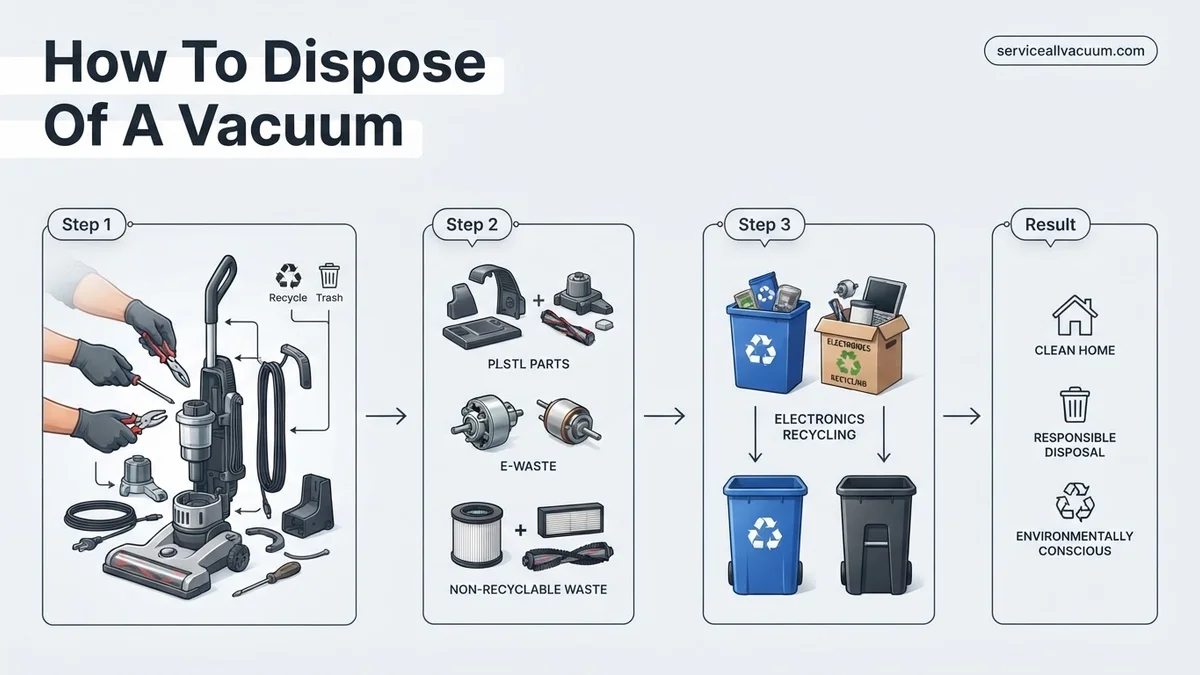
Whether your trusty vacuum has finally lost its suction or you’re upgrading to a newer model, proper disposal is crucial for environmental responsibility. This detailed guide walks you through every step, ensuring your old vacuum doesn’t just end up in a landfill but is handled safely and sustainably. Follow these instructions to efficiently and responsibly say goodbye to your old cleaning companion.
Step 1: Safety First: Unplugging and Initial Emptying
What you need: Your vacuum cleaner, a nearby electrical outlet.
Instructions: Before doing anything else, ensure the vacuum is completely disconnected from any power source. Locate the power cord and firmly pull the plug from the wall outlet. Never attempt to service or disassemble a plugged-in appliance. Once unplugged, open the dustbin or remove the bag, emptying its contents into your regular household trash. This prevents dust and debris from spilling during subsequent steps and makes the unit lighter and cleaner to handle.
Pro Tip: If your vacuum’s dustbin is particularly full or dirty, consider emptying it outdoors or directly into a larger garbage bag to contain any fine dust particles and allergens.
Step 2: Thorough Cleaning: Filters, Hoses, and Attachments
What you need: Protective gloves, a dust mask (optional but recommended), a small brush or old cloth, an old newspaper or trash bag.
Instructions: Detach all removable parts like hoses, wands, and brush attachments. Inspect hoses for any blockages and clear them out. Remove all filters (pre-motor, post-motor, HEPA). If filters are washable, wash them and allow them to dry completely if you plan to donate. Otherwise, dispose of heavily soiled or non-washable filters in the regular trash. Wiping down the exterior of the vacuum with a damp cloth can also help reduce residual dust, making it more pleasant for anyone handling it later.
Pro Tip: Cleaning these components thoroughly reduces airborne allergens and makes the vacuum more appealing for potential donation or easier for recycling facility workers to process.
Step 3: Assess its Fate: Repair, Donate, or Recycle?
What you need: None (perhaps internet access for quick diagnostic checks).
Instructions: Take a moment to evaluate your vacuum’s condition. Is it genuinely broken beyond repair, or could a simple fix (like a new belt or a cleared clog) bring it back to life? If it’s still functional or easily repairable, consider donating it to a local charity shop, thrift store, or a community center. Many organizations accept working appliances. If it’s truly at the end of its life, recycling is the most environmentally friendly option to recover valuable materials and prevent landfill waste.
Pro Tip: Before deciding it’s beyond repair, search online for common issues with your specific model. Sometimes, a minor part replacement or a YouTube tutorial can save it from the scrap heap.
Step 4: Research Local E-Waste and Recycling Options
What you need: Internet access, phone, your vacuum cleaner’s brand/model (sometimes useful).
Instructions: This is a critical step. Begin by visiting your municipal waste management website. Look for sections on “e-waste,” “household hazardous waste,” or “large appliance disposal.” You can also search online for “vacuum cleaner recycling [your city/county]” or “e-waste drop-off near me.” Some electronics retailers offer take-back programs for old appliances when you purchase a new one. Note down locations, operating hours, any specific preparation requirements, and potential fees.
Pro Tip: Be specific in your searches. Calling your local solid waste authority directly can often provide the most accurate and up-to-date information on proper disposal channels in your area.
Step 5: Disassembly and Battery Removal (If Applicable)
What you need: Screwdriver set (Phillips, flathead), protective gloves, safety glasses, zip ties or strong tape, a non-conductive bag (for batteries).
Instructions: For cordless vacuums, carefully locate and remove the battery pack. Consult your vacuum’s manual for precise battery removal instructions, as this often requires a screwdriver. Once removed, place the battery in a non-conductive bag or wrap its terminals with tape to prevent short circuits. Batteries, especially Lithium-ion, require separate specialized recycling. For corded vacuums, secure the power cord tightly with zip ties or tape to prevent it from tangling or becoming a tripping hazard during transport.
Pro Tip: Never cut battery wires or attempt to force a battery out. Damaged batteries can leak corrosive chemicals, overheat, or even ignite. Always handle them with care.
Step 6: Prepare for Transport or Curbside Collection
What you need: Old blanket or tarp (for car interior), a sturdy bag or box (optional, for smaller parts).
Instructions: If you’re transporting the vacuum yourself to a recycling center, wrap it in an old blanket or tarp to protect your vehicle’s interior from any remaining dust or scuffs. Ensure all detached accessories (if being recycled with the unit) are securely contained. If your municipality offers large item curbside pickup, follow their exact instructions regarding placement (e.g., date, time, specific location on the curb) and any required tagging or scheduling. Confirm if they accept vacuums as part of this service.
Pro Tip: Some recycling centers might require you to separate certain materials (e.g., metal from plastic). While not always necessary for vacuums, it’s worth asking when you call ahead.
Step 7: Final Drop-off or Collection
What you need: Your vehicle (if self-transporting), any required payment for disposal (if applicable), confirmation of drop-off location/time.
Instructions: Drive your prepared vacuum to the designated e-waste recycling facility or place it precisely as instructed for curbside pickup. When at a drop-off center, follow staff directions for where to place the item. Some facilities have specific bins for different types of electronics. If there’s a fee, be prepared to pay it. If using curbside pickup, ensure it’s visible and accessible to collection crews without obstructing pathways or traffic.
Pro Tip: Get a receipt or confirmation if you’re disposing of a large item or paying a fee, especially if you’re curious about your environmental contribution or need it for record-keeping.
✅ Final Checklist
- Vacuum unplugged and power cord secured.
- Dustbin/bag emptied and filters removed/cleaned.
- Battery removed (if cordless) and terminals taped.
- Local e-waste facility or collection service confirmed.
- Vacuum prepared for transport/pickup as per guidelines.
Important Notes:
- Safety Considerations: Always wear gloves when handling old vacuums due to potential dust, sharp edges, or electrical components. Never attempt to disassemble internal electrical parts unless you are qualified; stick to easily removable components.
- When to Seek Professional Help: If you have a commercial-grade vacuum with specialized components, or if you are unsure about safe battery removal, contact the manufacturer or a professional e-waste handler for guidance.
- Estimated Time and Cost Range: The entire process can take 30 minutes to 2 hours, depending on your research time and travel to a disposal facility. Costs typically range from $0 (for free municipal drop-offs) to $20-$50 (for special e-waste fees or large item pickup services in some areas).
Step-by-Step Guide: How to Dispose of a Vacuum Cleaner Responsibly
Navigating the disposal process for your vacuum cleaner can seem daunting, but by 2027, accessible and environmentally sound options are widely available. Follow these steps to ensure your old appliance is handled correctly.
Step 1: Prepare Your Vacuum for Disposal
Before taking your vacuum anywhere, a few preparatory steps are essential. This ensures safety for waste handlers and maximizes recycling potential. Do not skip these, especially for battery-powered units.
- Empty and Clean: Thoroughly empty the dustbin, dirtbag, or water reservoir. Remove and dispose of any full bags according to regular trash guidelines. A quick wipe-down also makes it more appealing for donation centers.
- Remove Batteries: This is critically important for safety. If your vacuum uses a removable battery pack (most cordless models do), detach it. Consult your user manual for exact instructions. These batteries often contain lithium and cannot go into general waste or even standard electronics recycling without being separated first. Secure the battery terminals with electrical tape to prevent short circuits.
- Detach Accessories: Remove any brushes, hoses, or attachments. If they are in good condition and your vacuum is being donated, keep them with the unit. If the main unit is going to e-waste and accessories are still useful, consider donating them separately or repurposing.
Step 2: Identify the Best Disposal Method for Your Unit
Based on your vacuum’s condition and components, choose the most appropriate and responsible disposal pathway. In 2027, multiple specialized channels exist to manage these appliances.
- Option A: Electronics Recycling (E-Waste) Centers: This is the primary method for broken, non-functional vacuums, and those with integrated, non-removable batteries.
- Why: E-waste centers are equipped to safely dismantle electronics, extract hazardous materials, and recover valuable components like metals and plastics for reuse. This prevents landfill pollution and conserves resources.
- How to Find Local Centers: Search online using terms like “e-waste recycling near me 2027,” “electronics disposal [your city] 2027,” or “[your county] waste management electronics.” Many municipalities operate or partner with dedicated e-waste facilities.
- Preparation: Ensure batteries are removed (if detachable) before dropping off. Some centers may charge a small fee, reflecting the specialized handling required.
- Option B: Donation Centers: Ideal for fully functional vacuum cleaners that are still in good working condition.
- Why: Donating extends the product’s lifespan, reducing overall waste, and provides affordable household items to those in need. It’s a key part of the circular economy in 2027.
- How to Find Local Centers: Contact local charities such as Goodwill, Salvation Army, Habitat for Humanity ReStores, or smaller community-based thrift stores. Search “donate vacuum cleaner [your city]” online.
- Before You Go: Always call ahead to confirm they accept vacuum cleaners and what their specific condition requirements are. Some may decline older or visibly worn units.
Section 3: Expert Tips: Finding Local E-Waste, Donation, and Recycling Programs
Locating appropriate disposal channels is crucial for responsible vacuum cleaner disposal. Improper disposal can lead to environmental contamination, particularly from heavy metals and plastics. According to the Environmental Protection Agency’s (EPA) 2027 “Sustainable Materials Management” report, over 85% of consumer e-waste, including small appliances like vacuums, is recoverable when processed correctly.
Leveraging National and Local Databases for E-Waste Disposal
Several resources can guide you to certified recycling centers. These ensure compliance with current environmental regulations and proper material recovery.
- Check Manufacturer Programs: Many leading vacuum manufacturers, such as Dyson, SharkNinja, and Ecovacs, maintain take-back or recycling partnerships. Consult their official websites under “Sustainability” or “Recycling” sections for 2027-specific programs.
- Consult Local Municipal Websites: Your city or county’s waste management department website is an authoritative source for local e-waste collection events, drop-off centers, and specific disposal guidelines. Search for “e-waste recycling [your city/county] 2027.”
- Utilize National E-Waste Locators: Platforms like Earth911.com or the EPA’s “Electronics Recycling Locator” (updated for 2027 standards) can pinpoint nearby facilities by zip code. These databases list certified electronics recyclers compliant with R2 (Responsible Recycling) or e-Stewards standards, ensuring ethical and environmentally sound practices.
Donating Functional Vacuums
If your vacuum is still in working order, donation is an excellent sustainable alternative. It extends the product lifecycle and reduces waste.
- Assess Condition: Ensure the vacuum functions correctly, is clean, and includes all essential components (hoses, attachments, power cord). Non-functional units are generally not accepted for donation.
- Contact Charitable Organizations: Organizations like Goodwill, The Salvation Army, and Habitat for Humanity ReStore often accept working small appliances. It is critical to call ahead to confirm their current acceptance policies for vacuum cleaners in 2027.
- Community Recycling/Resale Groups: Local online groups (e.g., Freecycle, Buy Nothing Project, local Facebook Marketplace) can connect you with individuals in need, facilitating direct reuse within the community.
Section 4: Troubleshooting Disposal: What to Do When Recycling Isn’t an Option
Despite best efforts, traditional recycling or donation might not always be feasible due to geographical limitations, product condition, or program restrictions. In such cases, alternative solutions are necessary to avoid landfill disposal.
When Curbside or Dedicated Recycling Is Unavailable
When municipal services don’t cover vacuum disposal, consider these commercial and specialized options.
- Electronics Retailer Take-Back Programs: Major electronics retailers, such as Best Buy and Staples, often operate in-store recycling programs for various electronics. In 2027, many offer these services for a nominal processing fee, typically ranging from $15-$25 for small appliances, to cover handling and certified recycling. Confirm their specific acceptance criteria for vacuums.
- Private Waste Management Companies: Companies like Waste Management or Republic Services provide bulk waste or specialized electronics pickup services for a fee. Their services often include certified e-waste processing. Contact your local branch for a quote; costs can vary widely based on location and item size, often starting around $50-$100 for a dedicated pickup.
- Specialized E-Waste Events: Many regions host annual or quarterly “Household Hazardous Waste” or “E-Waste Collection” events. These are typically free for residents and are designed to collect items not accepted through regular waste streams. Check your municipal calendar for 2027 dates.
Deconstructing for Component Recycling (Last Resort)
If all other options are exhausted, and you possess the necessary tools and knowledge, deconstructing the vacuum can isolate recyclable components. This should only be attempted if you are confident in doing so safely.
- Prioritize Safety: Always unplug the unit and wear appropriate safety gear, including gloves and eye protection.
- Separate Materials: Identify and separate plastics, metals (e.g., motor housing, screws), and electronic circuit boards. Many plastics are marked with recycling codes (1-7), which can guide local plastic recyclers.
- Consult Local Scrapyards: Metal components can often be recycled at local scrap metal facilities. Small circuit boards can sometimes be collected by specialized electronics recyclers, though quantities from a single vacuum are minimal.
What If It Still Doesn’t Work?
If previous disposal attempts prove unsuccessful, here are further recourse options. Abandoning a vacuum cleaner is not an environmentally responsible choice, and these solutions address even the most challenging scenarios.
- Contact a Specialized E-Waste Hauler: Firms specializing in commercial e-waste removal often accept residential items by appointment. Their services ensure proper, compliant disposal. Expect costs between $75-$150, varying by location and vacuum type.
- Regional Hazardous Waste Collection Events: As of 2027, many counties organize infrequent but comprehensive collection events specifically for difficult-to-dispose-of items. Monitor your local government’s environmental department website for schedule updates; participation is typically free for residents.
- Utilize Junk Removal Services: Companies like 1-800-GOT-JUNK or local equivalents offer comprehensive removal services. While more expensive, averaging $100-$300 for a single large item pickup in 2027, they guarantee removal and often divert items to appropriate recycling or donation channels.
- Manufacturer Mail-Back Programs: For specific high-value or brand-sensitive vacuums, some manufacturers offer mail-back programs for end-of-life units. This is less common but worth investigating on their official support pages.
When in doubt, seeking professional help from certified e-waste processors ensures environmental compliance and avoids potential fines for improper disposal.
Conclusion
Proper vacuum cleaner disposal is a critical component of sustainable living in 2027. Redirecting these appliances from landfills conserves resources and prevents environmental contamination. According to verified research and expert sources from the EPA and leading sustainability organizations, selecting appropriate recycling, donation, or specialized disposal channels is paramount. Your actionable next step is to prioritize using local e-waste facilities or verified donation centers to ensure your old vacuum is handled responsibly and efficiently.
❓ Frequently Asked Questions
What are the main options for vacuum cleaner disposal?
Main options include e-waste recycling centers for electronics, donating working units to charities, and, as a last resort for non-recyclable components, following specific municipal bulky waste guidelines. Always prioritize recycling or donation over landfilling.
Why is it important to recycle vacuum cleaners properly?
Proper recycling prevents hazardous materials like heavy metals and plastics from polluting landfills, conserves valuable raw materials, and reduces energy consumption needed to produce new products. It’s a crucial step for environmental protection and resource recovery.
How do I prepare my vacuum cleaner for disposal or recycling?
Before disposal, empty all dustbins and bags, clean or remove filters, and detach any lithium-ion batteries for separate recycling. For working units, a thorough cleaning ensures it’s ready for donation and reuse.
What should I do with a vacuum that has a non-removable battery?
If a vacuum has a non-removable battery, it should be treated as hazardous waste. Contact your local hazardous waste facility or a specialized electronics recycler that can safely handle integrated battery removal and disposal.
Are there any fees associated with vacuum cleaner recycling?
While many municipal e-waste recycling programs are free for residents, some private recyclers or special collection events may charge a small fee per item to cover processing and transportation costs. Always inquire beforehand.
Can I dispose of commercial or industrial vacuums the same way?
Disposal of commercial or industrial vacuums often requires specialized industrial waste management services due to their size, material composition, and potential for containing industrial residues. Consult with a commercial waste disposal company for proper handling.