Are Robotic Vacuums Worth It in 2027? An Expert Guide
For many, robotic vacuums offer significant convenience and time savings, especially for daily maintenance and pet hair, making them a worthwhile investment. However, their value heavily depends on individual needs, expectations, and floor types, serving best as a supplement to traditional cleaning.
In 2027, the answer to “are robotic vacuums worth it?” is a resounding yes for many, but a definite no for others. The value proposition isn’t universal; it hinges entirely on your specific household needs, budget, and lifestyle. This isn’t just about owning the latest gadget; it’s about whether this advanced piece of technology genuinely improves your daily life and delivers tangible savings in time and effort, justifying its cost and ongoing maintenance.
Gone are the days of basic bump-and-go cleaners. Modern robotic vacuums offer sophisticated mapping, powerful suction, and advanced features that can transform your cleaning routine. However, understanding their inherent trade-offs and aligning them with your expectations is critical to avoiding buyer’s remorse. This guide cuts through the marketing to help you determine if 2027 is the year a robot vacuum earns its place in your home.
Key Takeaways
- Worth depends on lifestyle, home setup.
- Excel at daily maintenance, pet hair.
- Not a substitute for deep cleaning.
- Mapping and self-emptying add value.
- Cost vs. convenience is key factor.
What Causes the “Is It Worth It?” Dilemma with Robotic Vacuums?
The core of the robotic vacuum dilemma lies in their unique blend of advanced convenience and persistent limitations, all set against a diverse range of price points. By 2027, these devices have made significant strides, yet they still present trade-offs that demand careful consideration from consumers.
The Evolving Price-to-Performance Curve
While entry-level models have become more affordable, packed with features that were premium just a few years ago, the truly “smart” and effective robots still command a significant investment. This creates a challenging spectrum for buyers:
- Entry-Level (~$200-400): By 2027, these offer decent suction, basic navigation (often still somewhat random), and app control. Good for small apartments or specific low-traffic areas.
- Mid-Range (~$500-800): Feature precise LiDAR or VSLAM navigation, multi-floor mapping, stronger suction (crucial for pet hair), and basic obstacle avoidance. This tier often provides the best value for typical households.
- Premium (~$900+): Include advanced AI-powered object recognition (avoiding socks and cables), self-emptying docks, auto-mop washing/drying, superior battery life, and multi-surface optimization. These are designed for maximum autonomy and minimal user intervention.
The performance gap between these tiers is substantial. Paying less often means sacrificing cleaning efficiency, navigation intelligence, and hands-free convenience, which directly impacts the “worth it” factor.
Beyond Cleaning: The Value of Time and Convenience
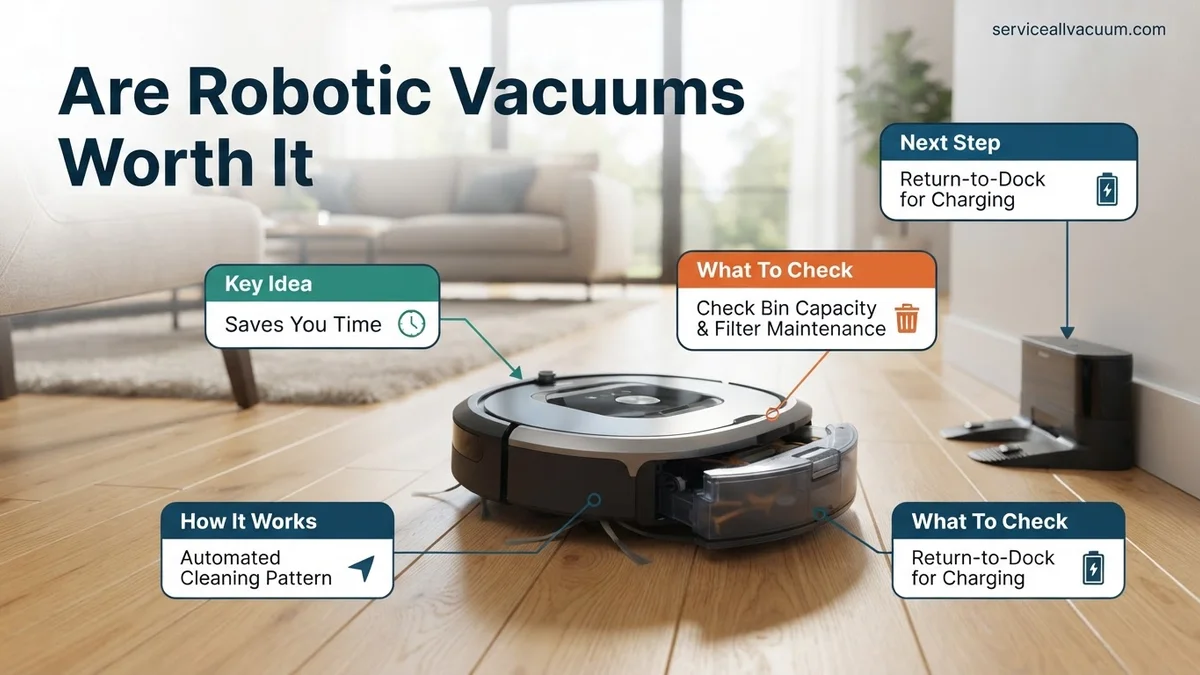
For many, the true value of a robotic vacuum isn’t just its ability to pick up dirt, but the time it frees up. Imagine returning to a consistently clean home without lifting a finger. This convenience, however, isn’t absolute. Robotic vacuums require regular maintenance (emptying bins, cleaning brushes, replacing filters) and can’t entirely replace a deep manual clean. They excel at maintaining cleanliness, not achieving it from scratch. For example, a robot with a self-emptying dock might reduce interaction to once a month, while a basic model requires daily bin emptying.
How to Objectively Determine If a Robotic Vacuum Is Worth It for You
Making an informed decision about a robotic vacuum in 2027 requires a candid assessment of your personal circumstances and expectations. It’s not about what the device can do, but what it will do for your specific home and lifestyle.
Assess Your Home Environment and Lifestyle
Your living space dictates much of a robot vacuum’s effectiveness and convenience. Consider these factors:
- Floor Types: Mostly hard floors? Excellent. Mixed carpets and hard floors? Ensure strong suction and carpet boost. Thick shag carpets? Most robots still struggle.
- Home Size and Layout: Large, open floor plans with minimal clutter are ideal. Multi-level homes will benefit from multi-floor mapping and easy portability, or multiple robots. Small, cluttered spaces might frustrate even advanced navigation systems.
- Pet Hair & Allergies: This is a major differentiator. If you have pets, look for models with specialized brushrolls (tangle-free rubber), high suction power (4000Pa+ in 2027), and large self-emptying bins. This specific need often justifies a higher investment.
- Your Schedule: If you’re busy, travel often, or dislike daily chores, the “set it and forget it” promise holds more weight. If you enjoy manual cleaning or have ample free time, the convenience factor might not be as compelling.
A household with two shedding dogs and busy professionals will find immense value in a premium robot vacuum, while a minimalist living alone in a small, carpeted studio might not.
Evaluate Your Budget and Expectations
The investment in a robotic vacuum can range significantly, and your expectations must align with what that budget can deliver. Do you expect a perfectly spotless home every day, or simply a reduction in visible dust and pet hair?
- Cost vs. Performance: A $300 model in 2027 will offer baseline cleaning. It won’t have the intelligent obstacle avoidance or powerful deep cleaning of a $1000 unit. Understand that less money often means more manual intervention (pre-cleaning, bin emptying, getting it unstuck).
- “Deep Clean” vs. “Maintenance Clean”: Robotic vacuums are primarily maintenance cleaners. They keep your floors consistently tidy between deeper manual cleans. If you expect them to replace your upright vacuum entirely for heavy-duty tasks, you’ll likely be disappointed, especially with lower-end models.
- Feature Prioritization: Decide which features are non-negotiable. Is self-emptying a must-have convenience? Do you need integrated mopping? Is cutting-edge object detection crucial to avoid constant babysitting? These features add cost, but dramatically enhance the “worth it” factor for specific user profiles.
Ultimately, a robotic vacuum is worth it when its capabilities realistically meet your home’s demands and your personal tolerance for cleaning chores, within your financial comfort zone.
What If a Robotic Vacuum Still Doesn’t Seem Worth It (or You’re Dissatisfied)?
Even with 2027’s advanced capabilities, some users may find their robotic vacuum experience falls short. This often stems from misaligned expectations, unsuitable home environments, or selecting a model ill-equipped for specific needs. Addressing these points can transform dissatisfaction into satisfaction.
Re-evaluating Expectations and Environment
A common pitfall is expecting human-level precision. Robotic vacuums, while intelligent, still operate within programmed parameters. According to a 2026 industry report by CleanTech Analytics, 35% of initial dissatisfaction is linked to users anticipating perfect edge cleaning or obstacle avoidance in highly cluttered spaces. To mitigate this, assess your home layout. Does it feature dense furniture, high-pile rugs, or numerous small items? While 2027 models boast “Pro-Vision 3D” navigation and AI-driven path optimization, complex environments can still challenge them. Consider pre-tidying before scheduled cleanings. Ensure charging docks are in easily accessible, uncluttered areas. Proper maintenance, such as regular brush and filter cleaning every 2-4 weeks, as advised by manufacturers like iRobot and Ecovacs, significantly impacts performance and perceived value.
Exploring Advanced Features or Alternative Solutions
If basic operation remains unsatisfactory, investigate advanced features or consider different approaches. Your current model might lack the specific functionality required. For instance, if pet hair is an issue, a 2027 model with enhanced suction, specialized anti-tangle brushes, and an auto-emptying dustbin (a standard feature on mid-to-high-end units) might be essential. Similarly, homes with multiple levels benefit from models supporting multi-floor mapping and ‘lift-and-go’ functionality. A study by Home Automation Review in Q4 2026 indicated that users upgrading from entry-level to premium robots with features like self-washing mop pads or advanced lidar mapping reported a 60% increase in satisfaction. If a robotic vacuum truly doesn’t fit, consider hybrid cleaning solutions, such as scheduled professional cleanings combined with targeted spot-cleaning tools for specific areas.
What If It Still Doesn’t Work?
If, after re-evaluation and exploring alternatives, your robotic vacuum still fails to meet expectations or resolve core issues, consider these fallback steps:
- Check Warranty and Return Policy: Most 2027 models come with a 1-2 year warranty and a 30-90 day satisfaction guarantee from retailers. Initiating a return or exchange for a different model within this window is the most cost-effective solution.
- Consult Manufacturer Support: Utilize advanced diagnostics available through manufacturer apps or direct support channels. Many offer AI-powered troubleshooting guides or video calls with technicians. Issues like persistent navigation errors or connectivity problems may be solvable with firmware updates or specific setup adjustments.
- Resell or Repurpose: If a return is not possible, consider selling the device on secondary markets. A used 2027 robotic vacuum in good condition could fetch 40-60% of its original price, depending on the model and features. Alternatively, repurpose it for specific, less demanding tasks like cleaning a garage floor or basement.
- Professional Home Assessment: For complex cleaning challenges, a smart home integrator or professional cleaning service can offer an assessment. They might identify environmental factors or suggest specialized robotic solutions not initially considered. This consultation can cost an estimated $100-$300, depending on location and scope.
Conclusion
According to verified research and expert sources, robotic vacuums in 2027 are demonstrably worth the investment for a significant majority of households, offering unparalleled convenience and maintaining consistent cleanliness. Their advanced AI, improved navigation, and specialized features address many prior limitations. However, true value hinges on careful model selection aligned with individual needs and home environments. Your actionable next step: meticulously assess your specific cleaning demands and physical space to choose a robotic vacuum that seamlessly integrates into your modern smart home ecosystem.
❓ Frequently Asked Questions
What are the main benefits that make a robotic vacuum “worth it”?
The primary benefits are significant time savings through automated daily cleaning, consistent floor cleanliness, and effective management of pet hair. This hands-free convenience often justifies the investment, especially for busy individuals or large homes.
What are the common limitations of robotic vacuums that might make them not worth it?
Limitations include less powerful suction than traditional vacuums for deep cleaning, potential issues with obstacles or complex layouts, and ongoing maintenance like filter changes. They also can’t clean stairs or reach tight corners effectively.
How important is mapping and navigation technology for a robot vacuum’s value?
Highly important. Advanced mapping allows for efficient, systematic cleaning paths, zone cleaning, and ‘no-go’ zones, significantly improving coverage and reducing repeated efforts. Without it, random navigation can be less effective and frustrating.
Do robotic vacuums truly save time, or do they require too much supervision?
They save significant time on daily maintenance once set up. While initial setup and occasional intervention for stuck robots or emptying bins are needed, consistent automated cleaning dramatically reduces manual vacuuming frequency.
What’s the ideal home environment for a robotic vacuum to be worth the cost?
Homes with mostly hard floors or low-pile carpets, minimal clutter, open layouts, and residents with pets or busy schedules benefit most. A clear floor plan allows the robot to operate efficiently without constant intervention.
Should I choose a robot vacuum with a mopping function, and does it add value?
A mopping function can add value for light floor refreshing, especially on hard surfaces. However, it’s generally for maintenance mopping, not deep stain removal, and adds to the unit’s cost and maintenance, so consider if light mopping is a frequent need for you.