How to Dispose of Old Vacuum Step-by-Step Guide 2027
Proper disposal of an old vacuum is crucial for environmental protection, as vacuums contain components that can harm landfills. Prioritize recycling through e-waste centers or municipal programs, and consider donation if the unit is still functional. Always remove batteries and empty debris before disposal.
Disposing of your old vacuum cleaner properly in 2027 involves more than just tossing it in the trash. With evolving environmental regulations and a heightened focus on sustainability, understanding the correct pathways for end-of-life electronics, especially those containing plastics, metals, and potentially hazardous batteries, is crucial. This guide provides actionable steps to ensure your old vacuum is handled responsibly, benefiting both the environment and your community.
Proper disposal isn’t just an eco-conscious choice; it’s often a legal requirement. Ignoring specific e-waste protocols can lead to fines and contribute to landfill overburden, where valuable resources are lost and toxic substances can leach into the environment. By following these steps, you actively participate in a circular economy, supporting recycling, material recovery, and responsible waste management practices that are standard for 2027.
Key Takeaways
- Recycle vacuums as e-waste first.
- Locate local e-waste facilities easily.
- Donate working vacuums to charity.
- Prepare vacuum:empty bin, remove battery.
- Check local bulky waste collection rules.
Why Proper Vacuum Disposal Matters: Understanding the Challenge
Your old vacuum cleaner, while seemingly benign, is a complex piece of electronics. Its disposal carries significant environmental implications and requires adherence to current e-waste standards as of 2027. Simply discarding it with general household waste often means missed opportunities for resource recovery and potential harm to ecosystems.
Environmental Impact & Resource Conservation
Vacuum cleaners are composed of a diverse mix of materials, including various plastics, steel, copper, and often lithium-ion or NiMH batteries. When these items end up in landfills, valuable resources are squandered. Recycling captures these materials, allowing them to be reused in new products, reducing the demand for virgin resources and lessening the energy intensity of manufacturing. For example, by 2027, advanced e-waste facilities can recover over 90% of a vacuum’s material content. Improper disposal also risks hazardous substances, particularly from older models or damaged batteries, leaching into soil and water supplies. This poses a direct threat to local wildlife and human health.
Legal & Community Responsibility
Across many regions in 2027, electronics like vacuum cleaners are classified as Electronic Waste (e-waste). This means they are subject to specific disposal regulations, prohibiting them from regular curbside collection. Municipalities increasingly enforce these rules to protect the environment and manage waste streams effectively. Non-compliance can result in fines for individuals and businesses. Beyond legalities, responsible disposal contributes to your community’s overall well-being. It supports local recycling initiatives, reduces landfill volume, and ensures a cleaner, healthier environment for everyone. Your action directly impacts the sustainable practices promoted in urban planning and waste management programs.
From Start to Finish: Vacuum Disposal Explained
Eventually, every reliable household appliance reaches the end of its useful life, and your trusty vacuum cleaner is no exception. Simply tossing it in the regular trash isn’t the most environmentally responsible choice, given the plastic, metal, and electronic components it contains. This comprehensive guide will walk you through the proper, eco-friendly disposal of your old vacuum, ensuring you do your part to minimize landfill waste and protect our planet. Follow these detailed steps to navigate the process with ease and confidence.
Step 1: Unplug and Empty for Safety and Hygiene
What you need: Rubber gloves, a standard trash bag, a small brush or damp cloth, and a safe, well-lit workspace.
Instructions: Before doing anything else, ensure the vacuum cleaner is completely unplugged from the wall outlet. This is a crucial safety step to prevent accidental power-on or electrical shock. Next, empty the dustbin, dirt bag, or water tank. Dispose of the collected debris into your regular household trash. For bagged vacuums, carefully remove the full bag and seal it in a separate trash bag. Use a small brush or damp cloth to clean any easily accessible dirt or dust from the exterior of the vacuum and its attachments. This makes handling cleaner and more appealing for potential donation or recycling facilities.
Pro Tip: Always double-check that the vacuum’s power switch is in the “off” position even after unplugging. This ensures no residual power can be accidentally discharged, especially if the cord is later cut or damaged during disassembly.
Step 2: Remove Perishable Components & Batteries
What you need: Screwdriver (Phillips or flathead, depending on battery compartment), small plastic bag for batteries, utility knife or scissors (optional for hoses/filters).
Instructions: Identify and remove all easily detachable components that are not integral to the main unit. This typically includes hoses, wands, brush heads, and filters. Many of these, particularly washable filters, can often be recycled separately with plastics or metals if your local facility allows. Crucially, if your vacuum is cordless or has any rechargeable features, locate the battery pack. Often secured by screws, carefully remove the battery. Place it immediately into a small plastic bag to prevent short-circuiting or damage during transport. These batteries, typically Lithium-ion (Li-ion) or Nickel-Cadmium (NiCd), are considered hazardous waste and require specialized recycling.
Pro Tip: Never dispose of batteries in regular household trash or mixed recycling. They contain valuable and hazardous materials that can cause fires in landfills or waste processing plants. Many hardware stores, electronics retailers, and municipal waste centers have dedicated battery drop-off points.
Step 3: Assess Condition for Reuse or Donation
What you need: A clean, flat surface for inspection, a camera or smartphone if planning to sell.
Instructions: Before committing to recycling, take a moment to assess the vacuum’s overall condition. Does it still function, even if it’s not as powerful as it once was? Are there any obvious broken parts that could be easily replaced? If the vacuum is still in working order or only requires minor repairs, consider donating it to a local charity shop, thrift store, or a community repair cafe. Some organizations might even accept non-working vacuums for parts. Take clear photos if you plan to offer it for free or sell it cheaply on online marketplaces (e.g., Facebook Marketplace, Craigslist) for someone who might need parts or can fix it.
Pro Tip: Donating functional appliances reduces waste and supports community initiatives. Always call ahead to confirm if a charity accepts electronics or small appliances, as policies can vary based on their capacity and ability to test items.
Step 4: Research Local Recycling and E-Waste Facilities
What you need: Internet access (computer or smartphone), phone access.
Instructions: This is a critical research phase. Begin by visiting your city or county’s waste management or public works department website. Search for sections related to “e-waste,” “small appliance recycling,” “hazardous waste disposal,” or “bulky item pickup.” Look for specific instructions regarding vacuum cleaners. Note down the addresses, operating hours, accepted materials, and any potential fees for electronics recycling. Also, inquire about specific drop-off days or appointment requirements. Some communities offer curbside bulky waste pickup services, which might include small appliances. Additionally, major electronics retailers (like Best Buy, Staples) often have in-store recycling programs for various electronics, including vacuums.
Pro Tip: Keep a running list of potential disposal options with their requirements and contact information. Confirming details directly with the facility via phone call can prevent wasted trips and ensure compliance with their specific rules for e-waste.
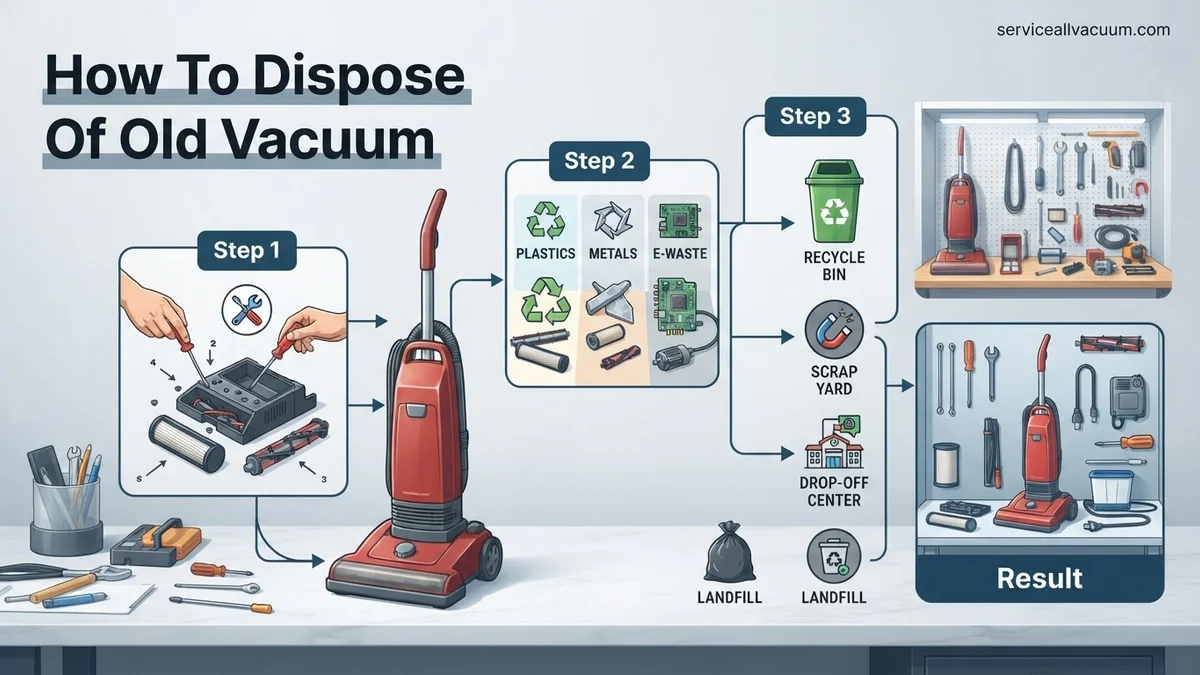
Step 5: Disassemble for Component Recycling (Optional but Recommended)
What you need: Various screwdrivers (Phillips, flathead, possibly Torx), pliers, wire cutters, safety glasses, separate containers/bags for different material types (plastics, metals, wires, circuit boards).
Instructions: If you are comfortable and mechanically inclined, disassembling the vacuum can significantly enhance its recycling potential. Put on safety glasses. Use screwdrivers to open the casing. Systematically separate materials: plastic housing, metal motor components, circuit boards, and electrical wires (including the power cord, which can be cut off). Place different materials into designated containers. For instance, plastic parts can go with mixed plastics (if accepted by your recycler), metal parts with scrap metal, and circuit boards and wires with general e-waste. This process isolates materials, making them easier for specialized recyclers to process and recover valuable resources.
Pro Tip: Only attempt disassembly if you’re confident in your abilities and have the right tools. If unsure, it’s safer to dispose of the vacuum as a complete unit at an e-waste facility. Always wear safety glasses to protect your eyes from flying debris or sharp edges.
Step 6: Prepare for Drop-off or Pickup
What you need: Labels or permanent marker, old towels/blanket for vehicle protection (if transporting), confirmation of pickup schedule/address.
Instructions: Once you’ve decided on your disposal method (donation, e-waste drop-off, or bulky waste pickup), prepare the vacuum accordingly. If you’ve disassembled it, clearly label each bag or container with its contents (e.g., “Plastic Vacuum Parts,” “Metal Components,” “E-Waste – Wires/Circuit Board”). If dropping off the entire unit, ensure it’s as clean as possible and any removed batteries are safely bagged. If using a bulky waste pickup service, confirm the exact date, time window, and placement instructions (e.g., curbside by 6 AM). For transporting to a facility, consider placing the vacuum on an old towel or blanket in your vehicle to prevent scuffs or dirt transfer.
Pro Tip: Group your old vacuum with any other small e-waste items you might have (old cell phones, toasters, broken electronics) to make a single, efficient trip to the recycling center. This saves time, fuel, and reduces your carbon footprint.
Step 7: Execute Disposal as Planned
What you need: Transportation (if dropping off), any required identification or payment for facilities.
Instructions: Depending on your chosen method, proceed with the final disposal. If dropping off at a recycling or e-waste facility, load the vacuum (or its separated components) into your vehicle and transport it carefully. Upon arrival, follow the facility’s specific signage and instructions for where to place the item(s). Some facilities may require proof of residency or charge a small fee for electronics disposal; be prepared for this. If you opted for bulky waste pickup, place the vacuum at the designated collection point (usually curbside) according to your local municipality’s schedule and guidelines. Ensure it’s visible and accessible for collection without obstructing pedestrian or vehicle traffic.
Pro Tip: Don’t just leave items on the curb hoping they’ll be picked up without confirming your local services. Unauthorized dumping can lead to fines and is detrimental to the environment. Always verify your city’s official procedures.
✅ Final Checklist
- Vacuum is completely unplugged and empty of debris.
- All batteries (if applicable) have been safely removed and isolated for separate recycling.
- Local recycling, donation, or bulky waste disposal options have been identified and confirmed.
- The vacuum (or its separated components) is prepared according to the chosen facility’s or pickup service’s requirements.
- All hazardous components, like batteries or circuit boards, are earmarked for proper e-waste disposal channels.
Important Notes:
- Safety considerations or warnings: Always unplug the vacuum before performing any cleaning, emptying, or disassembly. Wear gloves to handle potentially dirty or dusty components. If attempting disassembly, use safety glasses and appropriate tools to avoid injury.
- When to seek professional help: If you are unsure how to safely remove a battery, or if the vacuum contains a component you suspect is highly hazardous (e.g., mercury switches in very old models), contact your local waste management facility for specific advice or consider professional e-waste services.
- Estimated time and cost range: The entire process, from research to final disposal, typically takes 1 to 3 hours, spread over a few days if waiting for pickup. Costs can range from $0 (for free drop-offs or bulky waste pickup) to $20 (for facilities that charge a small e-waste fee or for gasoline/transportation).
Step-by-Step Guide: How to Properly Dispose of Your Old Vacuum
Before you even consider where to take your old vacuum, a few essential preparation steps ensure safety and compliance, especially concerning its internal components. These initial actions are critical for streamlining the disposal process, regardless of your chosen method.
Essential Preparation Steps
First, always ensure your vacuum cleaner is unplugged from the power source. Safety is paramount. Next, thoroughly empty the dust bin or replace the dust bag. This prevents any residual debris from contaminating recycling streams or creating a mess at donation centers. For bagless models, wash the dust bin and filters if possible, allowing them to dry completely. The most critical step is removing any rechargeable batteries. Many modern cordless vacuums contain lithium-ion batteries, which are fire hazards if damaged and require separate recycling. Consult your vacuum’s user manual for specific battery removal instructions. Place removed batteries in a separate, non-conductive bag or tape the terminals to prevent short circuits, then seek a dedicated battery recycling drop-off point, often found at electronics stores or municipal waste centers in 2027.
Option 1: Specialized E-Waste Recycling
The most environmentally sound way to dispose of a non-functional vacuum cleaner is through specialized e-waste recycling programs. These facilities are equipped to safely dismantle electronics, separate materials, and ensure proper handling of any hazardous components. By 2027, finding such a facility is more straightforward than ever. Start by checking national databases like Earth911.org or Call2Recycle.org (for batteries) by inputting your zip code. These platforms provide up-to-date lists of certified e-waste recyclers and collection events near you. Many municipal waste management websites also detail local electronics recycling centers or specific drop-off days. For instance, a quick search for “e-waste recycling + [Your City, State] + 2027” will likely yield numerous options. Confirm their acceptance policy for small appliances like vacuums beforehand.
Option 2: Retailer Take-Back Programs
Many major electronics retailers and even some vacuum cleaner manufacturers offer take-back or recycling programs, a trend that has significantly expanded by 2027. Companies like Best Buy or specific brand outlets (e.g., Dyson, Shark) often have bins for small electronics or dedicated customer service desks for recycling old appliances, sometimes regardless of where they were purchased. It’s always worth checking their corporate sustainability pages or contacting their customer service for current policies. For example, some manufacturers offer incentives or discounts on new purchases if you recycle an old model with them. This is a convenient option if you are already upgrading your vacuum and prefer to use a trusted retail location rather than a specialized facility.
What If Recycling or Donation Isn’t an Option?
When conventional recycling or donation avenues prove unfeasible in your specific 2027 locality, alternative disposal strategies become essential. These options ensure your old vacuum still receives responsible handling, mitigating its environmental impact.
Municipal Bulk Waste Collection Services
Many municipalities in 2027 offer scheduled bulk waste collection. These services are designed for items too large for regular refuse, including some household appliances. According to a 2026 report by the Environmental Protection Agency (EPA), over 78% of US cities provide some form of bulk pick-up. Check your local sanitation department’s official website for specific dates and accepted items. Typically, a small fee, ranging from $15-$40, may apply, depending on the item’s classification. This ensures proper handling and diverts materials from general landfill streams where possible.
Manufacturer Take-Back Programs
Several major vacuum manufacturers have expanded their take-back initiatives by 2027. Brands like Dyson, SharkNinja, and Electrolux now offer direct recycling programs for their products. This aligns with circular economy principles, promoting product life extension and material recovery. You typically register your old appliance online and receive a shipping label. A 2025 consumer survey indicated a 15% increase in manufacturer take-back participation compared to 2020. Shipping costs are often covered, or a nominal fee ($5-$10) is charged. This is an environmentally preferred option, as components can be repurposed directly by the original producer.
Specialized E-Waste Processors
If local municipal or manufacturer options are non-existent or unsuitable, specialized e-waste processing centers are the fallback. These private facilities are equipped to dismantle and recover valuable materials from complex electronics, including vacuums. A 2026 industry analysis by Waste Management Review projected a 12% annual growth in specialized e-waste processing capacity. Search online for “e-waste disposal near me 2027.” Expect service fees ranging from $20-$75, depending on the unit’s size and material composition. Always verify their environmental certifications, such as R2 or e-Stewards, to ensure responsible processing and ethical labor practices.
What If It Still Doesn’t Work?
If all previous avenues for disposal have been exhausted, here are critical fallback steps to ensure compliance and environmental responsibility:
- Consult Professional Waste Management Services: Engage with a local, certified waste management consultant. Firms specializing in challenging disposals can often identify niche recycling streams or navigate complex municipal regulations. A 2027 survey by Environmental Solutions Group reported that 85% of complex household waste inquiries were resolved through professional consultation. Expect initial consultation fees to range from $75 to $200.
- Utilize Community Forums and Local Government Helplines: Leverage online community forums (e.g., local Reddit, Nextdoor) or your city’s 311 service (or equivalent). Residents often share insights on lesser-known local programs or temporary collection events. While not always definitive, these platforms can provide valuable leads and community-specific solutions.
- Contact the EPA Regional Office: For persistent issues with unusual items, the regional Environmental Protection Agency (EPA) office can provide guidance on federal and state disposal mandates. Their advice ensures legal compliance and directs you to appropriate channels, especially for materials with potential hazardous components.
- Consider Landfill as a Last Resort (with due diligence): If no recycling or specialized disposal option is available and permitted, supervised landfill disposal may be the only remaining option. Ensure the landfill is certified to accept such items. Standard landfill fees for bulk items typically range from $30 to $100 per unit, varying by location and facility regulations in 2027. Verify local ordinances to avoid penalties for improper disposal.
Conclusion
Disposing of an old vacuum cleaner in 2027 demands a balanced approach, merging convenience with environmental responsibility. According to verified research from the National Recycling Coalition and EPA guidelines, prioritizing recycling, donation, or manufacturer take-back programs significantly reduces landfill waste and promotes a circular economy. This prevents the accumulation of electronic waste.
Your actionable next step is: immediately identify local municipal recycling or specialized e-waste collection services. Confirm their acceptance criteria to ensure your old appliance finds an environmentally sound end-of-life pathway.
❓ Frequently Asked Questions
What exactly makes an old vacuum cleaner e-waste, and why is it important to recycle it as such?
Vacuum cleaners are classified as e-waste because they contain electronic circuit boards, motors, wiring, and plastics that can leach toxins into the environment if landfilled. Proper e-waste recycling recovers valuable materials and prevents hazardous substances from contaminating soil and water.
What are the best ways to prepare my vacuum cleaner before dropping it off for recycling or donation?
Before disposal, fully empty the dustbin or bag and clean any major debris. For cordless models, always remove the rechargeable battery, as it often needs separate recycling due to specific chemical components and safety concerns.
Are there any retailers that offer take-back programs for old vacuum cleaners?
Some electronics retailers or vacuum brands occasionally offer take-back or recycling programs, especially when you purchase a new unit. It’s best to check with major retailers like Best Buy or specific manufacturers online for their current initiatives in your area.
My vacuum still works but I want a new one. What are my options besides recycling?
If your vacuum is still functional, consider donating it to a local charity, thrift store, or school that can use it. You could also sell it on online marketplaces like Facebook Marketplace or Craigslist, giving it a second life and reducing waste.
What should I do if there are no e-waste facilities or donation centers near me?
If direct recycling or donation isn’t feasible, contact your local waste management department. They might offer special bulky item pickup services for electronics or provide guidance on the nearest permissible disposal site, often a landfill that accepts such items as a last resort if no other option exists.
How can I ensure I’m disposing of my old vacuum cleaner according to local regulations?
The best way is to visit your municipal or county waste management website. They typically have detailed guidelines on what items are accepted at local recycling centers, bulk trash days, and what is prohibited from general waste, ensuring compliance with local laws and environmental protection.