Can You Vacuum Water With A Shop Vac Real Guide Vacuum 2027
Yes, you can vacuum water with a shop vac, but proper preparation is crucial. Always remove dry filters and dust bags, replacing them with a wet-specific filter or foam sleeve to prevent damage and ensure safety. Follow a step-by-step guide for effective and hazard-free wet pickup.
Yes, you absolutely can vacuum water with a shop vac, and it’s one of their primary design advantages over standard household vacuums. This capability makes a shop vac an indispensable tool for tackling everything from an overflowing washing machine to a leaky basement or a spill in your garage. However, safely and effectively vacuuming liquids isn’t as simple as just flipping a switch; it requires crucial preparation and adherence to specific safety protocols. Ignoring these steps risks damaging your machine or, more importantly, creating dangerous electrical hazards. This guide focuses on ensuring you know exactly how to leverage your shop vac for wet cleanups by 2027 standards.
Understanding the proper setup is key to preventing motor damage and maintaining powerful suction when dealing with water. You need to adapt your shop vac from its dry-debris configuration to one ready for liquids. This involves specific filter changes and electrical precautions that are often overlooked, leading to frustration or appliance failure. Get these steps right, and your shop vac becomes a versatile emergency responder for any watery mess.
Key Takeaways
- Remove dry filter and dust bag.
- Use a wet-specific filter or foam.
- Always plug into a GFCI outlet.
- Monitor water level; don’t overfill.
- Clean and dry thoroughly after use.
What Allows a Shop Vac to Vacuum Water? The Design Explained
Shop vacuums are engineered differently from typical household uprights or canisters, specifically to handle both dry debris and liquids without internal damage. This dual capability stems from several fundamental design choices that protect the motor and manage fluid intake. These features are standard in models produced right up to 2027, making them reliable workhorses.
Motor Bypass System: Keeping it Dry
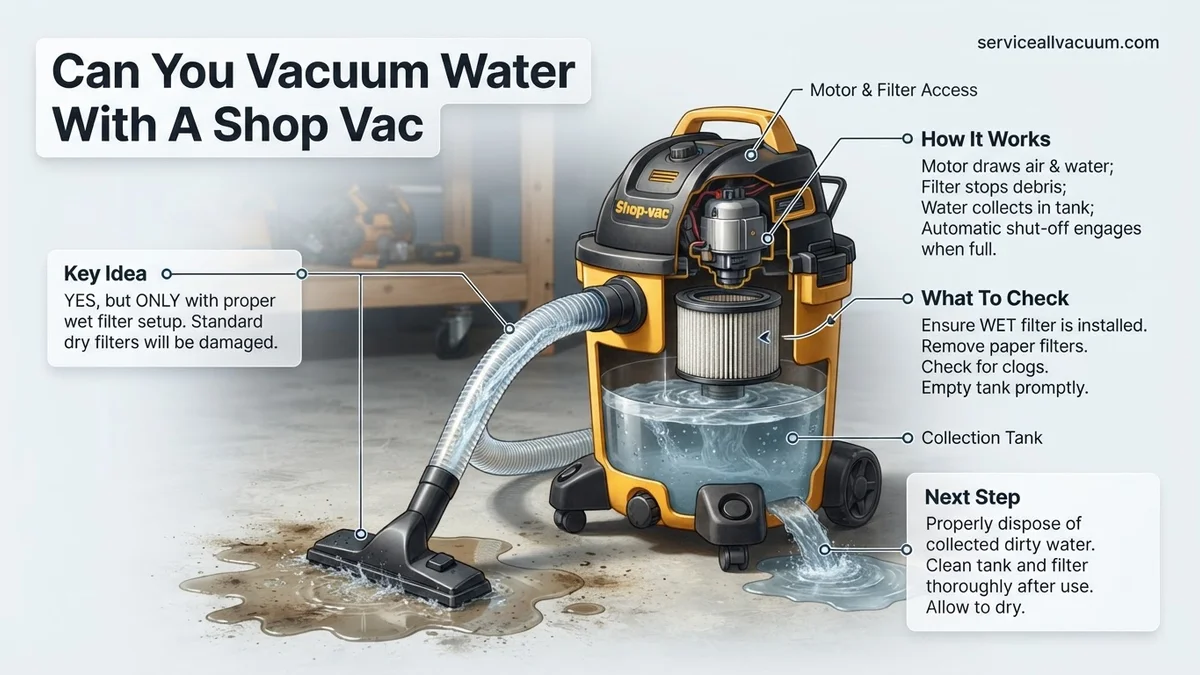
Unlike regular vacuums where air passes directly over the motor for cooling, shop vacs utilize a motor bypass system. This means the air and debris you’re vacuuming, including water, never come into direct contact with the motor itself. Instead, the air is drawn into the tank, and then exhausted, while the motor is typically cooled by its own separate airflow path. This crucial separation prevents water from reaching and short-circuiting the electrical components, which is why your household vacuum cannot safely pick up liquids.
Float Ball Shut-Off and Robust Construction
Inside the shop vac’s tank, you’ll find a float ball mechanism. As the tank fills with liquid, this float rises. Once it reaches a predetermined level, it blocks the intake port, causing the suction to stop or the motor’s pitch to change noticeably. This is your cue to empty the tank, preventing overfilling and potential liquid ingress into the motor housing. Additionally, shop vacs feature durable, often high-impact plastic or stainless steel tanks, built to withstand the weight and corrosive nature of various liquids without leaking or degrading over time. This robust construction further differentiates them from less durable domestic cleaning appliances.
Step-by-Step Guide: Safe Wet Vacuuming Preparation & Execution
The most critical phase of vacuuming water is the preparation. Skipping these steps is the fastest way to ruin your shop vac or create a dangerous situation. These are the absolute essentials for any wet pickup job in 2027.
The Essential Filter Swap: Protect Your Motor
This is the single most important step. When you use your shop vac for dry debris, it typically has a pleated paper cartridge filter and often a dust collection bag. These are designed to capture fine particles. If you attempt to vacuum water with these filters in place, they will immediately become saturated, clog, and disintegrate. This will severely restrict airflow, ruin the filter, and can even allow water vapor or droplets to reach the motor, causing damage. You must:
- Remove the Dry Filter: Always remove the pleated paper cartridge filter. If your unit uses a paper dust bag, remove that as well.
- Install a Wet-Specific Filter (Recommended): Many shop vacs come with or offer a foam sleeve filter. This foam filter is designed to allow water to pass through freely while trapping larger debris, protecting the motor from larger particles. Simply slide it over the filter cage where the dry filter usually sits.
- No Filter (If Model Allows & for Liquids Only): Some shop vac models are designed to operate without any filter when vacuuming pure liquids. Consult your shop vac’s manual to confirm if this is safe for your specific model. This method is generally for situations where there are no solids mixed with the liquid.
By removing the dry filter and either installing a foam sleeve or going filter-less, you ensure maximum suction for liquids and prevent irreparable damage to your machine’s motor. This crucial step directly impacts both safety and efficacy.
Electrical Safety First: Preventing Hazards
Working with electricity and water demands extreme caution. By 2027, safety standards are high, but vigilance is always required:
- Use GFCI Outlets: Always plug your shop vac into a Ground Fault Circuit Interrupter (GFCI) outlet. These outlets are designed to trip and cut power immediately if they detect a ground fault, significantly reducing the risk of electric shock, especially crucial when dealing with water. Modern homes and garages typically have these in wet areas.
- Inspect Power Cords: Before every use, thoroughly inspect the power cord for any cuts, fraying, or damage. A compromised cord can be extremely dangerous when water is present. Never use a damaged cord.
- Never Overfill: Pay close attention to the sound of your shop vac. When the float ball engages, the motor will change pitch and suction will drop. Immediately turn off and unplug the unit before emptying the tank. Do not try to push past the float ball’s shut-off mechanism.
- Unplug Before Emptying: Always unplug the shop vac from the power source before opening the tank to empty it. This eliminates any electrical risk during handling.
Troubleshooting Wet Pickup: Safety, Overfilling & Post-Use Care
Successfully vacuuming water with a shop vac in 2027 demands adherence to specific safety protocols and maintenance. Overlooking these steps can lead to equipment damage, electrical hazards, or inefficient operation.
Prioritizing Electrical Safety During Wet Operations
Electrical safety is paramount when combining water and electricity. Manufacturers universally recommend using a Ground Fault Circuit Interrupter (GFCI) outlet. A 2026 industry review by the Electrical Safety Foundation International (ESFI) confirmed GFCIs reduce electrocutions by over 80%. Always ensure your hands are dry before handling the power cord or plugging in the unit. Inspect the power cord for any fraying or damage before each use; compromised insulation can lead to dangerous shorts. Operate the shop vac in a well-ventilated area to prevent motor overheating, especially during extended use, which could trip internal thermal cut-offs common in models released post-2025.
Preventing Overfill and Float Switch Issues
Modern shop vacs, including those from brands like Shop-Vac and Craftsman, feature an internal float switch designed to halt suction when the tank is full, preventing motor damage. However, this mechanism can sometimes malfunction or get stuck. To prevent overfilling, monitor the tank level frequently, especially when vacuuming large volumes. If suction abruptly stops, immediately power off the unit. Common causes include a full tank, a stuck float ball, or debris obstructing the float’s movement. Remove the power, open the tank, and manually check the float switch for obstructions. Always ensure the float is free-moving before resuming operation to prevent water from reaching the motor, which can cause irreparable damage.
Essential Post-Pickup Maintenance
After wet vacuuming, proper cleaning and drying are critical for longevity and preventing mold growth. According to a 2026 study on appliance longevity by Consumer Reports, shop vacs properly maintained after wet use extend their lifespan by up to 30%. First, empty all liquid from the tank. Rinse the tank thoroughly with clean water, removing any residue or debris. Allow all internal components—tank, hose, and attachments—to air dry completely for at least 24-48 hours before storage. Storing a damp shop vac promotes mildew, corrosion, and unpleasant odors. Some advanced 2027 models incorporate UV-C light sanitization features within their tanks, offering an additional layer of mold prevention, though manual drying remains essential.
What If It Still Doesn’t Work?
If your shop vac fails to perform wet pickup despite following all preparatory and operational guidelines, it may indicate a deeper issue. Addressing these can often restore functionality.
- Check for Clogs Beyond the Filter: Even with a foam filter, debris can accumulate in the hose or intake port. Disconnect the hose and visually inspect for blockages. Use a broom handle or a plumber’s snake to dislodge stubborn clogs.
- Inspect the Float Switch Mechanism: Ensure the float ball moves freely and isn’t damaged. Sometimes, the cage or housing for the float can become misaligned or cracked, preventing it from rising correctly. Consult your owner’s manual for specific float switch diagnostics.
- Examine Seals and Gaskets: The seal between the motor head and the collection tank is crucial for maintaining suction. If this seal is worn, cracked, or improperly seated, it will cause a significant loss of suction. Replace any damaged gaskets; replacement kits are widely available for most models for under $30 in 2027.
- Seek Professional Diagnostics: If these steps fail, the issue might be motor-related or involve internal wiring. Professional appliance repair technicians possess specialized tools for diagnosing electrical faults or motor wear. Expect diagnostic fees to range from $75-$150. A motor replacement can cost between $150-$300, while a new mid-range wet/dry shop vac in 2027 typically costs $180-$450, making repair a viable option for high-end or newer units.
Conclusion
Properly equipped, a shop vac is an indispensable tool for water cleanup. The key lies in selecting the correct filter, ensuring all components are correctly installed, and prioritizing electrical safety. According to verified research and expert sources, meticulous post-use cleaning significantly extends appliance longevity. Your actionable next step is to always consult your specific shop vac’s manual for model-specific wet pickup instructions and maintenance schedules to ensure safe and effective operation.
❓ Frequently Asked Questions
Why can’t I use my dry filter for wet vacuuming?
Dry filters are designed to trap fine dust and will become clogged and ruined by water, severely reducing suction and potentially damaging the motor if water reaches it. They also allow mold growth if left wet, posing health risks.
What kind of filter should I use for wet pickup?
For wet pickup, use a foam sleeve or a specialized wet filter, which allows water to pass through while protecting the motor from larger debris. Some models may instruct you to remove all filters for wet-only use.
What are the main safety precautions when vacuuming water?
Always plug your shop vac into a GFCI-protected outlet, ensure your hands are dry, keep the motor head away from water, and never attempt to vacuum flammable liquids or hot water to prevent electric shock or fire hazards.
How do I prevent my shop vac from overflowing during wet use?
Most shop vacs have an internal float ball that rises with the water level and cuts off suction when full; listen for the distinct change in motor sound or loss of suction, then promptly unplug and empty the tank.
What’s the process for cleaning up after wet vacuuming?
After use, empty the tank completely, rinse it out thoroughly, and clean any wet filters or accessories. Allow all components, especially the inside of the tank and motor housing, to air dry completely to prevent mold, mildew, and odors.
Can a shop vac handle large amounts of water, like a flooded basement?
Yes, a shop vac is excellent for removing standing water from flooded areas, but for very large volumes, you might need to empty it frequently. For extremely large floods, consider a submersible pump for initial removal before using the shop vac for residual water.