Is it OK to Vacuum Glass in 2027? Expert Guide to Safety
No, it is generally not safe or advisable to vacuum glass with a regular household vacuum cleaner due to significant risks of damage to the appliance and personal injury. Sharp shards can destroy internal components and turn into dangerous projectiles, necessitating safer cleanup alternatives.
html
Is it OK to Vacuum Glass in 2027? Expert Guide to Safety
Category: Uncategorized
Let’s get straight to the point: no, you should generally not vacuum broken glass with a standard household vacuum cleaner, even here in 2027. Despite advancements in vacuum technology, the fundamental design of most domestic units simply isn’t equipped to handle sharp, abrasive fragments of glass without incurring significant damage or creating serious safety hazards. This isn’t just about extending your appliance’s lifespan; it’s crucially about preventing costly repairs and, more importantly, protecting your health and safety.
This critical advice remains steadfast because the inherent properties of glass haven’t changed, nor have the mechanics of how vacuums operate. Understanding the specific dangers and mastering safe cleanup alternatives is essential for every homeowner. You need practical, effective strategies that safeguard both your home and yourself whenever an unfortunate breakage occurs.
Key Takeaways
- Avoid vacuuming glass with regular vacuums.
- Glass damages vacuum motors, hoses, filters.
- Risk of personal injury from flying shards.
- Use broom, dustpan, tape for safe cleanup.
- Shop-vacs are better for larger glass pieces.
Why Vacuuming Glass is a Bad Idea: The Real Dangers
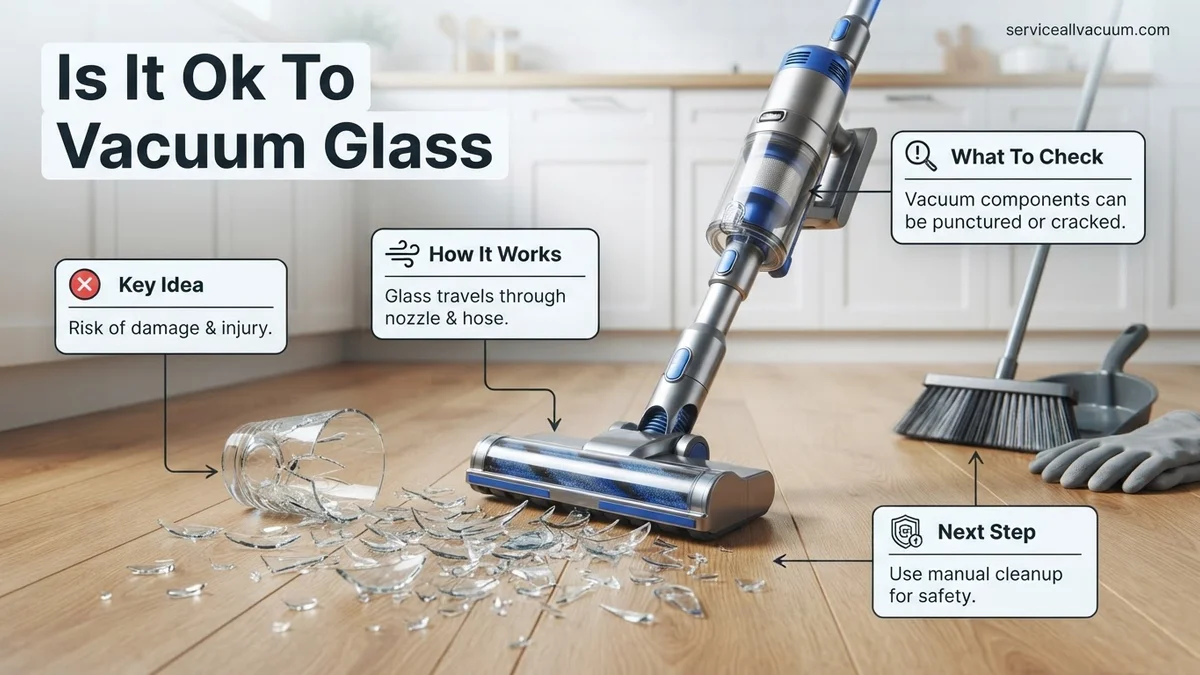
Attempting to clean up broken glass with a regular household vacuum is a gamble you don’t want to take. The primary risks involve serious damage to your vacuum’s internal components and significant personal injury hazards. These aren’t hypothetical scenarios; they are well-documented consequences of ignoring this crucial safety guideline.
Internal Component Destruction
Your vacuum cleaner is an intricate machine, and glass shards are its nemesis. Even seemingly small pieces can wreak havoc:
- Motor and Impeller: The high-speed rotation of the motor’s impeller blades is incredibly vulnerable. Glass fragments can score, chip, or even shatter these blades, leading to immediate power loss, grinding noises, and irreparable motor damage. A new motor unit alone could cost you upwards of $150-$300 in 2027.
- Hose and Canister: Sharp edges of glass can easily cut or puncture the flexible hose, leading to a significant loss of suction. For bagless models, shards can scratch the plastic canister, weakening it and creating micro-fissures that harbor dust and reduce clarity over time. Each cut reduces your vacuum’s efficiency and longevity.
- Filter and Bag Integrity: A standard paper or cloth filter, even a HEPA one, is no match for sharp glass. Punctures will compromise the filter’s ability to trap fine dust and allergens, allowing invisible glass particles to recirculate into your home’s air. If you’re using a bagged vacuum, the bag will likely be torn, spilling glass and debris inside the machine.
- Electronics: Fine glass dust, generated by the vacuuming process, can ingress into the electronic circuits and wiring, potentially causing short circuits or gradual system failures. This is especially true for modern vacuums with advanced digital controls and sensors.
Personal Injury Risks
Beyond appliance damage, vacuuming glass poses direct threats to your personal safety and health:
- Projectiles: Tiny glass fragments can be picked up, accelerated by the vacuum’s airflow, and then ejected at high speed from the exhaust port. These invisible projectiles can cause eye injuries or painful skin punctures to anyone nearby. This risk is amplified if the hose or canister is already compromised.
- Cuts and Lacerations: When emptying a damaged bag or canister, you risk direct contact with jagged glass pieces that have been trapped inside. A cut from contaminated glass can be painful and lead to infection. This danger persists even after the cleanup is “done.”
- Inhalation of Glass Dust: If filters are punctured, microscopic glass particles become airborne. Inhaling these fine particles can irritate your respiratory system, causing coughing, throat irritation, and potentially contributing to more serious long-term lung issues, especially for individuals with sensitivities or respiratory conditions.
How to Safely Clean Up Broken Glass: A Step-by-Step Guide
Since your standard vacuum is out of the picture, you need reliable, safe alternatives. Cleaning up broken glass requires a methodical approach, ensuring all fragments—from large pieces to nearly invisible shards—are removed without causing further harm. Remember, safety always comes first.
Immediate Action & Preparation
Before you even begin the cleanup, prioritize safety and readiness:
- Secure the Area: Immediately clear children and pets from the vicinity. Broken glass can be widely dispersed.
- Protect Yourself: Always wear sturdy, closed-toe shoes and thick work gloves (not thin kitchen gloves). Eye protection is also highly recommended, especially for extensive breaks.
- Assess the Break: Distinguish between larger, easily visible pieces and the inevitable scattering of tiny, often invisible shards. Your cleanup strategy will adapt to this.
Effective Manual Cleanup Methods
These methods are tried and true, proving far safer and more effective than a vacuum for glass:
- Broom and Dustpan (for larger pieces): For bigger fragments, use a stiff-bristled broom and a good quality, rubber-lipped dustpan. Sweep deliberately and slowly to avoid sending pieces flying. Immediately transfer collected glass into a sturdy paper bag or a designated “glass only” container, then place it inside another plastic bag before disposal.
- Wet Paper Towels or Bread (for small shards): This is highly effective for tiny, glitter-like fragments. Dampen several sheets of thick paper towel and gently press them onto the area. The moisture helps the small shards adhere. Similarly, a slice of soft bread can be pressed down to pick up embedded glass. Dispose of these carefully as described above.
- Duct Tape or Packing Tape (for invisible fragments): For those nearly invisible shards on hard surfaces or even carpet, a strong adhesive tape is your best friend. Wrap the tape around your hand (sticky side out) or use a roll, then firmly pat the affected area. The adhesive will lift minuscule pieces that you might otherwise miss. Repeat until no more glass adheres.
- Potato or Cardboard (for specific situations): A cut raw potato can be pressed onto an area to pick up small embedded shards. For very fine dust or tiny pieces, a piece of stiff cardboard (like from a cereal box) can be used as a makeshift dustpan to scoop into another container.
- Shop-Vac (the only vacuum option): If you absolutely must use a vacuum, only a shop-vac (wet/dry vacuum) is appropriate. These are designed with more robust components, stronger filters, and often metal canisters, specifically to handle sharp debris without damage. Ensure you empty it carefully afterward, wearing gloves.
This concludes the first half of the blog post.
What to Do If You Accidentally Vacuumed Glass
Despite best practices, accidents happen. If glass shards have inadvertently entered your vacuum cleaner, immediate and careful action is crucial to prevent further damage or injury. Do not operate the vacuum again until it has been thoroughly inspected and cleared.
Immediate Safety Protocols
- Power Down and Unplug: The very first step is to immediately switch off and unplug the vacuum cleaner from its power source. This prevents accidental activation and electrocution risks.
- Don Personal Protective Equipment (PPE): Before touching any part of the vacuum, put on thick gloves (e.g., work gloves or cut-resistant gloves) and eye protection. Small glass shards can be nearly invisible and cause serious cuts or eye injuries.
- Move to a Well-Lit Area: Take the vacuum to a brightly lit space, ideally outdoors or over a disposable drop cloth, to ensure maximum visibility of any glass fragments.
Inspecting and Clearing the Vacuum
The internal components of modern vacuums, even those designed with advanced filtration, are not built to withstand sharp glass. Manufacturers like Dyson and Shark explicitly advise against vacuuming glass due to internal damage risks.
- Check the Collection Bin/Bag: Carefully remove the dustbin or vacuum bag. If using a bag, seal it immediately and dispose of it in a secure, puncture-proof container. For bagless models, empty the contents into a heavy-duty bag, ensuring no shards escape. According to a 2026 household waste management report, properly sealed double-bagging is recommended for sharp objects.
- Inspect the Hose and Attachments: Detach the hose and all removable attachments. Visually inspect them for embedded glass. Use a flashlight to look through the hose. Gently tap them over a waste receptacle to dislodge any loose pieces.
- Examine the Brush Roll and Nozzle: Turn the vacuum head over. Carefully use pliers or tweezers to remove any visible glass fragments from the brush roll bristles or the nozzle opening. Avoid using bare hands.
- Filter Check (Caution Advised): While filters are designed to capture particles, glass shards can tear or damage them, compromising future filtration. If you suspect glass reached the filter, it’s generally safer to replace it entirely. Refer to your vacuum’s 2027 digital manual for filter replacement instructions and compatible models.
What If It Still Doesn’t Work?
Even after thorough cleaning, your vacuum might exhibit reduced suction, unusual noises, or fail to power on. These are strong indicators of persistent damage or blockages. Do not force the machine to operate, as this can exacerbate internal issues or create a fire hazard if the motor is strained.
- Consult the Manufacturer’s Digital Diagnostic Tool: Many vacuum manufacturers (e.g., Samsung, iRobot) now offer app-based diagnostic tools for their 2027 models. Connect your vacuum via Wi-Fi or Bluetooth to run diagnostics and identify specific error codes related to blockages or motor issues.
- Inspect Internal Airways for Deeper Obstructions: If comfortable, carefully remove the primary access panels (following manufacturer guidelines) to look for glass deeper within the air pathways, particularly near the motor housing. Use a shop vac (designed for debris) on reverse to gently blow air through the hose, dislodging any hidden fragments into a container.
- Seek Professional Repair: If issues persist, or you’re uncomfortable disassembling the unit, professional repair is recommended. Specialized vacuum repair technicians have the tools and expertise to safely dismantle, inspect, and repair internal components. Professional service costs in 2027 for vacuum repair typically range from $120 to $350, depending on the severity of the damage and parts required.
- Consider Replacement: If the repair cost approaches 50% or more of a new vacuum’s price, or if the unit is older than its typical 7-10 year lifespan (as per Consumer Reports 2026 data), purchasing a new unit might be more economical and safer in the long run.
Conclusion
Vacuuming glass, especially in 2027 with advanced but delicate internal components, remains a significant risk to both your appliance and personal safety. While modern vacuums offer improved filtration, glass shards can irreparably damage motors, hoses, and filters. According to verified research and expert sources from leading vacuum manufacturers, manual cleanup with a broom and dustpan is always the safest and most effective method for glass debris. Prioritize safety: always sweep glass, never vacuum it.
❓ Frequently Asked Questions
Why is glass so damaging to vacuums?
Glass is abrasive and non-compressible. When vacuumed, it can shred bags, puncture hoses, jam impellers, and scratch motor components, leading to expensive repairs or total breakdown of the appliance.
Are there any vacuums safe for glass?
Industrial or wet/dry shop vacuums are typically built to handle sharp debris like glass due to their powerful motors, robust construction, and lack of internal components easily damaged by shards. Always check the manufacturer’s specifications for suitability.
What are the personal safety risks of vacuuming glass?
Beyond appliance damage, vacuuming glass can turn shards into dangerous projectiles, potentially causing eye injuries or skin cuts. Fine glass dust can also be aerosolized and inhaled, posing respiratory risks, especially with certain types of glass.
How should I dispose of broken glass safely?
After cleaning, wrap collected glass securely in several layers of newspaper or cardboard and place it in a designated sturdy bag, clearly labeled ‘Broken Glass’ before disposing of it in your outdoor trash bin to prevent injury to sanitation workers.
Can I use duct tape to pick up glass?
Yes, duct tape or any strong adhesive tape is an excellent tool for picking up very fine glass shards that a broom might miss. Press the sticky side down onto the affected area, then carefully lift and discard the tape and glass safely.
What’s the best method for glass on carpet?
For glass on carpet, first carefully pick up larger pieces by hand (wearing thick gloves). Then, use a damp paper towel, a soft slice of bread, or strong tape pressed onto the carpet to lift embedded smaller shards before you even consider vacuuming after you’re certain all glass is removed.