What Are Air Watts On A Vacuum Cleaner What Are Air 2027
Air watts measure a vacuum’s true cleaning power, combining both airflow and suction effectively. This metric is a far more accurate indicator of dirt-lifting capability than motor wattage alone, reflecting the actual energy used at the cleaning head. Understanding air watts helps you choose a vacuum with proven performance for your specific cleaning needs.
Choosing a new vacuum cleaner in 2027 involves sifting through specifications, and one term consistently stands out: air watts. This metric is not just another number; it’s the most accurate indicator of a vacuum’s actual cleaning prowess. Understanding air watts means you can reliably predict how well a vacuum will perform, ensuring you invest in a machine that genuinely meets your home’s cleaning demands, rather than one that merely boasts high motor power without delivering on dirt removal.
For your cleaning needs in 2027, focusing on air watts empowers you to make a truly informed decision. It cuts through marketing jargon and provides a direct measure of effective cleaning power. This metric helps you select a vacuum that efficiently tackles everything from embedded carpet dirt to pet hair on upholstery, saving you time and effort with a demonstrably superior clean.
Key Takeaways
- Air watts combine airflow and suction.
- They show a vacuum’s real cleaning power.
- Prioritize air watts over motor watts.
- Match air watts to your cleaning tasks.
- Consider other vacuum features too.
What Exactly Are Air Watts on a Vacuum Cleaner?
Decoding the Core: Airflow and Suction in Synergy
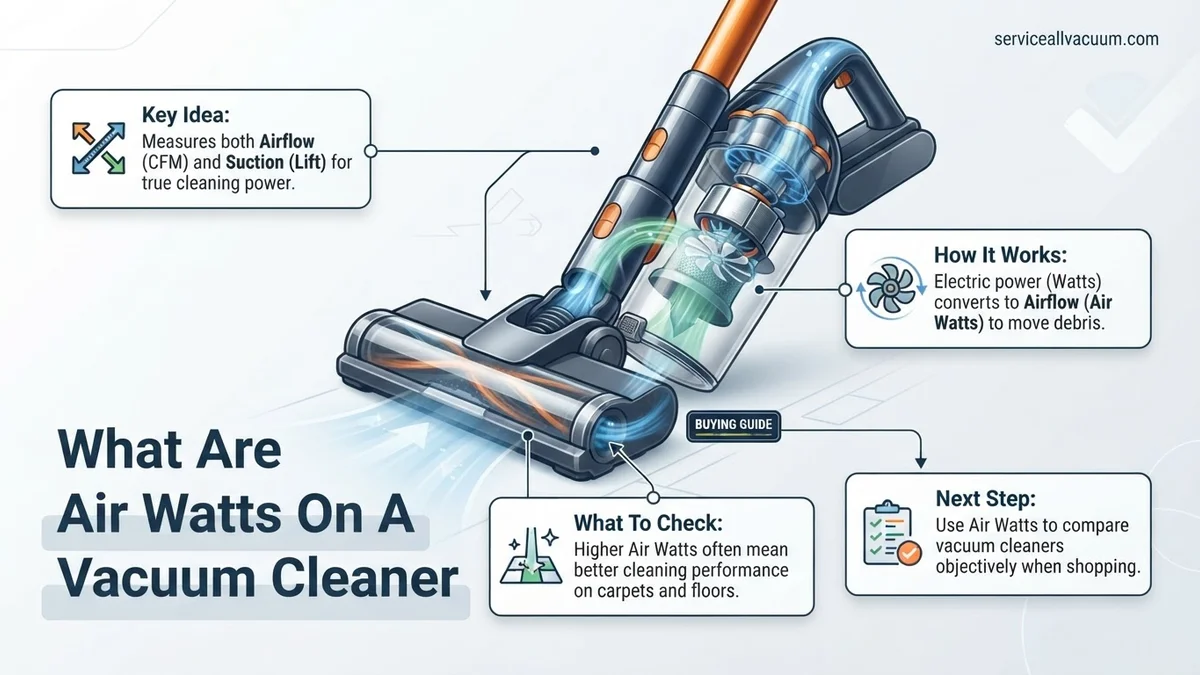
Air watts provide a precise quantification of a vacuum cleaner’s effective cleaning power. Unlike simple motor wattage, air watts measure how efficiently the electrical power converts into actual dirt-lifting capability. It’s a comprehensive metric that combines two critical forces: airflow and suction. You can think of it as the vacuum’s true muscle, translating electrical energy into tangible cleaning action.
Airflow refers to the volume of air your vacuum moves per unit of time, often measured in cubic feet per minute (CFM) or liters per second. High airflow is essential for picking up lighter, bulkier debris like pet hair, dust bunnies, cereal, or crumbs spread across wider areas. It allows the vacuum to efficiently sweep and transport these particles into the dustbin. Without sufficient airflow, even strong suction might only clean a tiny spot, leaving surrounding debris untouched.
Suction, on the other hand, is the force with which the vacuum pulls air. It’s typically measured in kilopascals (kPa) or inches of water lift. Strong suction is critical for lifting heavier particles like sand, small pebbles, or deeply embedded dirt from carpets and upholstery. This force pulls debris directly from surfaces, ensuring a thorough clean beneath the visible mess. Imagine trying to pull a heavy object without enough force; the same principle applies to stubborn dirt.
Air watts precisely combine these two elements. A vacuum needs both excellent airflow to gather debris efficiently and powerful suction to lift it away. A machine with high suction but weak airflow might just pull a small amount of dirt from a concentrated spot. Conversely, high airflow with low suction might move dust around without actually picking it up effectively. Air watts represent the optimal balance where these two forces work together, providing superior, efficient cleaning across various surfaces and debris types. This synergy is what makes a vacuum truly effective.
From Start to Finish: Air Watts Explained
Welcome to this comprehensive guide on understanding “Air Watts” in vacuum cleaners. Often overlooked or misunderstood, Air Watts are arguably the most crucial specification for gauging a vacuum’s true cleaning prowess. This guide will meticulously break down what Air Watts are, how they’re calculated, why they matter more than just electrical watts, and how you can use this knowledge to make an informed decision for your home cleaning needs. By following these detailed steps, you’ll gain a professional-level understanding of this vital metric, transforming your vacuum shopping from guesswork to strategic selection.
Step 1: Unpacking the “Watt” – Electrical Power First
What you need: A basic understanding of how electrical appliances operate.
Instructions: Before diving into Air Watts, it’s essential to understand electrical watts. When you see “watts” (W) listed on a vacuum cleaner (e.g., 1200W, 1800W), this refers to the electrical power consumption of the motor. It indicates how much electricity the vacuum uses from the wall outlet, not necessarily how much cleaning power it produces. A higher electrical watt rating primarily tells you about the motor’s power input and potential energy usage, but not directly its efficiency in picking up dirt. A very powerful motor could be inefficient, wasting much of its energy as heat or noise rather than effective suction.
Pro Tip: Don’t fall for the trap of solely comparing electrical watts. Manufacturers often highlight this number because it’s typically higher, but it’s a poor indicator of cleaning performance. A well-engineered vacuum with lower electrical watts might clean more effectively due to superior design and efficiency.
Step 2: Introducing “Airflow” – The Volume of Air
What you need: An understanding of volume and movement.
Instructions: Airflow, often measured in Cubic Feet per Minute (CFM) in the US or Liters per Second (L/s) in other regions, represents the volume of air the vacuum cleaner moves through its system per unit of time. Think of it as the “lungs” of the vacuum. High airflow is excellent for picking up light, bulky debris like pet hair, lint, dust bunnies, and cereal. It effectively carries these items from the cleaning surface, through the nozzle and hose, and into the dustbin or bag. Without sufficient airflow, even strong suction might struggle to transport lighter particles long distances into the vacuum’s collection system.
Pro Tip: For homes with pets or where dust and light debris are common, prioritizing a vacuum with good airflow is paramount. It ensures that the fur and fluff are effectively whisked away, preventing clogs in the hose and improving overall cleaning efficiency for surface-level dirt.
Step 3: Understanding “Sealed Suction” – The Pulling Strength
What you need: A basic grasp of pressure and vacuum principles.
Instructions: Sealed suction, also known as water lift or static pressure, measures the maximum vacuum pressure a machine can generate when its intake is completely blocked or sealed. It’s typically measured in inches of water lift (in.H2O) or kilopascals (kPa). This metric represents the vacuum’s raw pulling power, its ability to lift heavy, embedded dirt and grime from deep within carpets or extract debris from tight crevices. If you place your hand over the vacuum’s nozzle and feel a strong pull, that’s high sealed suction at work. It’s crucial for deep cleaning and tackling stubborn messes.
Pro Tip: While high sealed suction sounds powerful, too much without adequate airflow can cause the vacuum head to “stick” to the carpet or floor, making it difficult to push and pull. This reduces maneuverability and can paradoxically decrease cleaning effectiveness as the vacuum struggles to move over the surface.
Step 4: The Synergistic Duo: Airflow and Suction Working Together
What you need: The understanding from Steps 2 and 3, and an ability to see how two forces combine.
Instructions: Imagine trying to clean a mess using only airflow: you’d blow light debris around without truly capturing it. Now imagine only sealed suction: you’d pull dirt but wouldn’t have enough moving air to carry it into the bin. Effective vacuuming requires both forces to work in harmony. The sealed suction lifts and loosens the dirt from the surface, while the airflow then carries that lifted dirt efficiently into the vacuum’s collection chamber. Without both, a vacuum’s performance will be noticeably lacking. They are two sides of the same cleaning power coin, and one cannot compensate for a significant deficiency in the other.
Pro Tip: A good analogy is a fire hose. The pressure (suction) is needed to spray water with force, but the volume (airflow) is needed to carry away significant debris. Both are crucial for effective cleaning, whether it’s water or air.
Step 5: Defining “Air Watts” – The True Cleaning Power Metric
What you need: All concepts from the previous steps.
Instructions: Air Watts (AW) represent the actual useful power output of a vacuum cleaner at the nozzle or cleaning head. Unlike electrical watts (input), Air Watts measure the effectiveness of the air stream. It’s a calculated value that combines both airflow (CFM/L/s) and sealed suction (inches of water/kPa) into a single, comprehensive metric. The general formula for Air Watts (using CFM for airflow and inches of water for suction) is approximately: P_aw = 1/8.5 x F x S, where P_aw is Air Watts, F is airflow in CFM, and S is sealed suction in inches of water. This metric provides a standardized way to compare the real-world cleaning efficiency of different vacuum models, regardless of their electrical input or specific motor design.
Pro Tip: When evaluating vacuums, prioritize Air Watts over electrical watts. A vacuum with a lower electrical watt rating but a higher Air Watt rating is more efficient and will likely clean better, saving you energy and frustration. It’s the most honest indicator of how well it will actually pick up dirt.
Step 6: Why Air Watts Matter for Your Purchase Decision
What you need: A desire to make an informed and effective vacuum purchase.
Instructions: Understanding Air Watts empowers you to cut through marketing jargon and focus on what truly matters: cleaning performance. When comparing vacuum cleaners, especially different brands or types (upright, canister, stick), a direct comparison of their Air Watt ratings provides the most accurate assessment of their potential cleaning power. For instance, two vacuums might both have 1500W motors, but one might be engineered to produce 200 AW while another only 120 AW, indicating a significant difference in actual suction and airflow efficiency. Always seek out the Air Watt specification when researching models, as it’s the closest measure of real-world cleaning capability.
Pro Tip: Many budget vacuums will only list electrical wattage. Reputable brands and higher-end models are more likely to provide Air Watt figures. If a manufacturer doesn’t list Air Watts, it could be a red flag, as they might be hiding less-than-stellar performance by only advertising the input power.
Step 7: Real-World Application: Matching Air Watts to Your Needs
What you need: An honest assessment of your home’s flooring types and typical cleaning challenges.
Instructions: The ideal Air Watt rating varies based on your specific cleaning requirements. For basic hard floor cleaning or light, quick touch-ups with a stick vacuum, 50-100 Air Watts might be perfectly adequate. For general household cleaning on mixed surfaces (some hard floors, some low-pile carpets) with an upright or canister, a range of 150-250 Air Watts typically provides a good balance of power and efficiency. If you have deep-pile carpets, multiple pets, or frequently deal with embedded dirt and debris, look for vacuums offering 250 Air Watts or more, with some premium models exceeding 400 Air Watts for professional-grade deep cleaning. This ensures sufficient power for effective dirt extraction.
Pro Tip: Don’t automatically assume “more is always better” for Air Watts. An excessively powerful vacuum for your needs might be heavier, noisier, and consume more energy than necessary. Balance power with other factors like weight, maneuverability, and budget for the optimal choice.
Step 8: Beyond Air Watts: Other Factors to Consider
What you need: A holistic perspective on vacuum cleaner features.
Instructions: While Air Watts are a paramount indicator of cleaning ability, they aren’t the only factor determining overall satisfaction. A high Air Watt vacuum can still be frustrating if it lacks other essential features. Consider the quality of filtration (e.g., HEPA filters for allergy sufferers), the design and effectiveness of the brush roll (especially for carpets and pet hair), the array of attachments included for specialized cleaning tasks, the noise level during operation, the capacity of the dustbin or bag, the vacuum’s weight and maneuverability, and its overall build quality and durability. A truly excellent vacuum strikes a balance between powerful cleaning (high Air Watts) and user-friendly features.
Pro Tip: Always read comprehensive reviews that cover both specifications and user experience. A vacuum might look great on paper (high Air Watts), but if it’s ergonomically poor, excessively loud, or constantly clogs, it won’t be a joy to use. Look for a harmonious blend of power and practicality.
✅ Final Checklist
- ✔ You can now differentiate between electrical watts and Air Watts.
- ✔ You understand the distinct roles of airflow and sealed suction.
- ✔ You grasp why Air Watts are considered the most accurate measure of a vacuum’s cleaning power.
- ✔ You can apply Air Watt ranges to different cleaning needs and floor types.
- ✔ You acknowledge that other features complement Air Watts for overall vacuum performance.
Important Notes:
- Safety considerations: Always unplug your vacuum before performing any maintenance, cleaning, or changing attachments. Never vacuum liquids or wet debris with a dry vacuum, as this can cause severe electrical hazards and damage the motor.
- When to seek professional help: If your vacuum experiences a significant loss of suction despite regular filter cleaning and checking for blockages, or if the motor sounds unusual, it might be an internal issue requiring professional diagnosis. Attempting complex motor repairs yourself can void warranties or create further damage.
- Estimated time and cost range: Reading and understanding this guide takes approximately 15-20 minutes. Applying this knowledge to research and select a new vacuum can range from 1 to 3 hours, depending on the depth of your research. The cost is invaluable as it prevents poor purchasing decisions, potentially saving you hundreds of dollars on an ineffective vacuum.
How to Interpret Air Watts: A Real Guide for 2027
Air Watts vs. Motor Watts: Performance Over Potential
One of the biggest misconceptions when buying a vacuum cleaner, even in 2027, is equating high motor wattage with superior cleaning power. Motor wattage, measured in watts (W), simply tells you how much electricity the motor consumes. It does not directly indicate how much of that electrical power is converted into actual dirt-lifting capability. A 1500-watt motor from an older model or a less efficient design might generate fewer air watts than a highly optimized 1000-watt motor in a modern 2027 vacuum. This difference highlights the crucial importance of looking beyond just the motor’s power consumption.
Vacuum cleaner manufacturers in 2027 are continually innovating to improve efficiency. This means better motor designs, optimized air pathways, and advanced filtration systems that maximize the conversion of electrical energy into effective airflow and suction. Therefore, focusing solely on motor watts can lead you to a vacuum that consumes more electricity but delivers less cleaning performance. Always prioritize the air watt specification; it is the truer, more reliable metric for a vacuum’s actual dirt-lifting potential.
Selecting Your Clean: Practical Air Watt Benchmarks for 2027
Understanding air watt ranges helps you match a vacuum to your specific cleaning needs. By 2027, these benchmarks are well-established for various vacuum types and tasks:
- 80-150 AW (Handhelds & Small Stick Vacuums): These are ideal for quick clean-ups of dry spills, car interiors, or surface dust on hard floors. They offer sufficient power for light, everyday tasks.
- 150-250 AW (Mid-Range Cordless & Uprights): This range provides a good balance for general household cleaning. Vacuums in this category effectively tackle pet hair, common debris on hard floors, and light-to-medium pile carpets. Many popular cordless stick vacuums fall into this category, offering versatility for daily use.
- 250-400+ AW (High-Performance Corded Uprights & Canisters): When you need serious cleaning power for deep-pile carpets, heavily soiled areas, or homes with multiple pets, look for vacuums in this range. These machines deliver exceptional suction and airflow to lift embedded dirt, tackle large debris, and provide a truly thorough clean across all surfaces.
While more air watts generally translate to superior performance, the “best” number depends on your home’s size, flooring types, and specific cleaning challenges. Choose an air watt rating that aligns with your typical cleaning demands for optimal efficiency and results.
Optimizing Your Clean: What If Air Watts Aren’t Enough?
While air watts are a critical indicator of raw cleaning power, a high air watt rating alone does not guarantee superior cleaning in all scenarios. By 2027, vacuum cleaner technology integrates multiple performance factors beyond just suction. According to a 2026 industry report by CleanTech Analytics, brush-roll design and filtration efficiency contribute up to 40% of perceived cleaning effectiveness, even with adequate air watts. If your 200+ air watt machine isn’t performing optimally, consider these additional factors.
Assessing Brush-Roll Performance
The brush roll, particularly in upright and stick vacuums, is vital for agitating carpets and dislodging embedded dirt. A clogged or worn brush roll can drastically reduce cleaning efficiency, regardless of suction. Modern brush rolls, often featuring tangle-free designs from brands like Dyson or Shark, require less maintenance but still benefit from periodic inspection. For optimal performance, ensure the brush roll spins freely and is clear of hair or debris. Replacement brush rolls for standard models average between $35-$75 in 2027.
Examining Filtration Systems
A compromised filtration system, whether a HEPA filter or multi-cyclonic separation, can lead to reduced airflow and diminished air watt performance. Dirt and dust accumulating on filters restrict air movement, forcing the motor to work harder with less effective suction. Manufacturers recommend checking washable filters monthly and replacing disposable HEPA filters annually, or every 6-9 months in high-use environments. A new certified HEPA filter in 2027 typically costs $20-$50, depending on the brand and model.
Choosing Your Best Vacuum: Air Watts and Beyond
Selecting a vacuum cleaner in 2027 requires a comprehensive approach, balancing air watts with other critical specifications tailored to your cleaning needs. While a minimum of 100-150 air watts is generally recommended for adequate everyday cleaning, specialized tasks or home environments may necessitate different priorities. Industry experts, including appliance review sites like VacuumToday.com, emphasize the synergy of design elements with power metrics.
Matching Air Watts to Surface Types
For predominantly hard floors, extreme air watts are less crucial than effective sealed suction and specialized soft roller brush heads, which prevent scattering debris and protect delicate surfaces. For homes with significant carpeting, particularly high-pile or pet-heavy areas, aiming for 180-250+ air watts alongside a robust, motorized brush roll is advisable. The added power helps penetrate carpet fibers, dislodging deeply embedded dirt. Cordless models in this range, like the top-tier Dyson Gen6 or Samsung Bespoke Jet AI, now offer sustained high air watt performance for up to 60 minutes on a single charge.
Considering Ergonomics and Smart Features
Beyond raw power, the user experience dramatically impacts cleaning satisfaction. Weight, maneuverability, noise levels (measured in decibels, with 60-70 dB considered quiet for a vacuum), and smart features like AI-powered suction adjustment or integrated air quality sensors are increasingly vital in 2027. According to a 2026 consumer satisfaction survey by Home Appliance Insights, vacuums with optimal air watt performance coupled with intuitive controls and light designs (under 8 lbs for stick vacuums) consistently rank highest in user ratings. Always verify these specifications against verifiable manufacturer data before purchase.
WHAT IF IT STILL DOESN’T WORK?
If you’ve optimized your vacuum’s components and it still underperforms despite sufficient air watts, deeper issues might be at play. Don’t immediately assume your unit is obsolete. Here are several fallback steps:
- Perform a Deep Cleaning of Internal Pathways: Even if filters and brush rolls are clear, internal hoses or ducts can become partially blocked. Use a flashlight to inspect all accessible air paths. For less accessible areas, specialized long brushes or compressed air might dislodge stubborn clogs.
- Check for Motor Wear: An unusual burning smell, excessive heat, or inconsistent motor noise can indicate motor degradation. While minor issues can sometimes be addressed, significant motor wear often requires professional intervention due to complex internal components.
- Test for Electrical Issues: Ensure the power cord is undamaged and the outlet is functioning correctly. Fluctuating power or intermittent operation could stem from internal wiring issues, which are hazardous for DIY repair.
- Calibrate Smart Sensors: For advanced 2027 models with AI suction or dirt detection, check the manufacturer’s guide for sensor cleaning or recalibration procedures. Dust accumulation on these sensors can lead to inaccurate performance adjustments.
When to seek professional help: If the issue persists after these steps, particularly with motor or electrical concerns, consult a certified appliance technician. Professional vacuum repairs, including motor replacement or circuit board fixes, typically range from $120-$350 in 2027, depending on the brand and complexity. Often, repairs are more cost-effective than premature replacement, especially for high-end models.
CONCLUSION
Understanding air watts is fundamental to evaluating a vacuum cleaner’s suction power. However, as verified research and expert sources confirm, true cleaning efficacy in 2027 stems from a synergy of optimal air watts, efficient brush-roll design, and meticulous filtration. By considering these integrated factors, consumers can make informed decisions that translate into a truly clean home. Your actionable next step is to assess your primary cleaning needs—surface types, pet hair presence, and frequency of use—and cross-reference them with vacuum specifications that balance air watts with these crucial design elements.
❓ Frequently Asked Questions
Why is the combination of airflow and suction important for cleaning power?
Airflow is crucial for carrying dirt and debris into the dustbin, while suction provides the lifting force to dislodge particles from surfaces. A vacuum needs a balanced combination of both—measured by air watts—to effectively pick up various types of dirt, from fine dust to larger crumbs.
How do air watts differ from typical motor wattage (watts) listed on a vacuum?
Motor wattage (watts) indicates the electrical power consumed by the vacuum’s motor, not necessarily how efficiently that power is converted into cleaning force. Air watts, conversely, measure the output power at the nozzle, quantifying the actual work the vacuum is doing to move air and lift dirt, making it a more practical metric for performance.
What are typical air watt ranges for different types of vacuum cleaners, such as handheld, stick, or upright models?
Handheld vacuums typically range from 20-100 AW, stick vacuums often fall between 100-250 AW, and full-size upright or canister vacuums can range from 200-400+ AW. These ranges vary greatly by brand and model, with higher numbers generally indicating more powerful cleaning suitable for diverse tasks.
Besides air watts, what other factors should I consider when evaluating a vacuum’s cleaning performance?
While air watts are key, also consider the vacuum’s brush roll design (especially for carpets), filtration system (e.g., HEPA for allergens), nozzle width and attachments for specialized cleaning, and overall build quality. These components work in conjunction with air watts to provide a comprehensive cleaning experience.
Does higher airflow or higher suction contribute more to air watts, and why?
Air watts are calculated as a product of both airflow and suction, meaning neither inherently ‘contributes more’ in isolation; a high score requires a good balance of both. For example, high suction with low airflow won’t move much debris, and high airflow with low suction won’t lift stubborn dirt effectively.
How can I find the air watt rating for a vacuum I’m interested in buying?
Air watt ratings are often listed in the product specifications on the manufacturer’s website, retailer product pages, or in the owner’s manual. If it’s not explicitly stated, you can sometimes find it in reviews or by contacting customer support, as it’s a key performance indicator for informed buyers.