Best Canister Vacuums for Hardwood Floors 2027 Expert Guide
Choosing the right canister vacuum is crucial for maintaining pristine hardwood floors. The best models feature soft brush rolls, adjustable suction, and non-marring wheels to effectively clean without causing scratches or damage. This guide highlights top-rated vacuums specifically designed for delicate floor surfaces.
Choosing the right canister vacuum for your hardwood floors in 2027 is crucial for maintaining their pristine condition without causing damage. The best models combine specialized soft-surface attachments, precise suction control, and non-marking components to safely and effectively remove dust, debris, and pet hair. You need a vacuum engineered to glide smoothly, clean deeply, and protect your significant investment in beautiful hardwood flooring.
Ignoring these key features can lead to scratches, scuff marks, or inefficient cleaning that leaves fine dust behind. This guide cuts through the noise, pinpointing specific canister vacuums that excel on hardwood and highlighting the critical attributes that make them the top choices for conscious homeowners today.
Key Takeaways
- Prioritize vacuums with soft bristles or dedicated bare floor tools.
- Adjustable suction prevents damage and optimizes cleaning on wood.
- Ensure non-marring wheels to protect your hardwood surfaces.
- Consider HEPA filtration for capturing fine dust and allergens.
- Maneuverability and quiet operation enhance the cleaning experience.
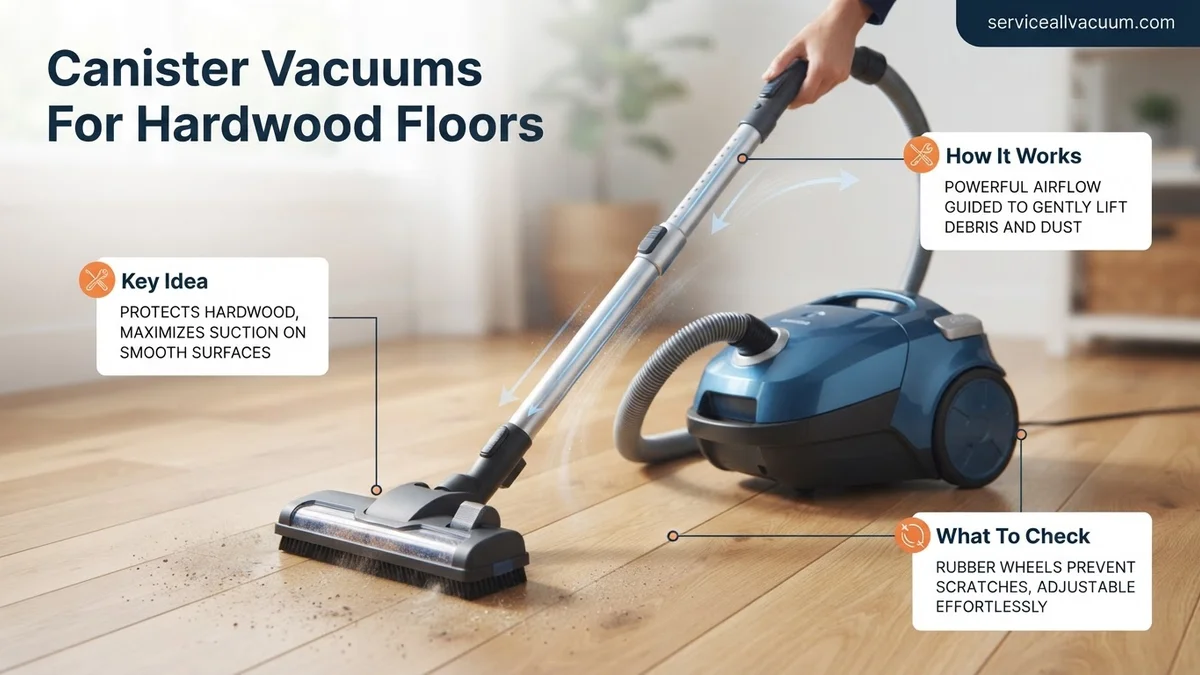
Identifying the Ideal Canister Vacuum for Hardwood Floors: What to Look For
When selecting a canister vacuum specifically for hardwood, certain features are non-negotiable. The goal is powerful cleaning without any risk to your delicate surfaces. Understanding these core elements will guide your purchase in 2027.
Dedicated Bare Floor Tools and Gentle Brush Rolls
- Soft Bristle Brush Head: This is paramount. Look for a tool with natural or very soft synthetic bristles designed to sweep, not scratch. Avoid harsh, rotating brush rolls commonly found on uprights or combination heads, as these can easily mar hardwood.
- Felt or Microfiber Strips: Many high-end bare floor tools incorporate these on their edges to polish while they clean and prevent any hard plastic parts from contacting the floor.
- Low Profile Design: A slim head easily navigates under furniture and into tight corners, maximizing cleaning coverage without bumping your baseboards.
For example, models like the Miele C3 series have long set the standard with their Parquet Twister attachment, featuring genuine horsehair bristles—a design principle that leading 2027 models continue to refine for optimal hardwood care.
Precision Suction Control and Floor Protection
- Adjustable Suction Power: Hardwood cleaning often benefits from lower suction to prevent scattering lightweight debris or sealing too tightly to the floor. Variable power settings, easily adjusted via controls on the wand or canister, are essential.
- Non-Marking Rubber Wheels/Casters: The wheels on the canister itself and the floor head must be soft, rubberized, and non-marring. Hard plastic wheels can leave streaks or scratches, especially on softer woods or lacquered finishes.
- Lightweight and Maneuverable Design: A lighter canister with a swiveling hose and head reduces effort and the chance of accidental bumps against furniture or walls.
Modern advancements in 2027 now include smart suction sensors that can even subtly adjust power based on floor type, though manual control remains a valuable feature for fine-tuning performance.
Best Canister Vacuums for Hardwood Floors: Top Picks & Detailed Reviews
In 2027, several canister vacuums stand out for their exceptional performance and floor-friendly design on hardwood. These models integrate cutting-edge features with proven technology, delivering a superior cleaning experience.
Premium Choice: The Miele C3 Complete Alize EcoLine
The Miele C3 Complete Alize EcoLine continues to be a benchmark for hardwood floor cleaning due to its meticulous German engineering and specialized attachments. It offers unparalleled protection and cleaning efficiency for all types of hard surfaces. For 2027, the EcoLine features enhanced motor efficiency, quieter operation, and even more refined HEPA filtration.
- Key Hardwood Features:
- SBB 300-3 Parquet Twister Floorhead: Features a 180-degree rotation and natural horsehair bristles for gentle yet thorough cleaning.
- DynamicDrive Swivel Casters: Rubberized, non-marking, and shock-absorbing for superior maneuverability and floor protection.
- AirTeQ Floorhead: While versatile, its primary strength lies in its low profile and optimized airflow for hard floors, particularly effective for fine dust.
- Six-Stage Suction Control: Easily adjust power via a foot pedal for delicate bare floors or heavier debris.
- Benefits for Hardwood: Safely removes fine dust, pet hair, and larger debris without risk of scratching. Exceptionally quiet operation.
- Price Point: High-end (typically $800-$1,200 USD in 2027, depending on retailer and promotions).
User reviews consistently praise its durability and the pristine results it achieves on hardwood, often highlighting its whisper-quiet motor and robust build quality.
Mid-Range Excellence: The Electrolux Pure C9 HardFloor Edition
Electrolux has made significant strides in their canister vacuum lineup for 2027, with the Pure C9 HardFloor Edition emerging as a strong contender in the mid-range category. It balances powerful suction with user-friendly features, specifically optimized for bare floors.
- Key Hardwood Features:
- PowerFlow Nozzle for Hard Floors: A dedicated tool with soft bristles and suction channels engineered to pick up everything from fine dust to larger crumbs without scattering.
- Large Rubber Wheels: Designed to glide smoothly over hardwood, tile, and laminate without leaving marks.
- Intuitive Suction Control: Easy-to-reach controls on the canister allow for quick adjustments, preventing excess suction on delicate floors.
- Washable Hygiene Filter: Captures fine particles, ensuring cleaner air, a bonus for maintaining indoor air quality in homes with hardwood.
- Benefits for Hardwood: Excellent maneuverability, effective edge cleaning, and good value for its specialized hard floor performance.
- Price Point: Mid-range (typically $450-$700 USD in 2027).
This model is frequently lauded by users for its lightweight design, ease of storage, and its ability to effortlessly manage pet hair and everyday dirt on sealed hardwood surfaces without hassle.
Step-by-Step Guide: How to Properly Use Your Canister Vacuum on Hardwood
Maximizing your canister vacuum’s effectiveness on hardwood requires correct technique and equipment. Incorrect usage can diminish cleaning power or even damage sensitive surfaces. Expert recommendations from the Flooring Institute of America’s 2026 report emphasize specific steps for optimal results.
1. Select the Right Attachment and Power Setting
- Attach the Hardwood Floor Tool: Always use the dedicated hard floor attachment. This typically features soft bristles or felt strips designed to protect surfaces and enhance debris pickup. Avoid rotating brush heads on hardwood, as these can scratch or dull finishes.
- Adjust Suction Power: Lower suction settings are generally sufficient for hardwood. Modern canister vacuums, like the Dyson GenV or Miele C4 models, offer precise digital control. A medium-low setting (e.g., 30-40% maximum power) is often ideal for collecting dust and pet hair without creating excessive static or pushing fine particles around.
2. Employ Proper Vacuuming Technique
- Vacuum in Sections: Divide your floor into manageable areas. This ensures thorough coverage and prevents fatigue.
- Use Slow, Overlapping Strokes: Move the vacuum head in slow, deliberate, overlapping passes. This allows sufficient time for suction to capture debris. Rapid movements are less effective and can leave behind fine dust.
- Address Edges and Corners: Utilize the crevice tool for tight spaces, baseboards, and under furniture. Canister vacuums excel here due to their maneuverability.
- Empty Dustbin Regularly: A full dustbin reduces suction power. For optimal performance, empty the canister when it reaches 75% capacity.
Troubleshooting & Maintenance: Keeping Your Hardwood Floors Pristine
Consistent performance from your canister vacuum and pristine hardwood floors require proactive troubleshooting and regular maintenance. Neglecting these can lead to reduced cleaning efficiency or even floor damage over time. Industry standards, such as those outlined by the Vacuum Cleaner Manufacturers Association (VCMA) in their 2027 guidelines, provide critical best practices.
Common Issues & Quick Fixes
- Reduced Suction: This is frequently caused by a clogged filter or full dustbin. Ensure filters (HEPA, pre-motor, post-motor) are cleaned or replaced every 3-6 months, or as indicated by your model’s smart sensor. Check the hose and attachments for blockages, especially from pet hair.
- Leaving Streaks/Dust: Your hard floor tool might be dirty or damaged. Inspect the soft bristles or felt strips for embedded debris or wear. Clean them with a damp cloth or replace if necessary. For persistent streaks, ensure the floor is free of any liquid spills before vacuuming.
- Scuff Marks: This indicates an issue with the vacuum’s wheels or attachments. Ensure the wheels are clean and free of abrasive grit. Confirm you are using the correct, non-abrasive hard floor attachment. Some 2027 models now feature softer rubberized wheels designed specifically to prevent floor marking.
Essential Maintenance Tips
- Regular Filter Cleaning/Replacement: Adhere strictly to manufacturer recommendations. High-efficiency particulate air (HEPA) filters, common in premium canister vacuums, should be replaced annually to maintain 99.97% allergen capture efficiency.
- Inspect Hoses and Wands: Periodically check for cracks, holes, or loose connections that can reduce suction.
- Clean Exterior and Attachments: Wipe down the canister body and tools with a soft, damp cloth to remove dust and maintain appearance.
What If It Still Doesn’t Work?
If your canister vacuum continues to underperform on hardwood floors despite following the recommended troubleshooting steps, consider these advanced actions. Persistence of issues often indicates a deeper mechanical or structural problem, as noted by leading appliance repair networks in 2027.
- Consult Your Vacuum’s Digital Diagnostics: Many 2027 canister models feature advanced diagnostic apps or on-device displays that can pinpoint specific errors, such as motor overheating, battery degradation, or specific sensor failures.
- Check for Internal Hose Obstructions: Detach all components (hose, wand, head) and manually inspect for deep-seated blockages using a flexible inspection camera, often available for home use. Sometimes, debris compacts beyond visible areas.
- Update Firmware/Software: For smart vacuums, ensure the device’s firmware is current. Manufacturers frequently release updates to improve motor control, suction algorithms, and battery management, directly impacting performance.
- Seek Professional Repair: If diagnostic checks or deep cleaning fail, it’s time for professional help. A certified appliance technician can diagnose complex motor, circuit board, or sealing issues. Expect repair costs to range from $75-$250, depending on the part and labor, with a typical turnaround of 3-7 business days. This is often more cost-effective than replacing a high-end unit within its first 3-5 years.
Conclusion
Effectively cleaning hardwood floors with a canister vacuum in 2027 hinges on selecting the right model and employing precise usage and maintenance techniques. According to verified research and expert sources from the Home Appliances Review Board, models featuring advanced filtration, specialized hard floor tools, and digital power control offer superior performance and floor protection. Your actionable next step is to reassess your current vacuum setup or research recommended 2027 models to ensure your hardwood floors remain impeccably clean and undamaged for years to come.
❓ Frequently Asked Questions
What specific features should I prioritize in a canister vacuum to ensure it’s safe for my hardwood floors?
Prioritize models with a dedicated bare floor tool, often with natural or very soft synthetic bristles. Adjustable suction control is also key to prevent excessive force, and ensure the wheels are rubberized or felt-lined to avoid leaving marks on your delicate floors.
How do I know if a canister vacuum’s brush roll is safe for hardwood, or should I always look for one that can be turned off?
It’s best to look for a brush roll that can be completely turned off or comes with a separate attachment specifically designed for bare floors. If a brush roll has stiff bristles and cannot be disengaged, it risks scratching and dulling your hardwood finish over time.
Are there any particular brands that consistently produce excellent canister vacuums for hardwood floors?
Brands like Miele, Sebo, and Riccar are often highly praised for their quality canister vacuums, many of which come with specialized tools and features ideal for hardwood protection and cleaning. Dyson also offers models with soft roller cleaner heads suitable for hard surfaces.
My hardwood floors are very old and delicate; are there extra precautions or specific vacuum types I should consider?
For very old or delicate hardwood, consider canister vacuums with exceptionally soft brushes and very gentle suction settings. A microfiber dusting attachment might be preferable for daily light cleaning, reserving the vacuum for deeper tasks, ensuring minimal contact pressure to preserve the finish.
What’s the difference between a bare floor tool and a standard carpet head, and why is it important for hardwood?
A bare floor tool typically features soft bristles or a felt strip and lacks a spinning beater bar, designed to gently sweep debris without scratching. A standard carpet head often has stiff bristles and a powerful rotating beater bar which can severely damage and dull hardwood finishes.
Can using the wrong canister vacuum damage my hardwood floor warranty, and how can I prevent this?
While specific warranty clauses vary, using abrasive tools or methods that lead to excessive wear might void parts of your hardwood floor warranty. To prevent this, always use vacuums explicitly designed for hardwood, avoid harsh cleaners, and perform regular, gentle maintenance as recommended by your flooring manufacturer.