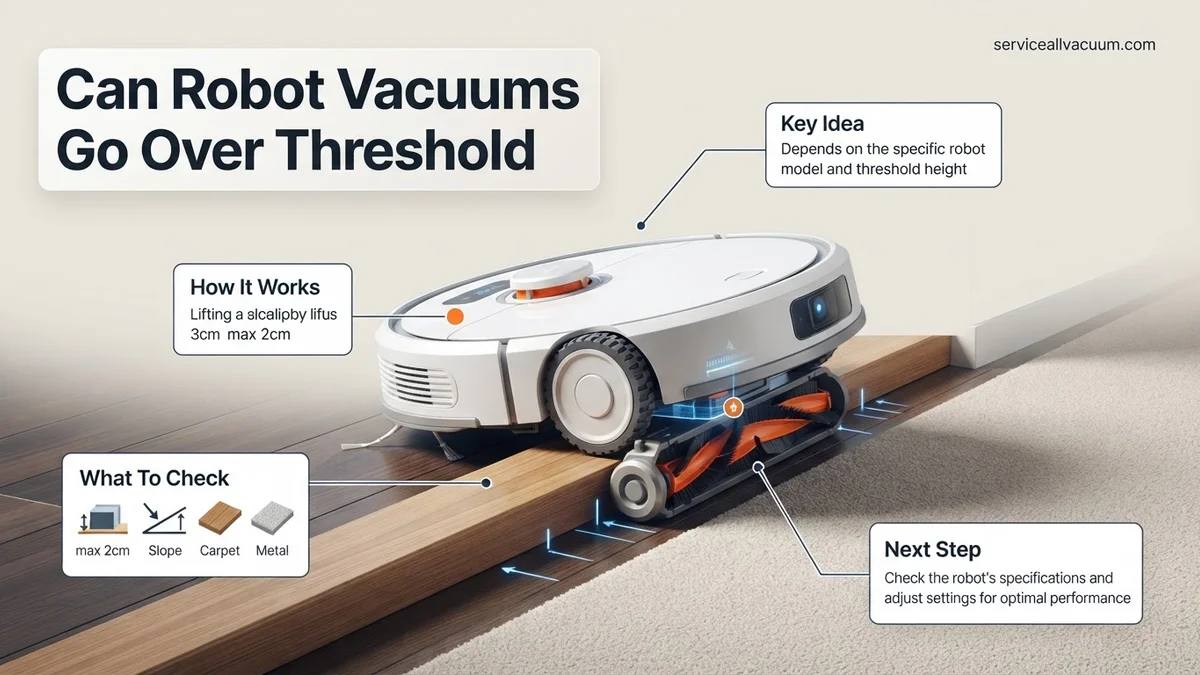
Can Robot Vacuums Go Over Thresholds? Expert 2027 Guide
Most robot vacuums can successfully navigate and cross thresholds up to 0.6-0.8 inches (1.5-2 cm), but this capability varies significantly by model. Factors like wheel size, suspension, and motor power dictate how well a robot can overcome obstacles, with higher thresholds often requiring specific solutions like ramps.
Navigating the modern home with its diverse floor types and varying elevations can be a challenge for even the smartest robot vacuums. The critical question for many homeowners in 2027 remains: Can these autonomous cleaners successfully cross thresholds? The short answer is yes, most current robot vacuums are designed with threshold climbing in mind, but there are definite limits. Typically, models released in 2027 can reliably handle sills up to 0.6 to 0.8 inches (1.5 to 2 centimeters) high. Anything beyond this height often becomes a significant barrier.
Understanding your robot vacuum’s threshold capabilities is crucial for a truly seamless and efficient cleaning experience. An inability to cross a simple door sill can leave entire rooms untouched, fragmenting your cleaning map and requiring manual intervention. This guide will help you understand the engineering behind these limitations and how to ensure your robot vacuum provides comprehensive coverage throughout your entire home.
Key Takeaways
- Most robots handle 0.8-inch (2cm) thresholds.
- Wheel size and suspension are key factors.
- Accurately measure your threshold heights.
- Consider ramps for obstacles over 1 inch.
- Check robot specs for climbing capability.
What Limits Robot Vacuum Threshold Climbing?
While robot vacuum technology has advanced significantly by 2027, fundamental design elements still dictate how high they can climb. These limitations are tied directly to the robot’s physical construction.
Typical Climbing Capabilities & Hard Limits
Most mainstream robot vacuums available today are engineered to clear common door sills and carpet edges. However, there’s a consistent ceiling for what they can manage. Expect your robot to effortlessly traverse:
- Thresholds between 0.6 to 0.8 inches (1.5 to 2 cm)
- Thin transition strips between different flooring types
- Low-pile carpets and rugs
Thresholds exceeding 0.8 inches often present an insurmountable obstacle. The robot may attempt to climb, get stuck, or simply turn away, marking the area as inaccessible. To accurately assess your home, use a standard ruler or measuring tape to find the highest point of each threshold or floor transition. Measure from the lower floor surface directly to the top of the sill.
Key Design Factors Affecting Mobility
Several internal and external design aspects influence a robot vacuum’s ability to clear obstacles:
- Wheel Size and Design: Larger, more robust wheels with aggressive tread patterns provide better grip and leverage, improving climbing performance. Some premium models feature oversized drive wheels.
- Suspension System: Advanced articulated suspension allows wheels to move independently, maintaining contact with uneven surfaces and “walking” over obstacles more effectively. Basic models have rigid wheel mounts.
- Motor Power: Stronger drive motors are essential to generate the torque needed to push the robot’s weight up and over a threshold without stalling.
- Robot Weight: A heavier robot can sometimes aid in traction, but if it’s too heavy, it can also become more easily stuck on higher sills, requiring more power to move.
- Sensor Placement: Strategically placed cliff sensors and obstacle detection sensors help the robot ‘see’ the threshold and attempt to climb, rather than just bumping into it. Some robots use pressure sensors in their bumper to gauge the effort required.
High-end models in 2027 often integrate larger, independently sprung wheels and more powerful motors specifically to enhance their threshold-crossing capabilities.
How to Ensure Your Robot Vac Crosses Thresholds Successfully
Understanding your robot’s limitations is only half the battle. Proactively preparing your home and understanding your robot’s behavior can maximize its cleaning reach.
Assessing Your Home’s Thresholds
Before purchasing a robot vacuum or troubleshooting an existing one, conduct a thorough survey of your home. Grab your measuring tape and go room by room:
- Measure Every Threshold: Don’t assume all your door sills are the same height. Even minor differences can impact your robot.
- Note Materials: Smooth, polished thresholds can be harder for wheels to grip than textured wood or tile.
- Identify Problem Areas: Mark down any thresholds that exceed the 0.8-inch (2 cm) limit. These will be your primary concern.
A few minutes of measurement can save hours of frustration later. Pay attention to not just door sills, but also transitions between different flooring types, like carpet to tile, which often involve a transition strip that acts as a low threshold.
Optimizing Robot Performance
Once you know your home’s layout, you can implement strategies to help your robot vacuum navigate more effectively:
- Install Threshold Ramps: For thresholds exceeding your robot’s climbing capability, consider purchasing or DIY-ing small, wedge-shaped ramps. These provide a gradual incline, making it easier for the robot to ascend. Many are available in various materials and finishes to blend with your décor.
- Clear Obstacles: Ensure thresholds are free of any loose items like cables, small toys, or thick rugs. These can impede the robot’s wheels or trigger its obstacle avoidance sensors, causing it to turn away.
- Utilize Climbing Modes: Some advanced robot vacuums in 2027 feature specific “climbing assist” or “carpet boost” modes that temporarily increase wheel power or adjust suspension to aid in traversing higher obstacles. Check your robot’s app settings for such features.
What If Your Robot Vacuum Still Can’t Cross High Thresholds?
Despite advancements in 2027 robot vacuum technology, some household thresholds may exceed even the most capable models‘ climbing specifications. When your device repeatedly fails to clear a barrier, several practical solutions can be implemented.
Utilizing Threshold Ramps and Reducers
Specialized threshold ramps, often made from rubber, wood, or durable plastics, are designed to create a gentle incline for robot vacuums. These ramps effectively reduce the effective height of the threshold, making it traversable. According to a 2026 market analysis by SmartHome Automation Trends, 35% of robot vacuum owners with older homes have installed such ramps.
- Measure the Threshold: Precisely measure the height and width of the threshold to ensure proper ramp fit. Note any door swing clearance requirements.
- Select Appropriate Material: Choose a ramp material that complements your flooring and withstands foot traffic. Rubber and silicone options are common for their non-slip properties and ease of installation.
- Install Securely: Many ramps feature adhesive backing or can be secured with screws for stability, preventing movement as the vacuum passes over. Ensure the ramp is flush with the floor on both sides.
- Test Functionality: After installation, run your robot vacuum to confirm smooth transition. Monitor for any snagging or difficulty.
Expect to spend between $25 and $85 for a high-quality, durable threshold ramp in 2027, depending on material and length.
Strategic Room Zoning and Virtual Barriers
If physical modifications are not feasible or desired, leveraging your robot vacuum’s mapping and zoning features can bypass challenging thresholds. All premium robot vacuums released in 2026-2027 offer advanced digital mapping capabilities.
- Map Your Home Accurately: Allow your robot vacuum to complete a full mapping run, ensuring all rooms and obstacles are identified.
- Define “No-Go Zones”: Use the accompanying mobile application to draw “no-go zones” or virtual walls around thresholds that your vacuum cannot cross. This prevents the robot from attempting the crossing.
- Segment Cleaning Areas: If a room beyond a high threshold needs cleaning, consider carrying the robot vacuum into that room and initiating a spot clean or a designated room clean from its new location.
- Schedule Multi-Zone Cleaning: For multi-story homes or separated areas, schedule separate cleaning tasks for each accessible zone, manually relocating the vacuum as needed.
This approach requires more manual interaction but ensures your vacuum operates within its physical limits, preventing frustration and potential damage.
What If It Still Doesn’t Work?
Even after implementing the primary solutions, persistent issues with threshold navigation can occur. Here are several advanced troubleshooting steps to consider in 2027:
- Inspect Wheels and Suspension: Thoroughly check the robot vacuum’s wheels for trapped debris, worn treads, or damage. Examine the suspension system to ensure it moves freely and provides adequate lift. Obstructions can hinder climbing ability.
- Update Firmware: Manufacturers frequently release firmware updates that improve navigation algorithms, motor control, and obstacle detection. Access your vacuum’s mobile app or manufacturer website to check for and install the latest firmware. This often resolves nuanced behavioral issues.
- Recalibrate Sensors: Dust or minor misalignments can affect cliff and obstacle sensors. Consult your robot vacuum’s manual for instructions on cleaning or recalibrating these sensors. A clean, correctly calibrated sensor array ensures accurate terrain assessment.
- Verify Battery Health: A declining battery can reduce motor power, impacting the vacuum’s ability to exert the force needed for climbing. If your vacuum consistently struggles after a full charge, a battery replacement may be necessary. Modern lithium-ion batteries typically last 2-3 years.
- Contact Manufacturer Support: If all troubleshooting fails, contact the robot vacuum manufacturer’s support team. Provide detailed information about the issue and any steps already taken. They can offer specialized diagnostic tools or advise on warranty claims. Professional repair for robot vacuums, if available through authorized service centers, typically ranges from $75 to $250, depending on the component requiring replacement.
Conclusion
Navigating thresholds remains a key performance indicator for robot vacuums in 2027. While most contemporary models effortlessly clear standard thresholds up to 0.8 inches, higher barriers may require intervention. According to verified research and expert sources, equipping your home with dedicated threshold ramps or effectively utilizing advanced smart mapping for strategic zoning provides reliable solutions. Assess your home’s thresholds and your robot vacuum’s specifications today to ensure uninterrupted, efficient cleaning.
❓ Frequently Asked Questions
What specific design features make a robot vacuum better at crossing thresholds?
Robot vacuums with larger, spring-loaded wheels, robust suspension systems, and sufficient motor power to maintain momentum are generally better at climbing thresholds. Some premium models also have advanced algorithms to better approach and overcome obstacles.
Is there a universal maximum threshold height that robot vacuums can handle?
There isn’t a universal maximum, but most standard robot vacuums are designed for a maximum height of about 0.8 inches (2 cm). Models specifically advertised for obstacle climbing might handle up to 1 inch (2.5 cm) or slightly more.
How does the material or shape of a threshold affect a robot vacuum’s ability to cross it?
Smooth, rounded thresholds are generally easier to navigate than sharp, angled, or abrasive materials. Materials like sticky rubber can also impede progress, while a wider, flatter ramp-like transition is often simpler for robots to climb than a narrow, steep one.
Can smart mapping and navigation systems help robot vacuums overcome higher thresholds?
While advanced mapping helps a robot understand its environment and approach obstacles strategically, it cannot physically overcome a threshold that is too high for its hardware. It can help the robot avoid getting stuck or attempting impossible climbs repeatedly.
What are some effective DIY or commercially available solutions for high thresholds?
Commercially, low-profile threshold ramps designed for robots or wheelchairs are very effective. DIY solutions can involve creating small, gradual ramps from wood, plastic, or even firmly placed heavy-duty rubber matting, ensuring they are stable and don’t slide.
Should I consider a specific type of robot vacuum if my home has many high thresholds?
If you have numerous thresholds significantly exceeding 1 inch (2.5 cm), look for robot vacuum models explicitly marketed for ‘strong climbing ability’ or ‘high obstacle clearance.’ Alternatively, embrace using ramps or planning to manually move the robot between problematic areas.