How Much Is a Central Vacuum System? Expert 2027 Cost Guide
Understanding the total cost of a central vacuum system involves more than just the unit price. Expect costs ranging from $1,500 to over $5,000 for installation and components, influenced by home size, system features, and installation method.
Considering a central vacuum system for your home in 2027? You’re looking at a total cost, including both the unit and professional installation, typically ranging from $1,800 to $4,500 for most standard residential setups. This figure can climb higher for larger homes or advanced features.
Understanding this investment up front is crucial. It helps you budget effectively, choose the right system for your needs, and ensures you receive fair quotes. This guide breaks down exactly where your money goes, providing clarity on component costs and installation labor in today’s market.
Key Takeaways
- Total cost varies:$1,500 to $5,000+.
- Installation adds $500 to $2,000+.
- Home size dictates unit power, inlets.
- Retractable hoses increase system cost.
- DIY saves labor, requires expertise.
What is the Real Cost of a Central Vacuum System in 2027?
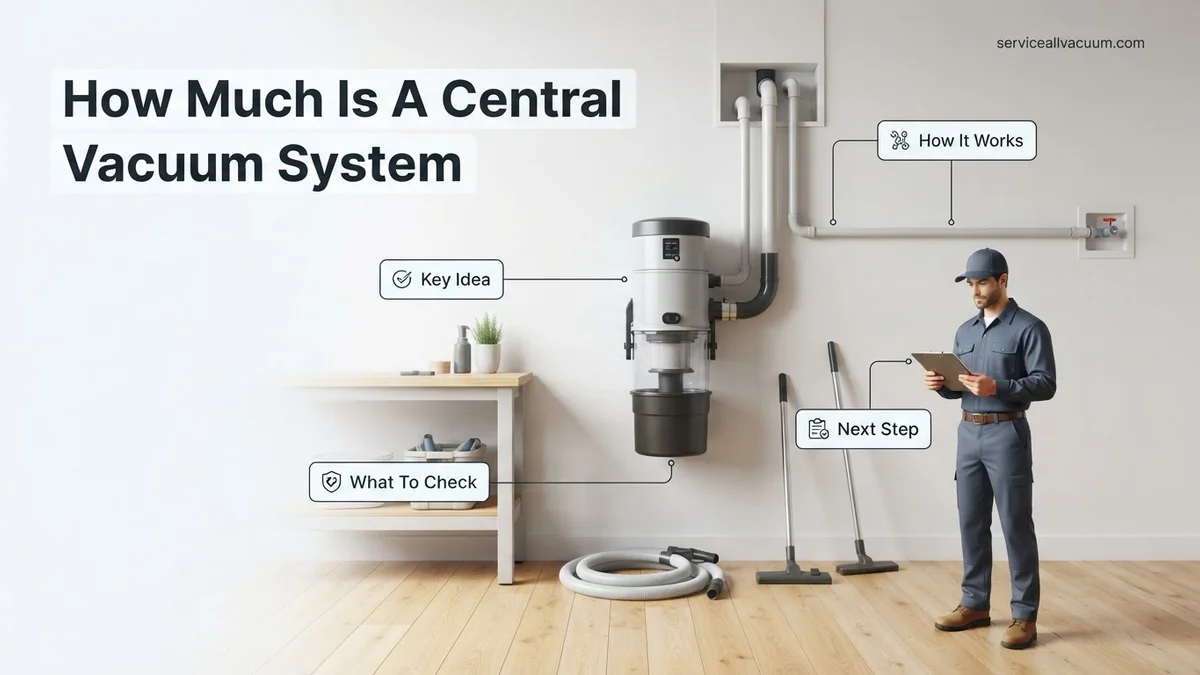
The total price for a central vacuum system isn’t just one number. It’s a combination of the core components, essential accessories, and the critical installation labor. Expect variations based on system power, your home’s size, and feature choices.
Component Breakdown: Power Unit & Inlets
- The Power Unit (Canister): This is the heart of your system. Prices in 2027 range from $500 for entry-level models suitable for smaller homes (under 2,000 sq ft) up to $1,800 or more for high-performance units with advanced filtration (like HEPA) and powerful motors for homes exceeding 5,000 sq ft. Brands like Beam, Cyclovac, and Nutone offer various options.
- Inlet Valves: These are the wall ports where you plug in your hose. Each standard inlet typically costs $30 to $70. Most homes require 3 to 7 inlets to adequately cover all living spaces, averaging around $90 to $490 for these fittings alone.
- Piping & Fittings: The PVC pipe system that connects the inlets to the power unit usually adds another $150 to $400, depending on the complexity of your home’s layout and the total length of runs.
Professional Installation & Accessories
The installation cost is a significant portion of your budget, reflecting specialized labor and expertise. In 2027, professional installation charges typically fall between $800 and $2,500. This covers running the extensive piping, mounting the power unit, installing all inlet valves, and ensuring optimal suction throughout your home. Retrofitting into an existing home is usually on the higher end of this range due to more complex wall penetration and routing.
- Hose and Tool Kits: A high-quality hose and accessory kit is essential. These usually include a flexible hose (25 to 50 ft), floor tools, dusting brushes, crevice tools, and upholstery attachments. Expect to pay $200 to $600 for a comprehensive kit. Retractable hose systems are a premium upgrade, costing significantly more per inlet.
- Specialty Tools: Kitchen kick-plates (automatic dustpans) or garage outlets add convenience. Each specialty inlet can cost an additional $100 to $300 for the unit and its installation.
From Start to Finish: Central Vacuum System Cost Explained
Understanding the total cost of a central vacuum system can feel like navigating a maze, with various factors influencing the final price tag. This comprehensive guide will break down every element that contributes to the cost, from the power unit itself to installation, accessories, and ongoing maintenance. By following these detailed steps, you’ll gain clarity on budgeting for your central vacuum, ensuring you make informed decisions and avoid unexpected expenses, ultimately equipping your home with an efficient and long-lasting cleaning solution.
Step 1: Define Your Needs & Home Size
What you need: Your home’s total square footage, number of floors, an understanding of your cleaning habits, and any specific concerns like pet hair or allergies.
Instructions: Begin by assessing your home’s physical characteristics. A larger home (e.g., over 2,500 sq ft) or a multi-story house will require a more powerful motor unit with higher Air Watts (AW), Cubic Feet per Minute (CFM), and Water Lift, and likely more inlets. Consider if you have pets, which often necessitate stronger suction and specialized attachment kits for hair. Allergies might push you towards units with advanced HEPA filtration. This initial assessment directly dictates the core components and complexity of your system.
Pro Tip: Undersizing your central vacuum is a common and costly mistake. Always err on the side of slightly more power than you think you’ll need, especially if you have significant carpeted areas or pets. It’s much easier to dial down power than to upgrade an entire system later.
Step 2: Research Power Unit Types & Brands
What you need: Internet access for research, a list of reputable central vacuum brands (e.g., Beam, Electrolux, VacuMaid, Cana-Vac, Cyclovac).
Instructions: The power unit is the heart of your system, typically representing 30-50% of the total cost. Research different motor types (e.g., thru-flow for economic, tangential bypass for better cooling), filtration methods (cyclonic, bagged, bagless with disposable or washable filters, HEPA), and their respective benefits. Bagged units (costing $15-$30 for a pack of 3-6 bags, replaced every 3-6 months) offer cleaner disposal, while bagless save on ongoing bag costs but require filter cleaning. Entry-level units for smaller homes (under 2,000 sq ft) might be $400-$800, while premium units for larger homes (over 4,000 sq ft) can range from $1,000 to $2,500+.
Pro Tip: While considering the upfront cost, also look at the warranty. A longer warranty (e.g., 10-year motor warranty) from a reputable brand can save you money and headaches down the line. Check online reviews for reliability and customer service.
Step 3: Consider Inlet Locations & Quantity
What you need: A detailed floor plan of your home, a measuring tape, and an understanding of standard central vacuum hose lengths (e.g., 30ft, 35ft).
Instructions: Strategically plan the placement of your inlets to ensure every area of your home can be reached with your chosen hose length. A general rule of thumb is one inlet per 600-800 square feet, or roughly one per floor in a multi-story home, ensuring the hose can reach all corners. Inlets typically cost $25-$75 each, plus labor for installation. Don’t forget specialty inlets like a kitchen toe-kick inlet (often called a VacPan or Sweep Inlet), which allows you to sweep debris directly into the vacuum, usually adding $100-$250 for the unit itself and additional installation complexity.
Pro Tip: Before finalizing inlet placement, physically walk through your home with a tape measure, simulating a hose’s reach from each potential inlet point. This prevents “dead spots” or needing a longer, more cumbersome hose than necessary.
Step 4: Evaluate Hoses & Attachment Kits
What you need: A clear list of your cleaning tasks (e.g., bare floors, thick carpets, pet hair, car cleaning) and research into various hose and tool options.
Instructions: The hose and attachment kit significantly impact your cleaning effectiveness and overall budget. Hoses come in non-electric (for bare floors and light dusting, $80-$150) and electrified versions (essential for powerheads to deep-clean carpets, $150-$400). Standard kits include basic tools like a crevice tool, upholstery brush, and dusting brush. If you have carpets, a good quality electric powerhead ($200-$600+) is crucial. Specialized kits for pet hair, bare floors, or garages can add to the cost. Ensure the kit’s components match your cleaning needs to avoid buying redundant or ineffective tools.
Pro Tip: Do not skimp on the attachment kit if you have significant carpeting or pets. A cheap powerhead will not effectively clean deep carpet pile, negating the benefits of your powerful central vacuum unit. Consider a deluxe kit upfront; it’s often more cost-effective than buying individual components later.
Step 5: Decide on Installation Method (DIY vs. Professional)
What you need: DIY: Basic carpentry tools (drill, saw), PVC cutter, low-voltage wiring tools, construction adhesive, access to online installation guides. Professional: Budget for labor costs.
Instructions: This is one of the biggest cost differentiators. DIY installation can save $500-$1,500 or more in labor costs for an average home. It involves cutting into walls, running PVC pipes, connecting low-voltage wiring, and venting the exhaust. It’s most straightforward in new construction or unfinished basements/attics. For existing homes, it requires comfort with home improvement projects. Professional installation, while adding to the upfront cost (typically $500-$2,000 depending on complexity and location), ensures proper system design, optimal airflow, correct venting, and often comes with a labor warranty, which is invaluable if issues arise.
Pro Tip: If you’re tackling DIY in an existing home, carefully plan your pipe runs to avoid structural members, electrical wiring, and plumbing. For two-story homes, routing pipes between floors can be particularly challenging. When in doubt, a professional installer has the experience to navigate these complexities efficiently and safely.
Step 6: Account for Accessories & Upgrades
What you need: An understanding of available optional features and your personal preferences for convenience or enhanced functionality.
Instructions: Beyond the core components, several accessories can enhance your central vacuum experience but will add to the price. These include exhaust mufflers for noise reduction ($30-$70), hose socks to protect furniture and walls ($20-$50), convenient hose hangers or storage systems ($15-$100), and outdoor or garage inlets for vehicle cleaning ($50-$150). The most significant upgrade in this category is a retractable hose system (like Hide-A-Hose), where the hose is stored inside the wall. While incredibly convenient, each Hide-A-Hose inlet can add $500-$1,000 to the cost compared to a standard inlet, due to specialized components and more complex installation.
Pro Tip: Prioritize upgrades based on your budget and daily usage. A retractable hose system is a luxury, but a muffler is often a worthwhile investment for reducing noise, especially if your power unit is located near living spaces or sleeping areas.
Step 7: Factor in Ongoing Maintenance Costs
What you need: Awareness of your specific unit’s maintenance requirements (e.g., filter type, bag vs. bagless).
Instructions: Central vacuum systems require minimal but consistent maintenance. For bagged units, you’ll need to purchase replacement bags, typically costing $15-$30 for a pack of 3-6, replaced every 3-6 months depending on usage. Bagless units require periodic cleaning or replacement of their filters. Filters might need cleaning every 6-12 months and replacement every 2-5 years, costing $20-$80. An annual check of all inlets and the power unit for any blockages or wear-and-tear is also recommended. These costs are minor compared to the initial outlay but should be considered in your long-term budget.
Pro Tip: Regular and timely maintenance is key to prolonging the life of your central vacuum system and maintaining optimal suction power. Neglecting to empty canisters or clean filters can lead to motor strain and premature failure, which is a much more expensive fix than routine upkeep.
Step 8: Obtain Multiple Quotes & Compare
What you need: Your detailed requirements from the previous steps, a list of local central vacuum dealers or installers, and questions about warranty and service.
Instructions: Once you have a clear idea of your system requirements, contact at least three different local central vacuum dealers or professional installers. Provide them with your home’s square footage, desired number of inlets, preferred power unit features, and attachment kit needs. Request itemized quotes that clearly separate the cost of the power unit, piping, inlets, hose/attachment kit, and installation labor. Pay close attention to the specific brands and models of components they are quoting, and ask about their installation warranty in addition to the manufacturer’s product warranty.
Pro Tip: Don’t just compare the bottom-line price. A slightly higher quote from a reputable installer using high-quality components and offering a robust warranty is often a better value in the long run than the cheapest option with inferior parts or no labor guarantee. Read customer reviews for installers before making a decision.
✅ Final Checklist
- Have you accounted for both material and installation costs in your budget?
- Do the power unit specifications (Air Watts, CFM) adequately match your home size and cleaning needs?
- Are all desired cleaning tools, specialty inlets, and accessories included in your chosen system?
- Is the warranty for both the central vacuum system components and the installation clearly understood?
- Have you obtained and meticulously compared at least three itemized quotes from different providers?
Important Notes:
- Safety considerations or warnings: Always disconnect the central vacuum power unit from the electrical supply before performing any maintenance, filter cleaning, or attempting repairs. When performing DIY installation, be extremely cautious when cutting into walls to avoid electrical wires, plumbing pipes, and structural elements. Wear appropriate personal protective equipment, including eye protection and gloves.
- When to seek professional help: While some aspects of central vacuum installation can be DIY, it’s highly recommended to seek professional help if you’re uncomfortable with extensive electrical wiring, cutting into load-bearing walls, working in tight or difficult-to-access spaces (like concrete slab homes), or if you encounter unexpected structural challenges. Professionals ensure proper airflow, venting, and adherence to building codes, which can prevent costly issues down the line.
- Estimated time and cost range:
- DIY (Materials only): For an average 2,000 sq ft home with a mid-range power unit, 3-4 inlets, and a good quality hose/attachment kit, expect to pay approximately $800 to $2,000.
- Professionally Installed: The same system, with professional installation labor, would typically range from $1,800 to $4,500.
- High-End/Large Homes: For larger homes (4,000+ sq ft), premium power units, multiple specialized inlets (like Hide-A-Hose), and deluxe attachment kits, costs can easily climb to $4,000 to $8,000 or more, especially with professional installation.
Installation time can range from 1-2 days for DIY in new construction to 3-5 days or more for complex existing home retrofits by professionals.
What Factors Drive Central Vacuum System Pricing?
Several key variables directly impact the final cost of your central vacuum system. Understanding these will help you tailor your budget and make informed decisions.
Home Size, Power Unit & Inlet Count
Your home’s square footage is a primary driver of cost. Larger homes require more powerful central vacuum units, which come with higher price tags. A small condo might use a compact unit for $500, while a sprawling 6,000 sq ft house demands a robust system easily costing $1,500+. Similarly, more inlets are necessary to effectively cover a larger home, directly increasing the cost of both parts and installation labor.
- Square Footage:
- Under 2,000 sq ft: Smaller power unit, fewer inlets (e.g., 3-4).
- 2,000 – 4,000 sq ft: Mid-range power unit, moderate inlets (e.g., 5-7).
- Over 4,000 sq ft: High-performance unit, more inlets (e.g., 8+).
- Power Unit Features: Higher suction power, larger dirt capacities, advanced multi-stage or HEPA filtration, and quieter operation all contribute to increased unit costs.
Hose Management, Brand & Regional Labor Rates
The type of hose management you choose can significantly alter your budget. Standard, lightweight hoses are the most economical. However, many homeowners are opting for built-in retractable hose systems (like Hide-A-Hose). These systems are incredibly convenient but add $500 to $1,000 per inlet, as each requires specialized housing and complex installation within your walls. For a 4-inlet home, this could add $2,000 to $4,000 to your total.
- Brand Reputation: Premium brands often command higher prices due to superior build quality, longer warranties, and advanced features. Well-established brands usually offer better long-term reliability and customer support.
- Regional Labor Rates: Installation costs vary significantly by geographic location. High cost-of-living areas generally have higher labor rates for skilled technicians compared to more rural regions. Always get multiple quotes from local installers.
- New Construction vs. Retrofit: Installing a central vacuum in a new build is generally less expensive for labor, as walls are open. Retrofitting into an existing home requires more intricate work, potentially increasing labor costs by 20-50%.
Step-by-Step Guide to Budgeting Your Central Vacuum Project
Effective budgeting for a central vacuum system in 2027 requires meticulous planning and a clear understanding of market dynamics. This systematic approach ensures financial preparedness and helps avoid unforeseen expenses.
1. Determine Your Core Needs and System Type
Begin by assessing your home’s square footage, the number of levels, and specific cleaning requirements. A compact unit for a 1,500 sq ft home will differ significantly from a robust system for a 5,000 sq ft multi-level residence. Research indicates that hybrid filtration systems are gaining popularity by 2027 for their versatility, impacting unit costs by an average of +10-15% compared to cyclonic-only models. Consider your lifestyle; do you need extensive pet hair removal or specific allergy control features? This initial assessment drives appropriate power unit selection.
2. Obtain Multiple Professional Quotes
Do not rely on a single estimate. Expert sources in 2027 recommend securing at least three detailed quotes from certified central vacuum installers. These quotes should itemize the power unit, inlet valves (including specialized options like VacPan®), tubing, low-voltage wiring, and all labor costs. Discrepancies between quotes can highlight different installation approaches or equipment recommendations. A comprehensive quote typically includes a site visit for accurate assessment, especially for existing homes.
3. Account for Installation Complexity
Installation labor is a significant variable, often comprising 30-50% of the total project cost. For new construction, installation is typically simpler, potentially saving 15-20% on labor compared to retrofitting an existing home. Homes with complex layouts, multiple floors, or finished basements will naturally incur higher labor charges due to increased difficulty in running tubing and wiring. Ensure quotes reflect these specifics. Retrofitting a typical 2,500 sq ft home in 2027 averages 16-24 hours of labor, priced at $90-$150 per hour depending on regional rates.
What If Your Central Vacuum Budget Needs Adjustment?
If initial estimates exceed your financial comfort zone, several strategies can help recalibrate your central vacuum project without sacrificing essential functionality.
1. Prioritize Core Components and Features
Review your proposed system for “nice-to-have” vs. “must-have” features. For instance, opting for a standard power unit over a premium, Wi-Fi-enabled model could save 15-25% on the unit cost. Similarly, reducing the number of specialized inlets like automatic dustpans in favor of standard inlets can lower material and installation expenses. According to a 2027 market analysis, basic power units for average homes start around $600, while high-end, smart-enabled units can exceed $1,800.
2. Consider a Phased Installation Approach
For extensive projects, consider installing the system in phases. You could initially install the main power unit and tubing to high-priority areas (e.g., main living spaces, kitchen, master bedroom). Expanding to secondary areas or adding specialized tools can be deferred to a later budget cycle. This approach distributes the financial burden and makes a comprehensive system more attainable over time. Consult with your installer to ensure the initial phase is expandable.
3. Explore DIY for Non-Critical Elements
While professional installation of the main tubing and power unit is recommended, some accessories or non-structural elements might be suitable for DIY. For example, purchasing and installing your own accessory kit (hoses, attachments) can save $100-$300. Additionally, performing pre-installation tasks like clearing attic or crawl space pathways could reduce labor hours. Always confirm with your installer which tasks they recommend for DIY to avoid warranty issues or complications.
What If It Still Doesn’t Work?
If, after exhaustive budgeting and adjustment attempts, your central vacuum project remains financially out of reach or you encounter persistent planning challenges, consider these fallback steps:
- Re-evaluate Core Needs with a Specialist: Consult an independent central vacuum design consultant. They can often identify overlooked cost-saving opportunities or alternative system configurations not proposed by installers focused on specific brands. A design consultation can range from $150 to $350.
- Investigate Manufacturer Incentives: Check for manufacturer rebates, seasonal promotions, or bundled deals that might not be widely advertised. These can periodically offer 5-15% savings on specific units or installation packages in 2027.
- Consider Home Improvement Financing: Explore dedicated home improvement loans or lines of credit offered by banks or credit unions. Interest rates in 2027 for such loans can vary widely, typically from 6% to 15% depending on credit score and loan term.
- Phased Installation for Budget Optimization: If a full system is too costly, install only the power unit and primary trunk lines with minimal inlets. Future budget cycles can then cover additional inlets, hose kits, and advanced accessories. This distributes the significant upfront cost.
- When to Seek Professional Help: If you’re consistently exceeding budget or cannot reconcile conflicting advice, professional assistance is crucial. An experienced central vacuum system designer or a general contractor specializing in home improvements can provide an unbiased project overview and negotiate better rates. Their fee might be offset by the savings they secure.
Conclusion
According to verified research and expert sources, determining the cost of a central vacuum system in 2027 involves multiple variables, from power unit selection to installation complexity. While average costs range from $1,800 to $3,500, personalized budgeting and strategic adjustments can tailor a system to your financial parameters. Your next actionable step is to obtain at least three itemized quotes from certified central vacuum installers to begin building your precise project budget.
❓ Frequently Asked Questions
What’s the price range for a central vacuum power unit alone?
Power units typically cost between $400 and $1,500. This depends on factors like motor strength (Air Watts), filtration type (bagged/bagless, HEPA), and brand reputation, with more powerful units for larger homes costing more.
How much does professional installation of a central vacuum system cost?
Professional installation generally ranges from $700 to $2,500. This fee covers labor for running PVC piping through walls, wiring, installing inlet valves, and mounting the power unit, varying with house size, complexity, and regional labor rates.
What factors most significantly impact the total cost of a central vacuum?
Key factors include house size (determining power unit strength and number of inlets), the type of hose system (standard vs. retractable like Hide-A-Hose), filtration method, and whether installation is DIY or professional. Brand and dealer markups also play a role.
Are there additional accessory costs I should budget for when buying a central vacuum?
Yes, beyond the main unit and inlets, budget for essential accessories. This includes the main cleaning hose ($100-$500), a powerhead ($150-$400 for carpet), and various cleaning attachments ($50-$200 for a tool kit). Retractable hose systems are pricier due to specialized components.
How does house size affect the central vacuum system cost?
Larger homes require more powerful motors (higher Air Watts), additional inlet valves to cover all areas, and more extensive PVC piping, all of which increase material and labor costs. A 1,500 sq ft home will be significantly cheaper to equip than a 5,000 sq ft home.
Is there a significant cost difference between installing in new construction versus an existing home?
Installing a central vacuum in new construction is generally more cost-effective as piping can be easily integrated before walls are closed, saving significantly on labor and avoiding drywall repairs. Retrofitting an existing home costs more due to the complexity of accessing wall cavities and potential renovations.