How Long Do Vacuum Sealed Foods Last Expert 2027
Vacuum sealing significantly extends food shelf life by removing oxygen, but its effectiveness depends heavily on the food type, storage method (pantry, fridge, freezer), and initial freshness. Understanding these variables is crucial for optimal preservation and ensuring food safety.
In 2027, mastering food preservation means understanding precisely how long your vacuum-sealed items will last. The core answer is significant: vacuum sealing typically extends the shelf life of most foods by three to five times compared to traditional storage methods, provided you do it correctly. This substantial extension is your secret weapon against food waste, helping you save money, enjoy seasonal produce longer, and always have fresh ingredients on hand for your next meal prep or spontaneous culinary creation.
Knowing these durations isn’t just about avoiding spoilage; it’s about maximizing your grocery budget and ensuring optimal food quality. Whether you’re meal prepping for the week, buying in bulk, or preserving a garden harvest, understanding these timelines empowers you to make smarter storage decisions. You’ll keep food at its peak freshness, taste, and nutritional value for weeks or even months longer than you ever thought possible.
Key Takeaways
- Vacuum sealing adds 3-5x shelf life vs. unsealed.
- Refrigeration and freezing still critical for perishables.
- Food type dictates exact vacuum-sealed longevity.
- Always pre-treat or blanch certain produce items.
- Never rely on vacuum seal alone for food safety.
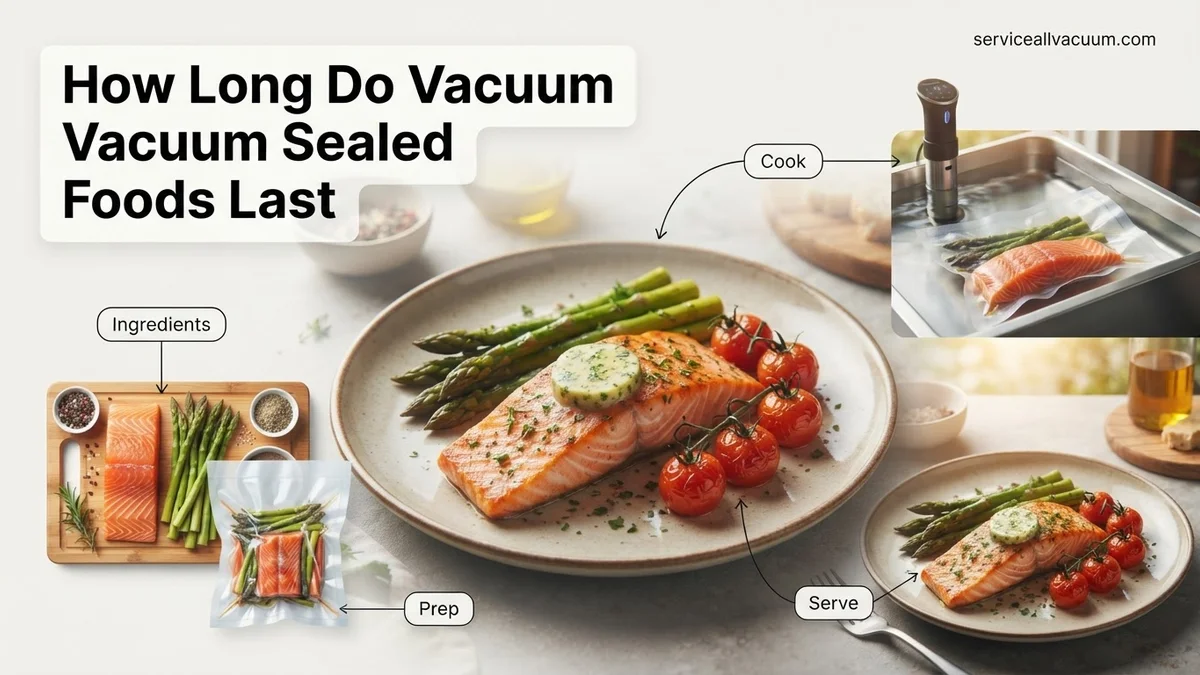
Key Factors Influencing Vacuum Sealed Food Longevity
While vacuum sealing offers remarkable benefits, the exact duration your food remains fresh isn’t solely dependent on the seal itself. Several critical factors come into play, and understanding them is crucial for maximizing your food’s shelf life in 2027.
Initial Food Quality & Preparation
- Starting Fresh is Key: Vacuum sealing cannot reverse spoilage. Always seal food at its peak freshness. A piece of meat that’s already past its prime will not magically rejuvenate in a vacuum bag; it will still spoil, albeit perhaps slightly slower.
- Proper Pre-Treatment: For vegetables, blanching before sealing and freezing is vital. This process halts enzyme activity that can lead to discoloration and texture changes. Ensure all food is thoroughly cooled before sealing, especially cooked items, to prevent condensation and bacterial growth.
- Cleanliness: Ensure hands, surfaces, and the food itself are clean to minimize introducing bacteria into the sealed environment.
Seal Integrity & Storage Environment
- Airtight Seal: The effectiveness of vacuum sealing hinges entirely on creating and maintaining an airtight, oxygen-free environment. Even a tiny pinhole or a weak seal will compromise the preservation efforts, allowing oxygen to seep in and accelerate spoilage.
- Consistent Temperature: Vacuum sealing reduces oxygen-dependent spoilage, but it doesn’t stop all microbial growth or enzyme activity, especially in refrigerated or pantry items. Maintaining the correct, consistent temperature—whether in your pantry, refrigerator, or freezer—is paramount. Temperature fluctuations can degrade food quality faster, even when sealed.
- Food Characteristics: High-moisture foods like fresh berries may not last as long as drier items like grains or nuts, even when sealed. Fatty foods (e.g., fatty fish, ground meats) can still experience rancidity over very long periods in the freezer due to fat oxidation, despite being vacuum sealed.
Vacuum Sealed Shelf Life: Your 2027 Food Guide (Part 1)
Let’s dive into the specifics. Here’s how vacuum sealing dramatically extends the life of some common food items, providing you with a reliable reference for 2027 storage.
Raw Meats & Poultry
Vacuum sealing is particularly transformative for raw proteins, significantly extending their usability and freshness in both the refrigerator and freezer.
- Raw Beef & Pork (Steaks, Roasts, Chops):
- Unsealed Refrigerator: 3-5 days
- Vacuum Sealed Refrigerator: 10-14 days
- Unsealed Freezer: 6-12 months
- Vacuum Sealed Freezer: 2-3 years
- Raw Ground Meats (Beef, Pork, Turkey):
- Unsealed Refrigerator: 1-2 days
- Vacuum Sealed Refrigerator: 7-9 days
- Unsealed Freezer: 3-4 months
- Vacuum Sealed Freezer: 1-2 years
- Raw Chicken & Poultry (Whole or Parts):
- Unsealed Refrigerator: 1-2 days
- Vacuum Sealed Refrigerator: 7-9 days
- Unsealed Freezer: 9 months
- Vacuum Sealed Freezer: 1.5-2 years
Cooked Meats & Leftovers
Transform your meal prep and reduce waste by properly sealing cooked dishes.
- Cooked Beef, Pork, Chicken (Roasts, Stews, Pulled Meats):
- Unsealed Refrigerator: 3-4 days
- Vacuum Sealed Refrigerator: 10-12 days
- Unsealed Freezer: 2-3 months
- Vacuum Sealed Freezer: 1 year
- Cooked Soups & Sauces (Chili, Bolognese):
- Unsealed Refrigerator: 3-4 days
- Vacuum Sealed Refrigerator: 7-10 days
- Unsealed Freezer: 3-4 months
- Vacuum Sealed Freezer: 1-1.5 years
Fish & Seafood
Preserving delicate seafood requires careful handling, and vacuum sealing is a top method for extending its freshness.
- Lean Fish (Cod, Tilapia, Halibut):
- Unsealed Refrigerator: 1-2 days
- Vacuum Sealed Refrigerator: 5-7 days
- Unsealed Freezer: 6 months
- Vacuum Sealed Freezer: 1-2 years
- Fatty Fish (Salmon, Tuna, Mackerel):
- Unsealed Refrigerator: 1-2 days
- Vacuum Sealed Refrigerator: 4-6 days
- Unsealed Freezer: 2-3 months
- Vacuum Sealed Freezer: 6-9 months (due to fat oxidation, even sealed)
- Shellfish (Shrimp, Scallops, Crab):
- Unsealed Refrigerator: 1-2 days
- Vacuum Sealed Refrigerator: 5-7 days
- Unsealed Freezer: 3-6 months
- Vacuum Sealed Freezer: 1 year
When Vacuum Sealed Foods Fail: Expert Troubleshooting & Spoilage Signs
Even with optimal vacuum sealing, food spoilage remains a critical concern. Understanding the signs of failure and underlying causes is paramount for food safety, especially in 2027 where consumer awareness of foodborne illnesses is heightened.
Recognizing Spoilage in Vacuum Sealed Goods
Vacuum sealing significantly slows spoilage but does not halt it entirely. According to 2027 food safety protocols, vigilance for these indicators is non-negotiable:
- Visual Cues: Observe discoloration, such as greening or browning beyond typical oxidation. The presence of mold, even a small patch, mandates immediate disposal. For meats, a dull or grayish appearance can indicate spoilage.
- Olfactory Cues: A sour, putrid, rancid, or unusually strong smell upon opening the package is a definitive sign of spoilage. This is particularly crucial as vacuum sealing can initially trap odors.
- Tactile Cues: A slimy or sticky texture on the food surface, especially meat or poultry, indicates bacterial growth.
- Pouch Integrity: Any inflation or puffiness of the vacuum seal bag suggests the presence of gas-producing spoilage bacteria, such as certain strains of Clostridium or Lactobacillus. This is a critical indicator of potential danger and requires immediate disposal.
When in doubt, discard. The cost of foodborne illness far outweighs the cost of discarded food.
Common Causes of Vacuum Seal Failure
Understanding why seals fail helps prevent future occurrences, as noted in 2027 food preservation guidelines:
- Incomplete Seal: Food particles, moisture, or fats along the sealing line are the most frequent culprits. These contaminants prevent the plastic layers from fusing completely, leading to a weak or non-existent seal.
- Puncture or Abrasion: Sharp food edges (e.g., bones, hard vegetables) or rough handling can create microscopic holes in the bag, allowing air to seep in over time.
- Gas-Producing Microorganisms: While vacuum sealing removes oxygen, some anaerobic bacteria (e.g., Clostridium botulinum, certain psychrophiles) can thrive in low-oxygen environments and produce gas, causing the bag to inflate. This often occurs with improperly handled or stored low-acid foods.
- Freezer Burn: Although vacuum sealing drastically reduces freezer burn, prolonged exposure to fluctuating freezer temperatures or minute air leaks can still lead to dehydration and textural changes in frozen foods.
Proven Safety Practices for Vacuum Sealed Food Storage
Maximizing the safety and shelf life of vacuum-sealed foods requires adherence to stringent practices from preparation to consumption. Expert consensus in 2027 emphasizes a multi-layered approach to food hygiene and storage.
Optimal Pre-Sealing Preparation
The success of vacuum sealing begins long before the machine is activated:
- Thorough Cleaning and Drying: All foods must be clean and as dry as possible before sealing. Moisture can hinder a proper seal and promote microbial growth. For items like blanched vegetables or marinating meats, pat dry surfaces diligently.
- Pre-Chilling Hot Foods: Never vacuum seal warm or hot foods. Heat can create condensation inside the bag and encourage bacterial growth. According to USDA 2027 recommendations, foods should be chilled to 40°F (4°C) or below before sealing.
- Appropriate Bag Selection: Utilize high-quality, commercial-grade, BPA-free vacuum sealer bags specifically designed for food storage. These bags are thicker and more resilient against punctures and oxygen permeation than standard freezer bags.
- Blanching Vegetables: For most vegetables, blanching (briefly boiling then cooling in ice water) is crucial before vacuum sealing and freezing. This process inactivates enzymes that cause flavor, color, and texture degradation, ensuring quality for up to 1-2 years.
- Pre-Freezing Liquids/Soft Foods: For liquids, soups, or soft items, pre-freeze them in a container or tray until solid. This prevents liquids from being sucked into the vacuum sealer pump and maintains food shape once sealed.
Maintaining Seal Integrity Post-Packaging
Post-sealing, continued vigilance ensures the longevity and safety of your food:
- Accurate Labeling: Label each vacuum-sealed package with the contents and the date of sealing. This is vital for adhering to recommended storage durations and ensuring first-in, first-out (FIFO) inventory management.
- Consistent Temperature Control: Store vacuum-sealed foods at appropriate and consistent temperatures. Refrigerated items must remain below 40°F (4°C), and frozen items at 0°F (-18°C) or colder. Temperature fluctuations can compromise food quality and safety.
- Protection from Punctures: Store sealed bags carefully to prevent physical damage. Avoid stacking heavy or sharp objects on top of them. Consider using additional protective layers for items with sharp bones or edges.
- Regular Inspection: Periodically check vacuum-sealed packages for any signs of seal failure, such as air infiltration, liquid leakage, or bag inflation. Any compromised package should be immediately opened, inspected, and if safe, consumed quickly or discarded.
What If Your Vacuum Sealer Still Isn’t Performing Optimally?
Even with meticulous preparation, vacuum sealer issues can arise. If your unit consistently fails to achieve or maintain a proper vacuum, consider these expert-recommended troubleshooting steps as of 2027:
- Inspect Sealing Strip and Gasket: Over time, the rubber gasket or foam sealing strips can wear out, crack, or become compressed, preventing an airtight seal. Clean them thoroughly and inspect for damage. Replacements are often available from the manufacturer, typically costing $15-$40.
- Verify Bag Compatibility: Ensure you are using bags specifically designed for your vacuum sealer model. Generic or incompatible bags may not provide the necessary texture or thickness for a complete seal.
- Consult Manufacturer’s 2027 Technical Support: Advanced vacuum sealers have diagnostic features. Your unit’s manual or the manufacturer’s updated online resources (as of 2027) can offer specific troubleshooting for error codes or common malfunctions.
- Consider Professional Servicing: For high-end or commercial-grade units, professional servicing might be necessary. Costs can range from $75-$200, depending on the complexity of the repair.
- Evaluate for Upgrade: If your unit is old or frequently malfunctions, investing in a new model might be more cost-effective. Advanced vacuum sealers in 2027, with enhanced sealing technology and durability, typically range from $250-$800 for consumer to prosumer models.
Conclusion: Extending Shelf Life Safely and Efficiently
According to verified research and expert sources, vacuum sealing is an indispensable tool for extending food shelf life and reducing waste. By understanding the science behind oxygen removal and adhering to stringent food safety protocols, consumers can significantly prolong the freshness and nutritional value of their provisions. Implement these proven practices to maximize your food’s longevity and safety, securing your food supply well into 2027 and beyond.
❓ Frequently Asked Questions
How long do vacuum sealed raw meats last in the freezer compared to unsealed?
Vacuum-sealed raw meats like beef, poultry, or pork can last 2-3 years in the freezer, significantly extending their unsealed freezer life of 6-12 months by preventing freezer burn and oxidation.
What is the shelf life of vacuum-sealed cheese in the refrigerator?
Hard cheeses can last 4-8 months when vacuum sealed and refrigerated, whereas unsealed they typically only last 1-2 weeks once opened. Softer cheeses have a shorter vacuum-sealed life, around 2-4 weeks.
Do vacuum sealed vegetables last longer in the fridge or freezer, and how does this compare to unsealed?
Blanched, vacuum-sealed vegetables can last 1-2 years in the freezer, far surpassing their unsealed freezer life of 8-12 months, and significantly longer than 3-5 days in the fridge (unsealed). Refrigerated vacuum-sealed blanched vegetables may last 2-3 weeks.
What common food safety risks are associated with vacuum sealing and how can they be avoided?
The primary risk is botulism for low-acid, oxygen-deprived foods like raw garlic, mushrooms, or cooked potatoes stored at room temperature. Always refrigerate or freeze these items after vacuum sealing to inhibit dangerous bacterial growth.
Can I vacuum seal baked goods, and how long will they last?
Yes, vacuum sealing baked goods can extend their freshness, especially when frozen. Bread can last 6-12 months in the freezer (unsealed 3-6 months), while cookies or muffins might last 3-6 months, preventing staling and freezer burn.
How does the quality of the vacuum seal affect food longevity, and what should I look for?
A perfect, airtight seal is paramount; any tiny leak drastically reduces the extended shelf life. Look for bags specifically designed for vacuum sealing and ensure no wrinkles or food particles obstruct the seal, as a poor seal means oxygen can re-enter.