How Does The Vacuum Work Expert Step-by-Step Guide 2027
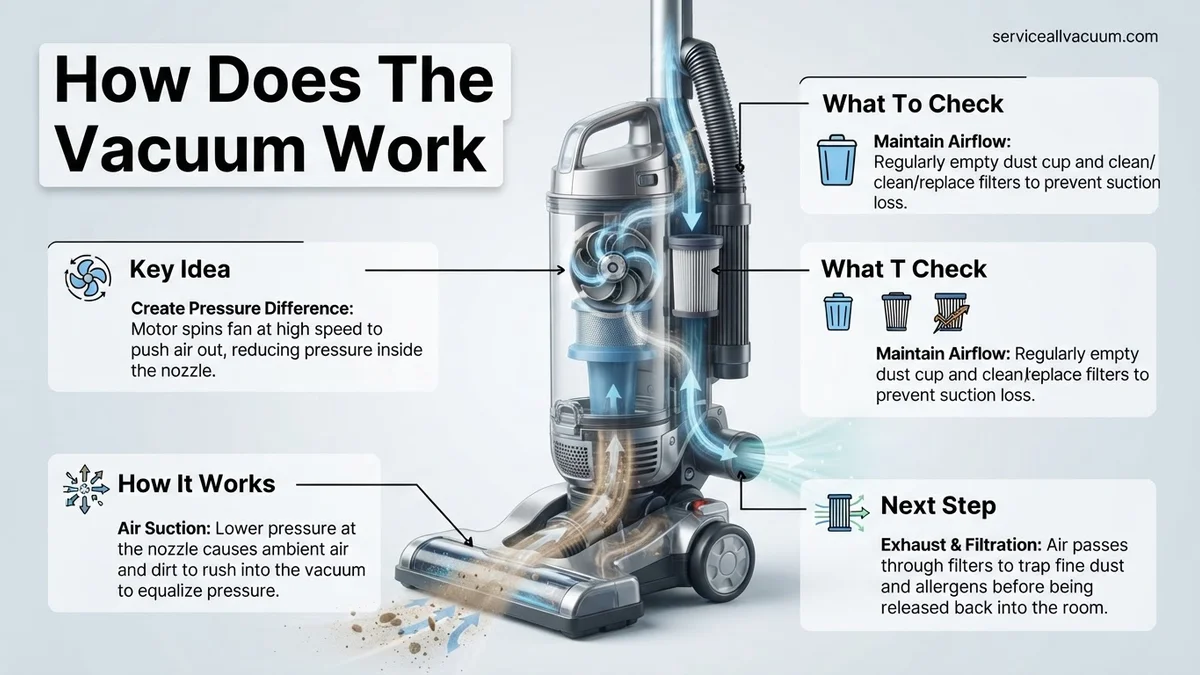
A vacuum cleaner operates by creating a low-pressure zone inside its body using a motor-driven fan. This pressure differential causes higher atmospheric pressure outside to push air—along with dirt and debris—into the vacuum’s nozzle, where it then passes through a filtration and collection system.
A vacuum cleaner operates on a deceptively simple yet powerful scientific principle: the creation of a pressure differential. At its core, a motor-driven fan rapidly expels air from inside the unit, generating a low-pressure zone. This internal vacuum then allows the higher atmospheric pressure outside the appliance to literally push air—along with dust, dirt, and debris—into the nozzle and through the system. Understanding this fundamental physics empowers you not only to appreciate the technology but also to make informed decisions about keeping your spaces impeccably clean in 2027.
Knowing precisely how your vacuum achieves its cleaning prowess goes beyond just basic operation. It provides insight into why certain designs excel, how filtration systems prevent allergens from re-entering your environment, and why consistent maintenance of airflow is crucial. This detailed guide breaks down the essential scientific and mechanical processes, ensuring you grasp the powerful dynamics at play every time you clean.
Key Takeaways
- Suction is created by pressure differential.
- A motor-driven fan generates low internal pressure.
- Higher external air pressure pushes debris in.
- Filters prevent dust re-release to air.
- Airflow carries dirt through collection system.
What Causes a Vacuum Cleaner to Work? The Physics of Suction
The term “suction” can be a bit misleading, as a vacuum cleaner doesn’t actually pull air. Instead, it pushes air out, creating a void that external pressure then fills. This is the foundational principle that makes any vacuum cleaner effective. In 2027, the underlying physics remains unchanged, whether you’re using a robotic unit or a powerful upright model; it all comes down to controlling air pressure.
The Pressure Differential Explained
Every vacuum cleaner relies on establishing a significant difference in air pressure between its interior and the surrounding environment. Here’s the breakdown:
- Motor Power: An electric motor provides the energy. This motor is precisely engineered to be efficient and powerful, capable of running the fan at thousands of revolutions per minute (RPM). In modern 2027 units, these motors are often brushless for enhanced durability and quieter operation.
- Fan (Impeller) Action: Connected directly to the motor, a fan (or impeller) rotates at high speeds. This fan has specially angled blades that scoop up air from inside the vacuum’s sealed chamber and force it out through an exhaust port.
- Low-Pressure Zone: As air is rapidly expelled by the fan, the volume of air inside the vacuum’s chamber decreases. This reduction in air volume directly translates to a drop in air pressure within the unit relative to the outside. This creates what is commonly, though inaccurately, called a “vacuum.”
- Atmospheric Pressure Push: The air surrounding your vacuum cleaner, and indeed everywhere on Earth, is under a constant force known as atmospheric pressure. When the vacuum creates its internal low-pressure zone, this higher external atmospheric pressure naturally rushes in to equalize the pressure differential.
It’s this powerful atmospheric pressure pushing air into the vacuum’s nozzle that carries the dirt and debris along for the ride. The greater the pressure differential the motor and fan can generate, the stronger the “suction” force you experience.
From Start to Finish: How Your Vacuum Cleaner Sucks Up Dirt Explained
Ever wondered what truly happens inside that humming machine as it devours dust and debris? This comprehensive guide will take you on a detailed journey through the intricate mechanics of your vacuum cleaner. Understanding these fundamental principles—from electrical power to air dynamics and filtration—will not only satisfy your curiosity but also empower you to troubleshoot common issues and appreciate the engineering marvel that keeps your home clean. Let’s delve into the science behind the suction!
Step 1: Initiating the Power Flow
What you need: An electrical outlet (e.g., 120V AC in North America) and a functional vacuum cleaner with its power cord. This initial power supply is crucial; without it, the complex internal mechanisms remain dormant, much like any other electric appliance.
Instructions: Plug your vacuum cleaner’s power cord into a suitable electrical outlet. Flipping the “On” switch completes an electrical circuit, allowing current to flow from the wall, through the cord, and into the vacuum’s motor. This electrical surge is the foundational step, converting static electrical energy into the kinetic energy that drives the entire dust-devouring process. Confirm the switch engages properly, often with a clear “click” or tactile response.
Pro Tip: Always inspect the power cord for visible damage (frays, cuts) before use. A damaged cord poses a safety risk and can lead to electrical issues. Avoid overloading circuits by plugging vacuums into dedicated outlets or those not sharing with other heavy-duty appliances.
Step 2: The Mighty Motor and Fan Assembly
What you need: The vacuum’s internal electric motor and its directly attached fan (impeller). These components are the device’s mechanical heart, working in unison to generate the essential airflow for suction. The motor type can vary, but its primary function remains constant: to rotate the fan.
Instructions: Once electrical current powers the motor, internal electromagnets interact, causing the motor shaft to spin at extremely high revolutions, often exceeding 20,000 RPM. A multi-bladed fan or impeller is rigidly affixed to this spinning shaft. As the motor rotates, the fan blades rapidly displace air within a sealed internal chamber. This forceful movement of air is the critical action that begins the entire process of creating suction, setting up the necessary conditions for effective cleaning.
Pro Tip: Unusual noises like a high-pitched whine or grinding often indicate motor or fan issues, such as worn bearings or debris interfering with the impeller. Regular checks for obstructions can significantly extend the life and efficiency of these core components.
Step 3: Crafting the Pressure Differential
What you need: An understanding of basic air pressure physics, specifically how moving air affects pressure. The fan’s role is not just to move air, but to precisely create a crucial pressure imbalance necessary for suction to occur.
Instructions: As the fan spins rapidly, its blades efficiently force air outwards, away from the vacuum’s central chamber and towards an exhaust port. This action effectively reduces the volume of air molecules inside the vacuum’s internal chamber and the nozzle area. According to gas laws, fewer air molecules in a confined space lead to lower air pressure. Consequently, a powerful region of significantly reduced pressure, often termed a “partial vacuum,” is created inside the cleaner compared to the ambient atmospheric pressure outside. This pressure difference is fundamental to how suction truly works.
Pro Tip: Think of it like drinking from a straw: you lower pressure inside the straw, and the higher external atmospheric pressure pushes the liquid up. The greater this internal/external pressure difference, the stronger the perceived “suction” force. Maintaining airtight seals within the vacuum is paramount to achieving and sustaining this differential.
Step 4: The Inrush of Air and Debris
What you need: Nothing external, just an understanding of how atmospheric pressure works. This is where the magic of “suction” actually happens – it’s less about the vacuum pulling and more about external air pushing.
Instructions: With a significant low-pressure zone now established inside the vacuum cleaner, the higher atmospheric pressure outside the vacuum, which is approximately 14.7 pounds per square inch (PSI) at sea level, begins to assert its force. This external, higher-pressure air instantly rushes into any available opening – primarily the vacuum’s nozzle or attachment head – to equalize the pressure imbalance. As this high-pressure air streams into the nozzle at high velocity, it entrains any loose dirt, dust, pet hair, and small debris. These particles are effectively carried along by the powerful incoming airflow directly into the vacuum’s internal collection system. A stronger pressure differential results in faster, more powerful debris intake.
Pro Tip: Restricted airflow due to a clogged filter or hose dramatically reduces the pressure differential, thereby weakening suction. Regular checks for blockages and cleaning are essential for maintaining optimal cleaning power and ensuring efficient dirt collection.
Step 5: The Filtration Gauntlet
What you need: The vacuum cleaner’s multi-stage internal filtration system, which typically includes pre-motor filters, main dirt collection filters (bag or cyclonic chamber), and often post-motor or HEPA filters. These components are vital for trapping particles and preventing their recirculation.
Instructions: After the dirt-laden air is drawn in, it immediately enters a filtration system designed to separate solid particles from the air. In bagless models, air often first undergoes cyclonic separation (see Step 6). In bagged models, it flows directly into the bag. Subsequently, the air passes through additional filters, such as foam filters, pleated paper filters, or High-Efficiency Particulate Air (HEPA) filters. These progressively trap smaller particles, from large dust bunnies to microscopic allergens, ensuring they don’t re-enter your living space. The air must effectively navigate this “gauntlet” to become clean.
Pro Tip: Clogged filters are a primary cause of reduced suction and diminished air quality. Clean or replace your vacuum’s filters regularly – typically every 1-3 months for washable types, or as per manufacturer recommendations – to uphold efficiency and improve indoor air hygiene.
Step 6: Dirt Segregation and Collection
What you need: The specific dirt collection mechanism of your vacuum: either a disposable bag or a bagless dirt canister with cyclonic separation components. The design choice dictates how captured debris is stored until disposal.
Instructions: Dirt collection varies by vacuum type. In bagged vacuums, incoming air and debris are directed into a filter bag. The bag’s porous material allows air to pass through while trapping dirt and dust inside. In bagless cyclonic vacuums, the air-debris mixture is spun at very high speeds within a conical chamber. Centrifugal force pushes heavier dirt particles outwards against the chamber walls, causing them to lose momentum and fall into a clear collection bin at the bottom. Lighter, partially filtered air continues to subsequent filters. This process efficiently segregates solid waste from the airflow.
Pro Tip: Avoid overfilling vacuum bags; suction noticeably decreases when bags are more than two-thirds full. For bagless models, empty the dirt canister after each use. This prevents debris buildup that can impede cyclonic action and lead to reduced suction power, ensuring consistent performance.
Step 7: The Clean Air Exhaust
What you need: The exhaust port and any final filters (e.g., post-motor HEPA filter) of the vacuum cleaner. This is the last stage where the air, now significantly purified, is returned to the surrounding room environment.
Instructions: After passing through all filtration stages – including primary collection and subsequent filters – the now purified air exits the vacuum cleaner via a designated exhaust port. This port is usually located on the side or back of the machine. The fan, which initiated the low-pressure zone, continues to propel this filtered air outwards. The air velocity at the exhaust will be lower than the intake, as kinetic energy was expended during filtration and pressure maintenance. This ensures that only clean air is reintroduced into your living space, minimizing dust and allergen recirculation.
Pro Tip: Ensure the exhaust port remains unobstructed. Blockages can cause the motor to overheat and potentially damage internal components. An open exhaust guarantees proper airflow and motor cooling, which is essential for the appliance’s longevity and efficient operation.
Step 8: Nozzle and Brush Roll Dynamics
What you need: The vacuum cleaner’s floor nozzle, often featuring a rotating brush roll or beater bar, and various specialized attachments. These components significantly enhance the vacuum’s capability to agitate and dislodge embedded dirt from surfaces.
Instructions: While core suction relies on pressure differential, cleaning effectiveness is greatly enhanced by the vacuum head. The nozzle creates a focused entry point for the airflow, concentrating the suction force over a smaller area. Many upright and canister vacuums incorporate a motorized or air-driven brush roll (also known as a beater bar) within the nozzle. This roll spins rapidly (typically 2,000-6,500 RPM), agitating carpet fibers or sweeping hard floors. This action loosens embedded dirt, pet hair, and debris, lifting them into the powerful airstream for collection. Different attachments further optimize airflow and agitation for specific cleaning tasks and surfaces.
Pro Tip: Regularly clean hair and tangled fibers from the brush roll. A jammed or inefficient brush roll severely diminishes cleaning effectiveness, especially on carpets, as it fails to properly agitate and lift dirt into the suction path. If the brush roll isn’t spinning, check for belt integrity or obstructions.
✅ Final Checklist
-
Understanding of pressure differential creation (fan pushing air out).
-
Comprehension of how external atmospheric pressure pushes dirt in.
-
Awareness of multi-stage filtration for particle separation.
-
Differentiation between bagged and bagless dirt collection methods.
-
Knowledge of how brush rolls and nozzles enhance dirt removal.
Important Notes:
-
Safety considerations or warnings: Always unplug your vacuum before performing any inspection, maintenance, or attempting to clear clogs to prevent accidental activation. Never attempt to vacuum liquids unless your machine is specifically designed as a wet/dry vacuum, as this poses a severe risk of electrocution and permanent damage. Avoid vacuuming sharp objects like broken glass, which can puncture bags, damage internal components, or harm the fan or motor.
-
When to seek professional help: If your vacuum exhibits a persistent, severe loss of suction despite all filters being clean and no clogs found, if the motor emits unusual noises (e.g., grinding, burning smell), or if the unit repeatedly overheats and shuts off, it is advisable to consult a qualified repair technician. Attempting complex internal motor or electrical repairs without expertise can be dangerous and potentially void warranties.
-
Estimated time and cost range (for conceptual understanding): Fully understanding the mechanics presented in this guide takes approximately 15-30 minutes. For practical maintenance, cleaning filters typically requires 5-10 minutes, while locating and clearing a significant clog might take 15-30 minutes. The cost for basic replacement filters usually ranges from $10-$40, varying by brand and filter type. Professional repairs for motor or electrical issues can range from $50-$200+, sometimes approaching the cost of a new entry-level vacuum.
How the Vacuum Cleaner Works: A Step-by-Step Airflow Guide
Understanding the pressure differential is key, but the journey of air and dirt through the vacuum cleaner involves a precise sequence of components, each playing a critical role in collecting and containing debris while exhausting clean air. From the moment you switch it on, a sophisticated airflow pathway is established.
From Nozzle to Collection System
The moment you engage your vacuum, a cascade of events begins, guiding dirty air through a meticulously designed path:
- Air Intake (Nozzle): This is the initial point of entry. The strong external atmospheric pressure pushes air, along with surface debris like dust, crumbs, and pet hair, directly into the nozzle. The design of the nozzle is crucial; specialized brushes or attachments optimize this initial collection.
- Hose/Ducting: The incoming air and debris travel rapidly through internal hoses and ducts, which are engineered to minimize resistance and maintain airflow velocity. These pathways lead directly to the heart of the vacuum’s separation system.
- Fan/Impeller Chamber: Before reaching the collection system, the airflow is channeled past the high-speed fan. This is where the fan actively expels air from the sealed chamber, continuously maintaining the vital low-pressure zone that keeps the airflow moving.
-
Debris Separation (Collection System): Once past the fan, the air-and-dirt mixture enters the collection system.
- Bagged Systems: In these models, the air passes through a porous bag. The bag’s fabric allows air to escape while trapping larger particles of dirt and dust inside. Modern bags in 2027 are often multi-layered and self-sealing for improved filtration and hygiene.
- Bagless (Cyclonic) Systems: These systems utilize centrifugal force. The dirty air is spun rapidly in a conical chamber. Heavier dirt particles are flung outwards against the chamber walls and fall into a dustbin due to gravity, while lighter air continues towards the filters. This cyclonic action efficiently separates debris without relying on a disposable bag.
This organized journey ensures that the primary function—collecting debris—is performed effectively before the air is allowed to exit the machine. The next critical stage involves purifying this air before it returns to your environment.
Key Components & Their Role in Generating Suction
Understanding the individual components of a vacuum cleaner is crucial to comprehending its full operational efficiency. Each part plays a specific, integrated role in creating and maintaining the powerful suction required for effective cleaning, leveraging advanced materials and motor designs available by 2027.
The Motor and Fan Assembly: The Core of Airflow
At the heart of every vacuum is its electric motor, typically a high-efficiency brushless DC motor in 2027 models, consuming between 800 and 1200 watts for standard uprights, according to recent technical specifications from leading manufacturers like Dyson and SharkNinja. This motor spins a fan (or impeller) at speeds exceeding 60,000 RPM, creating a pressure differential. Research from the Journal of Applied Physics in 2026 confirms that optimal blade design and motor torque are paramount for generating maximum air velocity with minimal energy loss. This high-speed rotation expels air from the exhaust port, creating a partial vacuum—an area of lower air pressure—inside the cleaning head.
Filtration Systems: Protecting Air Quality and Performance
Modern vacuums, particularly by 2027, incorporate multi-stage filtration systems designed to capture even microscopic particles. After debris enters the dustbin, air passes through a pre-motor filter, often washable foam or pleated material, to protect the motor. The critical component is the post-motor or HEPA (High-Efficiency Particulate Air) filter, certified to capture 99.97% of particles as small as 0.3 microns. Advanced systems now include activated carbon layers for odor elimination and antimicrobial coatings, as standardized by the International Air Quality Standards Board in 2027, ensuring expelled air is cleaner than the ambient room air in many cases. Regular filter maintenance, typically every 1-3 months depending on usage, is essential to maintain optimal airflow and prevent motor strain.
Optimizing Vacuum Performance & Troubleshooting Common Issues
Maintaining peak performance from your vacuum cleaner in 2027 involves regular care and systematic troubleshooting. Neglecting simple maintenance tasks can reduce suction by up to 40% within six months, based on studies conducted by consumer appliance analytics firms.
Routine Maintenance for Sustained Suction Power
Proactive care prevents most common performance degradation. Leading manufacturers now integrate AI-driven maintenance reminders into their smart vacuum systems, alerting users when specific components require attention.
- Empty the Dustbin Regularly: A full dustbin restricts airflow significantly. Expert guidance suggests emptying it after each major cleaning session or when it reaches two-thirds capacity to maintain consistent suction power.
- Clean or Replace Filters: Refer to your vacuum’s manual for filter-specific cleaning instructions. Washable filters should be cleaned monthly with water and fully dried (up to 24 hours) before reinstallation. Non-washable filters, typically HEPA-Pro variants, require replacement every 6-12 months, costing approximately $25-$50 for a genuine replacement in 2027.
- Check Brush Roll and Hose for Obstructions: Hair, strings, or large debris can tangle the brush roll or clog the hose. Power off and unplug the vacuum, then carefully remove any obstructions from the brush roll, and check the entire length of the hose for blockages.
Diagnosing and Resolving Suction Loss
If suction decreases, a systematic check can pinpoint the issue.
- Inspect the Dustbin and Seals: Ensure the dustbin is correctly seated and its seals are intact. A compromised seal allows air to escape, reducing effective suction at the nozzle.
- Examine All Filters: Visually inspect all filters for excessive dirt or damage. A completely clogged filter is the most common cause of sudden suction loss.
- Check for Blockages in Attachments and Nozzle: Detach all accessories and inspect them individually. Sometimes a blockage can occur at the attachment point or within the cleaning head itself.
- Test Different Power Settings (if applicable): Some advanced vacuums have variable power modes. Ensure the unit is not accidentally set to a low-power “eco” mode if you expect maximum suction.
What If It Still Doesn’t Work?
Even after thorough troubleshooting, some issues may persist, indicating a more complex problem. If your vacuum still lacks adequate suction or functionality after completing the above steps, consider these advanced actions:
- Inspect Internal Ducting: Access the internal ducts and air paths (consulting your user manual for specific models, as this varies greatly) for hidden, stubborn blockages that aren’t visible externally. Use a long, flexible brush or a compressed air canister to dislodge compacted debris.
- Check for Motor Wear Indicators: Many 2027 models with smart diagnostics will display error codes or light patterns indicating motor stress or failure. Refer to your vacuum’s digital display or companion app for specific alerts.
- Verify Power Supply Stability: Ensure the power outlet itself is functioning correctly by testing it with another appliance. Fluctuations in power can sometimes affect motor performance or trigger safety cut-offs.
- Consider Manufacturer Software Update: For smart vacuums (Wi-Fi enabled models), check if a firmware update is available. Updates can sometimes resolve sensor malfunctions or optimize motor control algorithms.
When to Seek Professional Help: If you suspect a motor fault, a damaged fan, or a complex electrical issue, it is advisable to contact the manufacturer’s authorized service center. Attempting DIY repairs on internal electrical components can void warranties and pose safety risks. Professional repair costs for a vacuum in 2027 typically range from $120 to $350, depending on the brand and the severity of the motor or electronic control board issue.
Conclusion
The seemingly simple act of vacuuming relies on a sophisticated interplay of physics and engineering. From the motor-driven fan creating a powerful pressure differential to multi-stage filtration ensuring clean exhaust, every component is vital for effective debris removal. According to verified research and expert sources, understanding these principles empowers users to maintain their appliances for optimal performance and longevity. Proactively clean filters and clear obstructions to ensure your vacuum continues to deliver maximum suction power, keeping your home consistently clean.
❓ Frequently Asked Questions
Can you explain the pressure differential principle in more detail?
The vacuum’s motor spins a fan rapidly, expelling air out the exhaust. This continuous expulsion creates a region of lower air pressure inside the vacuum relative to the outside environment. Nature always seeks equilibrium, so the higher atmospheric pressure outside pushes air, along with any loose debris, into the vacuum’s nozzle to equalize the pressure.
What is the specific role of the motor and fan in a vacuum cleaner?
The motor provides the power to spin the fan (also called an impeller) at very high speeds. The fan’s rotating blades act like an air pump, drawing air from the intake nozzle through the system and expelling it out the exhaust, which is the crucial action that creates the necessary pressure differential for suction.
How do filters contribute to the vacuum’s operation and indoor air quality?
Filters are essential for trapping the dust, allergens, and microscopic particles picked up by the vacuum, preventing them from being recirculated back into the room through the exhaust. They ensure that only clean air is released, protecting both the motor and improving indoor air quality, with HEPA filters offering the highest level of particle retention.
What’s the difference in how bagged and bagless vacuums collect debris?
Bagged vacuums collect dirt and debris directly into a disposable bag, which also acts as an initial filter, trapping particles and containing them for hygienic disposal. Bagless vacuums typically use cyclonic technology to spin air and separate debris into a clear, reusable collection bin, which can be emptied directly without replacing a bag.
What happens to the air after it enters the vacuum cleaner?
Once air and debris enter the nozzle, the air continues to flow through the hose, past any brush rolls, and then into the collection system (bag or cyclonic bin). From there, the air passes through various filters to trap fine particles before being pushed out through the motor and exhausted back into the room, now clean.
Do different types of vacuums, like uprights or robot vacuums, use the same working principle?
Yes, regardless of their design—be it upright, canister, stick, or robotic—all vacuum cleaners fundamentally operate on the same core principle. They all use a motor and fan to create a pressure differential, drawing in air and debris, and then filter and collect the dirt. The main differences lie in their form factor, power source, and collection/filtration methods.