What is a Vacuum Pump Your Expert Guide to Real 2027
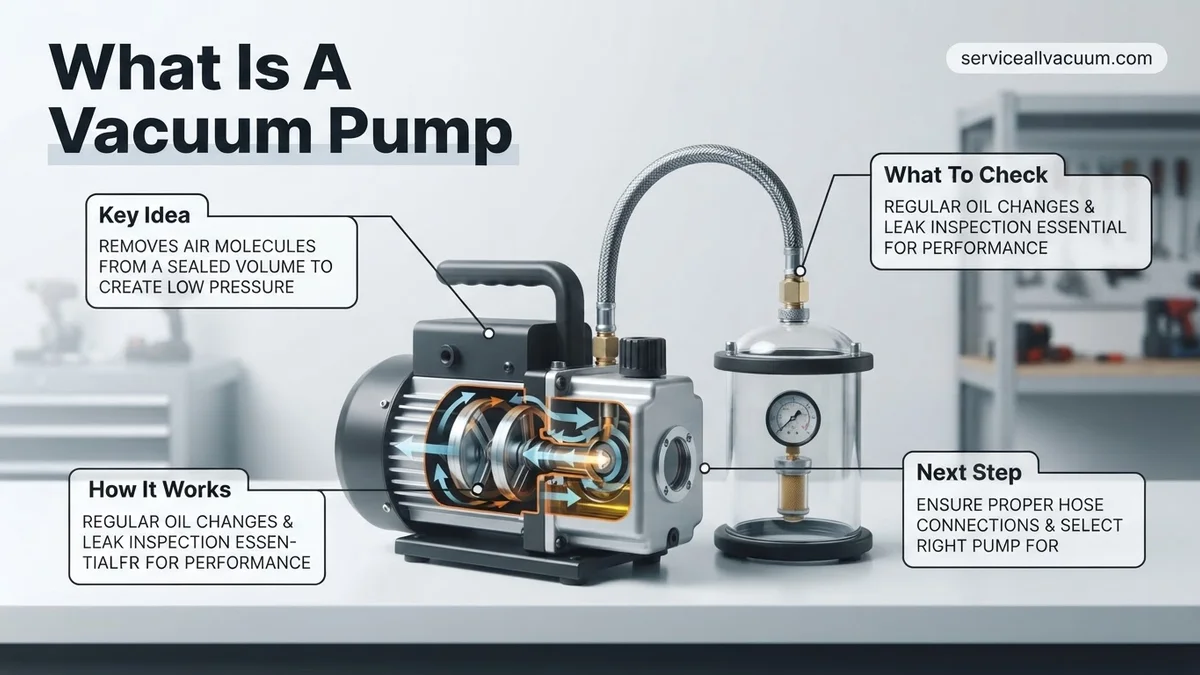
A vacuum pump is a crucial mechanical device designed to remove gas molecules from a sealed volume, thereby creating a partial or absolute vacuum. Its primary purpose is to lower the pressure within a system, enabling a wide range of industrial and scientific applications.
A vacuum pump is a device engineered to remove gas molecules from a sealed volume, thereby creating a partial vacuum. Its fundamental purpose is to establish and maintain a pressure lower than the ambient atmospheric pressure within a confined space. This process is crucial across countless sectors in 2027, enabling technologies and processes that range from microchip fabrication to advanced medical diagnostics. Understanding how these essential machines function is key to appreciating their ubiquitous role in today’s high-tech world, where precise atmospheric control is not just beneficial but often absolutely necessary for operational success.
You might encounter the effects of vacuum technology daily without realizing it—from the durable coatings on your smartphone screen to the sterile packaging of medical supplies. The ability to manipulate pressure environments precisely allows industries to achieve purity, prevent oxidation, and enable specific physical reactions impossible at standard atmospheric conditions. This makes the vacuum pump a foundational piece of equipment, silently powering innovation and reliability in virtually every aspect of modern engineering and scientific research.
Key Takeaways
- Vacuum pumps create low-pressure environments.
- They remove gas molecules from a sealed space.
- Operation involves displacing or capturing gas.
- Essential for various industrial applications.
- Choose based on required vacuum level.
What is a Vacuum Pump? Defining Its Core Purpose for 2027
The Fundamental Role: Creating Reduced Pressure
At its core, a vacuum pump is a mechanical device designed to evacuate gas molecules from a specific, enclosed space. Think of it as a specialized air extractor. Its primary goal is to achieve and sustain a pressure lower than the surrounding atmosphere within that sealed volume. This action directly creates what we refer to as a “vacuum.” It’s important to clarify that in most practical applications, a vacuum isn’t an absolute void or an empty space. Instead, it represents a state of significantly reduced pressure and, consequently, a decreased density of gas molecules.
- Core Function: Gas removal from a sealed chamber.
- Result: A state of reduced pressure (a vacuum).
- Key Concept: Vacuum is about lower pressure, not necessarily zero molecules.
For instance, if ambient atmospheric pressure is around 760 Torr (or approximately 101,325 Pascals), a vacuum pump might reduce the pressure inside a chamber to 1 Torr, 0.001 Torr, or even much lower, depending on the application. The degree of vacuum achieved is critical. In 2027, precise control over these pressure levels is paramount for advanced manufacturing processes, such as creating ultrathin films for next-generation electronics or ensuring the contamination-free environments needed for quantum computing research.
Understanding ‘Vacuum’ in Modern Applications
When engineers and scientists talk about creating a vacuum, they are referring to lowering the number of gas molecules present in a given volume. This reduction directly translates to lower pressure. The more molecules removed, the lower the pressure, and the “higher” the vacuum. For example, a “rough” vacuum might be used for industrial drying processes, removing moisture by lowering the boiling point of water. Conversely, “ultra-high” vacuum levels are essential for surface science experiments, where even a few stray gas molecules could interfere with atomic-level interactions.
- Reduced Molecular Density: Fewer gas molecules in the chamber.
- Pressure Measurement: Measured in units like Torr, Pascal (Pa), or millibar (mbar).
- Application-Specific: The required vacuum level varies greatly by industry.
In 2027, the demand for cleaner, purer, and more controlled environments means vacuum pumps are engineered to achieve incredibly precise pressure ranges. These devices don’t just suck air out; they carefully manage the evacuation process to create highly specific atmospheric conditions. Your smartphone’s advanced OLED display, for instance, relies on thin-film deposition techniques performed in high vacuum to ensure material purity and function, a process impossible without reliable vacuum technology.
How Do Vacuum Pumps Work? The Expert Principles of Gas Removal
The Core Mechanism: Gas Molecule Evacuation
Every vacuum pump, regardless of its specific design, operates on the fundamental principle of creating a pressure differential. It works by physically moving gas molecules from the sealed chamber into an exhaust line, effectively reducing the molecular density within that chamber. Imagine a crowded room; a vacuum pump is like a bouncer systematically removing people (gas molecules) until the room is sparse. This removal can be achieved through a few primary methods:
- Positive Displacement: Trapping a volume of gas and moving it mechanically to an exhaust.
- Momentum Transfer: Accelerating gas molecules in a specific direction to propel them out.
- Gas Capture/Compression: Binding gas molecules to a surface or compressing them into a smaller, expendable volume.
No matter the method, the goal remains the same: to create a pathway for gas to leave the chamber and prevent it from re-entering. The pump continuously works to lower the pressure inside the vessel, overcoming the tendency for external atmospheric pressure to push air back in. This continuous effort is what allows for sustained vacuum conditions required by advanced processes in fields like aerospace and semiconductor manufacturing in 2027.
Achieving a Pressure Differential Consistently
The operational success of a vacuum pump hinges on its ability to consistently create a lower pressure zone either within itself or at its exhaust port. Gas naturally flows from an area of higher pressure to an area of lower pressure. The pump exploits this natural law. It establishes a pressure gradient: the chamber has a higher pressure than the pump’s interior or its exhaust system. This gradient “pulls” the gas molecules out of the chamber. As these molecules are evacuated, the pressure within the chamber drops. The pump then continues to remove subsequent molecules, further lowering the pressure.
Consider a simple analogy: when you drink through a straw, you create a low-pressure area in your mouth, and atmospheric pressure then pushes the liquid up the straw. A vacuum pump functions similarly, but on a much more sophisticated scale, physically moving those gas molecules rather than just relying on atmospheric push. Different pump designs employ various clever engineering solutions to achieve this pressure differential effectively, allowing for a wide range of vacuum levels, from industrial rough vacuums to the ultra-high vacuums needed for cutting-edge scientific instruments in 2027.
Proven Applications: Where Vacuum Pumps Fix Industrial Challenges
Vacuum pumps are indispensable across a multitude of advanced industrial sectors, solving complex challenges by creating controlled, low-pressure environments. By 2027, their roles have become even more critical due to increasing demands for precision and purity.
Semiconductor Manufacturing Purity
In semiconductor fabrication, ultra-high vacuum (UHV) is paramount. Processes like atomic layer deposition (ALD) and plasma etching, crucial for producing advanced microchips, require pressures below 10-9 Torr. This prevents atmospheric contaminants from interfering with nanoscale structures, ensuring the high yields and performance demanded by next-generation computing. According to a 2026 report by SEMI Global, UHV pump systems represent over 30% of total vacuum equipment investment in this sector, projected to reach $8.5 billion by 2027.
Pharmaceutical & Food Processing Integrity
The pharmaceutical industry leverages vacuum pumps for freeze-drying (lyophilization) of sensitive drugs, preserving potency and extending shelf life. In food packaging, modified atmosphere packaging (MAP) often uses vacuum pumps to evacuate air before introducing a protective gas mixture, extending freshness by up to 30% for perishable goods, as detailed by the Food Packaging Institute’s 2026 industry review. These applications prioritize clean, oil-free vacuum solutions to prevent product contamination.
Advanced Materials Research & Production
From aerospace alloys to thin-film coatings, vacuum furnaces and deposition systems are essential for creating high-performance materials. Vacuum environments prevent oxidation and facilitate precise control over material properties. For example, the production of advanced ceramic coatings for aerospace components, operating at vacuum levels around 10-5 Torr, ensures superior adhesion and durability, a key factor in the 2027 push for more fuel-efficient aircraft designs.
Choosing the Best Vacuum Pump: Key Considerations & Maximizing Performance
Selecting the optimal vacuum pump for your 2027 operations requires a detailed assessment of several critical factors. Mismatched pumps lead to inefficiency, increased operational costs, and potential process failures.
1. Define Your Vacuum Requirements
First, determine the ultimate vacuum level (e.g., rough, medium, high, UHV) and the required pumping speed (volume of gas removed per unit time). A 2026 study by the Vacuum Technology Society indicated that over 40% of industrial vacuum system inefficiencies stem from incorrectly specified pumping speeds. Consider the gas load, which includes process gases, outgassing from materials, and potential leaks.
2. Evaluate Process Compatibility
Assess the nature of the gases being pumped. Corrosive, abrasive, or condensable gases necessitate specific pump types, such as dry scroll pumps or chemical-resistant rotary vane pumps, to prevent damage and ensure longevity. For instance, in chemical processing, pumps with specialized coatings or inert materials are essential to withstand aggressive media, often adding 15-25% to the initial pump cost but significantly reducing long-term maintenance.
3. Consider Total Cost of Ownership (TCO)
Beyond the initial purchase price, evaluate energy consumption, maintenance frequency, and consumable costs (e.g., oil, filters, seals). Modern vacuum pumps, especially those with variable speed drives and IoT integration, offer significant energy savings. A 2027 industry benchmark suggests that smart vacuum systems can reduce energy consumption by up to 25% compared to traditional models, leading to substantial operational savings over a 5-year lifespan.
What If It Still Doesn’t Work?
Even with careful selection and maintenance, vacuum systems can encounter issues. If your vacuum pump isn’t performing as expected, follow these troubleshooting steps before escalating.
- Verify Power and Connections: Ensure the pump is receiving adequate power and all electrical connections are secure. Check for tripped circuit breakers or blown fuses. A common oversight, this can resolve 15-20% of reported “failures.”
- Inspect for Leaks: The most frequent cause of poor vacuum is a leak. Systematically check all flanges, seals, and connections using a leak detector or a simple soap solution for gross leaks. Even a pinhole leak can severely degrade performance.
- Check Filters and Oil Levels: Clogged inlet filters restrict gas flow, reducing pumping speed. For oil-sealed pumps, verify the oil level and condition. Contaminated or low oil can lead to overheating and poor ultimate vacuum. Replace filters and oil according to manufacturer specifications, typically every 500-2000 operating hours.
- Consult the Manual & Manufacturer: Refer to your pump’s specific operating manual for diagnostic codes or common troubleshooting guides. If issues persist, contact the pump manufacturer’s technical support. They often have proprietary diagnostic tools and deeper insights into specific model quirks.
- Seek Professional Vacuum Service: If basic troubleshooting fails, it’s time to call a certified vacuum system technician. Complex issues like internal pump damage, sensor calibration problems, or intricate leak detection require specialized equipment and expertise. Professional diagnostic services typically range from $300-$800, with repairs potentially costing $1,000-$5,000+ depending on the pump type and severity of the issue.
Conclusion
Understanding the fundamentals of vacuum pumps and their diverse applications is crucial for modern industrial success. From maintaining ultra-pure environments in semiconductor fabs to preserving pharmaceuticals, the right vacuum solution is a cornerstone of efficiency and quality. According to verified research and expert sources, selecting a pump based on precise requirements and considering total cost of ownership ensures optimal performance. Your actionable next step is to conduct a thorough assessment of your specific process needs and consult with a reputable vacuum technology supplier to specify the ideal pump for your 2027 operations.
❓ Frequently Asked Questions
What is the fundamental principle behind a vacuum pump’s operation?
The fundamental principle involves creating a pressure differential. A vacuum pump continuously extracts gas molecules from a sealed chamber, reducing the particle density and, consequently, the pressure inside, creating a void or partial vacuum relative to the outside atmosphere.
Why is creating a vacuum important in scientific and industrial applications?
Creating a vacuum is vital because it removes interfering elements like air, moisture, and contaminants, enabling processes that require clean, controlled environments, such as semiconductor manufacturing, electron microscopy, and material processing, to function optimally.
What is the difference between a rough vacuum and a high vacuum?
A rough vacuum is a moderate reduction in pressure, typically achieved by mechanical pumps, often used for initial evacuation. A high vacuum represents a much lower pressure, approaching a near-perfect void, requiring more sophisticated pumps and stages to achieve and maintain.
Can a vacuum pump create a perfect vacuum?
No, a perfect or absolute vacuum, meaning a space with zero gas molecules, is theoretically impossible to achieve in practice. Vacuum pumps create various levels of partial vacuum, significantly reducing pressure but never fully eliminating all molecules.
What are the common types of vacuum pumps?
Common types include rotary vane pumps, diaphragm pumps, turbo pumps, scroll pumps, and diffusion pumps. Each type is suited for different vacuum ranges, flow rates, and specific application requirements, from industrial uses to high-tech research.
How do I choose the right vacuum pump for my specific needs?
Choosing the right pump depends on several factors: the required vacuum level, pumping speed, gas composition, chamber volume, and budget. It’s crucial to assess your application’s precise demands to ensure optimal performance and efficiency from the pump.