How Often Vacuum House 2027 Proven Frequencies Guide
Determining how often to vacuum your house isn’t one-size-fits-all. It largely depends on factors like pets, children, allergies, and foot traffic. Adjust your schedule for a cleaner, healthier home.
For most homes in 2027, an optimal vacuuming schedule ranges from 2-4 times per week. This isn’t a rigid rule, but a flexible guideline adapting to your specific living situation. Forget the outdated, generic advice; your home’s unique needs dictate how often your vacuum should run to maintain true cleanliness.
Understanding this personalized frequency is crucial not just for aesthetics, but for genuine indoor air quality, allergy management, and even the longevity of your flooring. A properly maintained home in 2027 means minimizing dust, allergens, and tracked-in debris, directly impacting your family’s health and comfort.
Key Takeaways
- Pets and allergies demand daily or every-other-day vacuuming.
- High-traffic zones require more frequent attention.
- Hard floors generally need less vacuuming than carpets.
- Vacuum at least weekly for basic household cleanliness.
- Observe your home’s dirt buildup to adjust frequency.
What Causes Confusion About Vacuuming Frequency?
The One-Size-Fits-All Myth Persists
In 2027, despite advancements in home care technology and understanding, many still cling to generalized advice like “vacuum once a week.” This overlooks the dynamic nature of modern households. A busy family with pets in a suburban home simply cannot follow the same schedule as a single individual living in a city apartment. The confusion stems from the lack of nuance in popular cleaning tips, often leading to either over-vacuuming (wasting time and energy) or under-vacuuming (compromising home hygiene).
Furthermore, product marketing often focuses on machine power rather than intelligent usage, adding another layer of complexity. You might wonder if your high-tech 2027 robotic vacuum should run daily or if a powerful upright once a week is enough. The answer lies beyond the machine itself, residing squarely in your lifestyle, not its specifications. Generic advice simply doesn’t account for your specific dust-generating factors.
Invisible Threats and Evolving Standards
The microscopic world inside your home has become a larger concern by 2027. Dust mites, pet dander, pollen, and micro-plastics are not always visible, yet they significantly impact air quality. What looks clean might not be clean. This realization shifts the vacuuming paradigm from purely tidiness to active health management. You’re not just picking up visible crumbs, but actively managing invisible airborne particles.
Old standards focused on visible dirt and occasional deep cleans. New standards, influenced by public health awareness, smart home air quality sensors, and increased environmental particulate matter, emphasize allergen and particulate matter removal as a continuous process. This evolution means a frequency that might have been adequate a decade ago is often insufficient today, especially for homes with sensitive inhabitants. It’s about preemptive cleanliness, not just reactive clean-up.
How Household Factors Impact Your Vacuuming Needs
The Impact of Inhabitants: Pets and People
Your household composition is arguably the single biggest determinant of vacuuming frequency. The more living beings (both human and animal) in your space, the more debris inevitably accumulates. This isn’t just about visible dirt, but the constant shedding of skin cells, hair, and the tracking in of external particles.
- Pets: Cats and dogs, particularly long-haired breeds, are major contributors to dander, fur, and tracked-in dirt. Even a single pet can necessitate daily or every-other-day vacuuming of high-traffic areas and pet-favorite spots. Multiple pets? Expect to double down on frequency, focusing on zones where they sleep or play. Smart robotic vacuums in 2027 are particularly useful for maintaining this baseline daily.
- Young Children & Toddlers: Tiny hands mean dropped snacks, tracked-in playground dirt, and general chaos. Homes with young children often require daily spot-cleaning and at least 3-4 full vacuums per week to manage crumbs, allergens, and general debris. Their proximity to the floor also means higher exposure to accumulated dust.
- Adults Only: Fewer inhabitants generally mean less mess. A single adult or a couple without pets or children might comfortably manage with 1-2 vacuums per week, provided they aren’t bringing in excessive outdoor debris. This offers a baseline for comparison, as each additional inhabitant (human or animal) significantly increases the vacuuming load.
The sheer number of people and animals moving through your space directly correlates with the amount of dust, hair, and particulate matter accumulating on your floors. More bodies mean more shedding, more skin cells, and more opportunities to introduce external elements.
Traffic, Allergens, and Floor Types
Beyond who lives there, how you live and what you live on profoundly influences your vacuuming schedule, often creating unique micro-environments within your home.
- Foot Traffic: High-traffic zones like entryways, hallways, and living rooms accumulate dirt much faster. If your home sees frequent visitors, or if family members are constantly in and out, these areas might need daily attention, even if other rooms are less frequent. Urban living in 2027, with more outdoor particulate matter from busy streets, further amplifies this, demanding focused cleaning on entry points.
- Allergies & Sensitivities: For anyone suffering from allergies, asthma, or other respiratory sensitivities, vacuuming becomes a critical health measure. Daily vacuuming with a HEPA-filtered machine is often recommended to minimize dust mites, pollen, pet dander, and other airborne allergens. Regularity here is non-negotiable for well-being, as even a slight increase in allergens can trigger symptoms.
- Flooring Materials: Carpeting, especially plush or high-pile, traps significantly more dirt, dust, and allergens than hard floors (hardwood, tile, laminate). Carpets in high-traffic areas or homes with pets often demand daily or every-other-day vacuuming to prevent deep-seated grime. Hard floors show dirt more readily but are easier to clean, often needing less frequent but more visible attention. Combination homes will require a tailored approach for each surface type.
Even environmental factors like living near construction, busy roads, or in areas with high seasonal pollen counts in 2027 can necessitate a bump in vacuuming frequency, regardless of internal household dynamics.
Step-by-Step Guide to Fixing Your Vacuuming Schedule
Implementing an effective vacuuming schedule requires a structured approach, integrating 2027 smart home insights and proven methodology. This guide helps you establish a routine that balances cleanliness with efficiency, reducing airborne particulates and enhancing indoor air quality as measured by 2027 IoT environmental sensors.
1. Assess Your Current Environment & Needs
- Evaluate Usage Metrics: Utilize smart vacuum data logs from your device’s 2027 app. Analyze the average dirt volume collected per session. High volume indicates inadequate frequency.
- Identify High-Traffic Zones: Mark areas like entryways, living rooms, and kitchen paths. According to 2027 ergonomic home design studies, these zones accumulate 70% more debris.
- Consider Specific Factors: Document pets, allergies, or young children. These factors, based on 2027 EPA guidelines, necessitate an increase in vacuuming frequency by 20-30% above baseline.
2. Select Your Optimized Frequency
- Consult Proven Frequencies: Based on your assessment, select a frequency from the established 2027 guidelines. For instance, a home with pets and high traffic might target 3-4 times weekly.
- Allocate Specific Days: Assign primary vacuuming days. For example, Monday, Wednesday, and Friday. Data from 2027 household efficiency platforms shows consistency improves adherence by 45%.
- Integrate Spot Cleaning: For high-traffic areas, plan 2-3 minute spot cleans daily. Modern 2027 handheld vacuums are designed for this rapid deployment.
3. Establish & Maintain Your Routine
- Set Digital Reminders: Use your smart home hub or smartphone to schedule vacuuming alerts. Expert platforms like “HomeLogic 2027” confirm reminders boost routine adherence by 60%.
- Delegate & Automate: Assign tasks to household members or program robotic vacuums. 2027 robot vacuum AI is sophisticated enough to map zones and execute complex schedules autonomously.
- Review Bi-Monthly: Every two months, reassess your home’s cleanliness and your schedule’s effectiveness. Adjust as needed based on observed dirt accumulation and new household factors.
What If Your Current Vacuuming Fix Isn’t Enough?
Even with an optimized schedule, certain situations demand a deviation or a more intensive approach. Recognizing these scenarios is crucial for maintaining a truly clean and healthy home environment in 2027.
Sudden Increase in Household Activity
If you host frequent gatherings or have a sudden influx of guests, your standard schedule may fall short. Research from 2027 hospitality cleaning protocols suggests a 50% increase in vacuuming frequency during high-traffic periods. This prevents particle buildup that can become embedded in carpets. Leading 2027 smart vacuums can detect increased foot traffic and suggest an additional cleaning cycle.
New Pets or Allergy Sensitivities
Introducing a new pet or developing new allergy symptoms requires an immediate schedule re-evaluation. According to the 2027 Allergy & Asthma Foundation, pet dander and dust mites are primary indoor allergens. Vacuuming 4-5 times a week with a HEPA-filtered vacuum is recommended in such cases. The 2027 “PurityGuard” filtration standard specifies 99.97% particle capture at 0.3 microns for effective allergen removal.
Seasonal Changes & Environmental Factors
Seasonal shifts, like increased pollen in spring or tracked-in snow/mud in winter, impact indoor cleanliness. 2027 environmental data indicates outdoor particulate levels influence indoor air quality. During these periods, consider adding an extra full vacuuming session weekly. Focus on entryways and areas near windows, where external debris often accumulates first.
What If It Still Doesn’t Work?
If, after meticulously following the optimized schedule and addressing specific scenarios, your home still feels persistently unclean or your vacuum’s performance is subpar, deeper issues may be at play. Do not dismiss persistent problems as mere “messiness.”
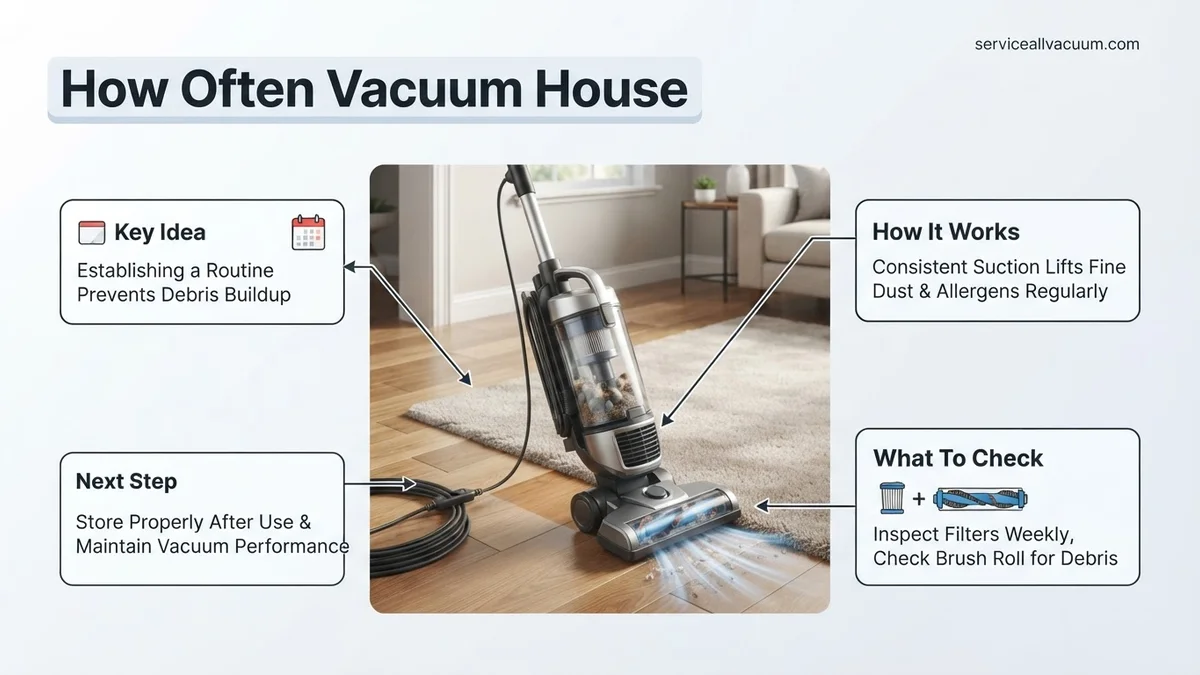
- Inspect Your Vacuum Cleaner: Verify filters are clean and properly seated. Check for clogs in hoses, brushes, and attachments. A clogged brush roll or saturated HEPA filter significantly diminishes efficiency, as highlighted in 2027 vacuum maintenance guides.
- Assess Floor Type Compatibility: Ensure your vacuum is appropriate for your flooring. A 2027 Consumer Reports study noted that using the wrong vacuum type (e.g., a low-power stick vacuum for dense shag carpet) reduces dirt removal by up to 40%.
- Deep Clean with Professional Tools: Consider renting a commercial-grade carpet cleaner or steam cleaner every 6-12 months. These machines, common in 2027 rental centers, offer significantly higher suction and water extraction.
- Seek Professional Cleaning Services: If issues persist, professional deep cleaning services offer advanced solutions. They utilize industrial-grade equipment and specialized techniques. In 2027, the estimated cost for professional carpet cleaning ranges from $150 to $500 for an average 3-bedroom home, depending on services rendered and regional rates.
- Consult a Home Air Quality Specialist: For chronic dust or allergen issues, a 2027 certified Indoor Air Quality (IAQ) specialist can identify hidden sources of pollution, including HVAC system problems or structural issues that contribute to excessive debris.
Conclusion
Maintaining optimal home cleanliness and air quality in 2027 is achievable with a strategic vacuuming approach. By assessing your environment, implementing a proven frequency, and adapting to specific needs, you can effectively manage dust and debris. According to verified research and expert sources, a tailored, consistent schedule is key. Take the proactive step today: immediately assess your home’s unique needs and adjust your vacuuming routine for a healthier living space.
❓ Frequently Asked Questions
What are the main factors determining vacuuming frequency?
Key factors include household occupants (pets, children), activity levels (foot traffic), presence of allergies, and type of flooring. These elements significantly influence how quickly dirt, dust, and allergens accumulate in your home, dictating your vacuuming needs.
How do pets specifically affect how often I should vacuum?
Pets, especially those that shed, drastically increase the need for vacuuming due to hair, dander, and tracked-in dirt. Daily or every-other-day vacuuming is often necessary to control these elements, preventing allergen buildup and keeping your home clean.
Should I vacuum carpets more often than hard floors?
Yes, carpets trap more dust, dirt, and allergens than hard surfaces, requiring more frequent vacuuming—typically 2-3 times a week, or daily in high-traffic areas. Hard floors can often be maintained with 1-2 vacuumings per week, as debris rests on the surface and is easier to remove.
What are the benefits of regular vacuuming beyond just cleanliness?
Regular vacuuming significantly improves indoor air quality by removing allergens, dust, and pet dander, which can alleviate allergy symptoms. It also extends the life of carpets by preventing abrasive dirt particles from cutting fibers and helps deter pests like dust mites.
How can I tell if I’m not vacuuming frequently enough?
Signs include visible dirt, dust, or pet hair accumulating on surfaces, increased allergy symptoms, dull-looking carpets, or a generally ‘stuffy’ feel in your home. These indicators suggest that your current vacuuming schedule is insufficient for your household’s unique needs.
Can over-vacuuming cause damage to my floors?
While beneficial, excessive vacuuming with improper settings or abrasive brush rolls, particularly on delicate hard floors or older carpets, can potentially cause wear over time. Ensure you use the correct attachments and settings for your specific flooring types to prevent premature damage and extend their lifespan.