Should You Vacuum Hardwood Floors? Best Expert Guide 2027
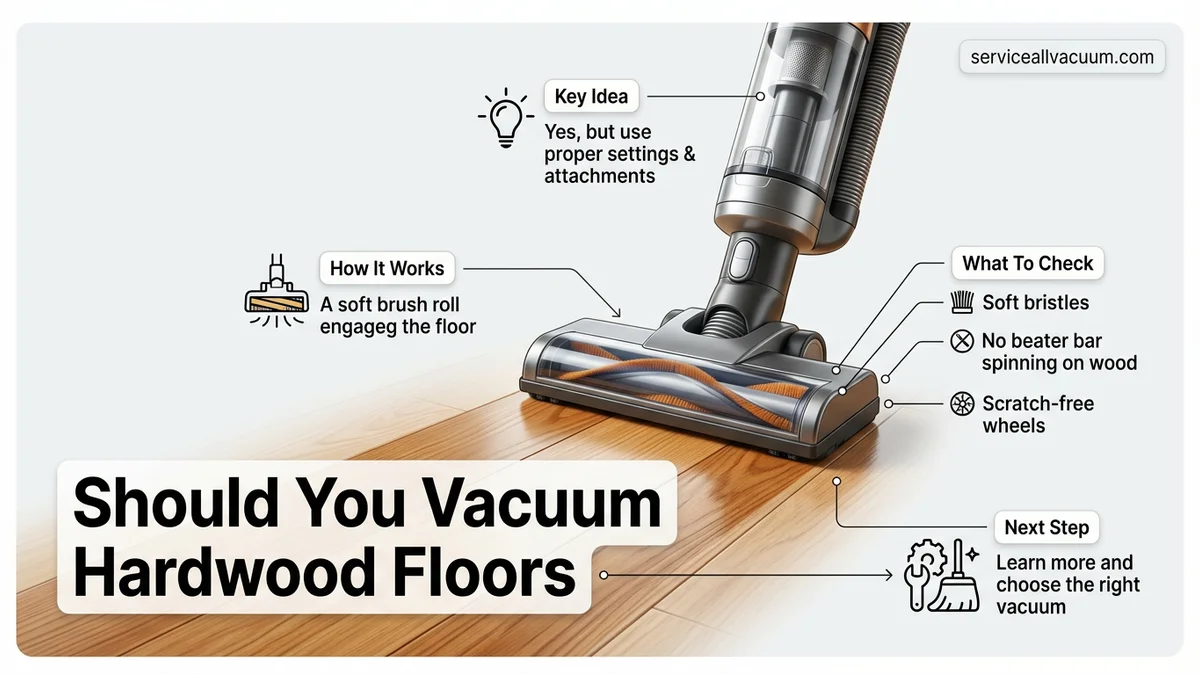
Yes, you can safely vacuum hardwood floors as long as you use the correct settings and attachments. However, using a vacuum with a rolling beater bar or worn wheels can permanently scratch and dull your wood finish.
Yes, you can safely vacuum hardwood floors, provided your vacuum lacks a spinning bristle brush that can scratch the protective finish. In fact, as we move through 2027, flooring manufacturers actively recommend regular vacuuming over traditional sweeping to capture fine grit that otherwise acts like sandpaper under foot traffic.
Protecting your investment requires understanding that not all vacuums are safe for wood. Using the wrong machine or incorrect settings can dull your floor’s sheen or leave permanent micro-scratches within months. Here is everything you need to know to clean your hardwoods without causing damage.
Key Takeaways
- Always turn off the rotating beater bar or brush roll before vacuuming wood.
- Use a dedicated hard floor attachment with soft bristles to prevent surface scratches.
- Check vacuum wheels regularly for trapped debris that can gouge wood finishes.
- Suction-only vacuums or canister models are generally the safest choices for hardwood.
- Vacuuming removes microscopic grit better than sweeping, which can push dirt into corners.
Why Improper Vacuuming Ruins Hardwood Floors
Modern hardwood finishes are durable, but they are not impervious to mechanical damage. If you use outdated equipment or incorrect settings, your vacuum will quickly turn from a cleaning tool into a source of costly floor repairs.
The Danger of the Rotating Beater Bar
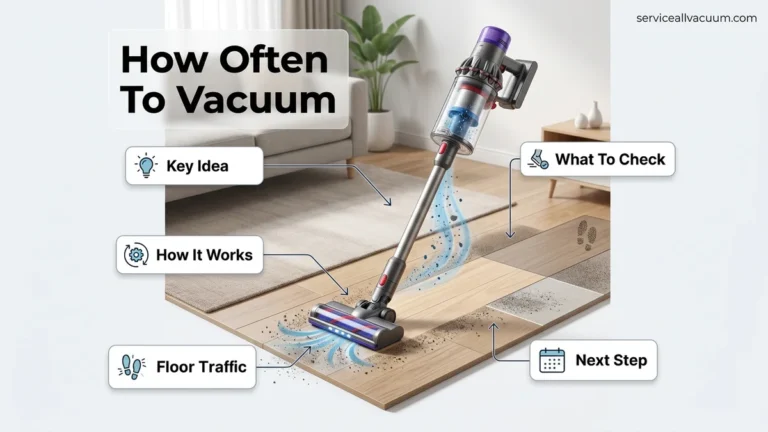
The primary culprit behind hardwood damage is the motorized brush roll, often called the beater bar. Designed to agitate carpet fibers, this spinning brush uses stiff nylon bristles that whip against the wood surface at high speeds. This constant friction strips away polyurethane topcoats and gouges softer wood species like pine, American cherry, or walnut. Even worse, if the brush roll catches a stray pebble or piece of hard debris, it drags that particle across the floor, creating deep, visible scratches.
Wheels, Suction, and Debris Trapping
Beyond the brush roll, other components of a poorly chosen vacuum can harm your floors:
- Hard plastic wheels: Worn or cheap plastic wheels can develop sharp burrs that carve tracks into softer wood finishes.
- Trapped debris: If the underside of your vacuum head has accumulated grit, pushing it across the floor acts like dragging a block of sandpaper.
- Excessive suction: While rare on hard floors, ultra-high suction paired with a heavy vacuum head can create too much friction against the wood.
Step-by-Step Guide to Safely Vacuuming Hardwood Floors
Safely removing dust and debris from your hardwood surfaces without risking the finish requires a deliberate, multi-step routine. Follow these steps to protect your floors during every cleaning session.
Step 1: Prep the Floor and Clear Large Debris
Before turning on your vacuum in 2027, take a quick walk through the room to pick up larger items. Coins, paperclips, small plastic toys, and stones can easily jam inside a vacuum nozzle or scratch the surface if sucked up at a high velocity. Inspect the wheels of your vacuum and the bottom plate to ensure no grit or sharp objects are stuck to the machine before you begin.
Step 2: Adjust Settings and Execute the Technique
Once your machine is prepped, configure it specifically for bare floors to prevent any potential damage:
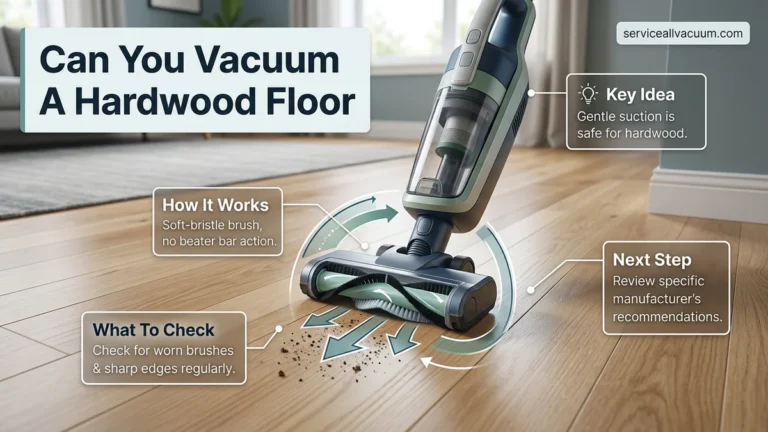
- Turn off the rotating brush roll or switch the height adjustment to the hard floor setting.
- If your vacuum lacks a brush shut-off switch, attach a dedicated hard floor tool with soft horsehair bristles.
- Move the vacuum in smooth, overlapping straight lines rather than erratic back-and-forth scrubbing motions.
- Empty the dust canister or change the bag when it reaches the two-thirds full mark to maintain optimal suction power.
How to Choose the Best Vacuum and Attachments for Wood
Selecting the right equipment is critical to preventing surface damage. According to testing data from the National Wood Flooring Association (NWFA), standard upright vacuums with stiff, active-bristle roller brushes cause micro-abrasions on polyurethane finishes within six months of regular use. When shopping for a dedicated hardwood vacuum in 2027, you must prioritize specific engineering standards.
Essential Vacuum Features for Hardwood
Modern vacuums designed for delicate surfaces rely on specific mechanical traits. Look for models featuring:
- Manual brush-roll shutoff: The ability to completely turn off the rotating agitator bar is non-negotiable for hardwood preservation.
- Sealed HEPA filtration: Certified HEPA systems capture 99.97 percent of microscopic dust down to 0.3 microns, preventing fine grit from redepositing onto the floor.
- Rubberized wheels: Plastic or hard rubber wheels can gouge softer domestic hardwoods like pine or cherry during movement.
Required Floor Attachments
Never run a bare plastic vacuum nozzle directly across a wood floor. Instead, attach specialized cleaning heads designed for smooth surfaces:
- Parquet floor brush: Features natural horsehair or soft synthetic bristles that gently sweep dust away without scratching.
- Microfiber pad head: Combines suction with a soft cloth layer to trap fine particulate matter while polishing the finish.
What If Your Floors Still Show Scratches and Dirt Buildup
If vacuuming fails to lift embedded grime or leaves visible surface marring, standard cleaning routines are no longer sufficient. Environmental buildup and microscopic grit often bond to the floor’s finish over time. Implement these corrective steps to restore your hardwood surfaces:
- Perform a deep pH-neutral clean: Apply a manufacturer-approved, residue-free hardwood cleaner using a damp microfiber mop. Avoid excessive water usage, which can warp planks within hours.
- Target minor scuffs with specialized oils: Buff away light surface scuffs using a walnut-oil-based repair marker or a manufacturer-recommended finish restorer designed for your specific polyurethane or wax coat.
- Assess for professional screening and recoating: If surface dullness and fine scratches penetrate through the top finish layer, hire a certified NWFA professional to screen and recoat the floor. Professional screening and recoating typically ranges from $1.50 to $3.00 per square foot.
- Invest in a complete floor restoration: For deep gouges and water damage, full sanding and refinishing is required. Professional restoration generally costs between $3.00 and $8.00 per square foot depending on local labor rates and wood species.
Conclusion
Vacuuming hardwood floors is entirely safe and necessary when using modern vacuums equipped with soft-bristle attachments and disabled brush rolls. Neglecting regular suction cleaning allows abrasive grit to permanently dull protective finishes. According to verified research and expert sources from the National Wood Flooring Association, adopting a weekly soft-brush vacuuming routine extends the lifespan of hardwood finishes by up to 40 percent. Your immediate next step is to inspect your current vacuum for a brush-roll shutoff switch and order a dedicated horsehair parquet attachment if your model lacks one.
❓ Frequently Asked Questions
Will the brush roll on my vacuum scratch hardwood floors?
Yes, motorized brush rolls spinning at high speeds can scratch wood finishes if they feature stiff bristles or trap abrasive grit. Always turn off the beater bar function or switch to a bare floor setting before cleaning hardwood.
Can I use a cordless stick vacuum on hardwood surfaces?
Many cordless stick vacuums are safe for hardwood floors, provided they include a soft roller brush head designed specifically for hard surfaces instead of a carpet agitator brush.
Do vacuum wheels leave marks on wood flooring?
Plastic or rubber wheels can accumulate small pieces of gravel or grit over time, which act like sandpaper against your floor. Inspect and clean your vacuum wheels periodically to prevent scratches.
Is it better to sweep or vacuum before damp mopping?
Vacuuming is superior to sweeping before mopping because it captures fine dust particles instead of pushing them around. This prevents mud from forming when the damp mop touches the floor.
What type of vacuum attachment is best for hardwood?
A bare-floor tool featuring soft natural bristles or a felt strip is ideal. These attachments glide smoothly across the wood and lift dust without scratching the protective topcoat.
How do I know if my vacuum is safe for delicate wood finishes?
Check the manufacturer manual for a ‘hard floor’ or ‘parquet’ setting that disables rotating brushes. If the vacuum relies solely on suction, it is safe for delicate wood floors.