How Long Does Meat Last in Vacuum Seal? Expert Guide 2027
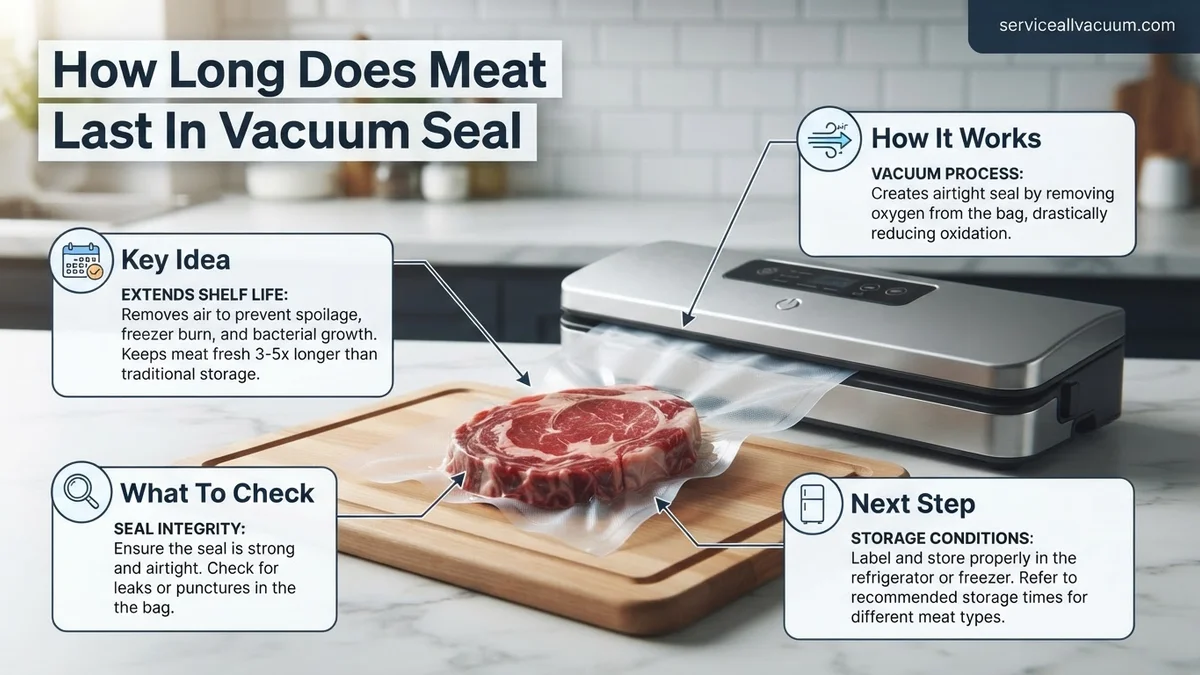
Vacuum sealing drastically extends the shelf life of meat by removing oxygen, increasing refrigerator storage from a few days to 1 to 2 weeks and freezer storage from months to 2 to 3 years. The exact longevity depends heavily on the specific type of meat, initial freshness, and storage temperature.
Vacuum sealing raw meat extends its refrigerated shelf life from the typical 2 to 4 days up to 10 days, while frozen storage jumps from a standard 6 months to 2 or 3 years. By removing oxygen from the packaging, you halt the oxidation processes and drastically reduce the aerobic bacterial growth that normally causes spoilage.
As food preservation technology and home appliances continue to improve in 2027, more households rely on vacuum sealers to eliminate freezer burn and cut down on weekly grocery costs. Knowing the exact timelines for different proteins helps you plan meals safely and prevents expensive cuts of meat from going to waste.
Key Takeaways
- Vacuum-sealed meat lasts 3 to 5 times longer in the freezer than standard wrapping.
- Ground meat spoils faster than whole cuts like steaks and roasts.
- Refrigerator vacuum storage extends raw chicken and beef life to 1-2 weeks.
- Freezer storage can preserve vacuum-sealed beef and pork for up to 3 years.
- Always check for off-odors and discoloration before consuming stored meat.
Understanding Why Vacuum Sealing Extends Meat Longevity
To get the most out of your vacuum sealer, you need to understand how the process alters the internal environment of your packaging. Removing air fundamentally changes how bacteria and freezer elements interact with your food.
The Role of Oxygen Removal
Standard storage leaves meat exposed to ambient oxygen, which triggers rapid lipid oxidation and allows aerobic bacteria to multiply quickly. When you use a vacuum sealer, you extract up to 99 percent of the air surrounding the protein.
- Stops Aerobic Bacteria: Most common food spoilage bacteria require oxygen to thrive and reproduce.
- Prevents Oxidation: Eliminating oxygen stops the chemical reactions that turn fats rancid and cause meat to discolor.
- Protects Moisture: The tight plastic barrier locks natural juices inside the meat fibers.
Combating Freezer Burn
Freezer burn occurs when moisture escapes from the surface of frozen meat into the dry air of your freezer, leaving the outer layer dry, gray, and tough. Traditional plastic wrap or butcher paper allows air pockets to form, which accelerates this moisture sublimation process.
A heavy-duty vacuum pouch conforms tightly to every contour of the meat. This airtight seal creates an absolute barrier against dry freezer air, keeping the internal moisture locked inside the tissue for years instead of months.
How Long Different Types of Meat Last in the Refrigerator and Freezer
Not all cuts of meat respond to vacuum sealing in the exact same way. Fat content, bone structure, and the original freshness of the protein all dictate your maximum safe storage window.
Beef, Pork, and Lamb (Red Meat)
Red meats possess dense muscle fibers and lower moisture levels than poultry or seafood, making them ideal candidates for long-term vacuum sealing.
- Refrigerator (34°F to 38°F): 7 to 10 days for steaks and roasts, compared to 3 to 5 days normally.
- Freezer (0°F or below): 2 to 3 years without developing freezer burn or losing structural integrity.
- Ground Red Meat: 4 to 6 days in the fridge and 1 year in the freezer due to increased surface area exposure.
Poultry and Seafood
Chicken, turkey, and fish have delicate cellular structures and higher moisture content, meaning they spoil faster even under ideal vacuum conditions.
- Poultry (Whole or Parts): 6 to 9 days in the refrigerator and up to 2 years in the freezer.
- Lean Fish: 4 to 6 days in the refrigerator and 1 to 2 years in the freezer.
- Fatty Fish (Salmon, Mackerel): 3 to 5 days in the refrigerator and 6 to 9 months in the freezer because residual oils can still oxidize slowly at low temperatures.
Step-by-Step Guide to Properly Preparing and Sealing Meat for Maximum Shelf Life
Maximizing the 2027 shelf-life benchmarks for your vacuum-sealed meat requires precise preparation techniques. Following standardized food safety protocols prevents premature spoilage and freezer burn.
1. Temperature Control and Hygiene
According to USDA food safety guidelines, meat must remain below 40 degrees Fahrenheit (4 degrees Celsius) during preparation. Sanitize all cutting boards, counters, and utensils to eliminate cross-contamination risks before handling raw poultry, beef, or pork.
2. Moisture Reduction
Pat the meat completely dry with paper towels before insertion into the pouch. Excess surface moisture prevents an airtight seal and creates breeding grounds for anaerobic bacteria.
3. Chamber or External Sealing Execution
Insert the meat into a BPA-free, commercial-grade vacuum pouch, ensuring at least three inches of headspace between the meat and the seal line. Select the appropriate moist or dry setting on your 2027-model vacuum sealer to guarantee a hermetic seal without liquid interference.
What If Your Vacuum Seal Fails or Signs of Spoilage Appear
Even with advanced 2027 sealing technology, packaging failures and food safety hazards can still occur. Recognizing the indicators of a compromised seal protects household health.
Recognizing Seal Failure
A compromised vacuum seal is characterized by lost suction, frost buildup inside the package, or a loose bag. If air re-enters the chamber, the extended shelf life reverts immediately to standard refrigeration or freezer timelines.
Detecting Spoilage
Inspect thawed or stored meat rigorously before cooking. Indicators of spoilage include a sour odor, sticky or slimy texture, and discoloration—such as a gray or green tint. When in doubt, discard the item immediately.
What If It Still Doesn’t Work?
If your vacuum sealer consistently fails to achieve a secure seal or maintain pressure, follow these troubleshooting steps:
- Inspect and Clean the Sealing Strip: Debris, fat, or moisture residue often blocks the heating element. Wipe the area with an isopropyl alcohol swab and dry completely.
- Verify Bag Compatibility: Ensure you are using textured or channel bags designed specifically for external suction sealers, rather than smooth chamber-sealer pouches.
- Check Gaskets and Foam Seals: Upper and lower rubber gaskets degrade over time. Replace worn gaskets using manufacturer-approved OEM parts, typically costing between $15 and $30.
- Test the Vacuum Pump: If the motor runs but draws no air, the internal vacuum pump may be failing. Consult a certified appliance repair technician. Professional diagnostics typically range from $75 to $150, which may exceed the replacement value of entry-level consumer sealers.
- Upgrade Equipment: If your machine is older than five years and struggles with heavy-duty sealing, upgrade to a modern chamber vacuum sealer or commercial-grade external unit for reliable performance.
Conclusion
Proper vacuum sealing dramatically extends the lifespan of fresh meat by eliminating oxygen exposure and preventing freezer burn. Executing correct preparation steps ensures your food remains safe and flavorful for months or years. According to verified research and expert sources from the USDA and food science laboratories, maintaining strict temperature controls and airtight seals is the definitive method for long-term meat preservation. Take the next step today by auditing your current sealing equipment and updating your storage inventory logs.
❓ Frequently Asked Questions
How long does vacuum sealed chicken last in the freezer?
Vacuum-sealed raw chicken pieces or whole chickens can last between 2 to 3 years in the freezer while maintaining their quality. In the refrigerator, vacuum-sealed chicken will safely last for up to 2 weeks.
Does vacuum sealed fish last as long as red meat?
No, fish and seafood have a shorter shelf life due to delicate fats and proteins. Vacuum-sealed fish lasts about 1 to 2 weeks in the fridge and up to 12 to 18 months in the freezer.
What factors reduce the shelf life of vacuum-sealed meat?
Initial bacterial load, fluctuating storage temperatures, poor seal integrity, and high-fat content can all cause vacuum-sealed meat to spoil faster than expected.
How can you tell if vacuum-sealed meat has gone bad?
Check for a sour or pungent odor upon opening the package, unusual sliminess, or a dull gray or green discoloration. If any of these signs are present, discard the meat immediately.
Is it safe to thaw vacuum-sealed meat inside the package?
Yes, thawing meat in the refrigerator while still in its vacuum seal is safe, but you should cut the bag open as soon as thawing is complete to prevent anaerobic bacterial growth.
Why did my vacuum-sealed meat turn brown in the freezer?
A slight darkening of meat in the freezer is normal due to the lack of oxygen and oxidation processes. However, if the meat smells spoiled upon thawing, do not consume it.