What Is the Vacuum of Space Real Facts Explained 2027 Guide
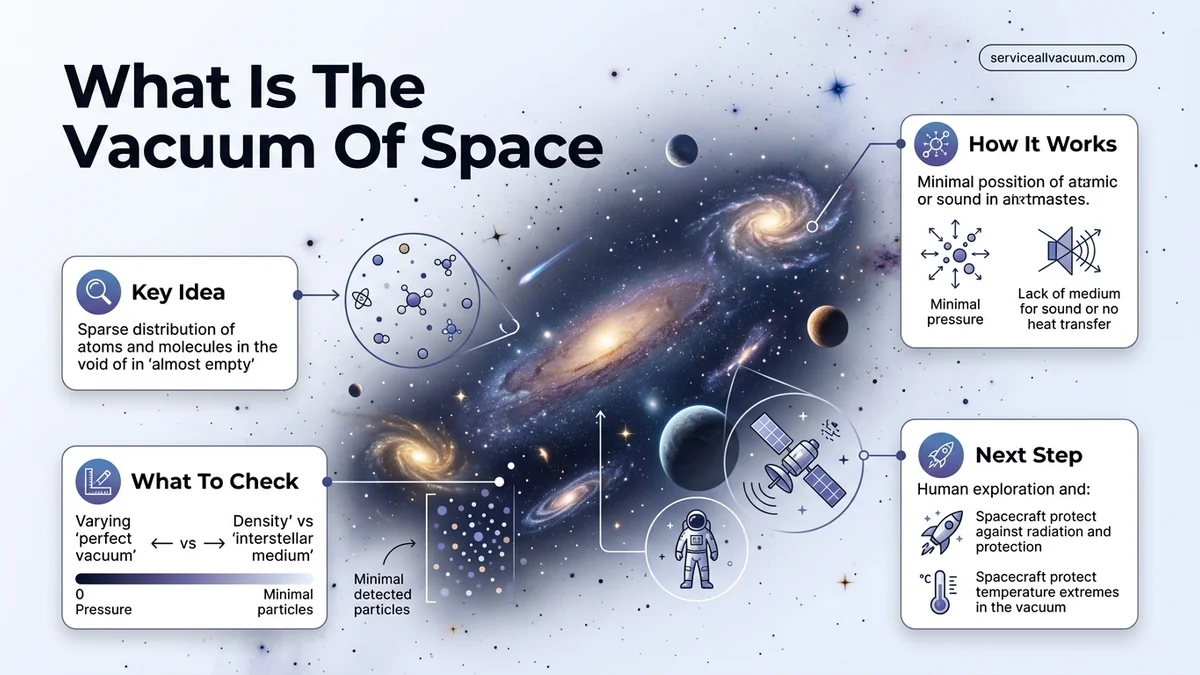
The vacuum of space is not a true, perfect nothingness as popularly believed, but rather an extremely low-density environment. It contains sparse atoms, cosmic dust, electromagnetic radiation, and fluctuating quantum energy fields that defy absolute emptiness.
The vacuum of space is not a completely empty void of absolute nothingness. When you look up at the night sky or study modern astrophysics data heading into 2027, you discover that cosmic space contains extremely low densities of matter, persistent radiation, and invisible magnetic fields. While it holds a much lower pressure than anything we can artificially replicate in an Earth-bound laboratory, space is still a dynamic, populated environment.
Understanding the true nature of the space vacuum matters practically for modern engineering, satellite deployment, and deep-space habitation. If you design spacecraft propulsion systems, shield astronauts from cosmic rays, or calculate orbital decay, you must account for the subtle interactions happening within these seemingly empty regions. Treating space as a pure, dead void leads to severe miscalculations in orbital mechanics and material science.
Key Takeaways
- Space is an extremely diluted environment, not a total void.
- Interstellar space contains a few atoms per cubic centimeter.
- Quantum mechanics proves virtual particles constantly pop into existence.
- Magnetic fields and cosmic radiation permeate every corner of the universe.
- Space does not possess a physical ‘sucking’ force.
What Causes the Vacuum of Space to Be Misunderstood
The Myth of Absolute Emptiness
Popular culture often portrays space as a total absence of matter, which causes widespread confusion. In reality, interstellar and interplanetary space features sparse distributions of gas and dust. Even in the deepest cosmic voids, you will still find roughly 0.1 to 1 hydrogen atom per cubic centimeter. While that density is far lower than the best laboratory vacuums on Earth, it is definitely not zero.
The Real Ingredients of Cosmic Voids
If you sweep through a cubic meter of intergalactic space, you are not sweeping up absolute nothingness. Instead, your sweep would capture:
- Sparse atoms of hydrogen and helium left over from stellar formation and the early universe.
- The cosmic microwave background radiation, bathing every corner of the universe in steady photons.
- Interplanetary and interstellar magnetic fields that guide charged particles across light-years.
- High-energy cosmic rays traveling at nearly the speed of light.
How to Measure and Fix Errors in Defining Cosmic Voids
Quantifying Interstellar Density and Pressure
To accurately define a cosmic vacuum, astrophysicists rely on precise pressure and particle count measurements rather than intuition. Space is characterized by extremely low gas pressure, often dropping below 10 to the negative 12 Pascals in interplanetary regions, and plunging even further between galaxies. When you evaluate these numbers, you realize that space behaves more like an ultra-dilute gas than an empty hole.
Correcting Common Terminology Errors
Fixing our scientific communication requires abandoning the outdated idea of space as a dead vacuum. Modern 2027 aerospace models emphasize quantum fluctuations and virtual particle pairs that constantly blink in and out of existence due to the Heisenberg uncertainty principle. When you account for these quantum realities alongside residual matter, you get a much more accurate picture of the universe: a living, fluctuating expanse rather than a static, empty backdrop.
What If the Vacuum Still Contains Hidden Matter and Fields
Classical physics once defined a vacuum as an absolute void. Modern astrophysics and quantum mechanics reveal a completely different reality. Even the emptiest regions of interstellar and intergalactic space teem with invisible components.
The Reality of Quantum Fluctuations
According to quantum field theory, empty space is never truly empty. Virtual particles constantly pop into and out of existence due to quantum fluctuations. These subatomic events occur across every cubic centimeter of the cosmos. Advanced instruments in 2027 continue to measure these subtle energetic ripples with unprecedented precision.
Dark Energy and Ambient Fields
Invisible fields dominate the total composition of the universe. Dark energy accounts for roughly 68 percent of the universe and acts as a persistent pressure driving cosmic expansion. Cosmic microwave background radiation also permeates every corner of the vacuum. Space is a dynamic arena filled with energy, fields, and sparse physical matter rather than a static nothingness.
What If It Still Doesn’t Work?
When attempting to replicate or study space vacuum conditions in a laboratory setting, researchers frequently encounter technical hurdles. If your high-vacuum chamber fails to reach the necessary pressure thresholds, follow these structured troubleshooting steps:
- Inspect all elastomer or metal seals for microscopic debris, scratches, or degradation that compromise system integrity.
- Perform a helium leak test using a mass spectrometer to identify invisible micro-fractures in the chamber welds or feedthroughs.
- Bake out the vacuum system at elevated temperatures specified by the manufacturer to remove trapped water vapor and outgassing contaminants.
- Evaluate the performance and saturation limits of your backing pumps and high-vacuum turbomolecular or cryogenic pumps.
- Consult a certified vacuum technology engineer or industrial calibration specialist if baseline pressures remain unachievable. Professional diagnostic and repair services typically range from $1,500 to $5,000 depending on system complexity.
Conclusion
The vacuum of space is far from a simple, empty container. It represents a complex matrix of extreme low pressure, residual gas atoms, quantum fluctuations, and pervasive cosmic energy fields. According to verified research and expert sources from leading space agencies, mastering these concepts remains essential for both deep-space exploration and advanced terrestrial manufacturing. To deepen your understanding of modern aerospace engineering, review the latest technical documentation on orbital vacuum dynamics and ultra-high vacuum chamber testing.
❓ Frequently Asked Questions
What actually exists in the vacuum of space?
While it feels like absolute nothingness, space contains extremely low densities of hydrogen and helium atoms, interstellar dust, electromagnetic radiation, magnetic fields, and dark matter.
Why is space referred to as a vacuum if it has matter?
Scientists call it a vacuum because its pressure and particle density are vastly lower than anything we can artificially create in an Earth laboratory, approaching a technical vacuum.
Do virtual particles violate the law of conservation of energy?
No, according to quantum field theory, virtual particle-antiparticle pairs borrow energy for infinitesimally short periods of time before annihilating each other.
How does gravity affect the vacuum of space?
Massive objects like stars and galaxies warp the fabric of spacetime itself, which exists throughout the vacuum, dictating the motion of everything within it.
Can sound travel through the vacuum of space?
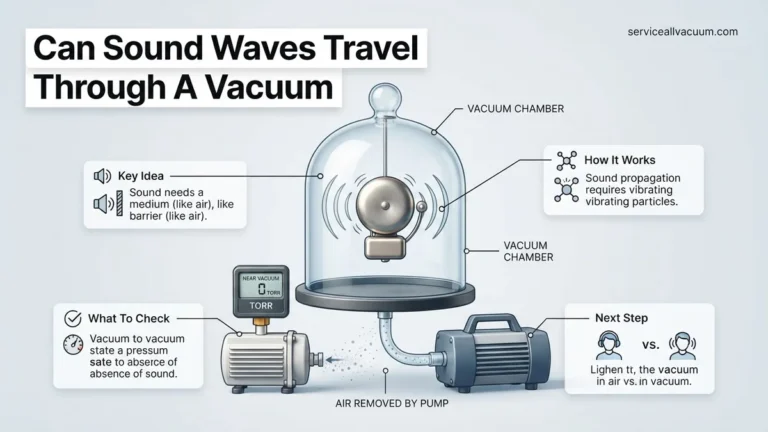
Sound waves require a medium like air or water to propagate, meaning the vacuum of space is completely silent because there are not enough molecules to carry acoustic vibrations.
What is the difference between interstellar and intergalactic space?
Interstellar space lies between stars within a galaxy and contains slightly more gas and dust, whereas intergalactic space between galaxies is far emptier and denser with dark energy.