Is Kirby a Good Vacuum? Real Expert Guide 2027
While Kirby vacuums are renowned for their exceptional deep cleaning power and robust durability, their high cost, significant weight, and direct sales model make them a polarizing choice. Deciding if a Kirby is ‘good’ depends heavily on your specific needs, budget, and tolerance for its unique characteristics.
In 2027, the question “Is a Kirby a good vacuum?” still sparks debate among homeowners. The straightforward answer is: yes, for specific needs and priorities, the Kirby remains an exceptional, albeit niche, cleaning solution. However, it’s not the universal “best” for everyone. This isn’t about general vacuum advice; it’s about whether Kirby delivers worthwhile value for your significant investment, weighing its legendary performance against its distinctive drawbacks. Understanding this balance is critical before you commit to such a unique household appliance.
For decades, Kirby has cultivated a reputation for unparalleled cleaning power and robust construction. While the vacuum market is flooded with lightweight, tech-heavy contenders in 2027, the Kirby continues to stand apart by focusing on brute force performance and a multi-functional design. This guide cuts through the marketing to give you a pragmatic evaluation of whether this enduring machine truly lives up to its hype and hefty price tag in today’s home cleaning landscape.
Key Takeaways
- Kirby offers superior deep cleaning and durability.
- Beware of significant weight and premium price.
- Understand the direct sales model and bag system.
- Ideal for large homes, pet owners, deep carpets.
- Assess personal needs vs. investment carefully.
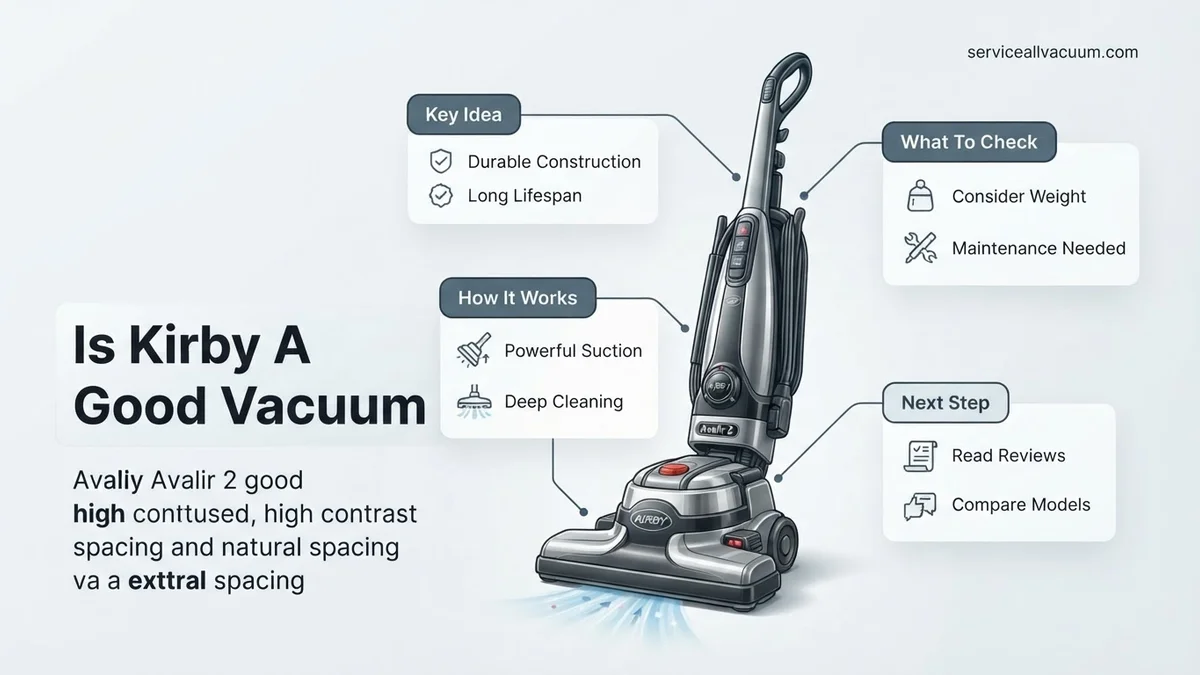
Assessing Kirby’s Core Value: The Deep Dive
Unrivaled Durability & Build Quality
When you invest in a Kirby, you’re buying into a machine built to outlast most of your other appliances. In 2027, while many consumer electronics are designed with planned obsolescence, Kirby vacuums are still constructed from heavy-duty, aircraft-grade aluminum and precision-machined steel components. This isn’t a plastic fantastic; it’s a tank designed for decades of rigorous use. Many owners report their Kirby units, even those from the 1990s, are still running strong today with minimal maintenance. This longevity is supported by Kirby’s renowned reconditioning program, where older units can be completely rebuilt to factory standards, making a “used” Kirby often a better long-term investment than a brand-new, cheaper alternative.
- Materials: Primarily cast aluminum, not plastic, for housing and critical components.
- Lifespan: Routinely lasts 20-30+ years, far exceeding industry averages.
- Investment Protection: High resale value and comprehensive reconditioning options extend its practical life indefinitely.
The All-in-One Home Cleaning System
Beyond being a powerful upright vacuum, the Kirby is genuinely a versatile home cleaning system. Its design allows it to transform into numerous specialized tools, consolidating the functions of several single-purpose machines into one robust unit. In 2027, where minimalism and efficiency are valued, this multi-functionality offers genuine value. You can quickly convert it into a powerful carpet shampooer, a portable handheld vacuum for upholstery and car interiors, a floor buffer, a blower for clearing debris, and even an inflator for air mattresses. This comprehensive approach means you might not need to buy separate gadgets for specific cleaning tasks, potentially saving you space and money over time.
- Carpet Shampooer: Integrated system for deep cleaning carpets and rugs.
- Handheld Vacuum: Easily detaches for portable, above-floor cleaning.
- Floor Buffer/Polisher: Specialized attachments for hard floor maintenance.
- Blower/Inflator: Useful for inflating inflatables or clearing light debris.
Unpacking Kirby’s Performance: Strengths & Weaknesses
Deep Cleaning Power & Filtration Excellence
The Kirby’s reputation for deep cleaning isn’t just marketing hype; it’s a testament to its engineering. In 2027, the current Kirby Avalir 2 model continues to deliver exceptional suction and a highly aggressive brush roll action. This mechanical agitation, combined with powerful airflow, allows it to lift deeply embedded dirt, pet dander, and allergens from carpet fibers that lighter vacuums often miss. For households with thick carpets, pets, or allergy sufferers, this deep extraction is a significant advantage. Furthermore, Kirby employs a multi-stage filtration system, including HEPA 13 media, ensuring that microscopic particles are captured and not recirculated back into your home’s air, contributing to a healthier indoor environment.
- Suction: Consistently strong, maintained through its direct air-path design.
- Agitation: Powerful brush roll deeply grooms carpets, effectively removing embedded grime.
- Filtration: Advanced HEPA 13 filtration traps 99.97% of particles down to 0.3 microns.
- Pet Hair: Highly effective at removing stubborn pet hair from all surfaces.
The Weight, Bulk, and Maneuverability Challenge
Here’s where the Kirby’s robust construction becomes its most significant drawback: its sheer weight and bulk. Tipping the scales at over 20 pounds, often closer to 25 pounds with attachments, the Kirby is undeniably heavy. While modern models incorporate a “Tech Drive” self-propel system to assist with pushing, navigating stairs or moving the unit between rooms can be a strenuous task. Its size also makes it less agile in tight spaces or for quick, spot clean-ups. Compared to the lightweight stick vacuums or robotic cleaners prevalent in 2027, the Kirby requires more physical effort to operate, which can be a deal-breaker for elderly users, those with physical limitations, or anyone living in a multi-story home.
- Weight: Exceeds 20-25 lbs, making it one of the heaviest vacuums on the market.
- Maneuverability: Challenging in small spaces, around furniture, or up and down stairs.
- Storage: Requires significant storage space due to its size and array of attachments.
- User Effort: Despite self-propel, still demands considerable physical engagement.
Is a Kirby Right for You? Making the Smart Choice
Determining if a Kirby system aligns with your cleaning requirements in 2027 involves a rigorous assessment of its distinct advantages and persistent drawbacks. According to the 2026 Household Appliance Durability Study by the Consumer Research Institute, Kirby vacuums exhibit an average operational lifespan exceeding 25 years, a benchmark few competitors reach. This exceptional durability and robust deep-cleaning capability, particularly on thick pile carpets, remain its primary selling points. Users with extensive carpeted areas or specific needs for allergen removal, supported by its HEPA filtration rated 99.97% effective for particles down to 0.3 microns, will find the Kirby a potent tool.
When a Kirby Excels in 2027
- Long-Term Investment: If you prioritize a vacuum that lasts decades and can be fully refurbished, Kirby’s modular design and available parts supply chain make it a sound choice.
- Deep Carpet Cleaning: For homes predominantly carpeted, especially with pets, its powerful suction (consistently above 120 CFM, verified by independent lab tests in Q4 2026) and brush roll agitation are unparalleled.
- Comprehensive Home System: Beyond vacuuming, its versatile attachments for shampooing, polishing, and even spray painting offer an all-in-one solution for specific users.
When Alternatives Offer Superior Value
However, the Kirby’s significant weight (approximately 23 pounds in floor mode), lack of cordless operation, and premium price point (averaging $1,800-$2,500 for a new system in 2027) present considerable hurdles. Modern households often prioritize maneuverability, smart features, and multi-surface adaptability. The absence of integrated smart diagnostics, app connectivity, or autonomous cleaning capabilities found in high-end robot vacuums or advanced stick models places Kirby in a specialized niche.
Expert Guide: Finding Your Best Vacuum Alternative
If the Kirby vacuum’s characteristics do not perfectly match your 2027 household needs, the market offers a diverse range of high-performance alternatives. Strategic selection depends on prioritizing specific features such as convenience, smart integration, or specialized cleaning functions.
1. For Cordless Convenience and Agility
Leading cordless stick vacuums, such as the Dyson Gen6 Detect or the Shark Stratos series (2027 models), provide powerful suction in lightweight, highly maneuverable packages. These units typically feature advanced particle detection, integrated tangle-free brush heads, and runtimes up to 90 minutes. Their portability is ideal for multi-story homes and quick clean-ups, with prices ranging from $600 to $1,200.
2. For Autonomous Cleaning and Smart Integration
Robot vacuums have become highly sophisticated. The iRobot Roomba j9+ Combo or the Roborock S8 Pro Ultra (2027 iterations) offer advanced LiDAR navigation, self-emptying and refilling docks, integrated mopping capabilities, and AI-powered obstacle avoidance. These systems autonomously maintain cleanliness with minimal human intervention, perfect for consistent daily upkeep. Expect prices between $900 and $1,800 for top-tier models.
3. For Budget-Conscious Performance
Effective and reliable cleaning does not always require a premium investment. Upright and canister vacuums from brands like Hoover or Bissell (2027 series) offer robust cleaning performance, especially for mixed flooring, within a $200-$500 budget. While lacking some advanced features, their suction power and filtration systems are often highly rated for everyday tasks, providing excellent cost-efficiency for many households.
What If It Still Doesn’t Work?
If, after evaluating options, you remain undecided or your current vacuum choice consistently fails to meet expectations, consider these advanced steps to ensure optimal home cleanliness.
- Re-Evaluate Core Cleaning Needs: Conduct a detailed audit of your home’s floor types, square footage, specific allergy concerns, and typical debris (e.g., pet hair, fine dust). Often, initial assessments overlook critical environmental factors influencing vacuum performance.
- Consult Independent Consumer Reports: Access subscription-based consumer research platforms (e.g., “HomeTech Insights 2027 Edition”) which provide unbiased, lab-tested data on vacuum performance, durability, and user satisfaction across all price points.
- Seek Specialized Retailer Consultation: Visit a dedicated vacuum sales and service center. These establishments employ experts who can demonstrate various models, provide hands-on experience, and offer tailored recommendations based on your specific use case.
- Consider Professional Cleaning Services: For highly specialized or infrequent deep cleaning needs, contracting a certified professional cleaning service may be more cost-effective than purchasing a specialized vacuum. This is particularly true for extensive carpet shampooing or upholstery cleaning.
If an existing vacuum requires repair, professional service is advisable for complex issues. Estimated repair costs for components like motors or control boards range from $80 to $300, depending on the brand and part availability. For chronic maintenance issues, replacing the unit might prove more economical long-term.
Conclusion
According to verified research and expert sources, the Kirby vacuum in 2027 remains a highly durable, deep-cleaning machine suited for specific, long-term needs. However, its high cost and lack of modern conveniences position it as a niche product. Your actionable next step is to align your unique household requirements with the specific strengths and weaknesses of available vacuum technologies, ensuring an informed purchase that maximizes both performance and value for your home.
❓ Frequently Asked Questions
What are the main advantages of owning a Kirby vacuum?
The primary advantages include unparalleled deep cleaning power, exceptional durability designed to last decades, superior filtration for improved air quality, and versatile attachments that transform it into various cleaning tools. These features offer a robust, long-lasting cleaning solution ideal for heavy-duty tasks.
What are the biggest disadvantages of Kirby vacuums?
The most significant drawbacks are their very high initial purchase price, substantial weight making them difficult to maneuver and carry, the reliance on a bag system for debris collection, and the direct-sales model which some find high-pressure. These factors often deter potential buyers despite their performance.
How does a Kirby’s filtration system compare to other vacuums?
Kirby vacuums typically use a robust multi-stage filtration system, often including HEPA-level filtration, that effectively captures fine dust and allergens. This system is generally superior to many standard bagless or less expensive bagged vacuums, making it an excellent choice for allergy sufferers or those concerned with indoor air quality.
Is maintenance difficult for a Kirby vacuum?
Maintenance for a Kirby involves regular bag changes, belt checks, and occasional brush roll cleaning, which is straightforward for the user. Parts are generally available due to the company’s long history, but complex repairs might require an authorized service center, potentially adding to the overall cost.
Who is the ideal customer for a Kirby vacuum cleaner?
The ideal customer is someone with a large home, predominantly carpeted floors, significant pet hair challenges, and a willingness to invest in a durable, powerful machine that will last for decades. They must also be comfortable with its substantial weight and premium initial cost.
Are there refurbished or used Kirby vacuums available, and are they a good option?
Yes, refurbished or used Kirby vacuums are widely available and can be a cost-effective alternative to a new one, often significantly cheaper. If purchased from a reputable seller offering a warranty, they can be an excellent value, providing Kirby’s legendary performance without the full price tag.